

 Platform Overview

 Integration Hub

 Insider One AI™

 Customer Data Management

 Personalization

 Journey Orchestration

 Reporting & Data

 Behavioral Analytics

 Web
Web

 Email
Email

 Site Search

 Conversational CX

 WhatsApp

 Web Push

 InStory

 App
App

 SMS & RCS

 Join the $0 Migration Movement™

 The Insider One Difference

 Compare Vendors

 Switch to Insider One

 Success Story

 Retail & Ecommerce

 Financial Services

 Travel & Hospitality

 Beauty & Cosmetics

 Automotive

 Telecommunications

 Total Economic Impact™ Study

 Blog
Blog

 E-Books & Guides

 Glossary
Why Your Personalized Marketing Still Feels Generic (And 7 Fixes That Work)

Updated on 14 Sep 2026
8 mins.
Table of Contents
- Summary
- The merge-tag trap: What 'personalized' actually means to most tools
- 5 reasons your personalization stalls at surface level
- Example fixes: from batch-and-blast to behavior-triggered
- Example fixes: cross-channel consistency that feels like one brain
- Building the data foundation real personalization needs
- Conclusion
- Frequently Asked Questions
Most Popular
Summary
- Personalization exists on a spectrum, from merge-tag name-drops to real-time, behavior-driven one-to-one messaging
- Five structural gaps, not weak copywriting, keep most brands stuck at the surface: siloed data, static segments, batch logic, channel silos, and rule-based decisioning instead of predictive scoring
- Seven before-and-after examples show what actually changes when a message moves from segment-of-thousands to segment-of-one
- Cross-channel consistency, not a clever subject line, is the real test of whether personalization is working
- A unified customer profile and live event triggers are the foundation every fix in this article depends on
Your emails carry first names, product photos, and a “just for you” subject line. Open rates look fine on the dashboard. But when a customer actually reads the message, it doesn’t feel personal at all. It feels like a mail merge wearing a personalization badge, and the customer knows the difference even if your reporting doesn’t.
Personalization is not a single feature you turn on. It runs on a spectrum: at one end, a first name inserted into a template sent to fifty thousand people; at the other, an experience that can use an individual’s browsing, purchase, channel behavior, and recent real-time triggers.
This article is for lifecycle, customer relationship management (CRM), and growth marketers at mid-market and enterprise brands who already run an email service provider (ESP) or customer data platform (CDP) but still see flat engagement.
You’ll get five reasons personalization stalls, seven before-and-after fixes, and what the underlying data foundation needs to look like.
The merge-tag trap: What ‘personalized’ actually means to most tools
Many personalization programs stop at variable insertion: name, city, or last product viewed dropped into a fixed template. It’s technically dynamic content, but the logic behind it hasn’t changed since the earliest days of email marketing.
The segment is still the unit of decision, not the individual, and the message was written for a group long before any one person opened it.
That’s why a “personalized” email sent to a segment of ten thousand still reads as generic to the one person opening it. The recipient doesn’t experience the segment; they experience a single message that either reflects what they just did or doesn’t.
Real one-to-one personalization can use an individual’s live behavior to shape content, timing, and channel, rather than relying only on a static bucket from a nightly batch job.
Our guide to personalization vs segmentation goes deeper on where segmentation ends and true individual targeting begins, and it’s worth reading if your team still treats the two as interchangeable.
5 reasons your personalization stalls at surface level
Weak personalization is rarely a creative problem. It’s a structural one, and the same five gaps show up across retail, fintech, and travel brands regardless of which ESP or CDP sits at the center of the stack.
- Customer data lives in separate systems: ESP, app analytics, point-of-sale, and support tools each hold a partial view, so no single message can reflect the whole customer
- Segments refresh weekly or quarterly instead of updating as behavior happens, meaning a customer who bought yesterday still gets an acquisition offer today
- Campaigns run on batch-and-blast logic, where content is finalized before send rather than assembled at the moment of open
- Channels operate in silos, so email, on-site, and push each run their own rules with no shared source of truth
- Rule-based “if this, then that” logic replaces predictive scoring, so the system reacts to what already happened instead of anticipating what’s likely next
Fixing any one of these helps. Fixing data fragmentation first tends to unlock the rest, because live segments, cross-channel consistency, and predictive scoring all depend on a single, current view of the customer.
A Customer Data Management layer that unifies these sources is what turns the other four fixes from theory into something a marketing team can actually execute.
Example fixes: from batch-and-blast to behavior-triggered
Cart abandonment: vague reminder vs. exact-item urgency
Before: “You left something in your cart!” with a generic product carousel and no reference to what the shopper actually viewed.
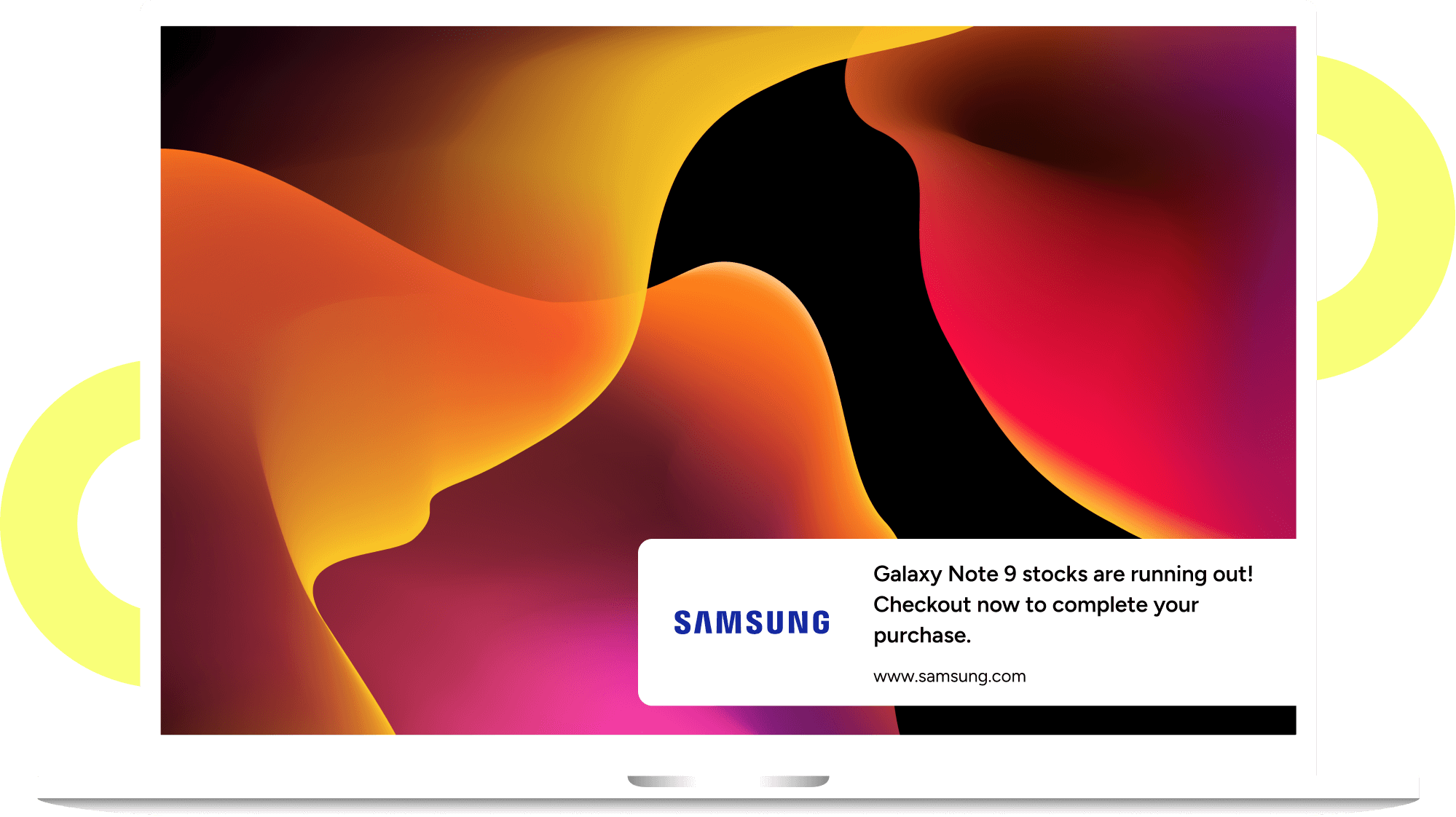
After: An email sent within minutes naming the specific item, showing remaining stock, and referencing the exact size or color the shopper browsed. Samsung used this kind of behavior-triggered targeting to act on real browsing signals instead of a fixed template; the implementation is documented in Samsung’s case study.
Blanket promo push vs. affinity-based recommendation
Before: A push notification announcing “20% off everything” sent to the entire app install base, regardless of category interest or purchase history.
After: A push built from the customer’s browsing and purchase affinity, surfacing the specific category or product they engage with most. Insider One’s Smart Recommender can use generic, contextual, personalized, and multi-strategy algorithms, with widget-based and API-based delivery options for consistent recommendations across web, app, and email.
Example fixes: cross-channel consistency that feels like one brain
A customer doesn’t experience your channels as separate systems. They experience one brand, and any gap between what email says and what the website shows breaks the illusion of personalization instantly, often more damage than a plain, unpersonalized message would have caused.
Mismatched email and on-site banner
Before: An email promotes a product the customer already purchased, while the homepage banner shown minutes later pushes an unrelated seasonal sale.
After: Both channels pull from the same customer profile, so the email and the on-site banner reflect the same recommendation logic. Philips used cross-channel personalization built on a unified profile to keep touchpoints aligned to the same signal; the implementation is detailed in Philips’ case study.
Fixed onboarding drip vs. adaptive onboarding
Before: Every new customer receives the same five-email welcome series over ten days, regardless of whether they’ve already made a purchase or abandoned the app entirely.
After: The sequence adapts to current behavior: a customer who completes a purchase on day two can skip the “why buy from us” emails and move into post-purchase content, while an inactive user can receive a re-engagement nudge instead of a redundant intro. The same approach can support fintech education or renewal journeys and travel destination or ancillary-offer messages when it uses current profile and behavior signals.
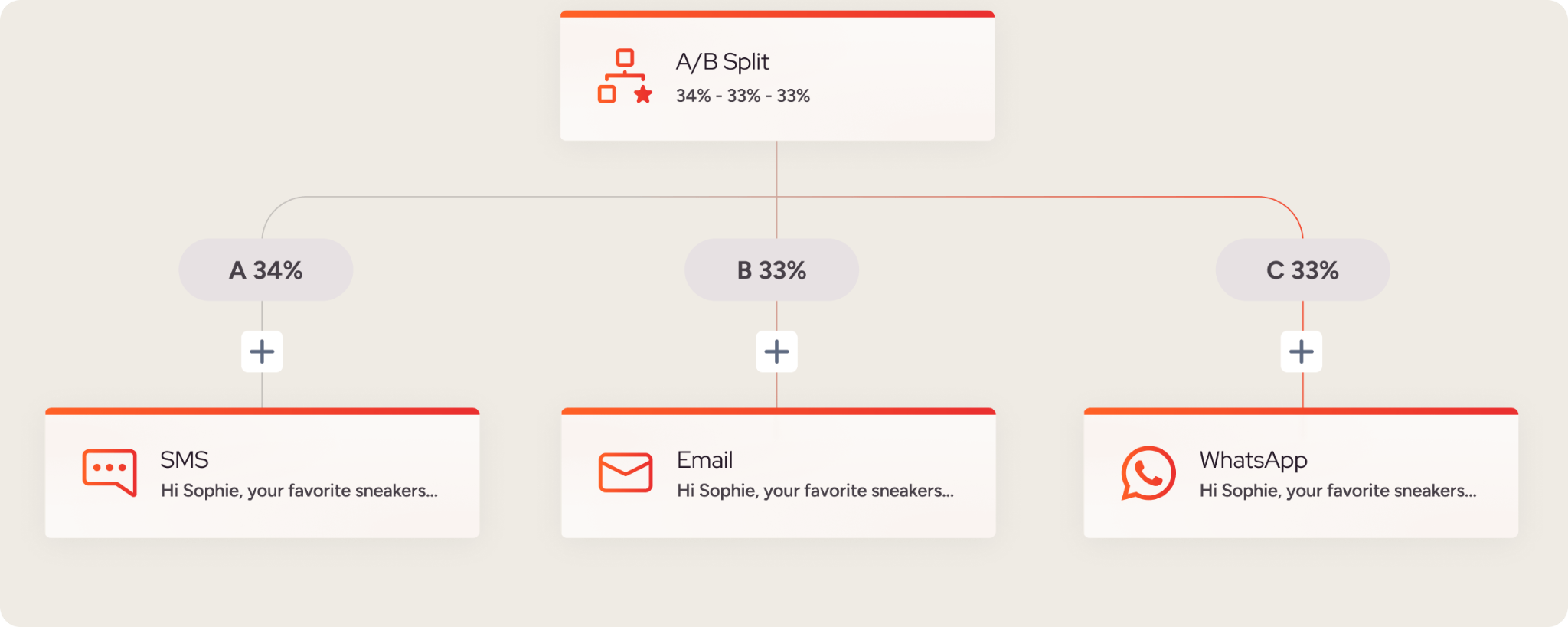
Building sequences like this typically requires Journey Orchestration with a visual cross-channel journey builder that can use branching logic, A/B splits, and wait conditions based on live behavior, plus channel logic that stays consistent across email, app, and web, which our guide to omnichannel personalization breaks down in more detail.
Loyalty messaging vs. behavior-based tier communication
Before: Every loyalty member, regardless of tier or recent activity, receives the identical “you’ve earned points” email on the same monthly schedule.
After: Messaging reflects actual tier progress and recent behavior, so a customer close to the next tier gets a nudge tied to that specific gap, while a lapsed high-value member gets a win-back offer instead of a generic points update.
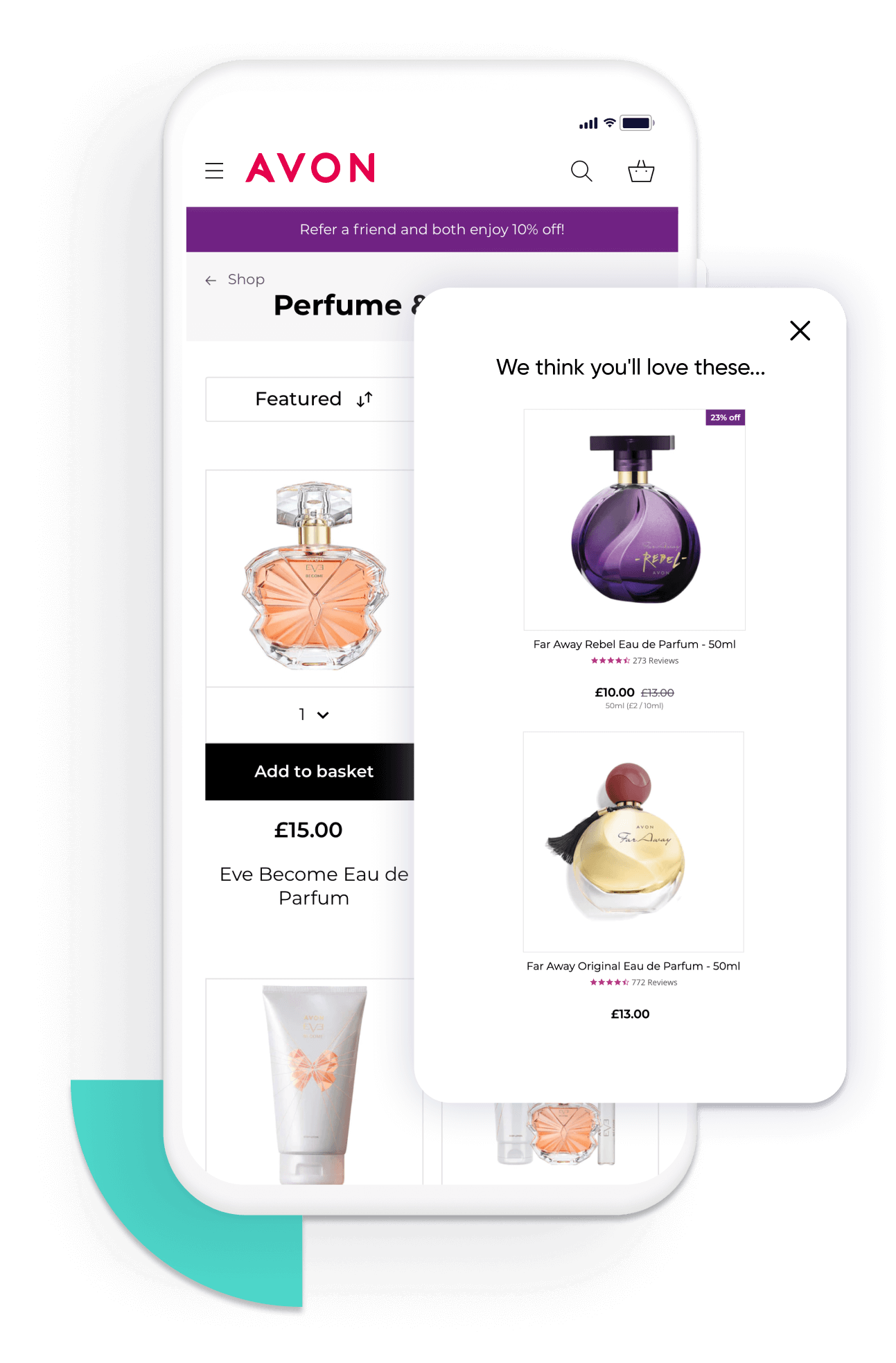
Avon applied this kind of behavior-based targeting by treating loyalty communication as a live signal rather than a fixed monthly task, as shown in Avon’s case study.
Building the data foundation real personalization needs
A unified customer profile is more than an ESP’s contact record with extra fields. It needs to validate, unify through identity resolution, and transform behavioral events, transaction history, and channel engagement into a 360-degree view that campaigns can activate across channels.
Without that foundation, each of the fixes above stays theoretical, because the system simply doesn’t have the data to act on.
Real-time event triggers, predictive groups, and dynamic content can help teams move beyond static rule logic once that foundation exists. Instead of relying only on a manually defined “if cart abandoned, send email three hours later” rule, teams can use unified profiles and journey orchestration to activate relevant next steps across channels.
Insider One’s Platform brings unified profiles, cross-channel activation, recommendations, journeys, web and app personalization, messaging, and analytics into one marketer-focused platform. Campaign and journey performance, behavior analytics, and experimentation can then help teams assess and improve personalization over time.
Conclusion
Personalization that still feels generic almost always traces back to structure, not strategy: fragmented data, stale segments, and channels that don’t share a brain.
Fixing the data foundation first makes every other improvement, from live triggers to cross-channel consistency, achievable rather than aspirational. The brands closing this gap aren’t writing cleverer copy.
They’re building the infrastructure to use current customer signals across channels, and, where appropriate, Agent One can extend that context into conversational support and shopping assistance using knowledge-base, catalog, recommendation, and customer-profile context.
To evaluate the fit of Smart Recommender and Customer Data Management for your use case, book a personalized demo to review your goals, data requirements, and implementation constraints with the Insider One team.
Frequently Asked Questions
Segmentation groups customers into shared buckets and sends the same message to everyone inside that bucket. Personalization can tailor the message, timing, and channel using an individual’s current behavior and available profile context. Segmentation can feed personalization, but treating a segment-level message as “personalized” is where most brands get stuck. See our breakdown for more detail.
A customer data platform (CDP) only helps if the data inside it is unified and current. If your CDP still receives batch updates, or if channels query it inconsistently, campaigns will keep relying on stale segments instead of live behavior, which is the core reason personalization plateaus.
Fake personalization inserts a name or last-viewed product into a fixed template. Real-time personalization can use recent behavior and real-time triggers to tailor product selection, messaging, and next steps, such as responding to a shopper who browsed a specific size that is low in stock.
Connect every channel to one customer profile so each surface reads the same signals. Without shared data, email, push, and on-site banners each run independent logic, which is why customers often see contradictory offers within the same hour across a single brand’s channels.
It depends on whether your current stack can unify data and act on it in real time. Some ESPs can extend toward this with add-ons; others hit structural limits around live event processing and cross-channel orchestration that require a broader layer.

Keep Reading
7 min.

Muharrem Derinkok
4 Jun 2026
11 min.

Chris Baldwin
2 Jun 2026
4 min.
Chris Baldwin
3 Feb 2026