

 Platform Overview

 Integration Hub

 Agent One™

 Agent One Teams™

 Customer Data Management

 Personalization

 Journey Orchestration

 Reporting & Data

 Behavioral Analytics

 Web
Web

 Email
Email

 Site Search

 Conversational CX

 WhatsApp

 Web Push

 InStory

 App
App

 SMS & RCS

 Join the $0 Migration Movement™

 The Insider One Difference

 Compare Vendors

 Switch to Insider One

 Success Story

 Retail & Ecommerce

 Financial Services

 Travel & Hospitality

 Beauty & Cosmetics

 Automotive

 Telecommunications

 Total Economic Impact™ Study

 Blog
Blog

 E-Books & Guides

 Glossary
Email Flows for Ecommerce That Actually Move the Sales Needle

Updated on 4 Aug 2026
8 min.
Table of Contents
- Summary
- The revenue math behind ecommerce email flows
- Welcome series: turning new subscribers into first-time buyers
- Cart and browse abandonment flows that recover lost revenue
- Post-purchase and replenishment flows for repeat revenue
- Orchestrating flows across email, SMS, and on-site for compounding sales
- Conclusion
- FAQs
Most Popular
Summary
- Five core flows, welcome series, cart abandonment, browse abandonment, post-purchase, and replenishment, earn more revenue per recipient than one-off campaigns because they fire on behavior, not a calendar date
- Build cart abandonment and welcome series first since they capture the warmest intent, then layer in browse abandonment, post-purchase, and replenishment as data matures
- Cart abandonment and browse abandonment need different timing and different first moves; leading with a discount too early erodes margin you didn’t need to give away
- Post-purchase sequences should stagger delivery updates, cross-sell offers, and review requests so buyers aren’t hit with three messages in one week
- Running each flow in a separate tool creates conflicting triggers across channels; a shared customer data layer lets one behavioral signal fire coordinated email, SMS, and on-site messages
Email flows for ecommerce are the automated sequences, welcome, cart abandonment, browse abandonment, post-purchase, and replenishment, that trigger from customer behavior instead of a send date, which is why they consistently outperform one-off campaigns sent to an entire list.
This guide is for lifecycle, customer relationship management (CRM), and ecommerce marketing managers at direct-to-consumer and mid-market retail brands who already have some flows live but suspect they’re leaving revenue on the table.
You’ll get a build-order for the five flows that matter most, the specific timing and messaging decisions inside each one, and the case for why treating flows as email-only tactics puts a ceiling on what they can earn.
We’ll also cover why splitting these triggers across disconnected email, SMS, and on-site tools creates message conflicts that a unified customer data layer solves.
The revenue math behind ecommerce email flows
Automated flows earn more per send than broadcast campaigns because they catch a shopper at the exact moment their intent is highest, right after they abandon a cart, right after they buy, right after they show interest in a category.
A campaign guesses at timing. A flow reacts to it, which is the structural reason lifecycle teams keep shifting budget and attention toward automation.
That said, not all five flows deserve equal build priority. Cart abandonment and welcome series should come first because they capture intent that’s already warm, a shopper who added to cart or just subscribed is closer to buying than one you’re trying to reactivate weeks later.
Browse abandonment, post-purchase, and replenishment follow, in roughly that order, since each depends on more behavioral or purchase-cycle data than the first two require.
- Cart abandonment: highest urgency, built on an explicit purchase signal
- Welcome series: high urgency, built on a fresh subscription and often a first-purchase incentive
- Browse abandonment: moderate urgency, built on category or product interest without cart intent
- Post-purchase: steady, ongoing revenue built on delivery trust and cross-sell timing
- Replenishment: predictable but delayed revenue tied to a product’s actual usage cycle
Welcome series: turning new subscribers into first-time buyers
A welcome series converts new subscribers into buyers by pairing three to five emails over seven to ten days with a first-purchase incentive that appears early, not buried in email four.
The first message should land within minutes of signup, introduce the brand, and set expectations for what’s coming next in the sequence.
Segmenting by signup source materially changes what that first message should say. A shopper who signed up through a checkout pop-up already has a product in mind, so the follow-up can reference their session directly.
A shopper who came through a quiz has told you their preferences outright, and ignoring that in email two wastes the most useful zero-party data you’ll collect all quarter.
A shopper who subscribed from a blog or content page needs more brand context before a hard offer, since they haven’t shown direct purchase intent yet.
- Pop-up or exit-intent signups: lead with the product or category they were viewing
- Checkout signups: skip broad brand storytelling and go straight to a first-order incentive
- Quiz or preference-center signups: personalize product recommendations using their stated answers
- Content or blog signups: build brand trust for one or two emails before introducing a discount
Insider One’s AI personalization capability lets teams tailor welcome content by signup source and browsing behavior instead of sending the same three emails to everyone who joins the list, which is where generic welcome series usually lose momentum by the third send.
Cart and browse abandonment flows that recover lost revenue
Cart abandonment and browse abandonment are not the same flow with a different name, and treating them identically is where most recovery revenue quietly disappears.
Cart abandonment fires within an hour of a shopper leaving items behind, because that intent decays fast and the first message should simply remind them what’s waiting, no discount required yet.
Browse abandonment can wait longer, sometimes a full day, since the shopper never committed to a cart and needs more context before you ask them to return.
The bigger decision inside both flows is when to introduce a discount versus urgency or social proof. Leading with a percentage off trains shoppers to abandon carts on purpose, waiting for the coupon that always arrives in email two.
A stronger sequence opens with a straightforward reminder, follows with stock urgency or a customer review if the product supports it, and reserves any discount for the final message, if it appears at all.
- Message one: neutral reminder, no discount, sent within one hour for cart and within 24 hours for browse
- Message two: social proof, stock scarcity, or a related product recommendation
- Message three: a modest incentive, held back until intent has clearly cooled
Detailed subject line and sequencing examples are covered in our guide to high-converting abandoned cart emails, which breaks down message-by-message structure in more depth than fits here.
Post-purchase and replenishment flows for repeat revenue
Post-purchase flows drive repeat revenue by sequencing delivery updates, cross-sell offers, and review requests far enough apart that buyers don’t feel messaged at. A confirmation and shipping update come first since they carry no sales ask.
A cross-sell offer tied to the purchased item follows once delivery is confirmed, and a review request lands after the product has had enough time in the customer’s hands to form an opinion.
Replenishment flows work differently because they depend on actual usage timing rather than a fixed day count after purchase. A consumable that typically lasts thirty days shouldn’t get a reorder nudge on day ten, and a product that lasts ninety days shouldn’t wait until day one hundred to ask.
Using purchase-cycle data, calculated from a customer’s own order history or category averages, lets the nudge land just before the product runs out instead of guessing at a generic interval.
- Confirmation and shipping updates: immediate, informational only
- Cross-sell offer: after delivery is confirmed, tied to the specific item bought
- Review request: after enough usage time has passed for an honest opinion
- Replenishment nudge: timed to the product’s real consumption cycle, not a flat thirty-day default
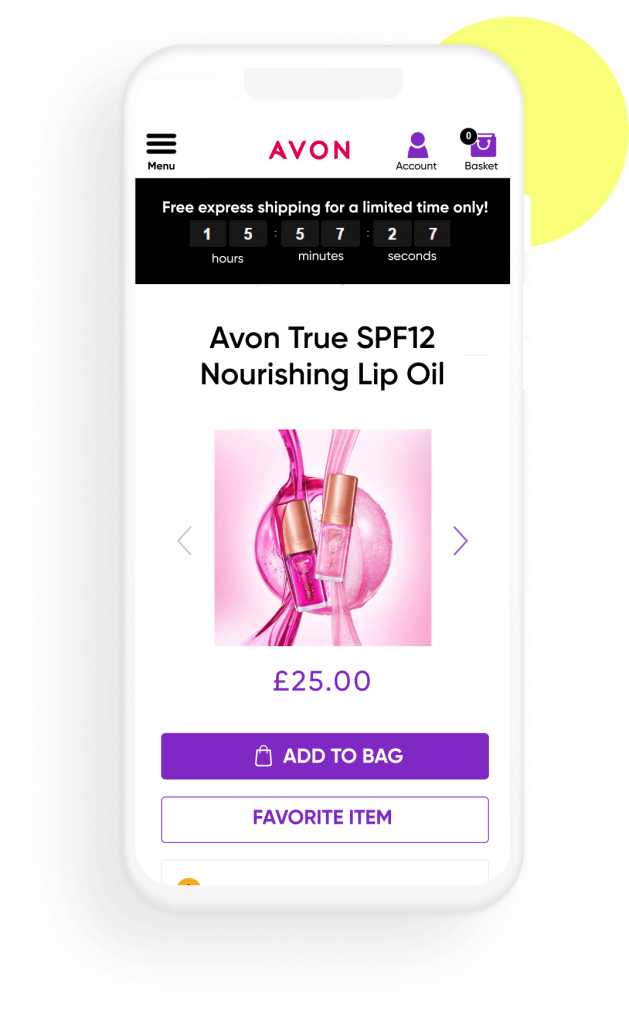
Avon improved conversion rates by up to 78% after tightening this kind of behavioral timing across its lifecycle messaging, which shows how much upside sits in getting the sequence right rather than just having one in place.
Orchestrating flows across email, SMS, and on-site for compounding sales
Building these five flows in separate, disconnected tools caps their performance because each one fires from its own trigger logic, blind to what the others are doing.
A shopper who abandons a cart might get an email discount from one platform and a full-price short message service (SMS) nudge from another an hour later, undercutting the very offer you just sent and training customers to distrust your pricing.
The fix is a shared behavioral trigger set sitting on one customer profile, so a single abandonment event fires a coordinated email, SMS, and on-site message instead of three uncoordinated ones.
This is what a unified customer data management layer solves: one event, one profile, one consistent sequence across channels, with each channel picking up where the last one left off instead of repeating it.
- One trigger fires the flow across email, SMS, and on-site instead of three separate rule sets
- A shopper who converts on-site automatically exits the email and SMS sequence, avoiding a redundant discount push
- Send timing across channels reflects when a customer actually engages, not a fixed delay per platform
- Frequency caps apply across the whole customer profile, not per channel, so nobody gets three messages in one day
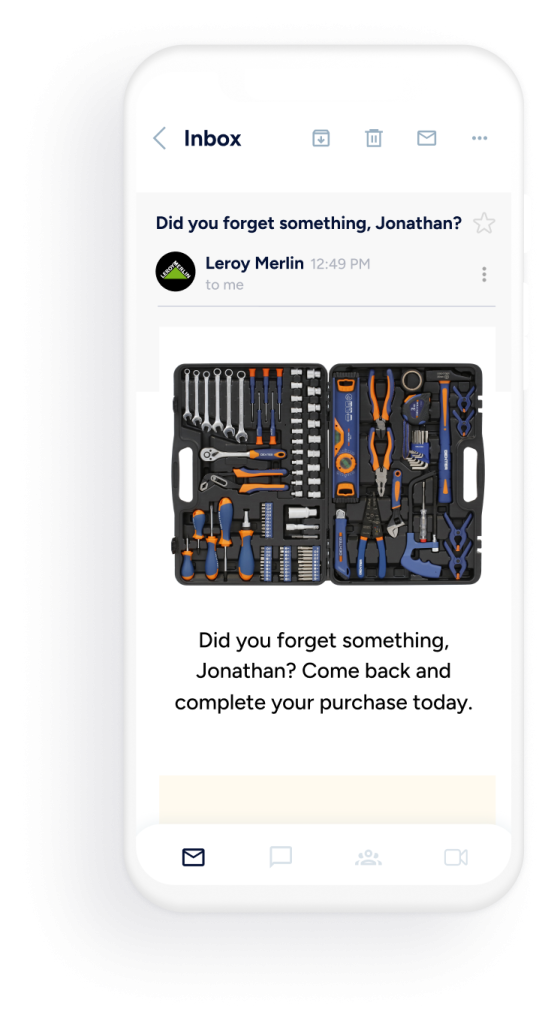
Leroy Merlin used Insider One’s platform to coordinate journeys like this and grew ecommerce revenue by 8.8%, evidence that orchestration across channels earns more than the same flows run in isolation.
Insider One’s Journey Orchestration works this way by design, building each flow once on shared customer data instead of rebuilding trigger logic per channel. Insider One™, our artificial intelligence (AI) engine, also handles send-time decisions within these journeys, adjusting delivery per customer instead of applying one blanket delay across the whole list.
For teams weighing agentic approaches to this kind of coordination, our piece on agentic AI versus traditional email automation walks through what changes when triggers become adaptive rather than fixed.
New Balance saw a 556% lift in conversion rate after moving to this kind of unified, cross-channel triggering, a result that’s hard to reach when flows stay siloed by tool.
Conclusion
The five core ecommerce email flows aren’t equally valuable, and building them in the wrong order or in disconnected tools caps what any of them can earn.
Rank them by intent, sequence the messaging inside each one deliberately, and orchestrate the triggers across email, SMS, and on-site from a single customer profile. That’s the difference between flows that run and flows that actually compound.
To evaluate the fit of Insider One’s platform and Insider One AI™ for your use case, book a personalized demo to review your goals, data requirements, and implementation constraints with the Insider One team.
FAQs
Start with cart abandonment and welcome series since both capture intent that’s already warm. Add browse abandonment once you have enough browsing data, then post-purchase, then replenishment last, since replenishment depends on purchase-cycle data that takes longer to accumulate across your customer base.
Three to five emails over seven to ten days works for most catalogs. The first should send within minutes of signup, and the first-purchase incentive should appear early rather than in the final message, especially for shoppers who signed up through a checkout pop-up or product quiz.
No. Leading with a discount trains shoppers to abandon carts intentionally. Open with a neutral reminder, follow with urgency or social proof, and hold any discount for the final message in the sequence, if it’s needed at all for that customer segment.
Cart abandonment fires on an explicit purchase signal and should send within about an hour, while browse abandonment reflects category interest without commitment and can wait up to a day. They need different timing and different opening messages, not the same template with a new name.
Separate tools fire triggers independently, so a customer can receive conflicting offers across email and SMS within the same hour. A shared customer data layer lets one behavioral event trigger a coordinated sequence across channels instead of three uncoordinated messages competing for the same sale.

Keep Reading
7 min.

Muharrem Derinkok
4 Jun 2026
11 min.

Chris Baldwin
2 Jun 2026
4 min.
Chris Baldwin
3 Feb 2026