

 Platform Overview


 Integration Hub


 Agent One™


 Agent One™ Teams


 Customer Data Management


 Personalization


 Journey Orchestration


 Reporting & Data


 Behavioral Analytics


 Web


 Email


 Site Search


 Conversational CX


 WhatsApp


 Web Push


 InStory


 App


 SMS & RCS


 Join the $0 Migration Movement™


 The Insider One Difference


 Compare Vendors


 Switch to Insider One


 Success Story


 Retail & Ecommerce


 Financial Services


 Travel & Hospitality


 Beauty & Cosmetics


 Automotive


 Telecommunications


 Total Economic Impact™ Study


 Blog


 E-Books & Guides


 Events


 Glossary
Less busywork, more relevance: automating every stage of the customer lifecycle

Updated on 2 Nov 2026
9 min.
Table of Contents
- Summary
- Why 'personalize every stage' advice keeps failing in practice
- The difference between automating a campaign and orchestrating a lifecycle
- Where AI decisioning replaces manual lifecycle tasks today
- Closing the activation gap between data and experience
- What to check before trusting a platform's 'less manual work' claim
- Conclusion
- Frequently Asked Questions
Most Popular
Summary
- Mapping lifecycle stages isn’t the bottleneck; rebuilding a campaign, segment, and content variant for every stage-channel combination is what eats a lifecycle team’s hours
- Rule-based automation still needs someone to define triggers and content paths; configured AI-backed journeys can use available customer data and capabilities to optimize channel, timing, and content without rebuilding every campaign
- Behavioral segmentation, Next Best Channel, Smart Delivery, and Dynamic Content can help teams reduce recurring review and campaign-building work when the relevant products are enabled and configured
- A unified customer data foundation can reduce the lag between new customer data and an activated experience by connecting relevant events, attributes, and engagement signals for lifecycle use
- Before trusting any “less manual work” claim, confirm whether the platform actually decides the next action or simply executes rules someone still has to write and maintain
Customer lifecycle marketing automation only works when the system can act on a customer’s data faster than a team can brief, build, and launch a campaign for them. Most retention and customer relationship management (CRM) teams already know the stage map: acquisition, onboarding, activation, retention, win-back, churn. What breaks down is the operational reality behind it, the separate segment, trigger, and content variant required for every stage-channel pairing, rebuilt every time behavior shifts.
This article is for lifecycle, CRM, and retention leads at mid-to-large consumer brands, ecommerce, fintech, travel, and subscription apps, running multi-channel programs with lean teams who feel the gap between strategy and execution every sprint.
We’ll break down where the manual hours actually go, how marketer-defined journey strategy can work with AI-backed orchestration and optimization, and what to check before you trust a platform’s promise to cut that busywork.
Why ‘personalize every stage’ advice keeps failing in practice
Personalizing every lifecycle stage fails in practice because the instruction assumes unlimited building capacity, not unlimited strategic insight. A lifecycle map with six stages and four channels already implies dozens of potential campaign variants, each with its own segment logic, send-time rule, and creative asset. Lean teams can map the stages in an afternoon; building and maintaining that many live campaigns across email, SMS, push, and on-site messaging is a different workload entirely.
The hidden cost isn’t creative, it’s maintenance. Every time a segment definition changes, a promotion ends, or a new product line launches, someone has to go back into each campaign and update the logic. That’s the real reason personalization stalls: not a lack of stage-mapping knowledge, but a backlog of rebuild work that never clears because new triggers arrive faster than the team can update old ones.
The recurring manual tasks usually look like this:
- Defining and refreshing a segment for each lifecycle stage as behavior changes
- Building a separate trigger and send-time rule per channel for the same lifecycle moment
- Producing content variants for each segment, channel, and offer combination
- Re-auditing active campaigns every time a product, promotion, or policy changes
A detailed breakdown of this stage-by-stage workload is worth reading alongside our customer lifecycle management strategy guide, which maps where the operational load concentrates across acquisition, retention, and win-back.
The difference between automating a campaign and orchestrating a lifecycle
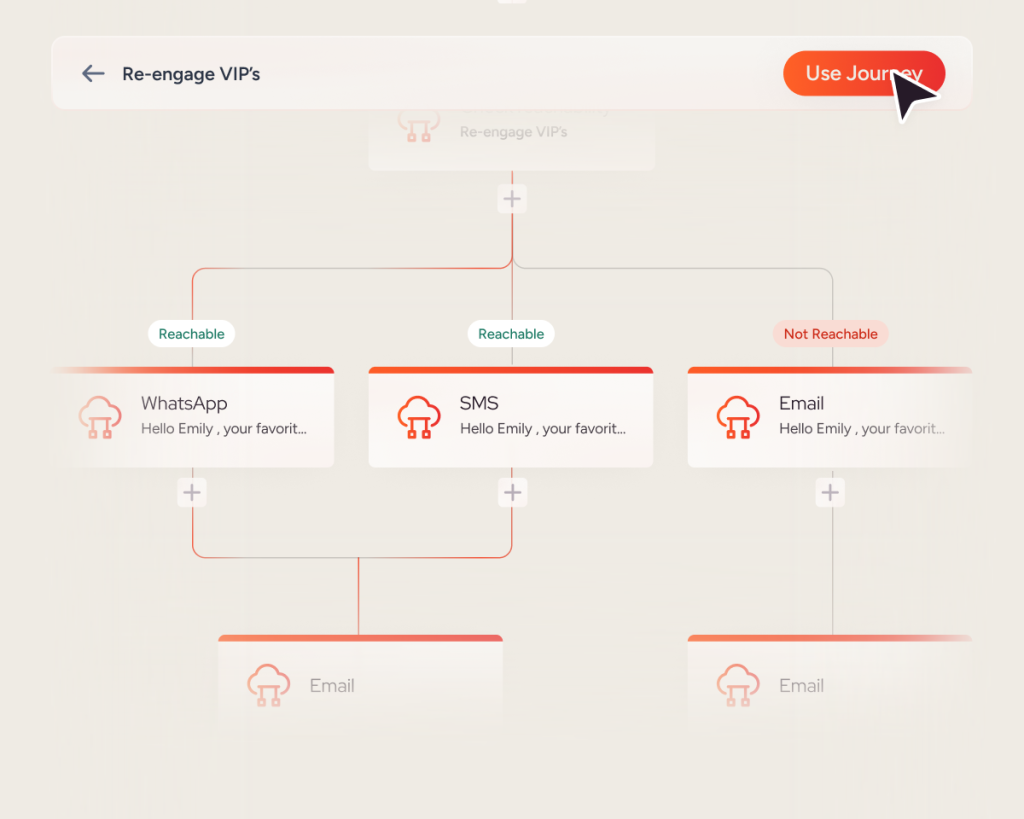
Automating a campaign often starts with rules a person defines in advance; orchestrating a lifecycle connects audiences, journey conditions, channels, personalization, and measurement around the customer experience. The practical distinction is whether teams can combine clear strategy and journey logic with connected data and optimization capabilities to reduce recurring rebuilding work.
Rule-based automation runs on logic someone wrote once: if a customer abandons a cart, wait two hours, send an email, then follow up with SMS if there’s no open. It works until behavior doesn’t match the rule, a customer who prefers SMS gets an email first, a repeat buyer gets treated like a first-time visitor, or a promotion no longer matches current inventory.
AI-backed journey orchestration complements that rule-based foundation with connected data, individualized experiences, and optimization capabilities. When configured with relevant events, attributes, and connected channels, it can use browsing behavior, purchase history, and engagement signals to personalize journey execution through capabilities such as Next Best Channel, Smart Delivery, and Dynamic Content. This can reduce repetitive campaign edits while teams retain responsibility for goals, eligibility, guardrails, creative, and ongoing optimization.
This is also where tools like Insider One’s Journey Orchestration separate from simpler automation stacks: dynamic wait conditions let a journey pause based on each customer’s own data, a renewal date, a flight time, a product’s expected run-out day, rather than one fixed delay applied to an entire segment.
Adding another integration alone does not solve the problem unless relevant customer data, journey logic, and measurement are connected in an operating model marketers can manage. Automation can reduce recurring rebuilding when teams configure reusable journeys, use available optimization capabilities, and continuously measure what is working.
Slazenger shows how brands can use Insider One’s omnichannel marketing solutions to strengthen customer lifecycle marketing. Explore Slazenger’s success story to learn more.
Where AI decisioning replaces manual lifecycle tasks today
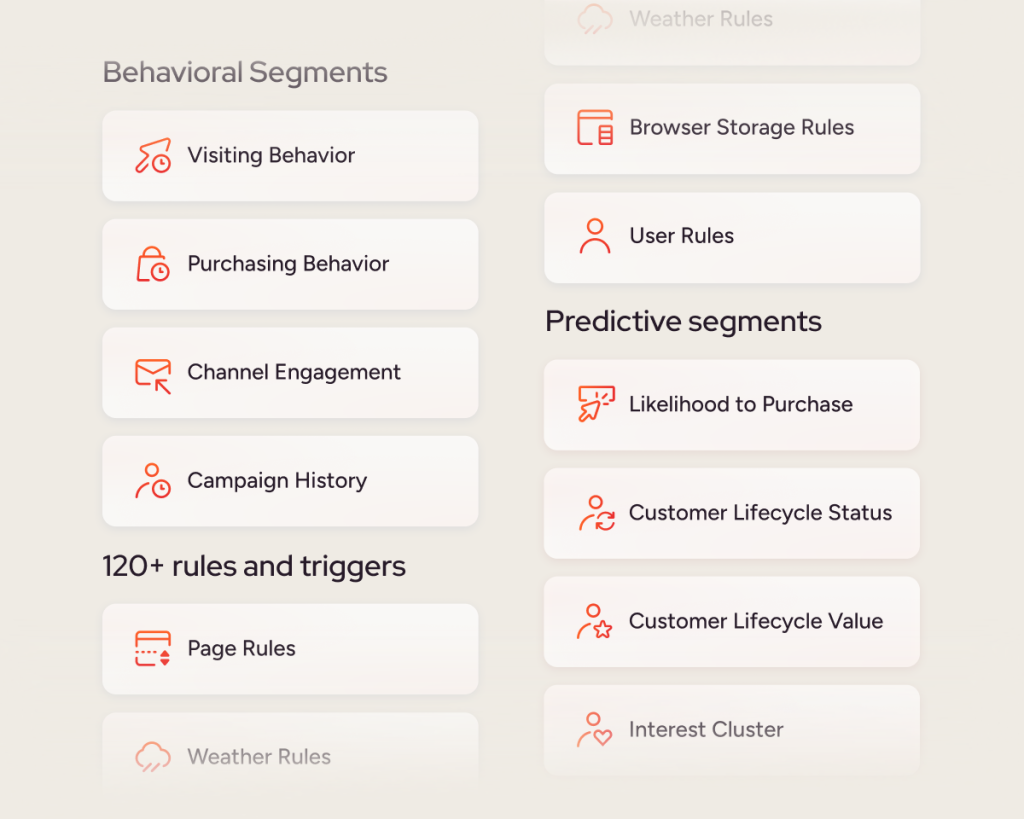
AI decisioning helps lifecycle teams move away from repetitive manual tasks and make customer engagement more responsive. With capabilities like behavioral segmentation, Next Best Channel, Smart Delivery, and Dynamic Content, teams can automate audience targeting, channel selection, send-time optimization, and personalization within their journeys. Tasks that once required regular manual updates can now happen automatically as customer behavior changes.
Segmentation and channel selection that update themselves
Lifecycle teams can use behavioral and transactional data, including ingested user events and attributes, to define audiences and identify stages such as active, inactive, silent visitor, or churned. Instead of relying only on weekly reporting, teams can configure cross-channel journeys that respond to relevant signals and use eligible channel and personalization capabilities for each audience.
Content that assembles itself per customer
Dynamic Content can personalize message content within configured journeys. Rather than manually rebuilding every content variant, teams can use Dynamic Content and available recommendation capabilities to tailor messages using relevant customer behavior and product context.
Three lifecycle moments show this clearly. An onboarding stall used to require a CRM analyst running a weekly report to flag users who hadn’t completed setup. A churn signal used to sit in a dashboard until someone reviewed it manually. A win-back window used to run on a fixed day count after last purchase, regardless of what that customer actually buys.
Teams can use journey conditions, testing, and analytics to deliver timely, relevant messages and continuously improve customer experiences. ECCO’s success story offers a real-world example of how Insider One supports data-driven customer lifecycle engagement.
Closing the activation gap between data and experience
The real measure of a lifecycle program’s health isn’t how well it’s mapped, it’s how long it takes new customer data to become an activated experience. That gap, often measured in days rather than minutes, is where most of the “less manual work” promise either holds up or falls apart.
When purchase data sits in one system, web behavior in another, and support tickets in a third, someone has to manually pull it together before a lifecycle trigger can even fire. That handoff, between a data team, a CRM tool, and a campaign builder, is where days get added to what should be a same-day response to a signal like a churn-risk score or a pricing complaint.
A unified customer data foundation can reduce those handoffs by bringing relevant behavioral, transactional, and channel-engagement data together through a shared Customer Data Management layer.
Once data sources are connected and journeys are set up, teams can respond to real-time customer signals instead of relying on manual data exports and repeated campaign updates. PUMA’s success story highlights how Insider One helps brands bring customer data together to create more connected lifecycle marketing programs.
What to check before trusting a platform’s ‘less manual work’ claim
Before you believe a lifecycle platform’s promise to cut manual work, test whether it actually decides the next action or only executes rules your team still has to write. The difference determines whether the workload genuinely shrinks or just moves somewhere less visible.
- Ask which channel, timing, and content capabilities are available, what data and configuration they require, and where marketers retain control
- Confirm a lifecycle marketer can adjust a journey without opening a developer ticket or waiting on an engineering sprint
- Check how user events, attributes, and other connected signals can enter audiences and configured journey conditions rather than relying only on scheduled batch jobs
- Watch for the common trap of swapping manual campaign-building for manual dashboard-watching
That second trap is the one most lifecycle teams don’t expect. A platform can stop requiring campaign rebuilds and still hand a marketer a full-time job watching dashboards, flagging anomalies, and manually overriding segments.
Real reduction in manual work means teams can reuse configured journeys, personalize execution with available capabilities, and use analytics and experimentation to improve programs without rebuilding every campaign from scratch. For more on how AI changes decisioning across the full customer journey, see how AI personalization powers the customer lifecycle.
Conclusion
Lifecycle marketing doesn’t stall because teams lack a strategy; it stalls because the manual work of rebuilding segments, triggers, and content per channel outpaces the team maintaining it. An AI-powered Growth Management Platform can bring unified customer data, segmentation, cross-channel journeys, personalization, optimization, and analytics into a marketer-focused operating model. Brands that close the gap between new data and an activated experience keep pace with behavior as it happens, not as it was planned months earlier.
See how Insider One’s Journey Orchestration and Customer Data Management can help teams connect customer data, configured journeys, personalization, and measurement in one lifecycle operating model.
Book a personalized demo to see how to assemble a live customer journey, from segmentation to send-time to content, without a separate build for every lifecycle stage.
Frequently Asked Questions
It’s the practice of using software to support customer experiences across lifecycle stages, including acquisition, onboarding, retention, and win-back, with reusable audiences, journeys, and campaign controls. Done well, it combines marketer-defined strategy and journey logic with connected customer data, personalization, optimization, and measurement rather than relying only on scheduled sends tied to fixed rules.
Marketing automation commonly uses rules a person defines in advance for an audience or segment. AI-backed journey orchestration can use configured data, conditions, and eligible capabilities such as Next Best Channel, Smart Delivery, and Dynamic Content to personalize execution, while marketers retain control of strategy and journey design.
Behavioral segmentation, Next Best Channel, Smart Delivery, and Dynamic Content are capabilities teams can use within configured lifecycle programs. They can reduce repetitive segment refreshes, channel planning, delivery-timing work, and content-variant rebuilding, while teams continue to govern, test, and optimize programs.
It should include a unified customer data foundation, audience segmentation, journey tools marketers can manage, cross-channel personalization, and analytics and experimentation to measure and improve performance. Without all three, “automation” often just moves the manual work elsewhere.
Fragmented data across separate systems, combined with manual handoffs between data, creative, and delivery teams, adds days to what should be a same-day response. A shared customer data layer can reduce those handoffs when relevant data sources, events, attributes, and journey configurations are connected.
Check what marketers can manage directly, how data and signals enter audiences and journey conditions, and which capabilities require product activation or implementation support. If the team still spends hours watching dashboards and manually overriding segments, the manual work hasn’t actually gone away.

Keep Reading
4 min.

Chris Baldwin
3 Feb 2026
9 min.
Chris Baldwin
2 Nov 2026
9 min.
Chris Baldwin
2 Nov 2026