

 Platform Overview

 Integration Hub

 Insider One AI™

 Customer Data Management

 Personalization

 Journey Orchestration

 Reporting & Data

 Behavioral Analytics

 Web
Web

 Email
Email

 Site Search

 Conversational CX

 WhatsApp

 Web Push

 InStory

 App
App

 SMS & RCS

 Join the $0 Migration Movement™

 The Insider One Difference

 Compare Vendors

 Switch to Insider One

 Success Story

 Retail & Ecommerce

 Financial Services

 Travel & Hospitality

 Beauty & Cosmetics

 Automotive

 Telecommunications

 Total Economic Impact™ Study

 Blog
Blog

 E-Books & Guides

 Glossary
How to Build a Customer Lifecycle Management Strategy That Actually Drives Revenue

Updated on 7 Jul 2026
9 min.
Table of Contents
- Summary
- Why lifecycle strategies stall before they scale
- The five lifecycle stages and what each one actually demands
- Building behavioral triggers instead of campaign calendars
- AI and personalization as lifecycle infrastructure, not a feature
- Measuring lifecycle health: metrics that predict revenue, not just activity
- FAQs
Most Popular

Summary
An effective customer lifecycle strategy adapts to changing behavior using real-time data, behavioral triggers, and AI-driven decisioning. Measuring performance at each lifecycle stage helps identify where customers drop off and where retention efforts will have the greatest impact.
There is a specific kind of frustration that hits retention teams around month six of a new lifecycle program: the flows are live, the segments are built, engagement numbers look acceptable, and yet customer lifetime value (CLV) is not moving.
The campaign calendar is full. The data is theoretically there. But something between the strategy document and the customer’s inbox is getting lost.
What is usually getting lost is the gap between a lifecycle map and a lifecycle program. A map describes stages. A program responds to behavior. The two look similar on a slide deck and perform very differently in production.
Building a strategy that actually drives revenue means closing that gap systematically, stage by stage, across the full arc of the customer relationship.
Why lifecycle strategies stall before they scale
The distance between a map and a live behavioral program
A standard lifecycle map assigns customers to stages based on where they are in a predefined sequence: prospect, new customer, active buyer, lapsed, churned.
The logic is clean on paper. The problem is that real customers do not move linearly. A loyal buyer who hits a friction point in your checkout flow behaves like a new visitor.
A lapsed customer who opens three emails in a week is signaling re-engagement intent that a static flow will not catch. When your lifecycle logic is built around position rather than behavior, you are always reacting to where customers were, not where they are.
How siloed teams quietly erode LTV
The second structural problem is organizational. Lifecycle programs are often designed by marketing teams, which means they reflect what marketing can see and control: email, SMS, push, and paid retargeting.
But the signals that predict lifecycle transitions live across the entire business. Product usage data sits in engineering. Support ticket volume and resolution time sit in customer service. Purchase and return history live in commerce or finance.
When those teams operate in separate systems with separate definitions of “active” or “at-risk,” customers receive contradictory experiences at the exact moments that matter most.
A customer flagged as high-value in your customer relationship management (CRM) system can simultaneously be receiving a win-back discount from marketing and an overdue invoice notice from finance. That kind of inconsistency is invisible in aggregate metrics and corrosive to trust at the individual level.
The five lifecycle stages and what each one actually demands
Stage-specific data, triggers, and success metrics
Textbook lifecycle frameworks name the stages: acquisition, activation, engagement, retention, reactivation. What they rarely specify is what each stage actually requires to function well.
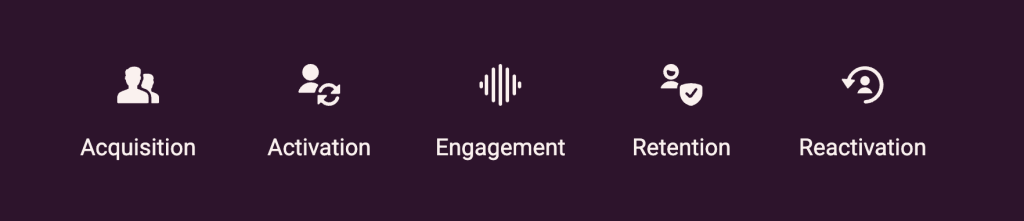
Acquisition needs identity resolution from the first touch, not just traffic volume. The success metric is not cost per click; it is the quality of the profile you can build from the initial interaction, which determines everything downstream.
Activation is where first-purchase or first-meaningful-use behavior gets established. The trigger for an activation sequence should be behavioral, not time-based: what signals indicate that a new user has genuinely engaged with your product or completed their first purchase? Activation rate, not open rate, is the metric that predicts whether a customer will survive to become a long-term buyer.
Engagement demands continuous behavioral listening. The question is not whether customers are opening emails; it is whether their depth of interaction is growing or contracting. Engagement depth, measured by actions per session, category breadth, and content consumption, is a better leading indicator of churn risk than inactivity alone.
Retention is where CLV optimization happens. The inputs here are purchase frequency, average order value (AOV), and net promoter score (NPS), cross-referenced against behavioral signals that predict category saturation or competitive shopping.
Reactivation requires the highest precision of any stage. Sending a discount to every lapsed customer is expensive and often unnecessary. The highest-leverage reactivation targets are customers with high historical monetary value who have stopped engaging for reasons that a personalized experience could address.
Cross-functional ownership and clean handoffs
Each stage should have a clear lead team and a defined supporting function. Acquisition is typically led by growth or demand generation, supported by product and analytics. Activation is a shared ownership problem between marketing and product, and it is also where handoffs most often break.
If the activation sequence is designed by marketing but the product owns the in-app experience, and those two teams are not working from the same behavioral definition of “activated,” customers fall through the gap.
Building a coherent product lifecycle management approach means establishing a shared data contract between teams, not simply sharing a campaign calendar.
Building behavioral triggers instead of campaign calendars
Replacing date-based sends with signal-based logic
Campaign calendars create the illusion of a lifecycle program. They generate activity, and activity is easy to report. But a message sent because it is Tuesday and a customer has not purchased in 30 days is a guess.
A message sent because a customer just viewed the same product category three times in five days without converting is a response. The first fills inbox quota. The second has a measurable reason for the message to exist.
The shift from calendar-based to signal-based messaging requires a unified behavioral data layer that can collect zero-party data (preferences and intent signals declared directly by the customer) and first-party behavioral data (browsing history, purchase history, and app activity) in a single profile.
Without that foundation, triggers are limited to what individual channel tools can see, and those tools rarely share a complete picture of any customer.
RFM segmentation and predictive churn scoring
Two analytical frameworks sit at the core of real-time lifecycle decisioning. RFM segmentation evaluates customers along three dimensions: recency of last purchase, frequency of purchases, and monetary value spent.
Customers who score low on recency but high on frequency and monetary value represent a high-priority segment: high-value buyers showing early churn signals who respond well to targeted reactivation and incentive campaigns before they disengage completely.
Predictive churn scoring extends RFM logic with AI-driven probability modeling, identifying the customers most likely to lapse before they have actually gone quiet.
For customer targeting at scale, these two inputs together do more work than any number of manually built segments, because they update continuously as behavior changes rather than locking customers into a cohort they may have outgrown.
AI and personalization as lifecycle infrastructure, not a feature
From being a campaign tool to becoming a decisioning layer
The most common mistake in lifecycle personalization is not a lack of artificial intelligence (AI). It is deploying AI as a campaign optimization layer rather than as decisioning infrastructure. A model that predicts which subject line performs better is useful.
A system that determines, for each individual customer, the right channel, the right message, the right offer, and the right moment across every stage of the lifecycle simultaneously represents a fundamentally different category of capability.
The former helps you send better emails. The latter enables a genuinely individualized program at scale without proportionally scaling your team.
Insider One’s AI-powered platform is built around this distinction. Sirius AI™ and Agent One™ function as an orchestration and decisioning layer, not simply a personalization feature sitting on top of existing campaign infrastructure.
The practical implication is that lifecycle decisions become continuous, individually calibrated responses to behavioral signals rather than pre-configured rules that an analyst reviews quarterly.
Closing the personalization execution gap
A persistent gap exists between how widely AI is adopted for engagement and how consistently customers feel recognized across touchpoints.
The reason is almost always the same: AI is being applied at the channel level without a unified view of the customer underneath it. Personalization that does not span the full lifecycle creates experiences that feel fragmented.
A customer who receives a relevant product recommendation in email but encounters a generic homepage on their next visit does not feel known; they feel inconsistently served.
Adidas achieved a 259% increase in AOV and a 13% lift in conversion rate in a single month by applying personalization across the full onsite and channel experience rather than in isolated campaign moments.

That kind of result requires AI to be embedded at the infrastructure level, not appended to individual campaigns.
Measuring lifecycle health: metrics that predict revenue, not just activity
A connected KPI stack by stage
Lifecycle measurement fails when every stage reports into a different dashboard with different definitions of success. The goal is a connected KPI stack that links stage-level health to revenue outcomes:
• Acquisition: qualified profile rate, identity resolution rate, cost per acquired profile
• Activation: first-purchase conversion rate, time to first meaningful action, activation rate by acquisition channel
• Engagement: engagement depth score, category breadth, repeat purchase rate within 90 days
• Retention: CLV trajectory, AOV trend, NPS, expansion revenue (upsell and cross-sell rate)
• Reactivation: win-back rate by segment, incremental revenue from reactivated customers, suppression accuracy (avoiding unnecessary discounts for customers who would have returned anyway)
The connective tissue between these metrics is the customer data platform (CDP), which enables stage transitions to trigger both operational actions and measurement updates simultaneously.
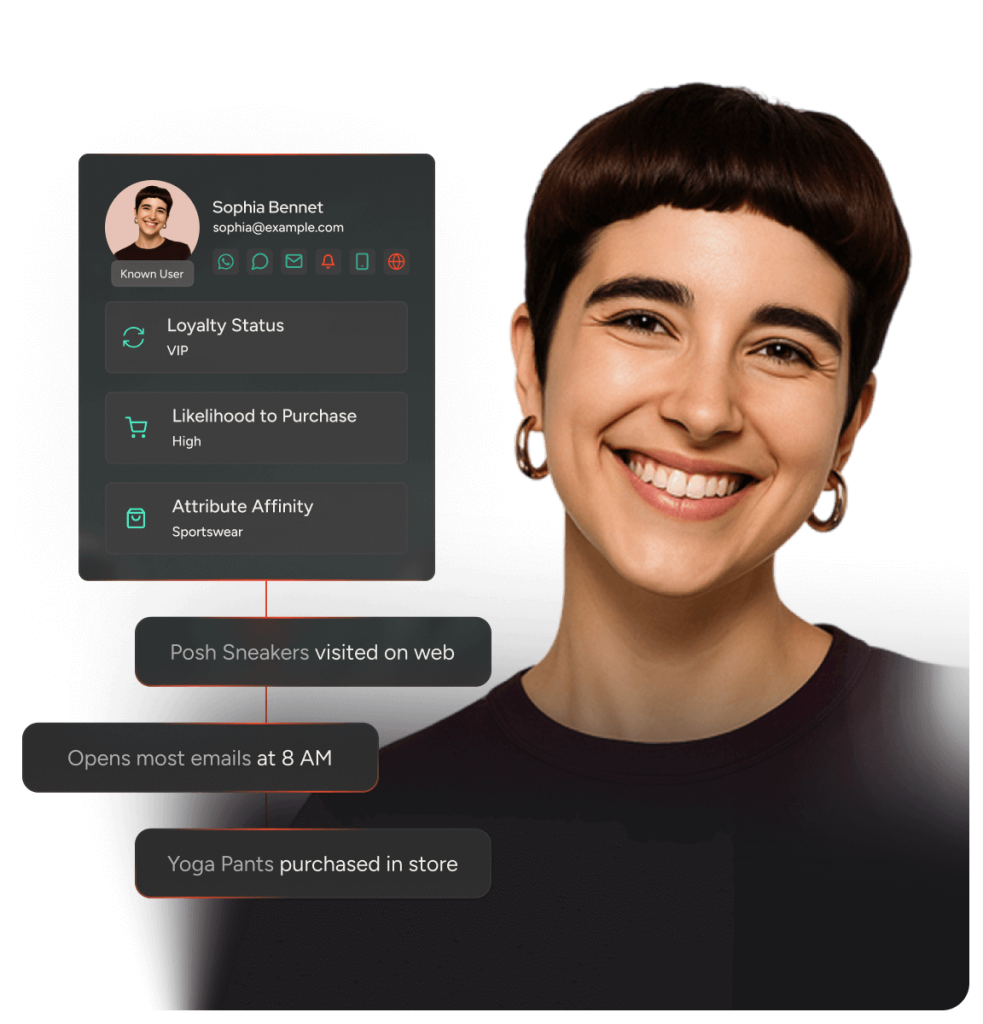
Without a CDP as the backbone, lifecycle metrics live in the same silos as the teams that produce them.
Running a lifecycle audit
The most practical starting point for any team feeling stuck is a lifecycle audit: a systematic review of which stage loses the most customers and which loss carries the highest revenue impact.
Stage dropout rates, visualized as a funnel from acquisition through reactivation, reveal where intervention will produce the greatest compounding return.
A 10% improvement in activation rate is worth more over 24 months than a 20% improvement in reactivation rate, because activated customers have a longer runway to generate CLV.
Slazenger achieved 49X ROI in eight weeks by identifying exactly these kinds of leverage points and deploying personalized journey orchestration at the stages where behavioral signals were strongest.
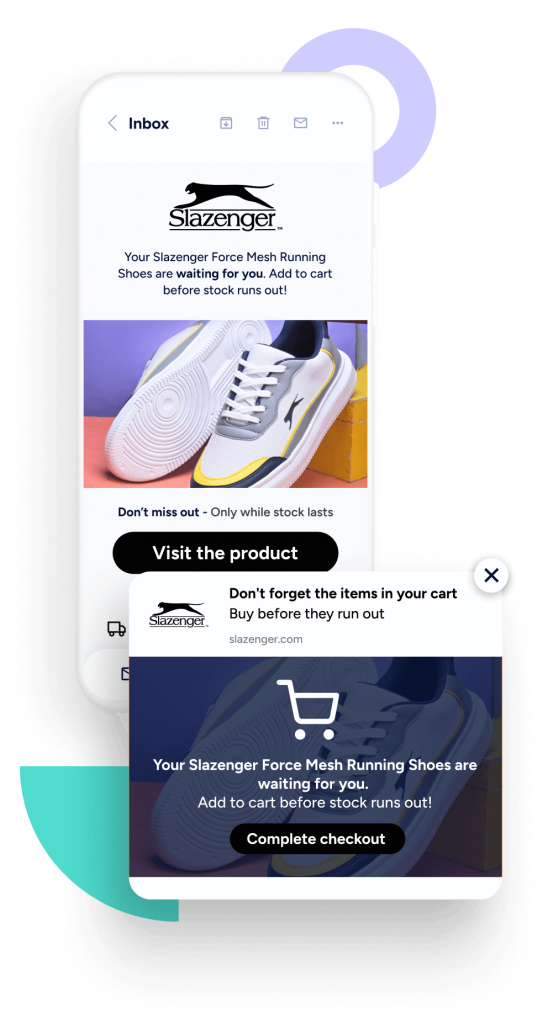
Sequencing fixes by impact rather than effort creates compounding returns that a quarterly campaign calendar cannot produce. A lifecycle audit run once a year, with key performance indicators (KPIs) reviewed monthly by stage, is a more honest performance framework than any top-line engagement report.
If you want to see how Insider One’s Architect, AI personalization, and Sirius AI™ turn live customer data into coordinated, revenue-driving experiences, book a personalized demo to see the exact use cases, decision logic, and growth levers most relevant to your team.
FAQs
A customer journey map is a static visualization of how customers move through defined touchpoints. Customer lifecycle management (CLM) is an operational system that responds to actual customer behavior in real time. Journey maps are useful for alignment. Lifecycle management is what drives revenue.
Stage classification should be driven by behavioral signals, not time elapsed. A customer who purchased recently and visits frequently is active regardless of tenure. A customer who spent significantly in the past but has not engaged in several months is a retention priority, requiring a different strategy than a genuinely new lapsed user. Predictive models trained on recency, frequency, and monetary (RFM) data update these classifications continuously, which is where a unified data layer becomes essential.
Run a stage-by-stage dropout analysis before changing anything else. Identify which transition has the highest volume of customer loss, calculate the revenue value of recovering even a fraction of those customers, and build your intervention around behavioral triggers at that specific stage. Changing creative or frequency across all stages simultaneously is the most common mistake teams make when early results disappoint.
AI’s highest-value role in lifecycle management is next-best-experience decisioning: determining, for each individual, which combination of channel, message, content, and offer is most likely to advance them toward the next stage. This goes beyond A/B testing or rule-based personalization into continuous, real-time optimization that accounts for behavioral context across every touchpoint.

Keep Reading
7 min.

Muharrem Derinkok
4 Jun 2026
11 min.

Chris Baldwin
2 Jun 2026
4 min.
Chris Baldwin
3 Feb 2026