

 Platform Overview


 Integration Hub


 Agent One™


 Agent One™ Teams


 Customer Data Management


 Personalization


 Journey Orchestration


 Reporting & Data


 Behavioral Analytics


 Web


 Email


 Site Search


 Conversational CX


 WhatsApp


 Web Push


 InStory


 App


 SMS & RCS


 Join the $0 Migration Movement™


 The Insider One Difference


 Compare Vendors


 Switch to Insider One


 Success Story


 Retail & Ecommerce


 Financial Services


 Travel & Hospitality


 Beauty & Cosmetics


 Automotive


 Telecommunications


 Total Economic Impact™ Study


 Blog


 E-Books & Guides


 Events


 Glossary
7 Customer Engagement Examples That Drive Retention and Revenue

Updated on 23 Nov 2026
11 mins.
Table of Contents
- Summary
- What is customer engagement, and why does it drive retention?
- 7 customer engagement examples at a glance
- 2. AI shopping agent for guided discovery: Braun
- 3. Category-based onsite personalization: El Corte Inglés
- 4. WhatsApp conversational commerce: Clarins México
- 5. Cross-channel product recommendations: L'Occitane
- 6. AI-driven repeat purchase journeys: New Balance
- 7. AI-led win-back with discount control: Levi's
- What these customer engagement examples have in common
- How to measure customer engagement
- Build customer engagement that drives retention with Insider One
- Frequently asked questions
Most Popular
Summary
- The best customer engagement examples connect one clear tactic to a measurable business result, such as repeat purchases, average order value or reactivated customers.
- This guide covers seven examples across the customer lifecycle: gamified lead capture, AI-guided discovery, onsite personalization, WhatsApp commerce, cross-channel recommendations, repeat purchase journeys and AI-led win-back.
- Results include Levi’s 2.6X reactivation rate against a rule-based journey, New Balance’s 35% repeat purchase lift against a control group and Braun’s Shopping Agent influencing 18% of ecommerce revenue.
- Every example relies on the same foundation: unified customer data, personalization at each step and coordinated channels.
- To prove impact, brands should compare engagement programs against holdout or control groups and track retention and revenue, not just clicks.
A customer engagement example is only useful if it shows what the tactic actually delivered and how another brand could apply it.
Each of the seven examples below covers the tactic, the channels used, the reported result and practical steps to replicate it. The examples are ordered along the customer lifecycle, from first visit to win-back.
What is customer engagement, and why does it drive retention?
Customer engagement is the ongoing, two-way interaction between a brand and its customers across channels such as websites, apps, email, SMS, WhatsApp and stores. Strong engagement means customers return, interact and buy more over time.
Personalization sits at the center of engagement. McKinsey research found that 71% of consumers expect companies to deliver personalized interactions, 76% get frustrated when that does not happen and 78% are more likely to repurchase from companies that personalize (McKinsey).
7 customer engagement examples at a glance
| # | Lifecycle stage | Tactic | Brand | Reported result |
| 1 | Acquisition | Gamified lead capture | MAC Cosmetics | 53,000 new leads in two days |
| 2 | Discovery | AI shopping agent | Braun | 18% of ecommerce revenue influenced in eight months |
| 3 | Browsing | Category-based onsite personalization | El Corte Inglés | +59.51% conversion rate, +37.09% AOV |
| 4 | Purchase | WhatsApp conversational commerce | Clarins México | 20X WhatsApp sales |
| 5 | Growth | Cross-channel product recommendations | L’Occitane | +27% AOV, +32% purchase frequency in three months |
| 6 | Retention | AI-driven repeat purchase journeys | New Balance | +35% repeat purchase rate vs control |
| 7 | Win-back | AI-led reactivation with discount control | Levi’s | 2.6X reactivation rate vs rule-based journey |
1. Gamified lead capture for first-time visitors: MAC Cosmetics
The tactic: when MAC Cosmetics entered a new region, it added a Wheel of Fortune game to its website, built with Insider One’s ready-made gamification template. First-time visitors spun the wheel and received a coupon code in exchange for their email address.
The result: the campaign generated 53,000 new leads in two days, with a 64.95% click-through rate and a 4.43% increase in conversion rate (MAC Cosmetics case study).
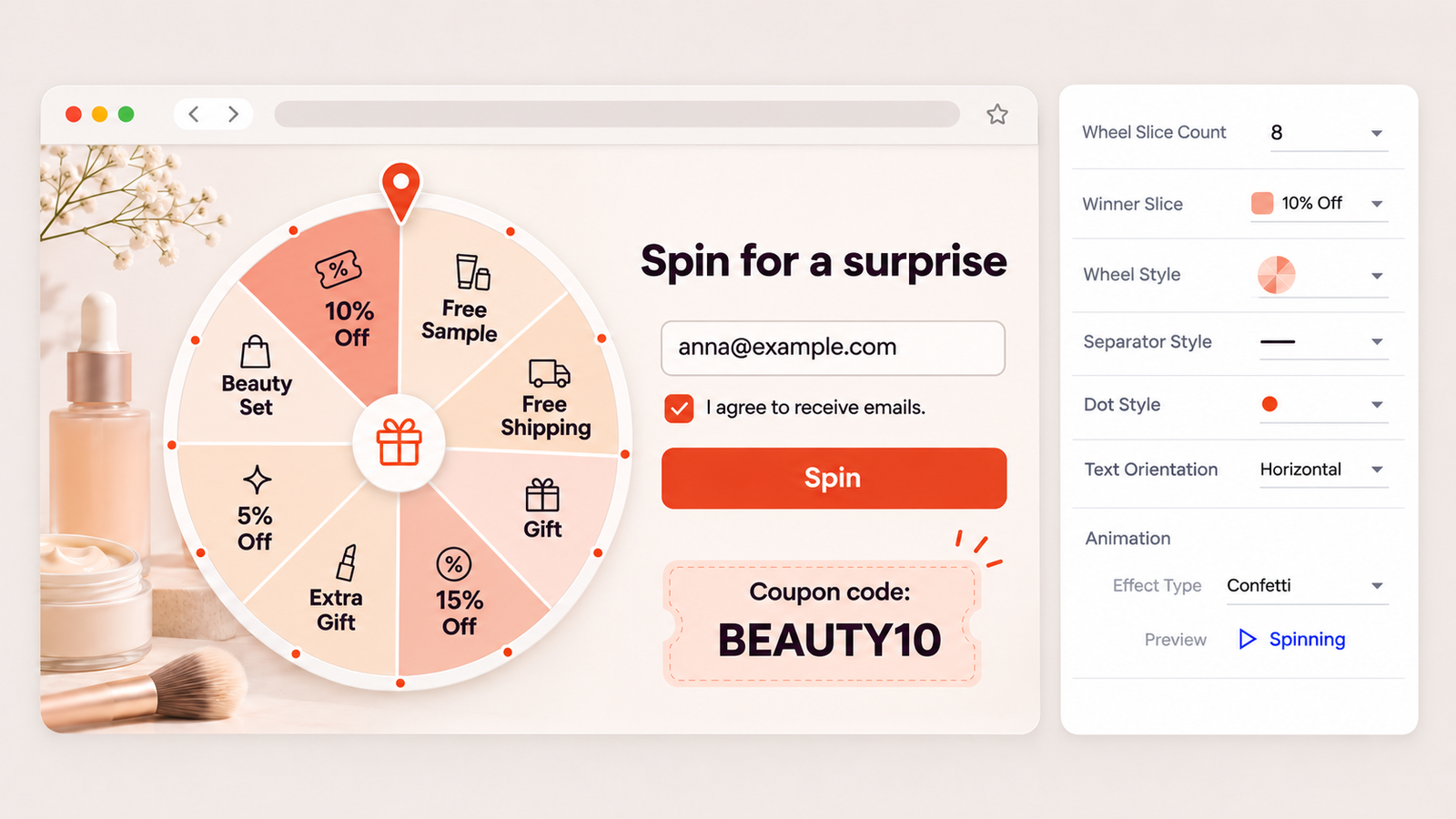
Why it works: a simple game turns an anonymous first visit into a known contact, which gives the brand a way to continue the conversation through email and other channels.
How to replicate it:
- Show the game only to first-time or anonymous visitors to avoid repeat discounts.
- Offer a reward that fits the margin, such as a small discount or free sample.
- Trigger a welcome journey immediately after sign-up so the lead does not go cold.
Metric to track: lead capture rate and the conversion rate of new leads within 30 days.
2. AI shopping agent for guided discovery: Braun
The tactic: Braun Shop added Shopping Agent, the AI-powered conversational shopping assistant in Insider One’s Agent One, and connected it to its customer data platform (CDP). The agent gives each shopper real-time product guidance based on their profile, past behavior and predicted intent, and recommends products and bundles.
The result: the Shopping Agent influenced 18% of Braun Shop’s ecommerce revenue in eight months, and average order value for new customers rose about 22% (Braun case study).
Why it works: shoppers comparing technical products often need advice before they buy. An agent that understands the catalog and the customer answers those questions in the moment.
How to replicate it:
- Connect the agent to live catalog, inventory and customer profile data.
- Start with categories where shoppers ask the most comparison questions.
- Define the agent’s tone, scope and brand rules before launch.
Metric to track: revenue influenced by agent conversations and AOV for shoppers who engage with the agent. Learn more about how AI agents turn browsers into buyers.
3. Category-based onsite personalization: El Corte Inglés
The tactic: on its Portuguese ecommerce site, El Corte Inglés personalized its sports category for each shopper. Shoppers saw the items they had recently viewed in that category, along with recommendations for related categories.
The result: the sports category campaign increased conversion rate by 59.51% and average order value by 37.09% (El Corte Inglés case study).
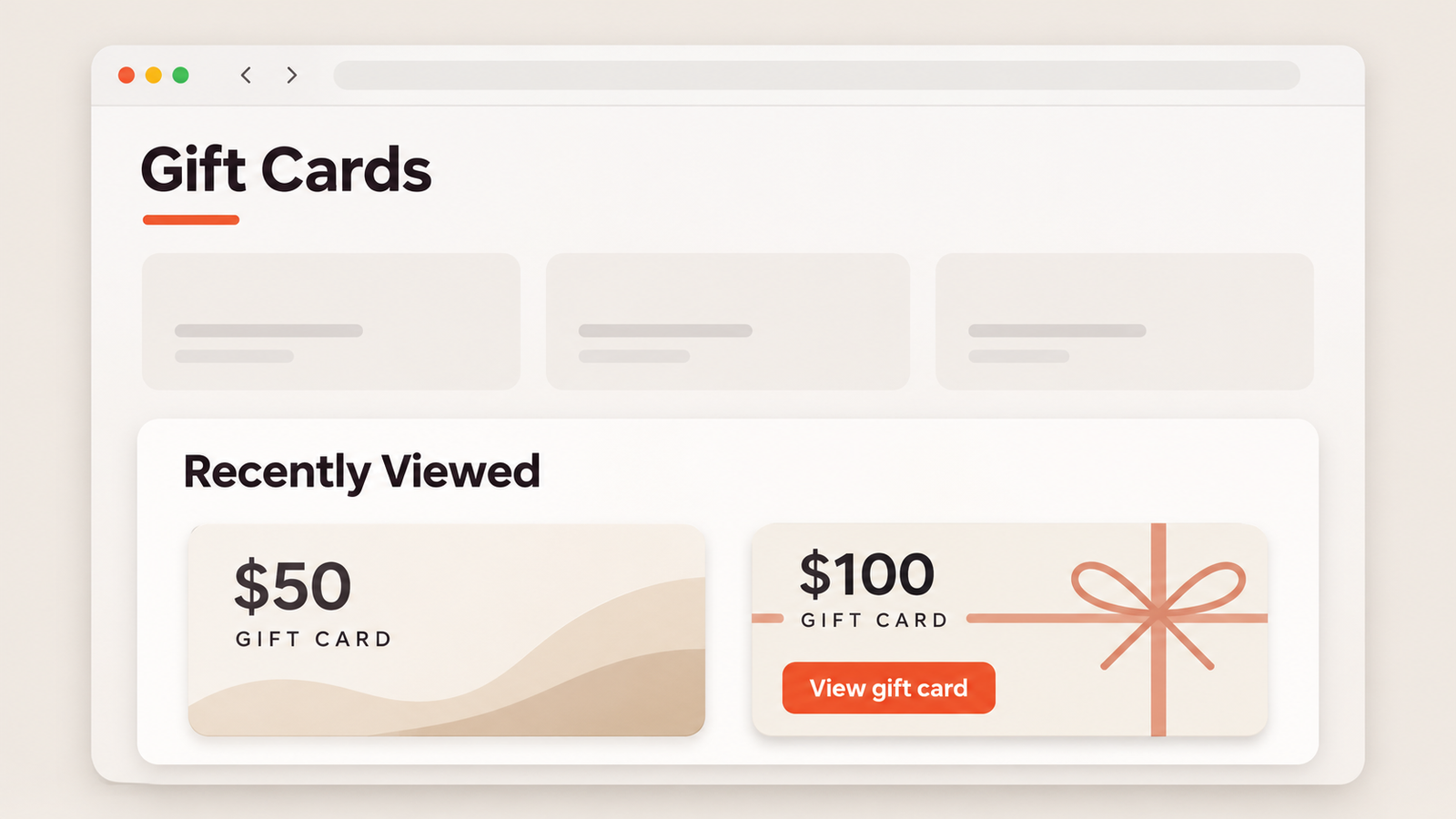
Why it works: reminding shoppers what they already showed interest in, and pointing them to related categories, shortens the path back to products they are likely to buy.
How to replicate it:
- Clean up product categories so interest signals are reliable.
- Add recently viewed and related category widgets to the homepage and category pages.
- Use AI-powered product recommendations to personalize the products shown.
Metric to track: conversion rate and AOV for sessions that interact with the personalized widgets.
4. WhatsApp conversational commerce: Clarins México
The tactic: Clarins México made WhatsApp its official customer communication channel. Chatbots answered customer service questions automatically, and real-time segmentation personalized WhatsApp campaigns for new user benefits, product launches and special occasions.
The result: Clarins México reports a 20X increase in WhatsApp sales and 400% growth in WhatsApp opt-ins (Clarins México case study).
Why it works: conversational commerce lets customers ask questions, discover products and move toward a purchase inside a messaging app they already use. In markets where WhatsApp is part of daily life, that removes friction and gives the brand a direct channel it owns.
How to replicate it:
- Grow WhatsApp opt-ins through the website, checkout and in-store touchpoints.
- Use customer segments to personalize messages instead of sending broadcasts.
- Combine chatbots for common questions with live agents for complex ones.
Metric to track: WhatsApp opt-in growth and revenue from WhatsApp conversations. Explore WhatsApp Commerce.
5. Cross-channel product recommendations: L’Occitane
The tactic: after moving from Adobe to Insider One, L’Occitane used Smart Recommender, Insider One’s AI-powered product recommendation engine, to show each customer relevant products on its website and in emails. It also uses SMS and web personalization.
The result: L’Occitane reports a 27% increase in average order value and a 32% increase in purchase frequency in the first three months. It also reports an 18% increase in customer lifetime value (L’Occitane case study).
Why it works: consistent recommendations across web and email reinforce each other, so customers see relevant products wherever they engage.
How to replicate it:
- Unify web, email and purchase data in one customer data platform.
- Use the same recommendation logic across channels instead of separate rules per tool.
- Test recommendation placements in emails, on product pages and in the cart.
Metric to track: purchase frequency and AOV for customers exposed to recommendations.
6. AI-driven repeat purchase journeys: New Balance
The tactic: New Balance moved from Emarsys to Insider One, migrating its email program in six weeks. It then used Architect, Insider One’s customer journey orchestration solution, to build AI-driven email and SMS journeys with personalized content such as product recommendations.
The result: New Balance increased its repeat purchase rate by 35% compared with a control group over six months, and reports a 16% increase in customer lifetime value (New Balance case study).
Why it works: automated journeys keep the brand relevant between purchases, and personalized content gives customers a reason to come back.
How to replicate it:
- Map the typical time between first and second purchase for key categories.
- Build post-purchase journeys with care content, complementary products and timely reminders.
- Keep a control group to measure the incremental effect.
Metric to track: repeat purchase rate and time to second purchase, compared with a control group. Learn more about journey orchestration.
7. AI-led win-back with discount control: Levi’s
The tactic: Levi’s first deployed Agent One on its journey for inactive customers. Agent One is Insider One’s agentic AI system for customer engagement: it works toward the goals a brand sets and learns from every result. Predictive RFM segments, based on how recently, how often and how much each customer buys, identified the customers most likely to return. Agent One then chose the channel, timing, content and offer for each person, within the budgets, contact limits and allowed offers Levi’s set.
The result: the AI-led journey delivered a 2.6X reactivation rate compared with an equivalent rule-based journey, one that follows fixed, predefined rules. The share of reactivated purchases that required a discount also fell by 72%. Across lifecycle journeys, Levi’s reports 48% more incremental net revenue than its holdout, with statistically significant uplift in 17 days (Levi’s case study).
Why it works: instead of sending every lapsed customer the same discount, Agent One matches the message and offer to each person’s likelihood to return and learns from each response, so discounts go only where they are needed. That protects margin.
How to replicate it:
- Segment inactive customers by predicted return potential.
- Set guardrails for budget, contact frequency and allowed offers.
- Measure reactivation and discount usage against a rule-based or holdout group.
Metric to track: reactivation rate, share of reactivated purchases using a discount and incremental net revenue.
What these customer engagement examples have in common
- Unified data: each tactic relies on a single view of the customer across channels.
- Personalization at each step: content, products and offers reflect each customer’s behavior.
- Connected channels: web, email, SMS and WhatsApp work together rather than as separate campaigns.
- Measured against a baseline: the strongest examples compare results with a control group, holdout or rule-based journey.
For a broader view of the strategies behind these examples, see the guide to customer engagement strategies for 2027.
How to measure customer engagement
| Goal | Metrics |
| Acquisition | Lead capture rate, opt-in rate, new lead conversion rate |
| Engagement | Click-through rate, session depth, conversation rate with AI agents |
| Revenue | Conversion rate, average order value, revenue per customer |
| Retention | Repeat purchase rate, purchase frequency, customer lifetime value |
| Win-back | Reactivation rate, discount usage, incremental net revenue |
Whenever possible, compare results with a holdout group that does not receive the tactic. This separates the effect of the engagement program from purchases that would have happened anyway.
Build customer engagement that drives retention with Insider One
Insider One brings unified customer data, personalization, journey orchestration and AI agents together across 12+ channels in one platform, so brands can run all seven of these tactics from one customer profile.
Agent One plans, acts and learns from every interaction toward the outcomes a team sets, such as more repeat purchases, more reactivated customers or more incremental revenue. Teams set the goals and guardrails and decide how far the agents go. Explore the product demo hub or request a demo.
Frequently asked questions
Common examples include gamified sign-up offers, AI shopping assistants, personalized product recommendations, WhatsApp conversations, post-purchase journeys, loyalty programs and win-back campaigns.
Focus on the moments after the first purchase: personalized post-purchase content, replenishment reminders, relevant recommendations and targeted win-back for customers who stop buying.
Customer experience is the overall perception a customer has of a brand across every touchpoint. Customer engagement is the ongoing interaction that builds that relationship, such as messages, conversations and personalized offers.
It depends on the audience and market. The website and app, email, SMS, push notifications and messaging apps such as WhatsApp each play a different role. They work best when they share one customer profile, so each message builds on what the customer has already seen and done.
AI agents can answer product questions, guide purchases and decide the best channel, timing and offer for each customer. Agentic AI also learns from every response, so each decision improves the next one. Teams set the goals and guardrails, such as budgets, contact limits and allowed offers, and decide how far the agents go.
Use predictive segments to target offers only where they are needed, set offer guardrails and measure discount usage against a control group, as Levi’s did in its win-back program.
Some tactics, such as gamified lead capture, show results within days. Retention and lifetime value programs take longer to prove. New Balance, for example, measured its repeat purchase lift over six months. Confirm results against a control group before scaling a program.

Keep Reading
4 min.

Chris Baldwin
3 Feb 2026
20 mins.

Nicolas Algoedt
23 Nov 2026
13 mins.
Chris Baldwin
23 Nov 2026