

 Platform Overview

 Integration Hub

 Agent One™

 Agent One™ Teams

 Customer Data Management

 Personalization

 Journey Orchestration

 Reporting & Data

 Behavioral Analytics

 Web
Web

 Email
Email

 Site Search

 Conversational CX

 WhatsApp

 Web Push

 InStory

 App
App

 SMS & RCS

 Join the $0 Migration Movement™

 The Insider One Difference

 Compare Vendors

 Switch to Insider One

 Success Story

 Retail & Ecommerce

 Financial Services

 Travel & Hospitality

 Beauty & Cosmetics

 Automotive

 Telecommunications

 Total Economic Impact™ Study

 Blog
Blog

 E-Books & Guides

 Events

 Glossary
Our 5 Biggest Bets for 2026 BFCM: The Customer Engagement Use Cases That Will Drive More Revenue Without More Manual Work

Updated on 27 Aug 2026
11 min.
Table of Contents
- 1. Turn BFCM browsers into buyers with an always-on Shopping Agent
- 2. Automate BFCM creative production with Design Agent and Insider One’s Figma Integration
- 3. Integrate ChatGPT into the BFCM customer journey
- 4. Stop BFCM promotions disappearing with App Cards
- 5. Reach every BFCM shopper in the channel and moment most likely to convert
Most Popular
BFCM 2026 will not be won by the teams who simply send more campaigns, build more segments, or spend more hours buried in dashboards.
The pressure is only getting bigger. Last year, NRF reported that a record 202.9 million consumers shopped during the five-day Thanksgiving to Cyber Monday weekend in 2025. Shopper behavior is changing, too. Accenture found that 46% of U.S. shoppers are planning to use conversational or generative AI tools for Black Friday shopping.
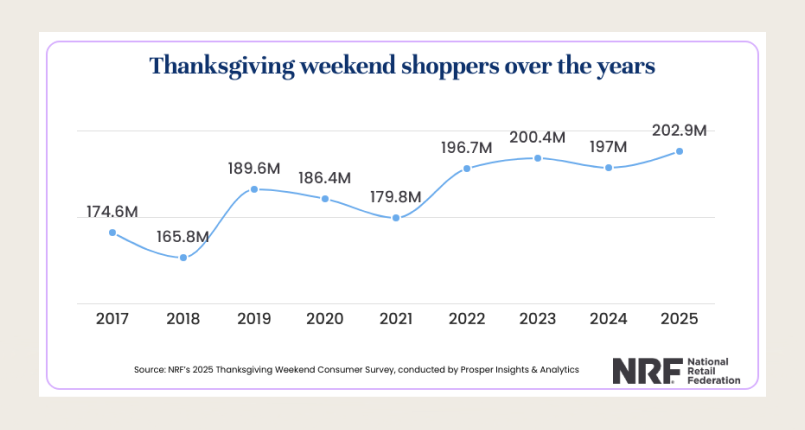
[Source: National Retail Federation, 2025]
That means more channels, more moments of intent, more expectations for personalization, and more pressure on already-stretched marketing, ecommerce, CRM, and customer engagement teams.
In this guide, we’re bringing together the top tactical use cases to help teams drive more revenue, turn more high-intent moments into action, and keep their sanity intact.
Let’s get stuck in.
1. Turn BFCM browsers into buyers with an always-on Shopping Agent
BFCM shoppers arrive with questions, competing options, and little patience. Shopping Agent gives every visitor immediate, personalized assistance, helping them discover, compare, and choose the right products through natural conversations. It combines customer context with real-time product, inventory, and merchandising data to deliver relevant recommendations at scale.
Why this matters
Offering conversational assistance never matters more than during BFCM. Basic chatbots lack the contextual understanding and insights into individual consumers to personally assist every customer effectively and provide the best advice. Without this, shoppers may abandon their journey or buy elsewhere. Shopping Agent acts like an always-available digital sales associate, removing uncertainty and keeping the conversation going even when the customer is not ready to purchase immediately.
Because the agent understands each shopper’s past behavior and can predict intent for new shoppers, brands not only surface better recommendations in the moment but also use that intent after the initial interaction. A customer who viewed a product during Black Friday can be re-engaged the moment its price drops, it comes back in stock, or the right offer becomes available.
Best-fit BFCM use cases
- Guiding shoppers towards the right product based on their needs, preferences, and budget
- Answering product, availability, delivery, and promotion questions instantly
- Helping customers compare products during high-consideration purchases
- Recommending complementary products to increase average order value
- Capturing purchase intent when a shopper is not ready to convert
- Triggering personalized price-drop or back-in-stock alerts when the moment is right
- Providing 24/7 assistance during peak traffic without overwhelming service teams
The big bet
The highest-intent BFCM shoppers should never be left waiting. Shopping Agent gives every customer immediate, personalized guidance, remembers what they wanted, and brings them back when the right product, price, or offer gives them a reason to buy.
2. Automate BFCM creative production with Design Agent and Insider One’s Figma Integration
Every BFCM strategy depends on creative speed. Teams need campaign visuals for early access offers, VIP drops, discount reminders, app campaigns, web overlays, gamified experiences, category promotions, loyalty incentives, and last-chance messages. Then every campaign needs variations by audience, channel, region, market, product category, and lifecycle stage.
The challenge is that creative production is often still too manual. Marketing teams brief designers. Designers create assets. Marketers rebuild those assets inside campaign tools. Teams go back and forth on changes. Then the process repeats for every new offer, audience, or campaign variation.
That model does not scale during peak season.
With Insider One’s Design Agent and Figma MCP integration, marketing and customer engagement teams can use AI-powered prompts to generate brand-ready campaign visuals faster. Instead of starting every campaign from a blank page or waiting in a creative queue, teams can create and customize campaign visuals using natural language, without needing coding or design expertise.
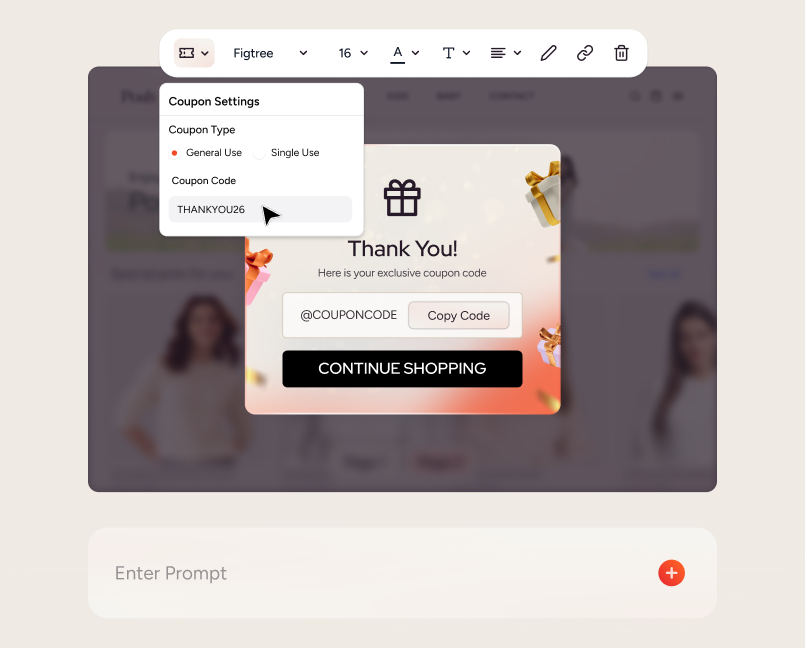
This becomes even more powerful with Figma support for Design Agent. Teams can use approved Figma designs as the starting point for campaign creation, helping them move from creative concept to campaign-ready execution without manually rebuilding assets from scratch.
Why this matters for BFCM 2026
BFCM campaigns are becoming more personalized, more segmented, and more time-sensitive. But if every variation depends on manual creative production, teams either move too slowly or compromise on quality.
Design Agent helps reduce that bottleneck. It gives teams a faster way to create campaign visuals for web and app experiences, while helping protect brand consistency and reduce dependency on technical or design resources.
For BFCM, that means teams can launch more campaign variations, react faster to trading moments, and turn ideas into live experiences while customer intent is still high.
Best-fit BFCM use cases
- Early-access campaign visuals for VIP customers
- Gamified discount experiences for web and app
- Category-specific offer campaigns
- Localized campaign creative by market or region
- Last-chance sale reminders
- App and web campaign variants for different customer segments
- Fast creative updates based on inventory, offer changes, or performance
The big bet
BFCM 2026 will not be won by the teams with the longest creative queues. It will be won by the teams that can turn ideas into live, brand-ready campaigns at the speed of customer intent.
3. Integrate ChatGPT into the BFCM customer journey
BFCM product discovery is changing. Customers no longer move through a simple journey of search, click, browse, compare, and buy. Increasingly, they are using AI-powered conversations to ask for recommendations, compare products, find gift ideas, understand options, and make decisions faster.
That creates a new challenge for brands. If customers are forming purchase intent inside conversational AI environments, brands need a way to show up inside those moments, not just wait for shoppers to return to their website, app, email, or paid media journey.
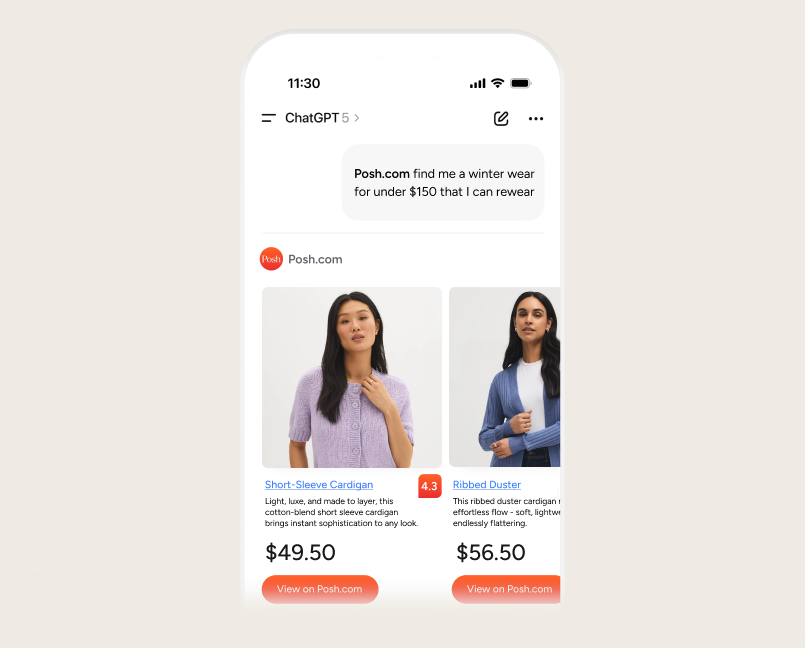
With Insider One’s ChatGPT App Builder, existing Insider One customers can create a ChatGPT App within 30 minutes with zero coding or technical skills. Our step-by-step wizard allows brands to initialize the Web SDK, connect the ChatGPT app UI component lifecycle with Insider One, match events and interactions, create and display campaigns within ChatGPT, and track user interactions and custom events. The ChatGPT App Builder transforms ChatGPT into a measurable part of your customer engagement channel and allows you to extend campaigns, product recommendations and placements into the app where shoppers where they are already asking questions, comparing options, and making purchase decisions.
Already have a ChatGPT App? Insider One’s native integration with ChatGPT can still help. Instead of treating ChatGPT as a disconnected discovery moment, brands can use conversational intent to guide customers toward relevant products, offers, coupons and incentives, and extend campaigns, and next-best actions natively through ChatGPT, and feed all the information back to your customer profile to be activated and used across other channels and journeys from Browse Abandonment to Discount Seeker Conversions, even Engagement Boosters
Why this matters for BFCM 2026
During BFCM, shoppers are overloaded with offers. They are comparing brands, prices, product features, delivery options, reviews, and gift ideas at speed.
A conversational journey can help reduce that decision friction. Customers can ask what to buy, what suits their needs, what is on offer, what is best for a specific occasion, or which product is right for a particular budget. The brand can respond with relevant recommendations and campaign experiences in the same moment.
For marketing and customer engagement teams, this creates a new way to capture and convert intent without manually building endless static journeys, gift guides, product finders, or one-size-fits-all promotional campaigns.
Best-fit BFCM use cases
- AI-powered gift discovery
- Product comparison and recommendation journeys
- Conversational access to BFCM offers
- Personalized product suggestions based on budget, preference, category, or occasion
- Guided discovery for high-consideration products
- Conversational re-engagement for shoppers who need help deciding
- AI-assisted product exploration before customers return to web or app
The big bet
BFCM 2026 will not be limited to the channels brands already own. As shoppers move into AI-powered discovery, brands need to show up inside the conversations where purchase intent is being created.
4. Stop BFCM promotions disappearing with App Cards
BFCM strategies depend on urgency. Limited-time offers, loyalty incentives, early-access deals, discount codes, price drops, back-in-stock alerts, and exclusive bundles are all designed to make customers act now.
But there is a simple problem. Most notifications are easy to miss, dismiss, or forget.
A shopper may see a push notification while they are busy. They may accidentally clear it. They may intend to come back later, but the message disappears. And once the message is gone, the incentive is often gone with it.
That creates a major revenue leak during BFCM. The brand has done the hard work of creating the offer, targeting the customer, and sending the message, but the customer no longer has an easy way to find it when they are actually ready to buy.
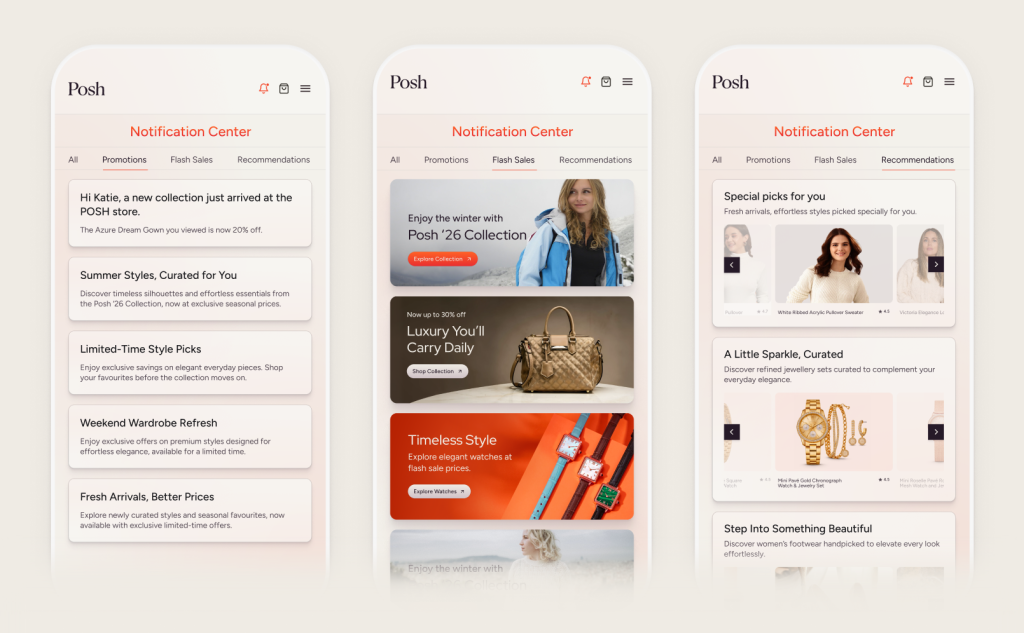
Insider One’s App Cards solve this by giving brands a persistent in-app messaging channel. Instead of relying only on one-off notifications, teams can create a streamlined, consolidated inbox where offers, incentives, updates, and messages remain available inside the app.
This means BFCM messages do not vanish the moment a notification is dismissed. They stay visible and accessible, ready for customers to revisit when the buying moment returns.
Why this matters for BFCM 2026
During peak season, customers are moving quickly between brands, offers, and channels. If your promotion disappears, the customer may not go looking for it again. They may simply buy from a competitor.
App Cards help brands keep high-value messages available beyond the first notification. That is especially important for app-first customers, loyalty members, repeat buyers, and shoppers who need more than one touchpoint before converting.
For marketing and customer engagement teams, App Cards also provide a more structured way to manage persistent in-app messaging. Teams can define audiences, design messages, configure goals, and launch campaigns in a familiar workflow, while using analytics to understand how customers engage with the content.
Best-fit BFCM use cases
- Persistent discount codes and coupon reminders
- VIP and loyalty member offers
- Early-access sale announcements
- Back-in-stock and low-stock alerts
- Price-drop messages
- App-exclusive promotions
- Personalized offer inboxes
- Post-purchase incentives and next-best offers
- Last-chance reminders that customers can return to later
The big bet
BFCM promotions should not disappear when a notification is dismissed. App Cards keep incentives visible until customers are ready to buy, while our Insights Agent works in the background to help identify which segments perform year-round, where the biggest opportunities sit, and how to pivot spend and targeting during the holiday period.
5. Reach every BFCM shopper in the channel and moment most likely to convert
A BFCM purchase rarely happens in one session or one channel. Architect connects customer data, behavior, and predictive intelligence to determine the next best interaction for each individual, then activates it across any channel, including email, SMS, WhatsApp, Web, App, and Push.
Why this matters
Sending the same promotion to a batch of customers, at the same time and through the same channel, wastes attention and budget during the most competitive period of the year. A customer’s browsing history, purchase behavior, product affinities, preferred price points, and recent engagement all provide clues about what they want and how they are most likely to respond.
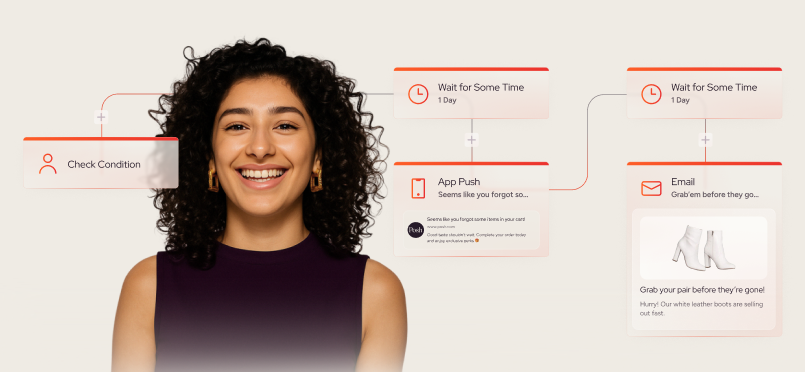
Architect, Insider One’s customer journey orchestration tool, brings those signals together to coordinate each journey in real time. Instead of following a rigid campaign sequence, brands can adapt the message, incentive, timing, and channel around each customer’s behavior. Insider One can track affinities, including products, colors, sizes, and price points, helping brands make alerts and recommendations more relevant.
Best-fit BFCM use cases
- Selecting the best channel and send time for each customer
- Re-engaging product viewers with personalized price-drop alerts
- Triggering back-in-stock journeys for products that customers have shown interest in
- Predicting the next best channels when a customer does not engage with a message
- Personalizing offers around product, category, size, color, or price affinities
- Coordinating browse abandonment, cart recovery, and post-purchase journeys
- Suppressing irrelevant promotions once a customer has purchased
- Moving customers into different journey paths as their behavior changes
The big bet
BFCM success is not about sending more messages. It is about recognizing what each shopper wants and reaching them through the right channel, at the right time, with the interaction most likely to move them forward.

Keep Reading
4 min.

Chris Baldwin
3 Feb 2026
8 mins.
Chris Baldwin
8 Oct 2026
8 mins.
Chris Baldwin
8 Oct 2026