

 Platform Overview

 Integration Hub

 Agent One™

 Agent One™ Teams

 Customer Data Management

 Personalization

 Journey Orchestration

 Reporting & Data

 Behavioral Analytics

 Web
Web

 Email
Email

 Site Search

 Conversational CX

 WhatsApp

 Web Push

 InStory

 App
App

 SMS & RCS

 Join the $0 Migration Movement™

 The Insider One Difference

 Compare Vendors

 Switch to Insider One

 Success Story

 Retail & Ecommerce

 Financial Services

 Travel & Hospitality

 Beauty & Cosmetics

 Automotive

 Telecommunications

 Total Economic Impact™ Study

 Blog
Blog

 E-Books & Guides

 Events

 Glossary
How Predictive Pricing Software is Changing Retail and Ecommerce Pricing in 2026

Updated on 7 Sep 2026
9 min.
Table of Contents
Most Popular
Summary
- Predictive pricing systems may use prices from competing retailers, demand signals, and stock position to inform price changes, depending on their data, configuration, and governance
- Engagement and customer data platforms are typically built to predict churn and lifetime value, not to run live, competitor-aware repricing workflows
- Demand-based dynamic pricing and shopper-level personalized pricing carry different legal exposure, and personalized pricing is drawing more regulatory attention
- Rule-based repricing still beats AI-driven models on thin-margin or small catalogs where there isn’t enough signal volume to train a reliable model
- A contained pilot with a control group, run against clear margin and revenue targets, is the only honest way to prove a predictive pricing tool before a full rollout
A predictive pricing tool can recommend a price change in seconds. But if your merchandising or finance team asks why the price should change, the answer needs to be just as clear.
That’s one of the biggest challenges with predictive pricing software: models can process competitor pricing, demand, and inventory signals quickly, but the reasoning behind their recommendations isn’t always easy for pricing teams to explain or audit.
Predictive pricing software for retail and ecommerce uses AI to read competitor prices, demand signals, and inventory levels, then recommends or automates a price change before margin erodes.
It differs from static rule-based repricing because it forecasts likely outcomes instead of reacting to a single trigger like a stockout or a competitor undercut.
This guide is written for pricing managers, revenue and merchandising directors, and marketing operations leads evaluating these tools for the first time.
You’ll get a picture of how the models work, where customer engagement platforms, such as Insider One fit into the broader pricing stack, the legal line between dynamic and personalized pricing, and a framework for piloting predictive pricing without creating unnecessary compliance exposure.
How predictive pricing engines actually calculate a price
Predictive pricing engines combine competitor pricing, demand signals, stock position, and contextual data, then run scenario simulations before recommending or executing a change.
That combination separates them from static repricing rules, which simply react to one trigger at a time without weighing the broader demand picture.
Data inputs that separate predictive tools from static pricing
A rule-based system might say: match the lowest competitor price in your market, always. A predictive system weighs several signals at once before deciding whether matching is even the right move.
- Your market’s competitor price feeds across relevant marketplaces and direct competitors
- Real-time demand signals, including search volume, add-to-cart rate, and browsing velocity
- Inventory and stock-aging data, so a slow-moving item doesn’t get priced like a bestseller
- Contextual data such as seasonality, local events, and channel-specific demand patterns
Elasticity modeling and guardrails
Before any price goes live, the software simulates how demand would likely respond to a given change, a process known as elasticity modeling.
This lets a pricing team see the projected effect on unit volume and margin under different scenarios rather than finding out after the fact.
Guardrails, including minimum price floors and category-level margin targets, sit on top of the model so an aggressive recommendation can’t push a product below what finance has approved.
Where engagement platforms fit into real-time pricing
Engagement and customer data platform solutions solve a different part of the problem.
Platforms such as Insider One are designed to help businesses unify customer data, understand customer behavior, segment audiences, and personalize interactions across channels.
They can help determine which shoppers should receive an approved promotion, but that is different from calculating a live product price based on competitor feeds and inventory.
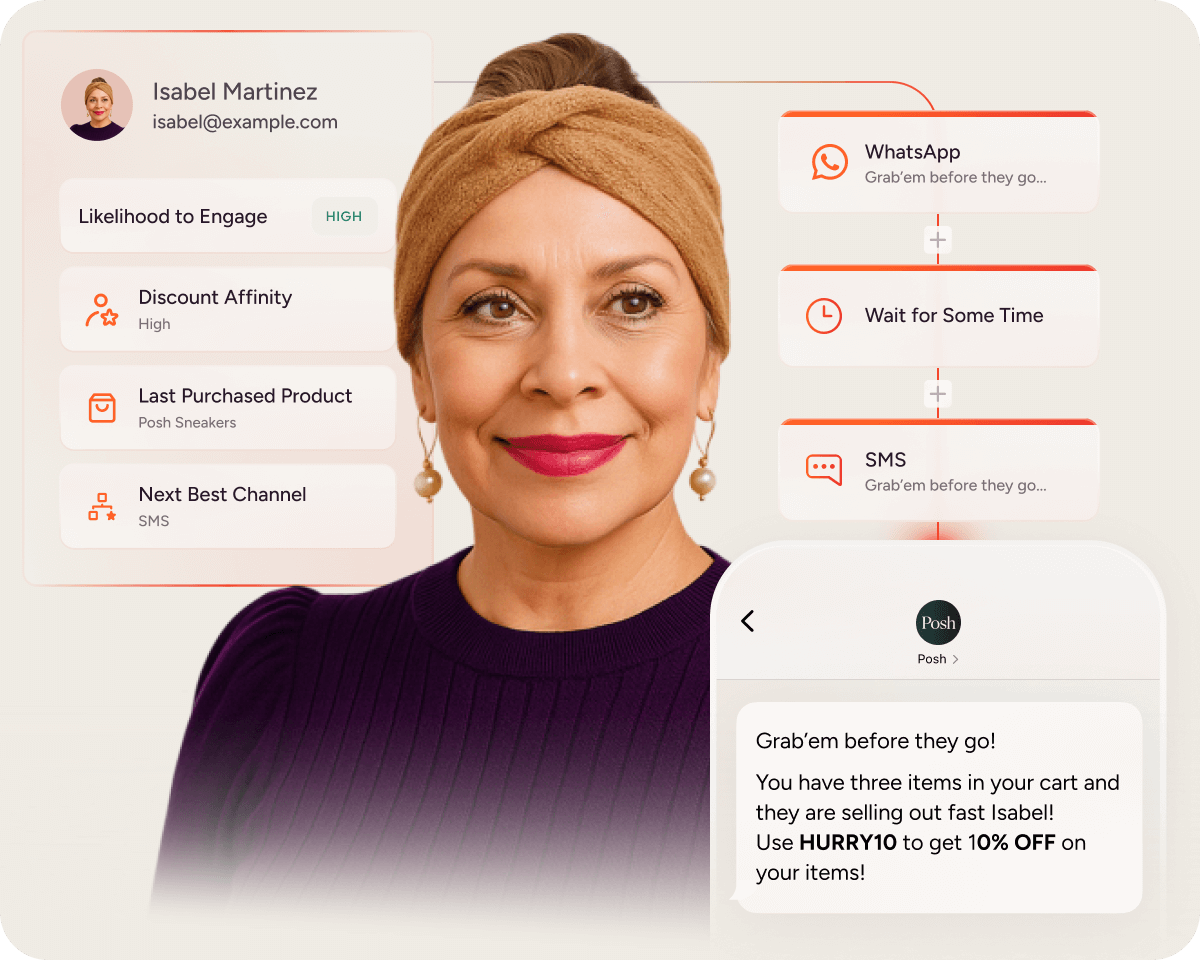
This distinction matters when building a pricing technology stack. A retailer may use predictive pricing software to determine the appropriate price or promotion, then use an engagement platform to decide how and where that offer should be presented to relevant customer segments.
Built for customer behavior, not live repricing
Engagement and customer data platforms are typically built to predict customer behavior from purchase history, browsing patterns, and engagement data.
For example, Insider One can use customer and behavioral signals to support segmentation and personalization. These capabilities can complement pricing workflows by helping retailers target customers based on factors such as purchase likelihood or discount responsiveness.
They generally aren’t designed to ingest live competitor price feeds and execute catalog-wide repricing inside the same workflow. That is a different capability from the predictive analytics and customer engagement functions these platforms are built to provide.
A pricing manager evaluating an engagement platform for repricing capability alone is therefore likely to find a strong customer intelligence and activation layer, but not a dedicated pricing engine.
The explainability gap
The second issue shows up once a price actually changes. Many AI-driven repricing tools produce a recommendation without a clear, auditable reason attached to it, leaving category managers and finance teams unable to explain the decision internally.
That black-box quality erodes trust faster than any feature gap. A pricing team that can’t defend a number to its own leadership will quietly stop trusting the system, even when the recommendation is directionally correct.
The legal tightrope between dynamic and personalized pricing
Demand-based dynamic pricing, where everyone sees the same price at the same moment based on stock and demand, and shopper-level personalized pricing, where two customers can see different prices for the same item, are not the same risk category.
Treating them as interchangeable is where pricing programs get into trouble.
Demand-based repricing vs. shopper-level personalized pricing
Dynamic pricing adjusts a single, publicly visible price based on aggregate signals like stock levels and overall demand.
Personalized pricing goes further and varies the price by individual, often using data points such as browsing history, device type, or location.
That individual-level variation is where discrimination and consumer-protection concerns start to surface, particularly if the inputs correlate with protected characteristics even unintentionally.
What increased regulatory attention means for rollout decisions
Regulatory and consumer-advocacy attention on personalized pricing has increased in several markets. That shift should shape how a pricing team scopes a rollout, not just how legal reviews the contract afterward.
A practical response is to keep personalization at the segment level, using signals like discount responsiveness rather than identity-linked data. Documenting the inputs feeding every price decision means the logic holds up if a regulator or a customer asks for it.

This is one area where a platform such as Insider One can play a supporting role: retailers can use customer segmentation and personalization to determine which approved offer or promotion is most relevant to a group of shoppers without necessarily changing the underlying product price for each individual.
Rule-based, AI, and hybrid pricing models compared
Rule-based repricing still wins for smaller catalogs and thin-margin categories, while AI-driven models earn their cost on high-volume catalogs with enough transaction data to train reliably. Choosing between them is a data-volume question first, not a technology preference.
When rule-based repricing still wins
A catalog of a few hundred SKUs with tight margins often doesn’t generate enough transaction volume for a predictive model to learn anything useful.
In that case, a simple rule, such as staying within a set range of your three closest competitors, delivers most of the benefit at a fraction of the operational overhead and with easier auditability for finance.
How hybrid models blend automation with human guardrails
Hybrid pricing models let an algorithm handle high-frequency, low-risk repricing decisions while a human sets the strategic boundaries: which categories are eligible, how deep a discount can go, and which products are excluded entirely.
This is also where customer personalization can layer on top of a pricing decision without becoming personalized pricing in the legal sense.
Personalization at the segment level, such as targeting shoppers by discount responsiveness or purchase likelihood, lets a team direct a promotion the pricing engine has already approved toward the shoppers most likely to respond, rather than varying the underlying price by individual.
Watsons applied a similar segment-based targeting approach during a high-volume promotional period, without changing its published price for every shopper.
The distinction is important: the pricing system determines the commercial offer, while the engagement layer helps determine which customers are most relevant for that offer and which channel should deliver it.
Running a pricing pilot that actually proves ROI
ROI on predictive pricing only holds up if the pilot is structured to isolate the tool’s effect from everything else moving in the business that quarter.
A single category rollout with a genuine control group is the difference between a defensible result and a number nobody upstream will trust.
Choosing a pilot category and control group
Pick a category with stable demand and enough transaction volume to generate a meaningful signal within a few weeks, then hold out a comparable control group of stores or product lines that keep the existing pricing approach.
Avon paired targeted, discount-sensitive segments with its existing pricing approach rather than overhauling the pricing engine outright, which kept the test contained and attributable.
A key performance indicator (KPI) framework for margin and revenue lift
Track gross margin percentage, unit volume, and revenue per category alongside the control group, and resist the urge to project a single pilot’s lift across the entire catalog. A four- to six-week pilot tells you whether the model works on one category; it doesn’t tell you the gain compounds evenly everywhere else.
- Gross margin percentage versus the control group, not versus last year alone
- Unit volume shift, to confirm a margin gain isn’t just a demand drop in disguise
- Time from price recommendation to live change, as an operational efficiency measure
- Number of manual overrides by category and finance teams, as a trust signal
Conclusion
Predictive pricing software earns its place when the model’s logic is auditable, the legal line between dynamic and personalized pricing is respected, and the pilot proves margin lift on one category before scaling.
The bigger decision isn’t which vendor has the best demo; it’s whether the tool’s outputs will survive a finance review and a regulator’s question, both of which are coming.
For retailers already using an engagement platform such as Insider One, the key is to understand where each technology fits. A predictive pricing system can handle pricing decisions based on market, demand, and inventory signals, while Insider One can support the customer-facing side through segmentation, personalization, and omnichannel activation.
If your current stack handles engagement and personalization well but stalls on live, explainable pricing decisions, that gap is worth mapping before you sign anything.
See how personalization can layer discount-affinity and purchase-likelihood targeting on top of existing pricing rules, giving your team a documented way to personalize offers without stepping into individual-level price discrimination risk.
Explore the Insider One platform to see how orchestration and segmentation can direct a pricing-approved promotion to the shoppers most likely to convert, or read how retailers use real-time personalization alongside pricing decisions to protect margin without slowing down the business.
FAQs
It’s software that uses artificial intelligence (AI) to analyze competitor prices, demand signals, and inventory levels, then recommends or automates price changes before margin erodes. It differs from static repricing rules because it forecasts likely demand response rather than reacting to a single trigger.
Demand-based dynamic pricing, where every shopper sees the same price at a given moment, is generally accepted practice. Shopper-level personalized pricing, where individuals see different prices for the same item, carries more legal and reputational exposure and is drawing increased regulatory attention in several markets.
Customer engagement platforms such as Insider One are generally designed to use customer and behavioral data for segmentation, personalization, and engagement. They aren’t typically designed to ingest live competitor price feeds or execute catalog-wide repricing actions, which is a different capability from customer analytics and activation.
Insider One can complement a predictive pricing workflow by using customer data, segmentation, and personalization to help retailers target approved promotions to relevant audiences. This allows the pricing engine and customer engagement layer to perform different but connected roles.
Rule-based repricing tends to win on smaller catalogs and thin-margin categories where transaction volume is too low for a predictive model to train reliably. A simple competitor-matching rule often delivers most of the benefit with far less operational overhead and easier auditability for finance teams.
Four to six weeks is typically enough to generate a meaningful signal for a single, stable-demand category, provided you hold out a genuine control group. Track margin, unit volume, and manual override rates, and avoid projecting the pilot’s lift evenly across the rest of the catalog.

Keep Reading
4 min.

Chris Baldwin
3 Feb 2026
9 min.
Chris Baldwin
22 Oct 2026
8 mins.
Chris Baldwin
8 Oct 2026