Retail data strategy

How to Choose the Right Customer Data Platform for Retail

The right customer data platform turns disconnected retail data into trusted customer profiles and actionable insights. Use this guide to evaluate data quality, identity resolution, integrations, activation, governance, and the ability to create relevant experiences across every channel.

Summary

A strong retail CDP does more than store customer records. It should unify customer, product, behavioral, and online and offline engagement data, resolve identities, support privacy requirements, and make insights available for activation. The goal is a trusted data foundation that helps retail teams create better experiences and measurable business outcomes.

Selection criteria

Retail outcomes a CDP must support

Selection criteria

Retail outcomes a CDP must support

A CDP should support the customer experiences and business outcomes that matter most to your retail business. These may include increasing repeat purchases, improving product discovery, reducing cart abandonment, strengthening loyalty, or creating more relevant post-purchase experiences. The right platform should connect these outcomes to the data, capabilities, and channels required to deliver them.

Unified profiles

Assess how the platform creates a trusted customer view

Unified profiles

Assess how the platform creates a trusted customer view

Retail data often sits across ecommerce, stores, CRM, loyalty, customer service, and marketing tools. Look for a platform that brings interactions into a single profile while giving teams control over identity resolution and personally identifiable information. The result should be a profile marketers can trust without waiting on manual data work.

Data activation

Check whether insights can reach shoppers in real time

Data activation

Check whether insights can reach shoppers in real time

A retail CDP should not stop at reporting. Test how quickly profile changes, events, and segments can trigger activity across web, email, app, SMS, WhatsApp, and other relevant channels. Timely activation lets teams respond while purchase intent is still present.

Data foundations

What to test in a retail CDP evaluation

Use these questions to separate a data repository from a platform that supports everyday retail engagement.

Profile completeness

Can the platform combine customer, product, behavioral, and engagement data both online and offline into profiles your marketing team can use?

Data connectivity

Does it offer integrations, warehouse connections, APIs, and flexible ways to exchange data with your existing stack?

Identity controls

Can your team manage identity resolution and personally identifiable information in a way that fits your retail data model?

Data reliability

Does it provide visibility into ingestion, transformation, duplicate events, consent, and retention so teams can act with confidence?
Retail CDP checklist

Evaluate your retail data strategy with confidence

See how Insider One connects customer data, segmentation, and cross-channel activation in one platform.

Segmentation

Prioritize marketers’ ability to find and act on audiences

Segmentation

Prioritize marketers’ ability to find and act on audiences

Retail teams need to create audiences from behaviors, preferences, purchases, and engagement, then adjust them as customer activity changes. Ask how much segment building can be completed without technical support and whether the platform can help identify high-value opportunities. The right workflow keeps insight close to campaign execution.

Personalization

Choose data that improves the shopper experience

Personalization

Choose data that improves the shopper experience

A CDP investment should make every interaction more relevant, not simply create more dashboards. Evaluate how profile and behavioral data can inform web experiences, recommendations, messages, and journeys. Look for a platform that lets teams test and refine those experiences as shopper behavior changes.

Activation checklist

Questions to ask about cross-channel execution

The value of retail data depends on how easily it can support consistent experiences across touchpoints.

Journey orchestration

Can teams coordinate timely journeys across channels from a shared customer profile and a single campaign workflow?

Real-time responsiveness

Can events and changing customer behavior update targeting quickly enough to support relevant retail moments?

Channel breadth

Are the channels your shoppers use supported, including web, email, app, SMS, WhatsApp, and web push?

Measurement and improvement

Can teams analyze behavior, conversion funnels, and campaign outcomes to improve future experiences?
See the platform

Turn customer data into retail growth

Explore how Insider One brings customer data, personalization, and journey orchestration together.

Governance

Make privacy, consent, and data quality part of the decision

Governance

Make privacy, consent, and data quality part of the decision

Retail customer data is only valuable when it is accurate and responsibly managed. Review how each platform handles consent history, flexible retention, data transformation, and ingestion visibility. These controls help teams reduce avoidable risk while maintaining useful, current profiles.

Implementation

Evaluate the operating model, not just the software

A retail CDP must fit the people, systems, and pace of your business.

Marketer usability

Assess whether marketers can build segments, journeys, and reports without relying on technical teams for routine campaign work.

Migration support

Ask how the provider supports planning, implementation, prioritization, and activation when moving from your current systems.

Enterprise readiness

Confirm the platform can support your data volume, brands, markets, channels, and evolving retail use cases.

Measurable value

Define the business measures that matter, then verify how the platform connects data activity to campaign and conversion outcomes.

Retail results

Slazenger achieved 49X ROI within eight weeks

Retail results

Slazenger achieved 49X ROI within eight weeks

"Insider's growth experts suggested exactly which tools to use to achieve our objectives. We implemented personalized product recommendations on the homepage and this helped us generate a 18.8% increase in revenue per user in one month. Insider's tools are amazing."

Senior eCommerce Manager

Slazenger

Read the case study

Slazenger results with Insider One

Reported results from Slazenger’s Insider One case study.

49X

ROI within eight weeks

700%

increase in customer acquisition

30%

productivity gains with Insider One AI Challenge

30%

productivity gains with Smart Segment Creator

Final decision

Select the platform that connects data to action

Final decision

Select the platform that connects data to action

The best retail CDP supports a complete decision loop. It collects and organizes reliable customer data, helps teams understand shopper behavior, activates experiences across channels, and shows what changed. Build your evaluation around that loop to choose technology that can grow with your retail strategy.

Loved by brands, trusted by analysts

IDC Agentic
Gartner MQ
Gartner VOC MMH
Gartner VOC Pers.
Forrester Wave
Forrester EOP
IDC Omnichannel
G2
IDC Agentic
Gartner MQ
Gartner VOC MMH
Gartner VOC Pers.
Forrester Wave
Forrester EOP
IDC Omnichannel
G2
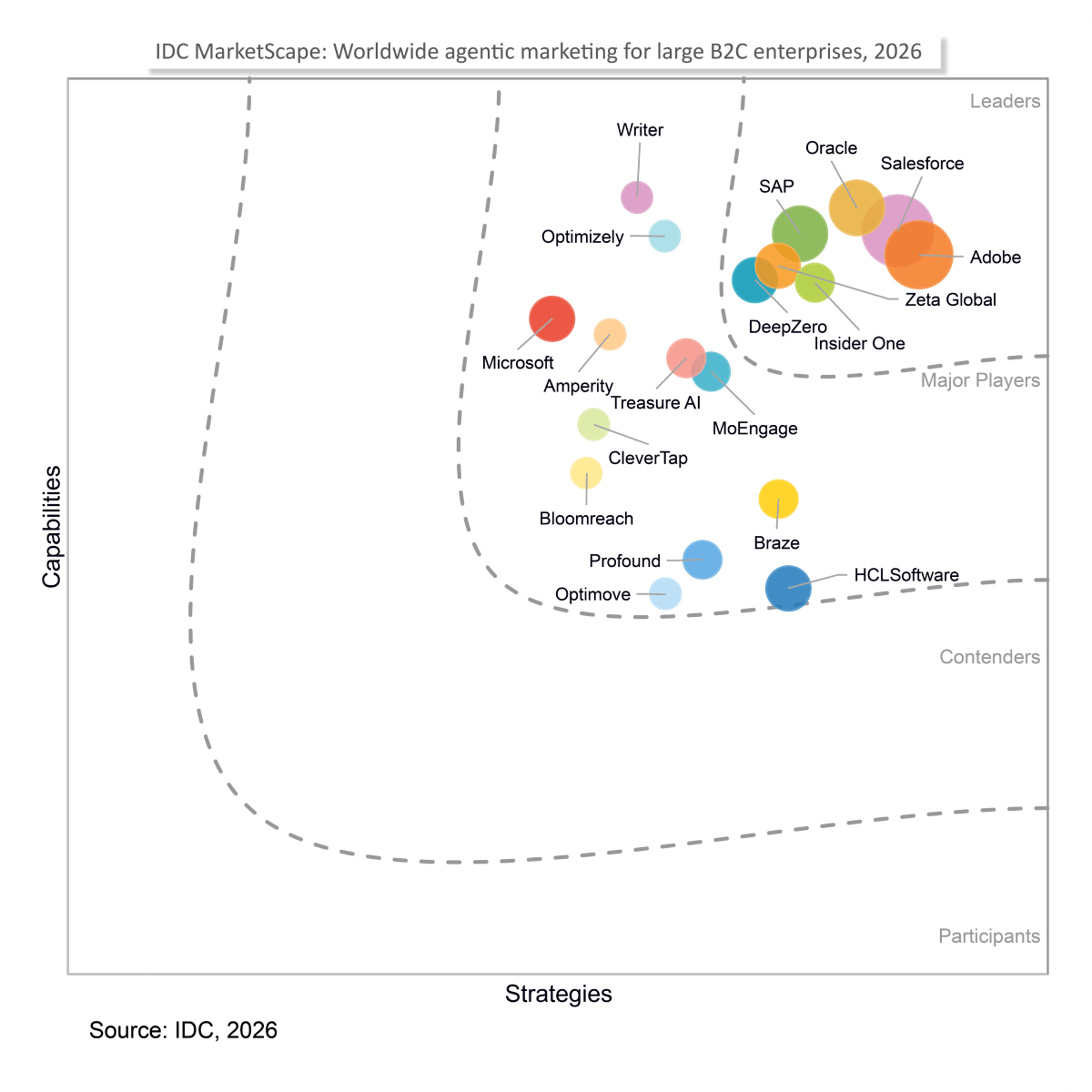
Insider One named a 2026 IDC Marketscape Leader for Agentic Marketing
Learn more

Conversational Agents

AI Orchestration

AI Composable

Insider One named a 2026 Gartner® Magic Quadrant™ Leader for Personalization Engines
Learn more

Marketing 3.99/5.0

Digital Commerce 4.11/5.0

Services and Support 3.94/5.0

Insider One Recognized as a 2026 Gartner Peer Insights™ Customers’ Choice for Multichannel Marketing Hubs
Learn more

Product Capabilities 4.9/5.0

Sales Experience 4.9/5.0

Deployment Experience 4.8/5.0

Support Experience 4.9/5.0

Insider One Recognized as a Gartner Peer Insights™ Customers’ Choice for Personalization Engines ‘25
Learn more

Overall Rating 4.8/5.0

Support Experience 4.9/5.0

Sales Experience 4.7/5.0

Willingness to Recommend 100/100

Insider One recognized as a leader in The Forrester Wave: Cross-Channel Campaign Management (Independent Platforms)
Learn more

Personalization

Innovation Strategy

Platform Architecture

Predictive Analytics

Machine Learning

Insider One recognized as a Leader in The Forrester Wave™: Experience Optimization Platforms, Q4 2024
Learn More

Generative AI

Personalization

Segmentation

Analytics

Insider One named a leader in the IDC MarketScape for Worldwide Omnichannel Marketing Platforms
Learn more

Personalization

Channel Breadth

AI / Machine Learning

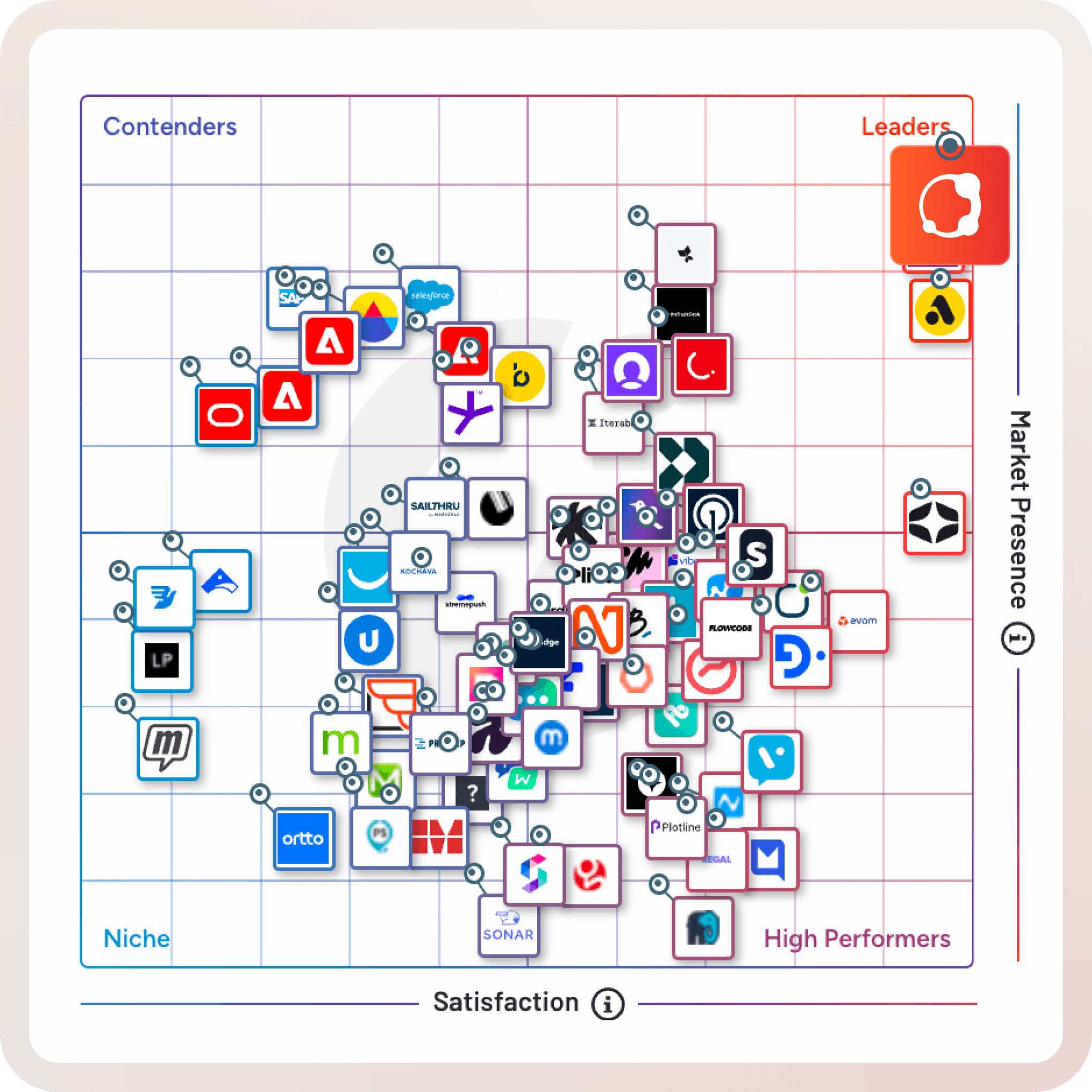
Insider One tops G2’s Fall ’26 reports as the Top Leader across 14 Categories
Learn more

Personalization Software

CDP

Mobile Marketing

SMS Marketing

WhatsApp Marketing

6 more categories

Retail customer data platform FAQs

What is a customer data platform for retail?

A retail customer data platform collects and organizes customer data from multiple sources into usable profiles. Retail teams use those profiles to understand shopping behavior, create audiences, personalize experiences, coordinate campaigns across channels, and measure the impact of customer engagement activity.

What data should a retail CDP unify?

A retail CDP should be able to unify customer, product, behavioral, purchase, and engagement data relevant to your business. The exact sources vary, but the goal is a trusted profile that gives teams enough context to deliver relevant experiences and make informed decisions.

How is a CDP different from a CRM?

A CRM primarily helps teams manage customer relationships and records. A CDP focuses on collecting, organizing, and activating customer data from many sources for marketing and customer engagement. In retail, the two can work together, with the CDP adding behavioral and cross-channel context.

How do retailers evaluate CDP integrations?

Start with the systems that hold essential customer, ecommerce, product, analytics, and marketing data. Then assess available integrations, warehouse connectivity, APIs, and data exchange options. A strong evaluation also checks how easily data can be monitored, transformed, and activated after it is connected.

Why does real-time data activation matter in retail?

Retail intent can change quickly as shoppers browse, compare products, add items to carts, or make purchases. Real-time activation helps teams respond to those changes with relevant experiences while the interaction is still useful, instead of relying only on delayed campaign audiences.

What should retailers measure after implementing a CDP?

Retailers should connect the implementation to agreed business outcomes, such as conversion, customer acquisition, revenue per user, average order value, repeat purchase, or campaign productivity. They should also monitor profile quality, audience performance, channel engagement, and the speed of campaign execution.