Enterprise CDP guide

Enterprise Customer Data Platforms: Key Features, Use Cases, and Checklist

An enterprise customer data platform unifies customer information from across your business into trusted profiles that marketing, analytics, and customer experience teams can use. It turns fragmented data into timely, relevant actions across channels.

Summary

An enterprise customer data platform, or CDP, collects data from multiple sources, resolves it into unified customer profiles, and makes it available for activation. Unlike a database that only stores records, an enterprise CDP helps teams segment audiences, personalize experiences, orchestrate journeys, and measure outcomes using the same customer history.
Unified customer data

Bring every customer interaction into one trusted profile

Unified customer data

Bring every customer interaction into one trusted profile

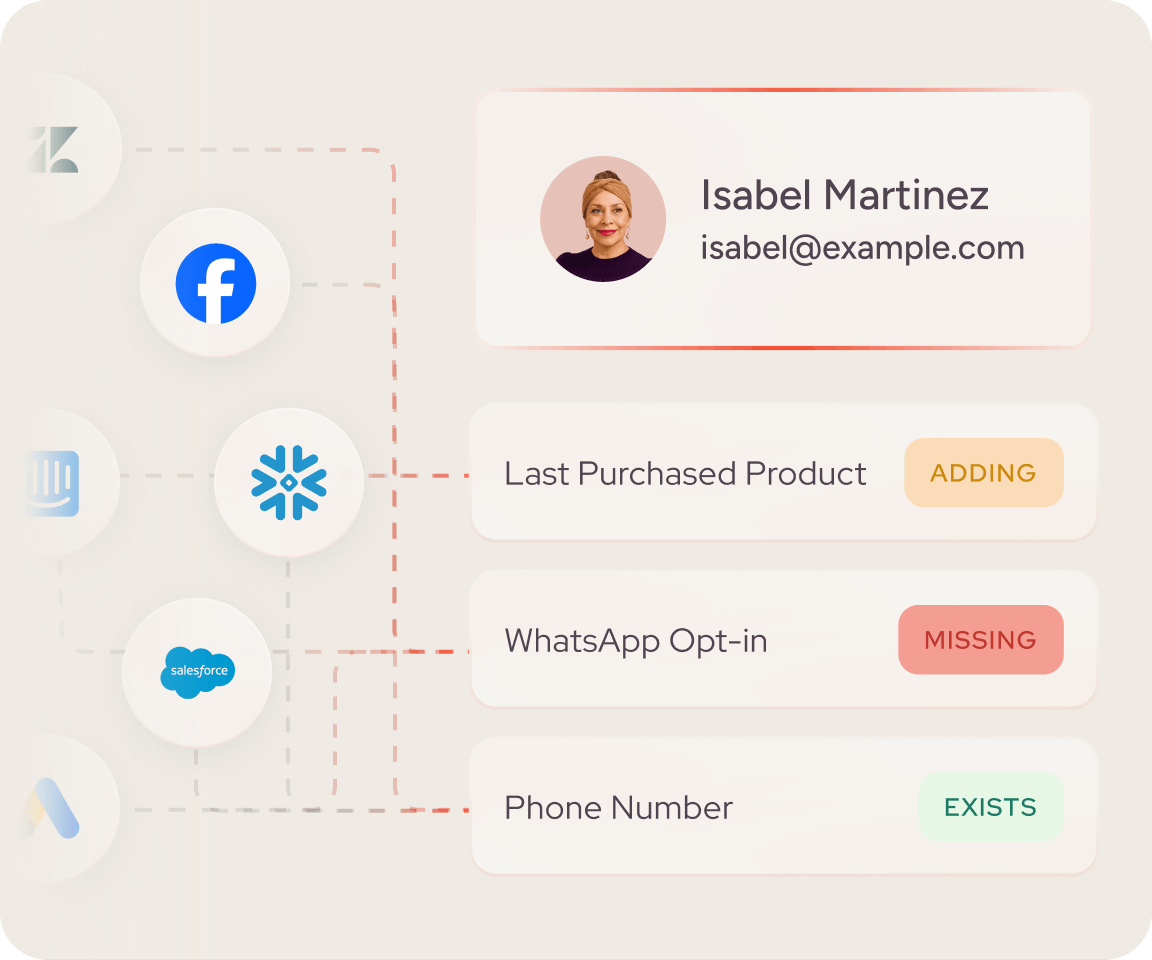
Enterprise teams often hold customer signals in CRM systems, ecommerce platforms, analytics tools, service channels, and data warehouses. A CDP connects those sources, unifies events and attributes around customer identifiers, and creates a clearer view of each person's relationship with your business. That shared profile gives every team a consistent foundation for engagement.

Enterprise capabilities

What makes a CDP enterprise-ready?

Enterprise capabilities

What makes a CDP enterprise-ready?

Enterprise CDPs need to handle high volumes of data without creating another operational bottleneck. They should support flexible identity resolution, data transformation, governance, and connections to the systems teams already use. Just as importantly, they must make reliable customer data usable by marketers without waiting on technical teams for every audience or analysis.

Real-time activation

A CDP creates value when data becomes action

Real-time activation

A CDP creates value when data becomes action

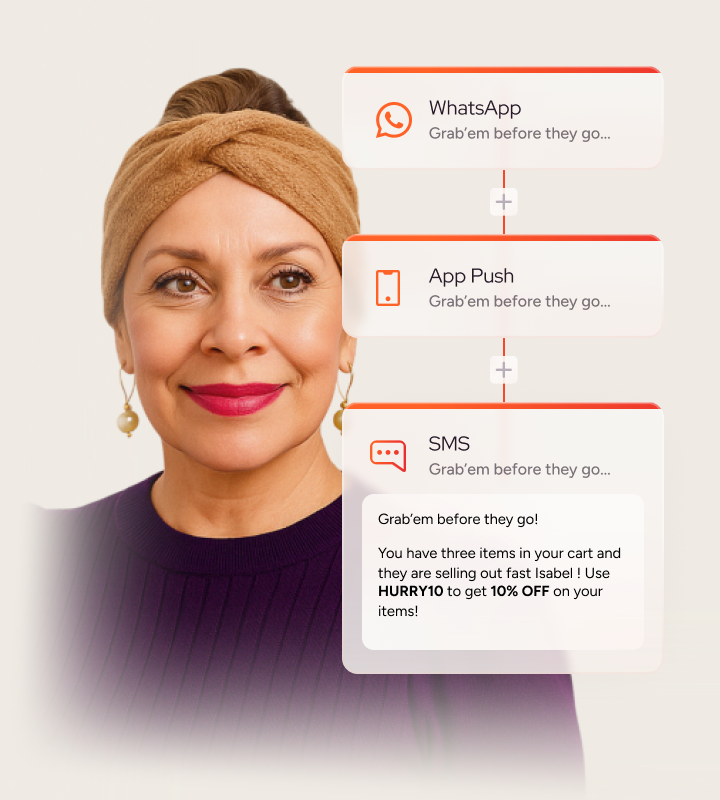
Customer data matters most when it changes the next interaction. An enterprise CDP lets teams use profile, behavioral, and preference data to build audiences and activate them across web, email, app, SMS, WhatsApp, and other channels. This reduces disconnected campaigns and helps each message reflect what the customer has already done.

Core features

Essential enterprise customer data platform features

Look for capabilities that make customer data accurate, accessible, and ready to activate at scale.

Data ingestion and integration

Connect customer, engagement, and product data from existing systems through integrations, APIs, webhooks, and warehouse connections.

Unified customer profiles

Combine identifiers, attributes, and interaction history into profiles that provide a more complete view of every customer.

Identity resolution

Manage how known and anonymous activity is connected, while retaining the flexibility required for complex enterprise data environments.

Segmentation

Build audiences from behavioral, profile, and preference data, then update them as customer activity changes.

Data governance

Maintain visibility over data collection, consent history, retention settings, and the quality of incoming customer data.

Analytics and reporting

Turn raw events into computed traits, composite events, and reports that help teams understand customer behavior and campaign performance.
Enterprise data, activated

Turn fragmented customer data into coordinated engagement

See how Insider One can unify your customer data and activate it across the customer journey.

Enterprise benefits

Why enterprises use a customer data platform

Enterprise benefits

Why enterprises use a customer data platform

A CDP gives teams a common customer view instead of separate channel-by-channel records. That makes audience selection more precise, reduces duplicated effort, and helps teams respond to behavior with greater speed. It also creates a stronger basis for improving customer lifetime value, reducing acquisition waste, and delivering consistent experiences.

Data and AI

Use customer intelligence to prioritize the next best action

Data and AI

Use customer intelligence to prioritize the next best action

Enterprise teams cannot manually inspect every signal across every audience. AI can help identify profitable segments, surface patterns in customer behavior, and improve campaign decisions using unified data. The goal is not more dashboards, it is better decisions about who to engage, what to say, and where to reach them.

CDP use cases

How enterprise teams use a customer data platform

A unified data layer supports practical use cases across acquisition, conversion, retention, and analysis.

Anonymous visitor engagement

Use observed behavior to tailor web experiences and identify the most relevant path toward a first conversion.

Cross-channel journey orchestration

Coordinate messages across channels using the same profile, so interactions reflect prior activity instead of repeating it.

Customer retention

Identify audiences whose engagement or purchase patterns are changing and deliver timely reactivation experiences.

Personalization

Adapt content, recommendations, and offers using customer attributes, preferences, and real-time behavioral context.

Marketing measurement

Analyze customer behavior, conversion funnels, reachability, and campaign performance from a shared source of truth.

Warehouse activation

Enrich profiles with warehouse data and send customer data back to the warehouse through bidirectional connections.
Built for activation

See what an enterprise CDP can do with your data

Explore how Insider One connects unified customer data to personalization, journeys, and reporting.

CDP evaluation

How to evaluate an enterprise customer data platform

CDP evaluation

How to evaluate an enterprise customer data platform

Start with the data sources, audiences, and customer experiences your teams need to support. Then assess whether the platform can integrate with your stack, unify identities accurately, govern data responsibly, and activate segments where customers engage. A strong evaluation also considers how quickly marketers can move from insight to campaign without unnecessary technical dependency.

Buying checklist

Questions to ask when choosing an enterprise CDP

The right platform should fit your existing architecture while improving the speed and quality of customer engagement.

Can it connect to our data sources?

Confirm support for the systems that hold customer, product, engagement, and warehouse data today.

Can teams activate data directly?

Assess whether marketers can create audiences and launch relevant experiences without lengthy implementation queues.

How does it maintain data quality?

Review transformation, ingestion visibility, duplicate prevention, and monitoring capabilities for incoming data.

How does it support governance?

Check how the platform handles consent history, personally identifiable information, and flexible retention requirements.

Can it support cross-channel engagement?

Ensure unified profiles can inform consistent journeys across the channels your customers use.

Can it prove impact?

Look for reporting and behavioral analytics that connect customer activity and campaign decisions to business outcomes.
Customer success

Belgian Cycling Factory accelerated personalized customer journeys

Customer success

Belgian Cycling Factory accelerated personalized customer journeys

"No one bike fits all, and this is also true of customer experiences. Insider One is the perfect partner to help us deliver personalized customer journeys that unlock new revenue and maximize customer lifetime value."

Gert Thora, Chief Information Officer

Belgian Cycling Factory

Read the case study

Belgian Cycling Factory results

Results reported in the Belgian Cycling Factory success story.

6X

faster campaign execution Challenge

6X

faster campaign execution SUCCESS STORY #3

30X

return on investment Web & mobile web Read more

8%

increase in AOV

Loved by brands, trusted by analysts

IDC Agentic
Gartner MQ
Gartner VOC MMH
Gartner VOC Pers.
Forrester Wave
Forrester EOP
IDC Omnichannel
G2
IDC Agentic
Gartner MQ
Gartner VOC MMH
Gartner VOC Pers.
Forrester Wave
Forrester EOP
IDC Omnichannel
G2
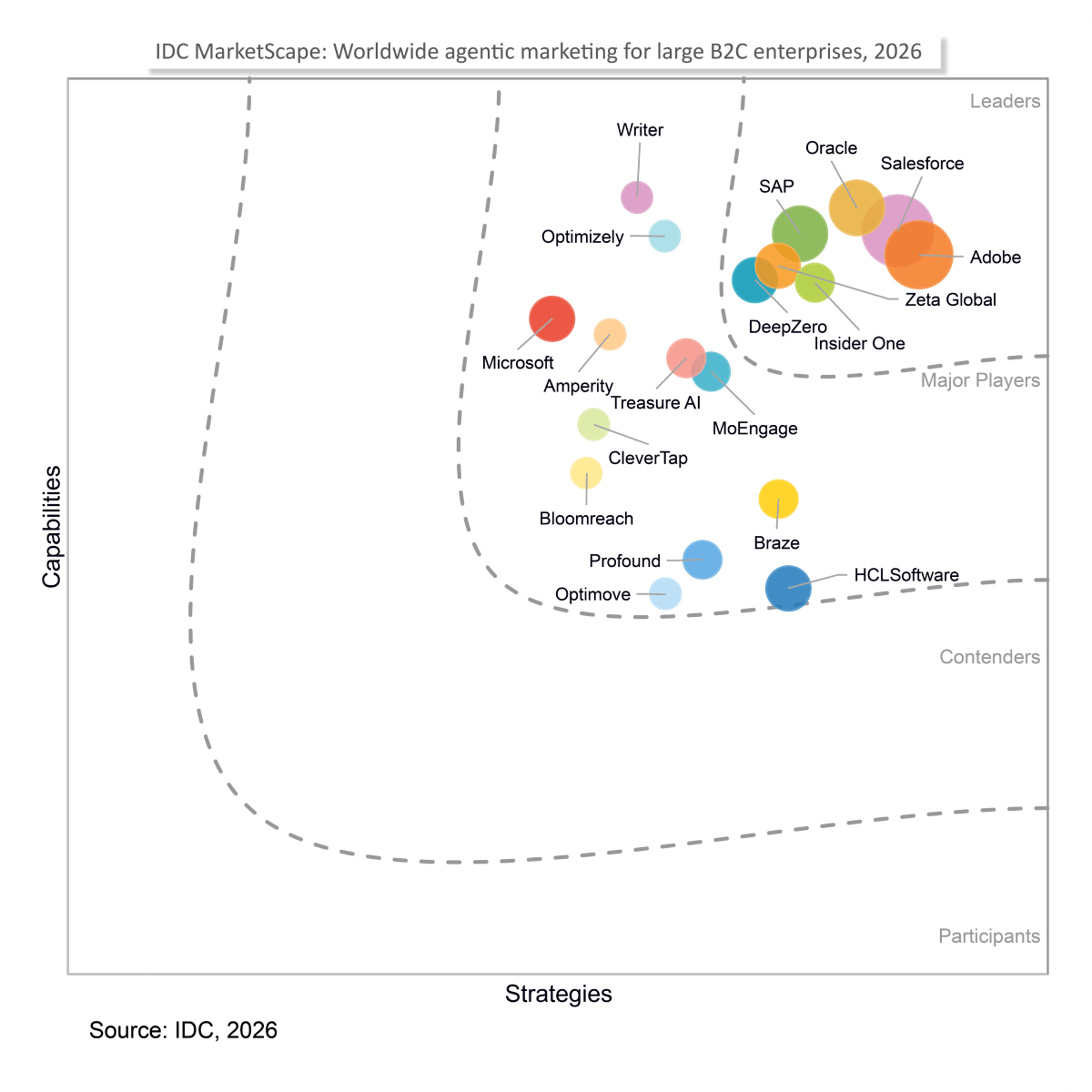
Insider One named a 2026 IDC Marketscape Leader for Agentic Marketing
Learn more

Conversational Agents

AI Orchestration

AI Composable

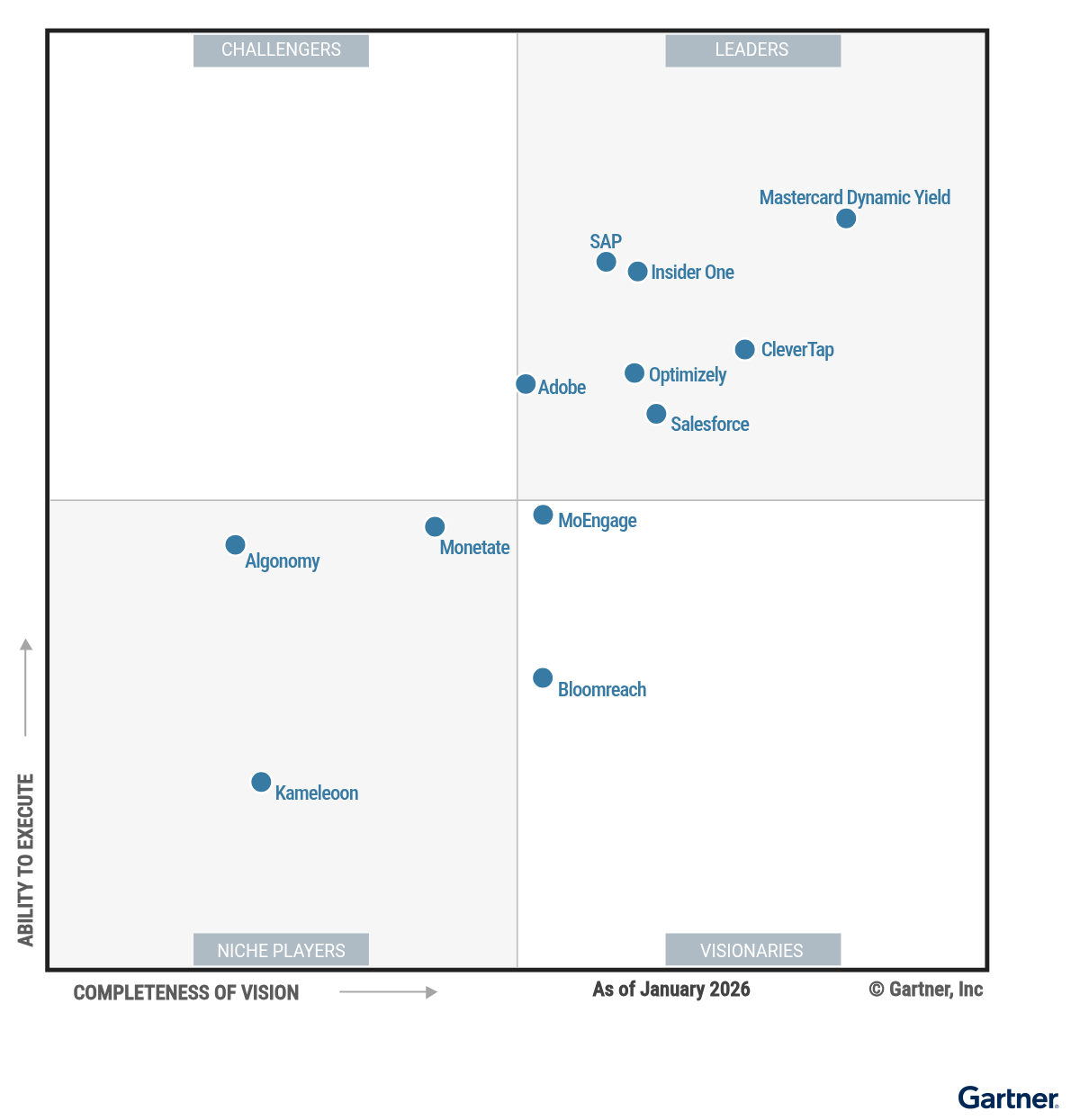
Insider One named a 2026 Gartner® Magic Quadrant™ Leader for Personalization Engines
Learn more

Marketing 3.99/5.0

Digital Commerce 4.11/5.0

Services and Support 3.94/5.0

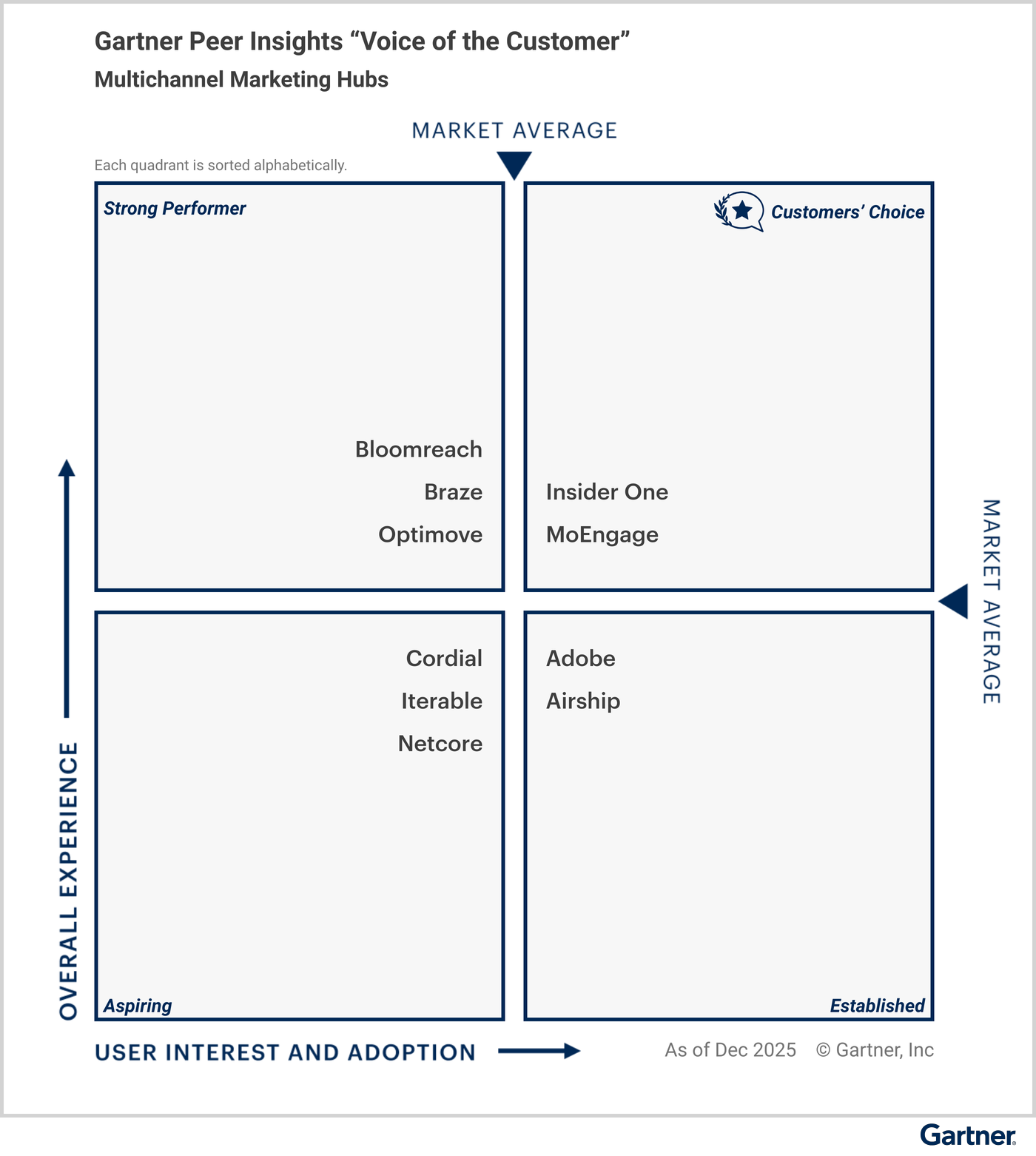
Insider One Recognized as a 2026 Gartner Peer Insights™ Customers’ Choice for Multichannel Marketing Hubs
Learn more

Product Capabilities 4.9/5.0

Sales Experience 4.9/5.0

Deployment Experience 4.8/5.0

Support Experience 4.9/5.0

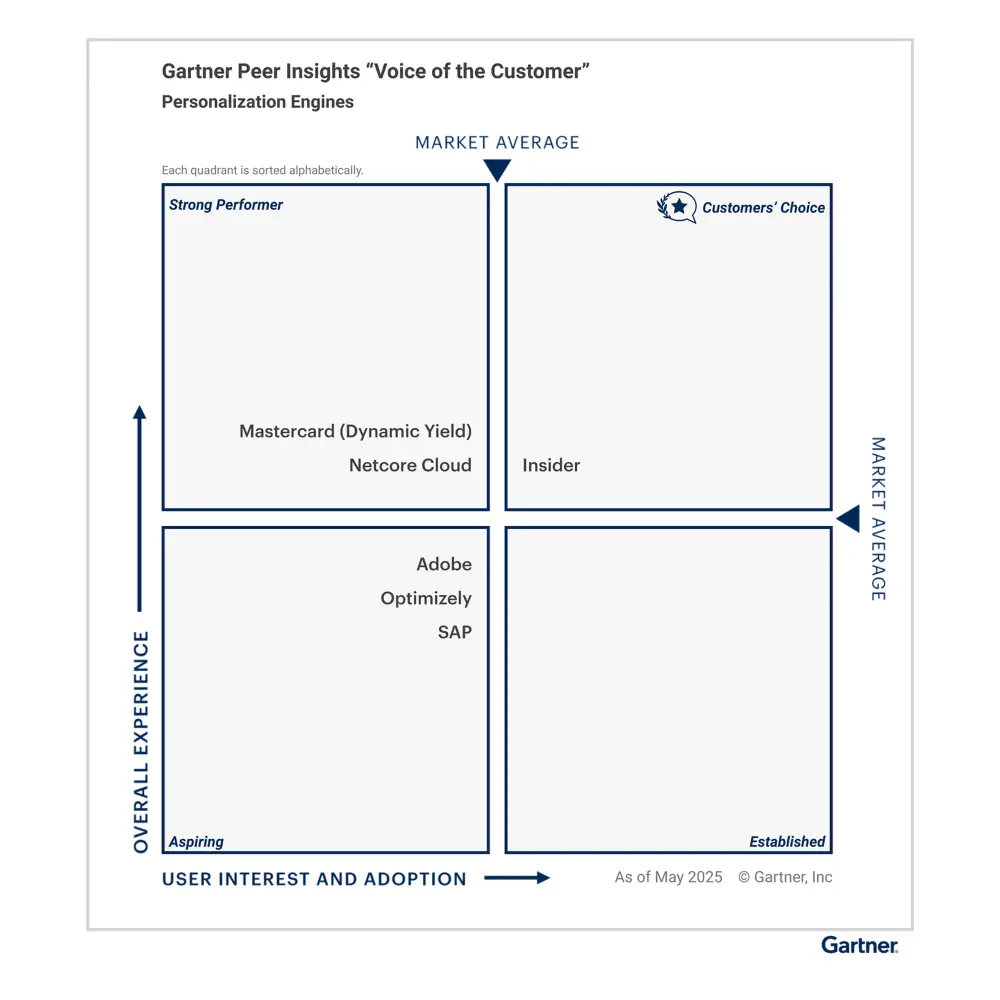
Insider One Recognized as a Gartner Peer Insights™ Customers’ Choice for Personalization Engines ‘25
Learn more

Overall Rating 4.8/5.0

Support Experience 4.9/5.0

Sales Experience 4.7/5.0

Willingness to Recommend 100/100

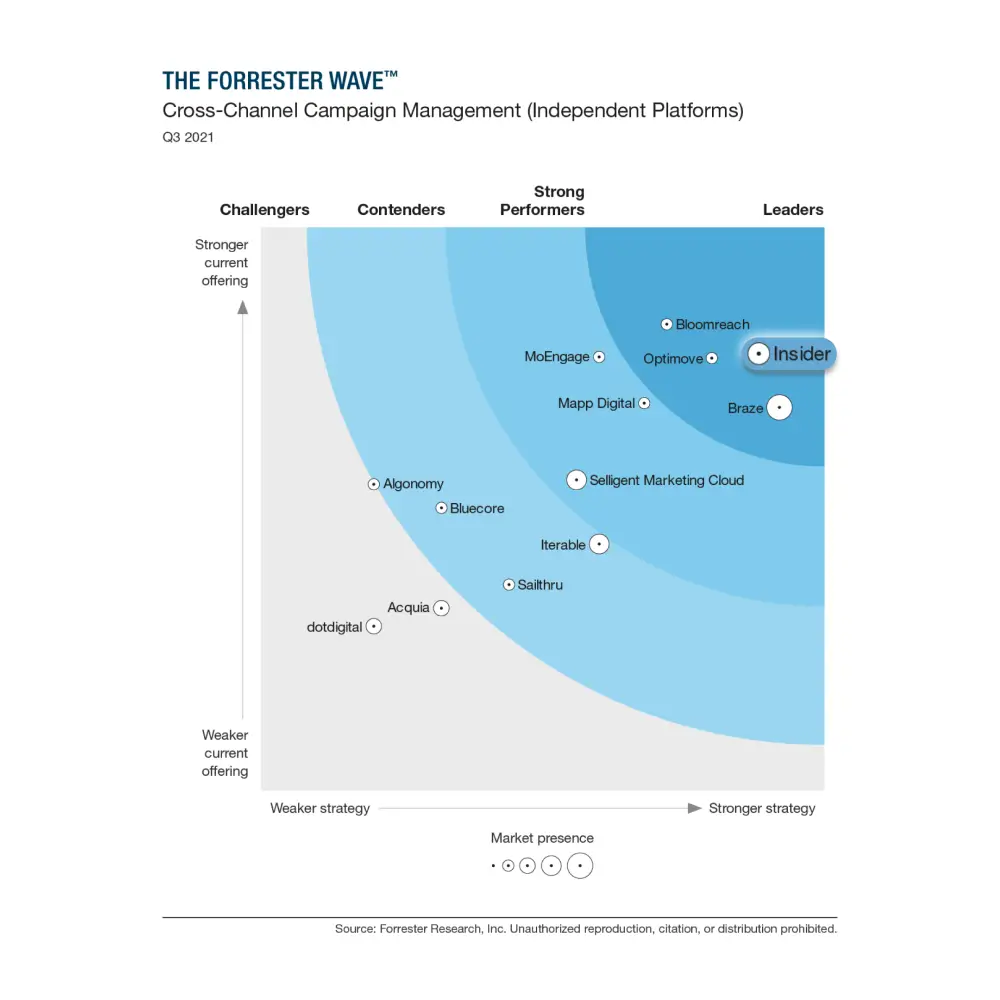
Insider One recognized as a leader in The Forrester Wave: Cross-Channel Campaign Management (Independent Platforms)
Learn more

Personalization

Innovation Strategy

Platform Architecture

Predictive Analytics

Machine Learning

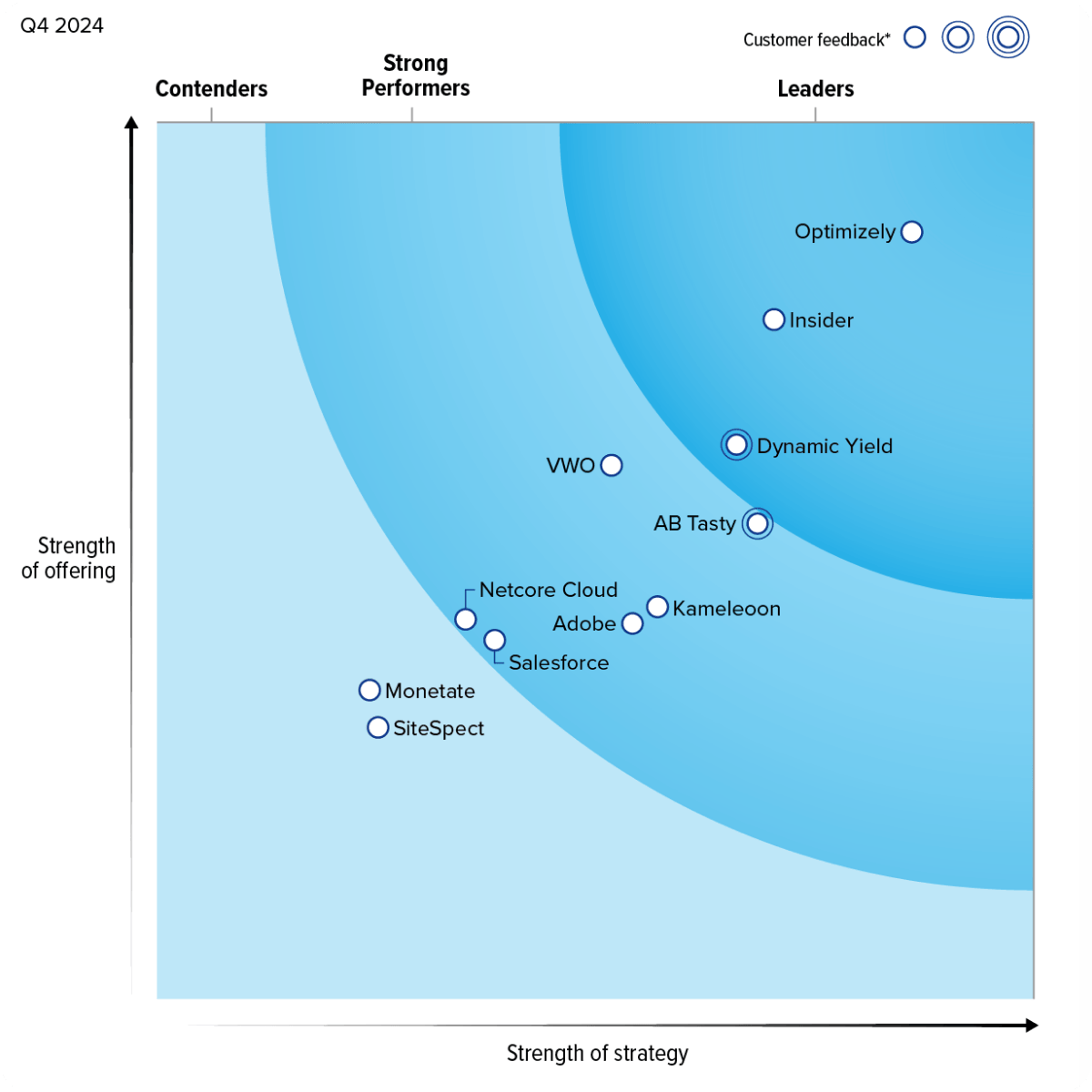
Insider One recognized as a Leader in The Forrester Wave™: Experience Optimization Platforms, Q4 2024
Learn More

Generative AI

Personalization

Segmentation

Analytics

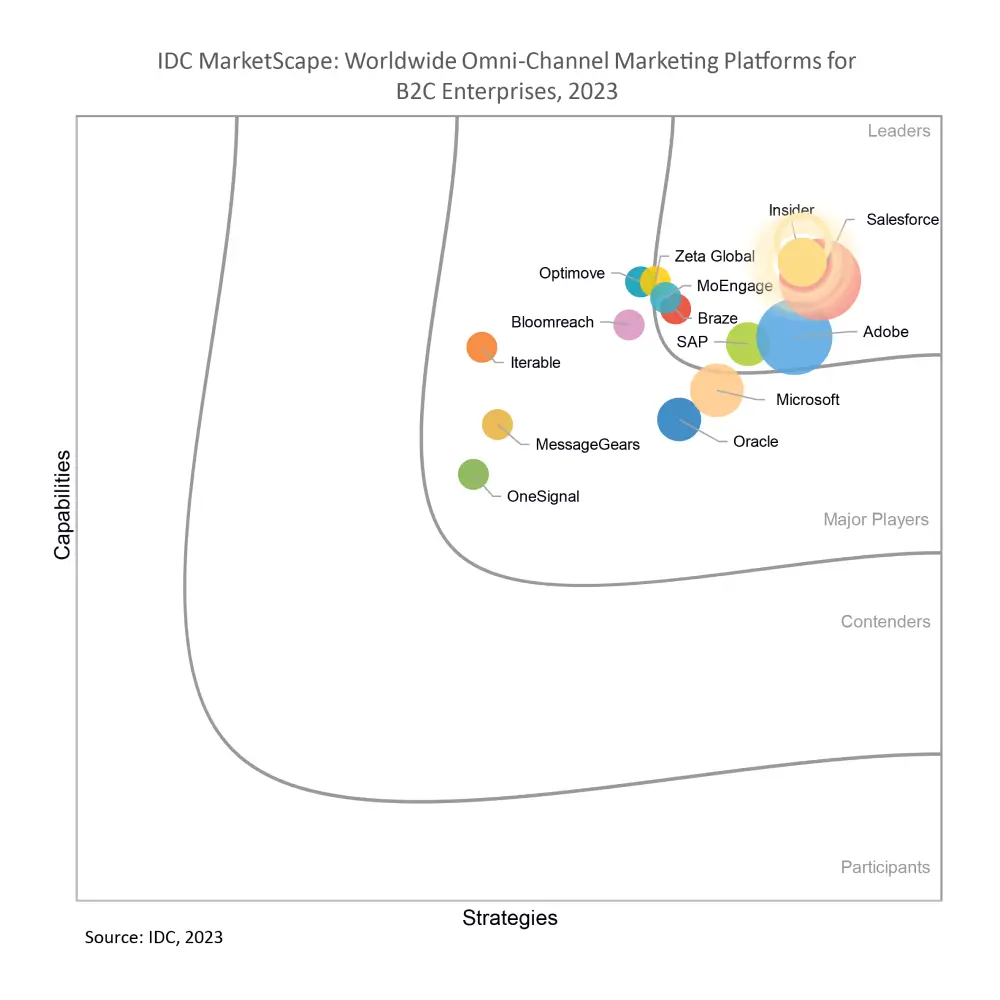
Insider One named a leader in the IDC MarketScape for Worldwide Omnichannel Marketing Platforms
Learn more

Personalization

Channel Breadth

AI / Machine Learning

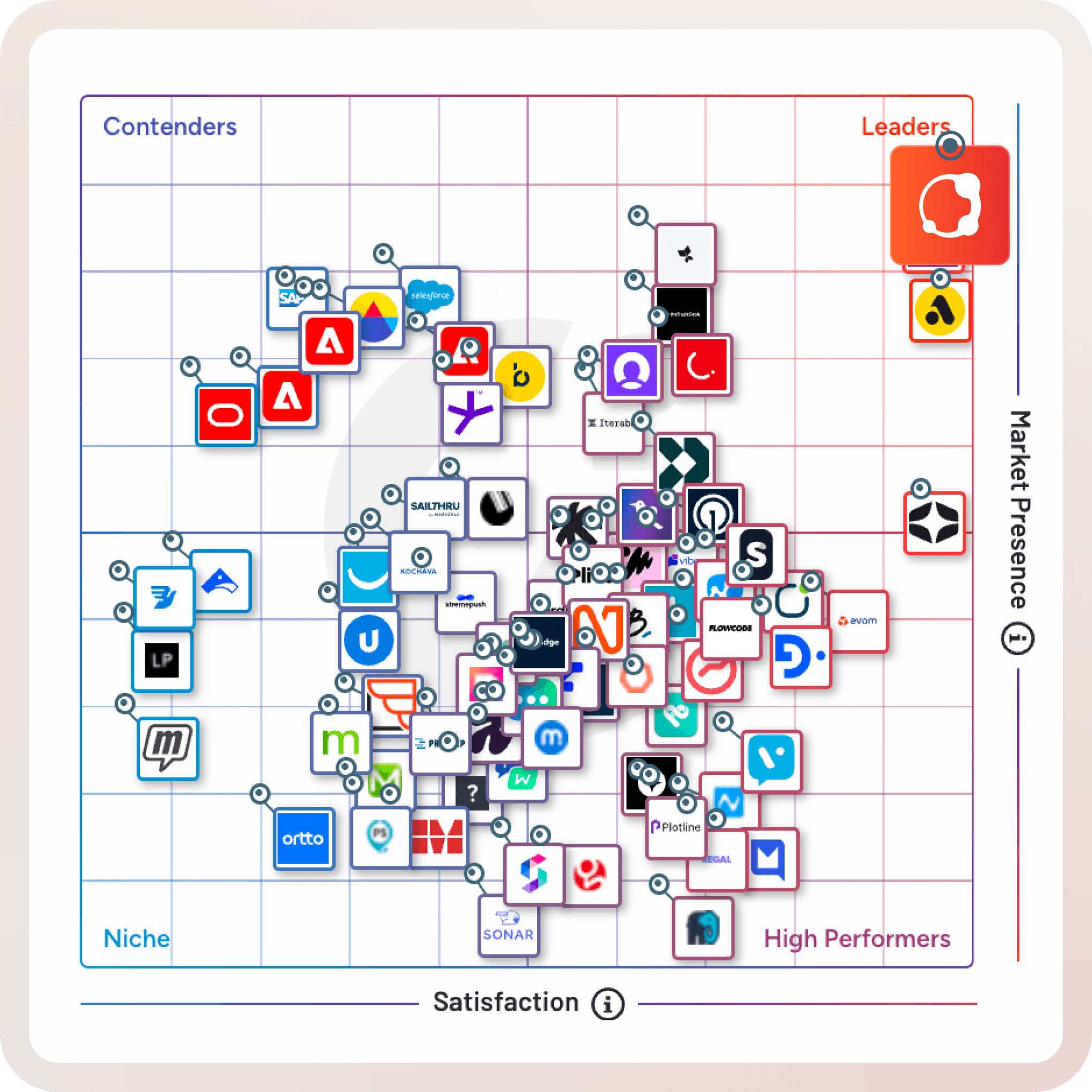
Insider One tops G2’s Fall ’26 reports as the Top Leader across 14 Categories
Learn more

Personalization Software

CDP

Mobile Marketing

SMS Marketing

WhatsApp Marketing

6 more categories

Enterprise customer data platform FAQs

What is an enterprise customer data platform?

An enterprise customer data platform is a system that collects customer data from multiple business sources, unifies it into customer profiles, and makes it available for activation. It helps large organizations use consistent customer information across marketing, analytics, personalization, and customer engagement.

What is the difference between a CDP and a CRM?

A CRM primarily manages customer relationships and sales or service interactions. A CDP brings together data from a wider set of sources, including digital behavior, product activity, marketing engagement, and offline interactions. It is designed to create unified profiles that teams can segment and activate.

Why do enterprises need a CDP?

Enterprises often manage data across many regions, brands, channels, and systems. A CDP helps reduce those silos by creating a shared customer view. This supports more relevant engagement, clearer analysis, and more consistent experiences while giving teams a stronger foundation for customer-focused decisions.

What features should an enterprise CDP include?

Key features include data ingestion, integrations, unified customer profiles, identity resolution, segmentation, data transformation, consent management, flexible retention, analytics, and activation across channels. Enterprise buyers should also assess governance, scale, and how easily business users can turn customer data into action.

How does an enterprise CDP support personalization?

A CDP supplies the customer attributes, preferences, and behavioral signals that personalization needs. Teams can use this unified context to create relevant audiences and tailor experiences across channels. Because profiles update as new data arrives, personalization can respond more closely to current customer intent.

Can a CDP support cross-channel customer journeys?

Yes. A CDP provides the unified profile that helps teams coordinate customer interactions across channels. Journey orchestration can use that data to determine audience eligibility, timing, and message relevance, helping businesses avoid disconnected communications and create more consistent customer experiences.