Retail customer data

Why Retailers Need a Customer Data Platform to Unify Customer Data

Retail teams cannot personalize a customer journey when web, app, purchase, and campaign data live in separate systems. A customer data platform brings those signals together so teams can understand customers, build relevant audiences, and act on what each shopper does next.

Summary

A retail customer data platform connects customer identifiers, events, and attributes from different sources into a shared customer profile. This gives marketing, ecommerce, and analytics teams a common foundation for segmentation, personalization, journey orchestration, and measurement.

Fragmented retail data

Disconnected data leads to disconnected experiences

Fragmented retail data

Disconnected data leads to disconnected experiences

A shopper might browse on mobile, return through the website, add a product to their basket, and complete the purchase in a store. When those interactions remain in separate systems, retailers have limited context about the customer and their intent.

Unifying these interactions creates a more complete customer record that teams can use across engagement and personalization.

Unified customer profiles

Connect customer behavior across every retail touchpoint

Unified customer profiles

Connect customer behavior across every retail touchpoint

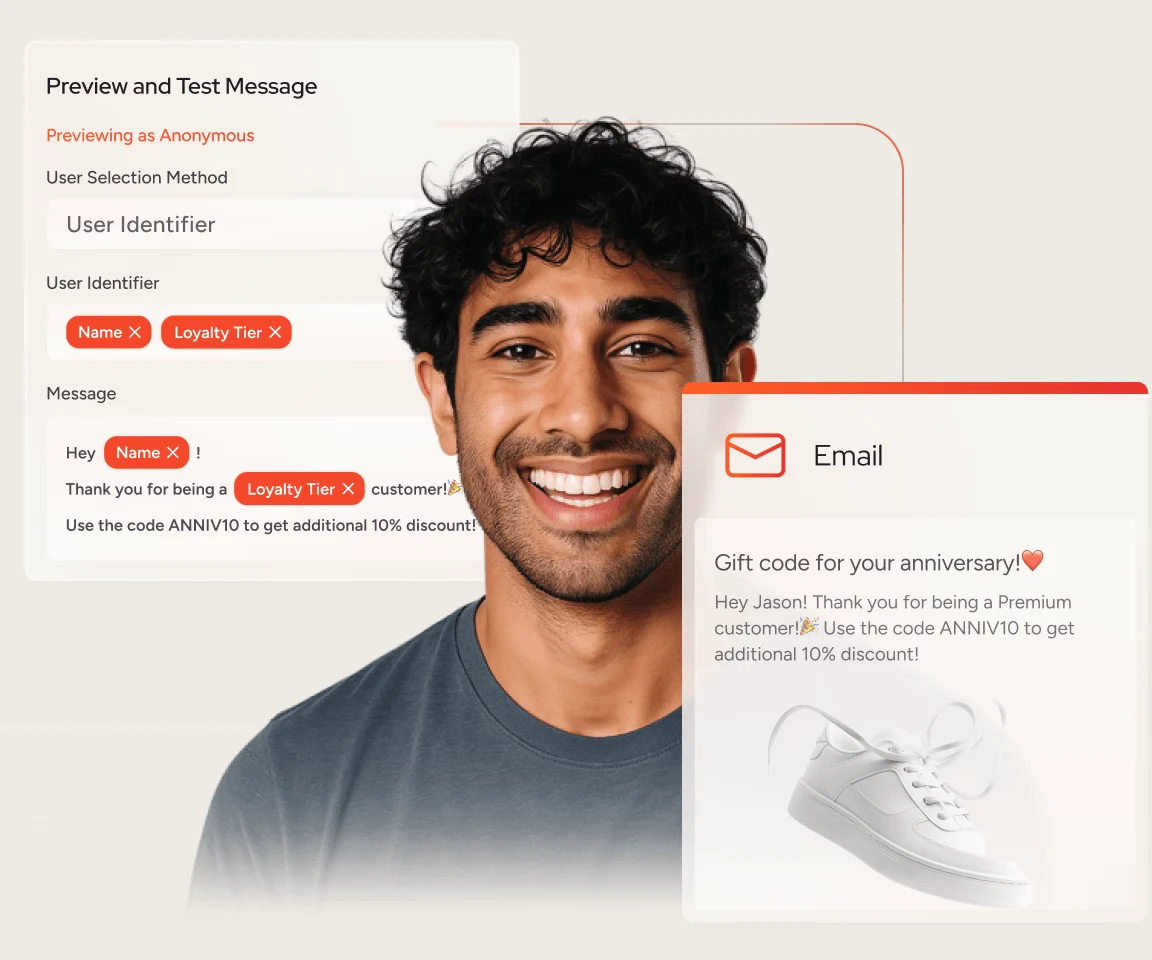
Customer data management brings together behavioral data from sources such as web, mobile, and APIs, then unifies it with identifiers including email address, phone number, or user ID. Teams can work with events and attributes in one place instead of reconciling separate records before every campaign. That also helps retailers recognize anonymous visitors as they become known customers.

Retail data foundation

What a customer data platform enables retail teams to do

A connected data foundation helps teams move from scattered signals to coordinated customer experiences.

A shared customer record

Bring customer identifiers, events, and attributes together so ecommerce, marketing, and analytics teams work from the same understanding of each shopper.

Flexible segmentation

Create audiences from behavioural and custom data, then refine them as customer activity changes across web, app, and other connected sources.

Faster activation

Put unified data to work in personalized experiences and coordinated journeys without manually exporting and reconciling customer lists.

Clearer measurement

Connect campaign activity to customer behaviour and outcomes, helping teams identify what is working and where to improve.
Retail data activation

Turn scattered retail data into customer-ready insight

See how Insider One can help your teams unify customer data and use it across the customer journey.

Personalization readiness

Personalization works better when every signal is connected

Personalization readiness

Personalization works better when every signal is connected

A personalization decision is only as useful as the data behind it. Unified customer data gives retailers context for what a shopper has viewed, engaged with, or purchased, so experiences can reflect current intent. This reduces the risk of treating returning customers like first-time visitors.

Connected journeys

Coordinate journeys across the channels customers use

Connected journeys

Coordinate journeys across the channels customers use

Retail customers move between channels on their own schedule. A unified data foundation helps teams trigger and adapt journeys from customer behaviour, rather than relying on one-off campaigns built from outdated lists. The result is a more consistent experience across the moments that matter.

Retail use cases

Use unified data across the customer lifecycle

Connected customer signals support practical retail use cases from first visit through repeat purchase.

Recognize returning visitors

Use known and anonymous customer signals to make web experiences more relevant when shoppers return to browse, compare, or continue a purchase.

Respond to basket activity

Build audiences around basket behaviour and engagement, then coordinate timely communications across the channels customers choose to use.

Encourage repeat purchase

Use purchase and engagement data to identify customers ready for relevant follow-up, replenishment, or product discovery experiences.

Improve campaign decisions

Bring customer behaviour and campaign activity into a connected view, helping teams learn from outcomes and refine future journeys.
Connected retail experiences

Build every retail experience on connected customer data

Give teams a shared customer foundation for personalization, orchestration, and measurable growth.

Real-time retail context

Make customer data useful while intent is still current

Real-time retail context

Make customer data useful while intent is still current

Retail intent changes quickly, particularly when shoppers compare products, respond to promotions, or switch devices. A customer data platform helps teams use current events and attributes to keep segments and experiences relevant. It replaces slow list preparation with a data foundation designed for activation.

Buyer considerations

What retailers should look for in a customer data platform

The right platform should make data easier to connect, understand, activate, and evaluate.

Data connectivity

Look for integrations and data ingestion options that can connect the systems where retail customer activity already happens.

Identity resolution

Ensure the platform can unify records using customer identifiers while retaining the behavioural context needed for relevant experiences.

Cross-channel activation

Choose a platform that can put customer audiences to work across the channels your shoppers use throughout their journey.

Performance visibility

Prioritize reporting that helps teams understand customer behaviour and campaign outcomes, then make better decisions from that insight.
Retail growth results

Slazenger achieved 49X ROI within eight weeks

Retail growth results

Slazenger achieved 49X ROI within eight weeks

Slazenger used Insider One to support more efficient customer acquisition and productivity. Its Senior eCommerce Manager said, "Insider's growth experts suggested exactly which tools to use to achieve our objectives. We implemented personalized product recommendations on the homepage and this helped us generate a 18.8% increase in revenue per user in one month. Insider's tools are amazing."

Senior eCommerce Manager

Slazenger

Read the case study

Slazenger results with Insider One

Results reported on Slazenger's Insider One case study.

49X

ROI within eight weeks

700%

increase in customer acquisition

30%

productivity gains with Insider One AI Challenge

30%

productivity gains with Smart Segment Creator

Loved by brands, trusted by analysts

IDC Agentic
Gartner MQ
Gartner VOC MMH
Gartner VOC Pers.
Forrester Wave
Forrester EOP
IDC Omnichannel
G2
IDC Agentic
Gartner MQ
Gartner VOC MMH
Gartner VOC Pers.
Forrester Wave
Forrester EOP
IDC Omnichannel
G2
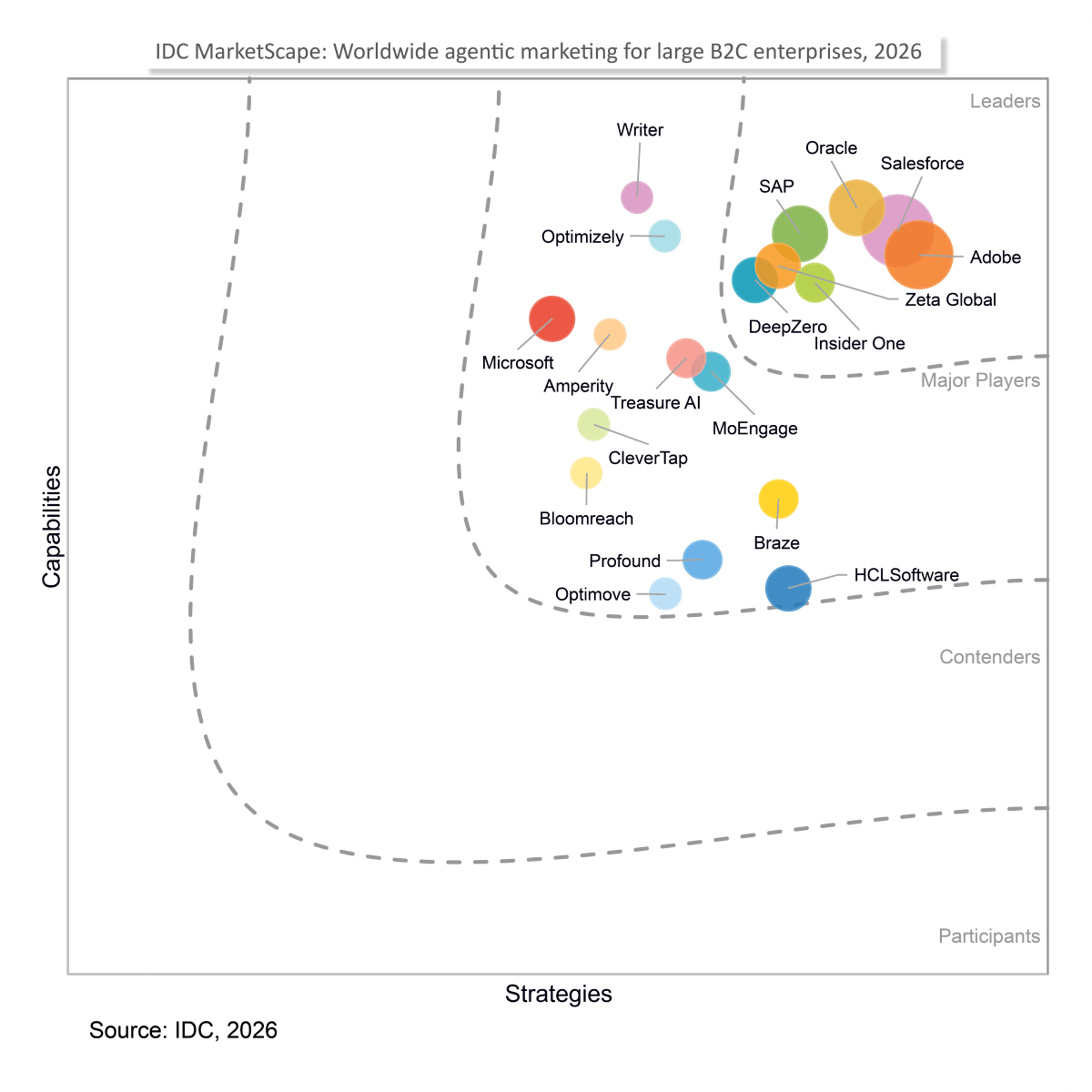
Insider One named a 2026 IDC Marketscape Leader for Agentic Marketing
Learn more

Conversational Agents

AI Orchestration

AI Composable

Insider One named a 2026 Gartner® Magic Quadrant™ Leader for Personalization Engines
Learn more

Marketing 3.99/5.0

Digital Commerce 4.11/5.0

Services and Support 3.94/5.0

Insider One Recognized as a 2026 Gartner Peer Insights™ Customers’ Choice for Multichannel Marketing Hubs
Learn more

Product Capabilities 4.9/5.0

Sales Experience 4.9/5.0

Deployment Experience 4.8/5.0

Support Experience 4.9/5.0

Insider One Recognized as a Gartner Peer Insights™ Customers’ Choice for Personalization Engines ‘25
Learn more

Overall Rating 4.8/5.0

Support Experience 4.9/5.0

Sales Experience 4.7/5.0

Willingness to Recommend 100/100

Insider One recognized as a leader in The Forrester Wave: Cross-Channel Campaign Management (Independent Platforms)
Learn more

Personalization

Innovation Strategy

Platform Architecture

Predictive Analytics

Machine Learning

Insider One recognized as a Leader in The Forrester Wave™: Experience Optimization Platforms, Q4 2024
Learn More

Generative AI

Personalization

Segmentation

Analytics

Insider One named a leader in the IDC MarketScape for Worldwide Omnichannel Marketing Platforms
Learn more

Personalization

Channel Breadth

AI / Machine Learning

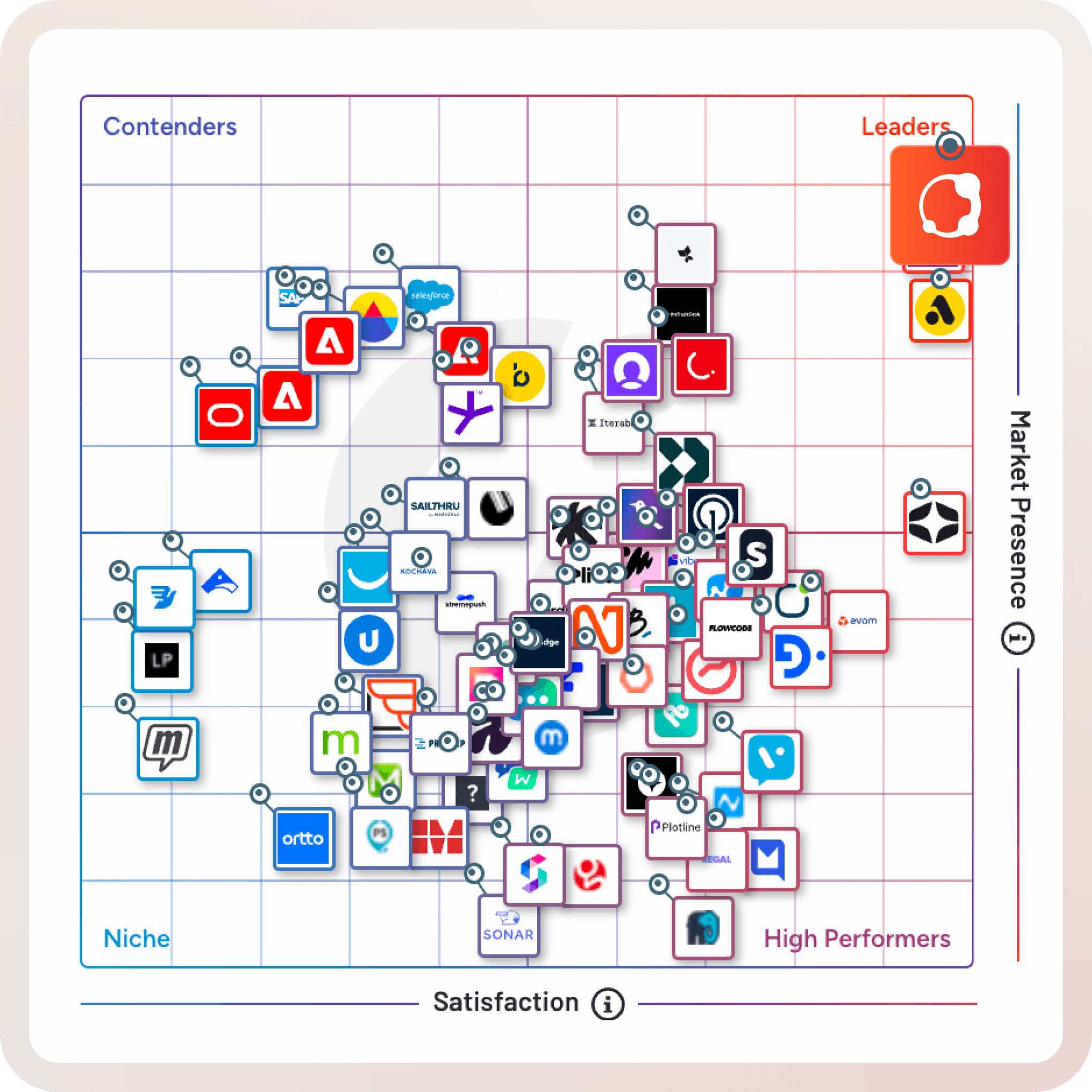
Insider One tops G2’s Fall ’26 reports as the Top Leader across 14 Categories
Learn more

Personalization Software

CDP

Mobile Marketing

SMS Marketing

WhatsApp Marketing

6 more categories

Customer data platforms for retailers, answered

What is a customer data platform for retail?

A retail customer data platform brings together customer identifiers, events, and attributes from connected sources. It helps retailers build a unified view of customer behaviour, create usable audiences, and activate those audiences in personalized experiences and customer journeys.

Why do retailers need to unify customer data?

Retail customers often interact across web, mobile, campaigns, and other touchpoints. Unifying those interactions helps teams recognize customer context, reduce duplicate or disconnected records, and make decisions using a more complete view of behaviour and engagement.

How does unified customer data support retail personalization?

Unified data provides the context behind personalization, including customer activity, interests, engagement, and purchase history. Retail teams can use that context to create more relevant audiences and experiences, rather than relying only on broad demographics or static campaign lists.

Can a customer data platform help identify anonymous retail visitors?

Customer data management can use identifiers to unify known customer data and help identify anonymous users as they become known. This gives retailers a stronger foundation for understanding how customer activity develops across web, mobile, API, and other connected sources.

What data should retailers connect to a customer data platform?

Retailers should prioritize the customer data needed for their customer experiences, such as behavioural events, customer identifiers, purchase-related attributes, and campaign engagement. The best starting point is data that helps teams recognize customers, create audiences, and act on current intent.

How is a customer data platform different from a marketing campaign tool?

A customer data platform provides the connected customer data foundation that campaigns depend on. It unifies identifiers, events, and attributes so teams can create and activate audiences with more context. Campaign and journey tools then use that data to deliver coordinated customer experiences.