

 Platform Overview

 Integration Hub

 Insider One AI™

 Customer Data Management

 Personalization

 Journey Orchestration

 Reporting & Data

 Behavioral Analytics

 Web
Web

 Email
Email

 Site Search

 Conversational CX

 WhatsApp

 Web Push

 InStory

 App
App

 SMS & RCS

 Join the $0 Migration Movement™

 The Insider One Difference

 Compare Vendors

 Switch to Insider One

 Success Story

 Retail & Ecommerce

 Financial Services

 Travel & Hospitality

 Beauty & Cosmetics

 Automotive

 Telecommunications

 Total Economic Impact™ Study

 Blog
Blog

 E-Books & Guides

 Glossary
6 Best Email Platforms with Built‑In Automation & Personalization

Updated on 6 Apr 2026
9 min.
Table of Contents
Most Popular
Email marketing is no longer just about sending newsletters. Today’s enterprise teams rely on automation, AI-driven insights, and real-time personalization to deliver highly relevant messages across the customer lifecycle.
Modern platforms combine predictive analytics, dynamic segmentation, and cross-channel orchestration to help brands deliver relevant messages that drive higher engagement and revenue. For marketing leaders, the challenge isn’t whether to adopt automation, but which platform can deliver the fastest ROI and the most individualized customer experiences.
Below are six leading email marketing platforms that offer built-in automation and advanced personalization, along with the features that set them apart.
1. Insider One
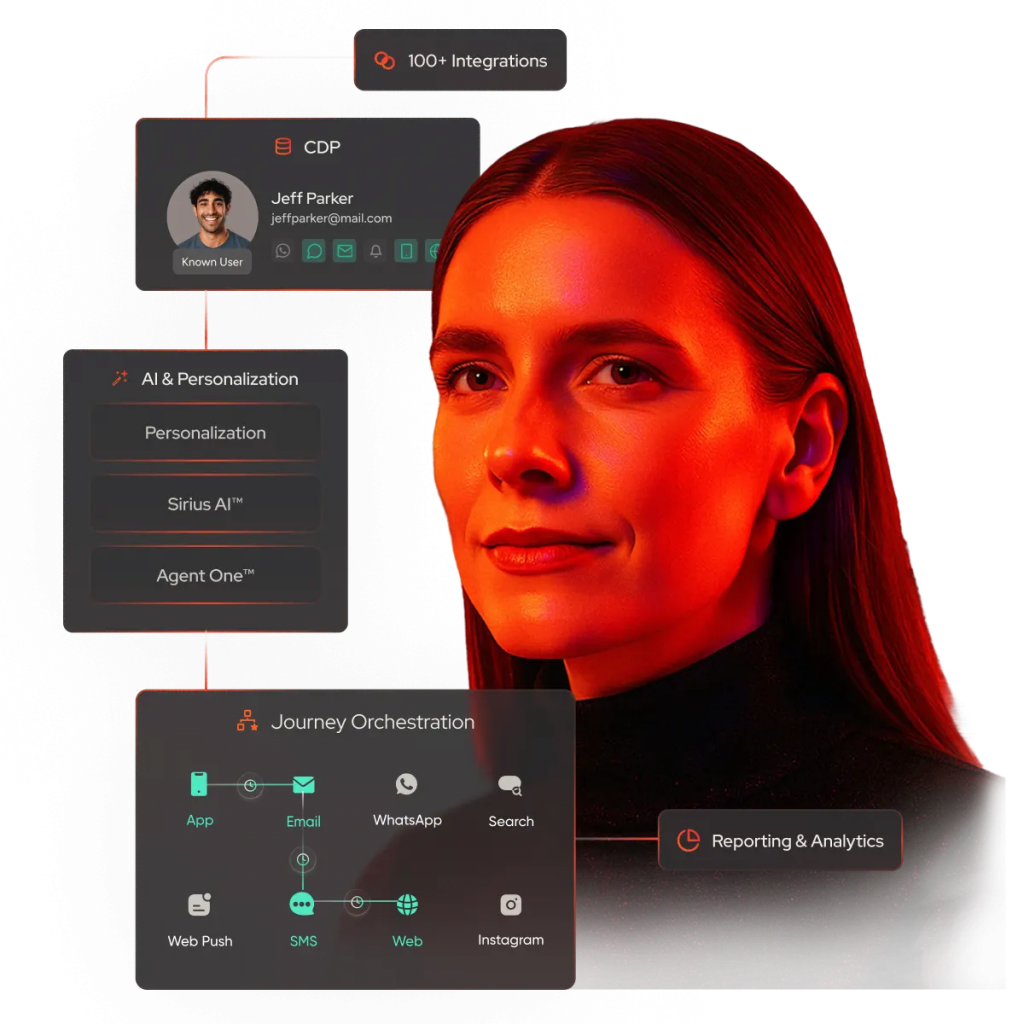
Insider One stands out as a category leader for enterprise marketing teams that require sophisticated automation, omnichannel orchestration, and advanced personalization capabilities. Unlike traditional email service providers that focus on one channel, Insider One is purpose-built to coordinate messaging across the entire customer journey.
The platform enables brands to manage campaigns across 12+ marketing channels, including email, web, push notifications, SMS, WhatsApp, and more from a single interface. This approach is known as cross-channel automation, meaning marketing teams can coordinate messaging across multiple platforms simultaneously without switching between separate tools.
Insider One also uses AI-driven automation and predictive analytics to help marketers identify high-value segments, personalize messages in real time, and optimize campaigns for conversion.
Key features and highlights
- AI-backed predictive segmentation: Insider One’s personalization engine analyzes behavioral, transactional, and engagement data to identify high-intent audiences automatically. Marketers can create highly targeted campaigns using predictive attributes like likelihood to purchase, churn probability, or future lifetime value.
- True real-time personalization across channels: Instead of static segments, Insider One delivers dynamic content tailored to each customer interaction from email subject lines to AI-powered recommendations and website experiences based on real-time user behavior.
- Cross-channel orchestration from a unified platform: Insider One coordinates messaging across email, SMS, web push, mobile apps, and social channels, ensuring customers receive consistent and contextual communications throughout the entire journey.
- Enterprise-grade integration ecosystem: With 100+ data connectors and integrations, Insider One seamlessly connects to CRM systems, ecommerce platforms, data warehouses, and analytics tools, enabling unified data activation and faster campaign execution.
- Rapid time-to-value and measurable ROI: Enterprise customers report significant gains in revenue and efficiency within months, driven by Insider One’s automation capabilities and scalable architecture.
- Global enterprise support: Insider One provides localized service across 28 countries, helping multinational brands manage campaigns across regions, languages, and markets.
Common enterprise use cases include automated lifecycle messaging, predictive content optimization, and highly personalized customer journeys that adapt to user behavior across multiple channels.
2. HubSpot
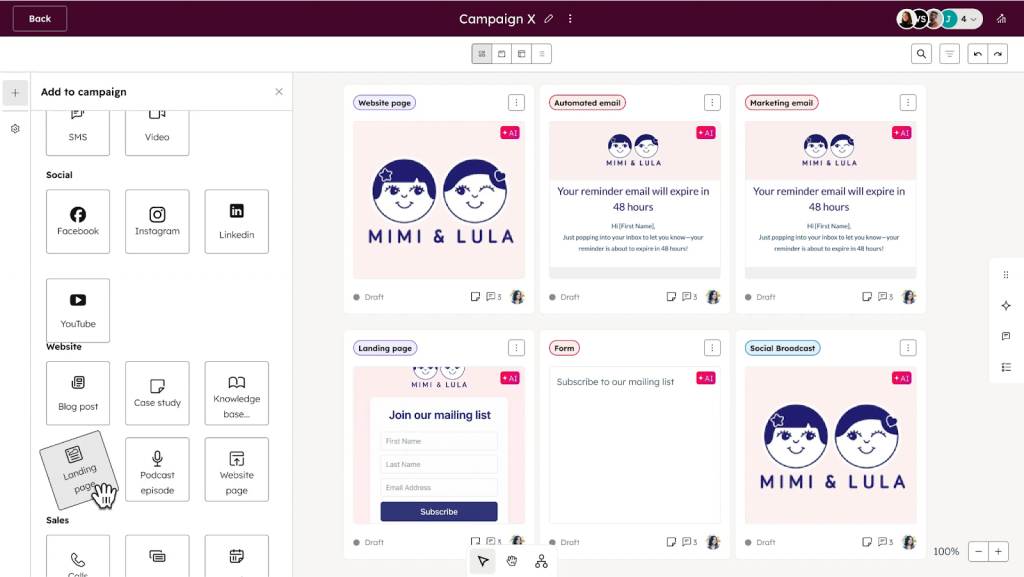
HubSpot is one of the most widely adopted all-in-one marketing platforms, combining email marketing, CRM functionality, automation tools, and analytics into a unified ecosystem.
For organizations that want tight alignment between marketing, sales, and customer service, HubSpot offers a comprehensive platform where all customer data lives in the same system.
Its strength lies in the ability to automate sophisticated marketing workflows using CRM data, enabling highly personalized campaigns based on lifecycle stage, lead behavior, and engagement history through its visual workflow builder.
Key features and highlights
- Advanced automation workflows: HubSpot’s visual automation builder supports branching logic, conditional triggers, and behavior-based messaging, allowing marketers to create sophisticated nurture campaigns and lifecycle communications.
- Deep CRM integration: Because email marketing is directly tied to HubSpot’s CRM, teams can personalize messages using real-time customer data, deal stages, interaction history, and lead scoring models.
- Extensive integration ecosystem: HubSpot integrates with 1,800+ third-party apps, including ecommerce platforms, analytics tools, and sales software, allowing businesses to connect marketing automation with their broader tech stack.
- Detailed analytics and campaign reporting: The platform provides advanced performance dashboards and attribution insights that help marketers understand which campaigns generate revenue and how customers move through the funnel.
- Scalable marketing infrastructure: HubSpot is designed to support growing organizations with expanding contact databases, complex workflows, and multichannel campaigns.
3. ActiveCampaign
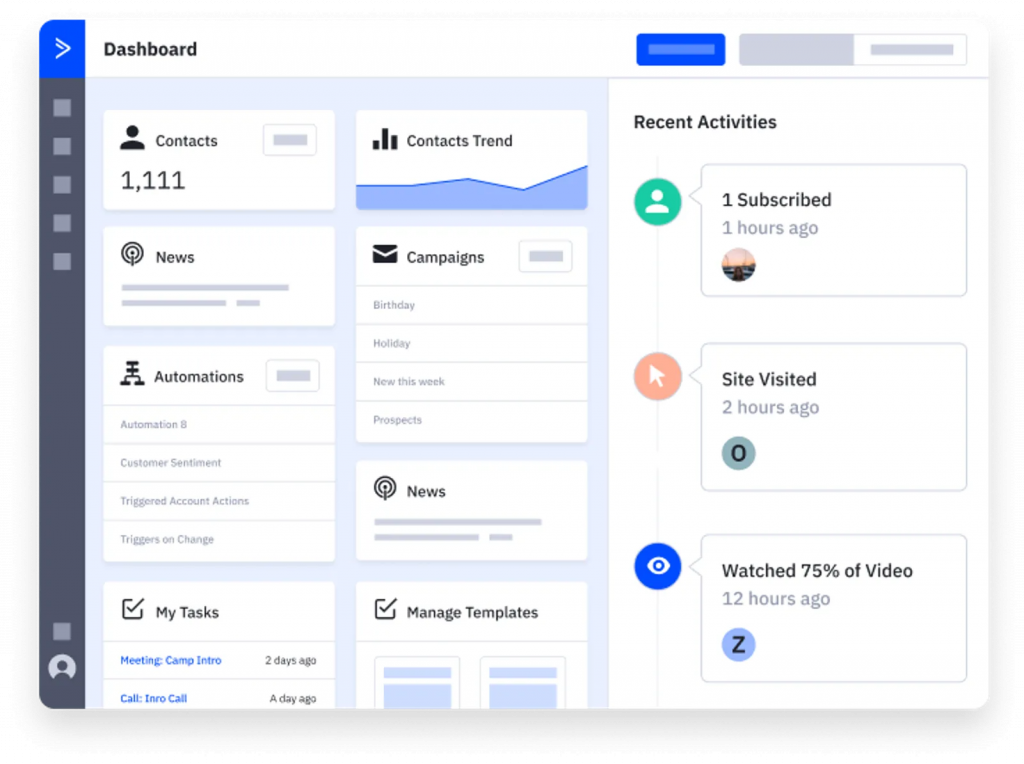
ActiveCampaign combines powerful automation with intuitive usability, making it a strong choice for marketing teams that want advanced capabilities without overwhelming complexity.
The platform blends marketing automation, CRM functionality, and email personalization tools into a flexible system that supports businesses of all sizes.
Its automation engine is often ranked among the most sophisticated in the industry.
Key features and highlights
- Advanced automation workflow builder: ActiveCampaign enables marketers to create detailed customer journeys with multiple triggers, branching paths, and conditional logic, allowing campaigns to adapt dynamically to user behavior.
- Highly flexible segmentation and personalization: Teams can build targeted campaigns using behavioral data such as email opens, website visits, purchases, or custom attributes, ensuring messages are highly relevant to each audience segment.
- Integrated CRM and lead nurturing tools: The platform’s built-in CRM allows marketing and sales teams to track leads, automate follow-ups, and manage customer relationships within the same system.
- Scalable automation features: ActiveCampaign excels in automation and service features, supporting both small businesses and large marketing operations with complex workflows.
For organizations prioritizing lead nurturing, automation flexibility, and reliable deliverability, ActiveCampaign is a strong contender.
4. Brevo (formerly Sendinblue)
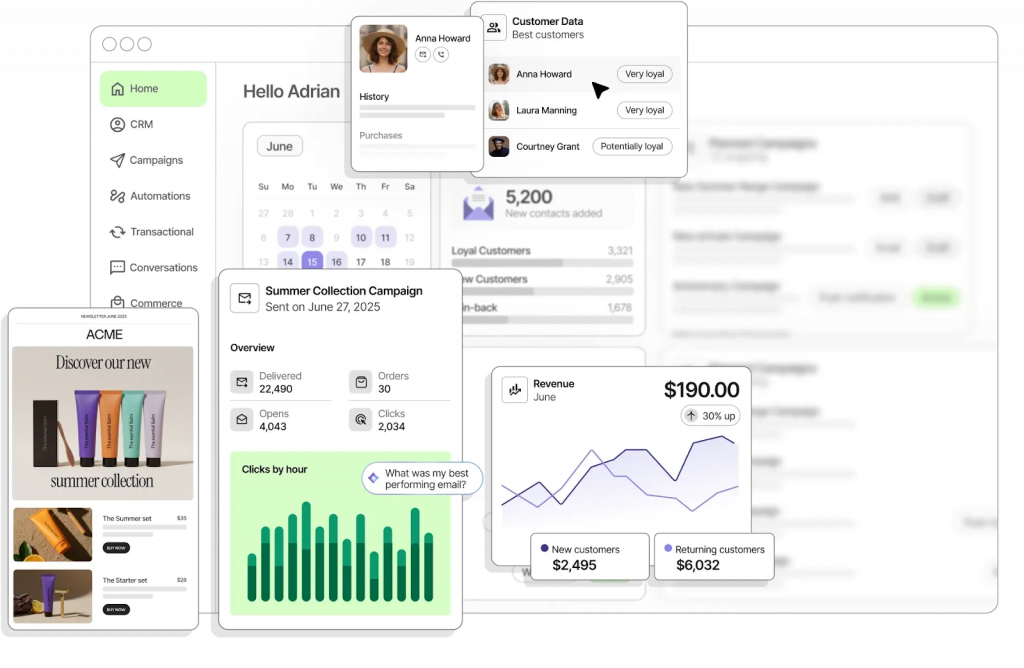
Brevo offers a flexible CRM platform designed for businesses that want multichannel marketing and automation across email, SMS, and WhatsApp without unnecessary complexity.
Unlike traditional email-only platforms, Brevo enables brands to coordinate communication across email, SMS, and messaging apps from a single dashboard.
Its focus on accessibility and multichannel capabilities makes it a popular choice for companies that want to expand their communication channels while maintaining centralized campaign management.
Key features and highlights
- Multichannel marketing dashboard: Brevo allows teams to manage campaigns across email, SMS, WhatsApp, and chat, making it easier to coordinate messaging across different customer touchpoints.
- Automation workflows with personalization triggers: Marketers can design automated journeys triggered by user actions, engagement signals, or CRM events to deliver timely and contextually relevant messages.
- Built-in CRM functionality: Brevo includes a lightweight CRM system that enables businesses to store customer profiles, manage contacts, and personalize messaging based on user data.
- Template library and campaign design tools: The platform offers 50+ customizable email templates and a drag-and-drop builder that simplifies campaign creation for non-technical teams.
- Cost-effective pricing and free tier: Brevo provides a free plan that allows businesses to test email automation and personalization features before committing to a paid subscription.
Brevo’s versatility and budget-friendly plans make it particularly appealing for small and mid-sized teams seeking multichannel outreach.
5. Braze

Braze is a real-time customer engagement platform for brands that require real-time messaging and sophisticated cross-channel automation.
The platform’s unified customer data model allows brands to deliver highly contextual communications triggered by real-time behavioral events.
Key features and highlights
- Real-time behavioral triggers: Braze enables marketers to trigger campaigns based on live customer interactions, such as app activity, product views, or engagement with previous messages.
- Advanced journey orchestration with Canvas: Braze Canvas allows teams to design dynamic customer journeys that adapt automatically based on engagement signals and user actions.
- AI-driven personalization and recommendations: The platform supports personalized content and product recommendations powered by behavioral data and predictive analytics.
- Cross-channel messaging capabilities: Campaigns can be coordinated across email, mobile push, SMS, in-app messaging, and web channels to deliver consistent experiences.
- Unified customer profiles: Braze consolidates behavioral, transactional, and engagement data into real-time customer profiles that power segmentation and personalization.
Braze is particularly popular among mobile-first brands, digital platforms, and enterprises managing complex customer engagement strategies.
6. Klaviyo
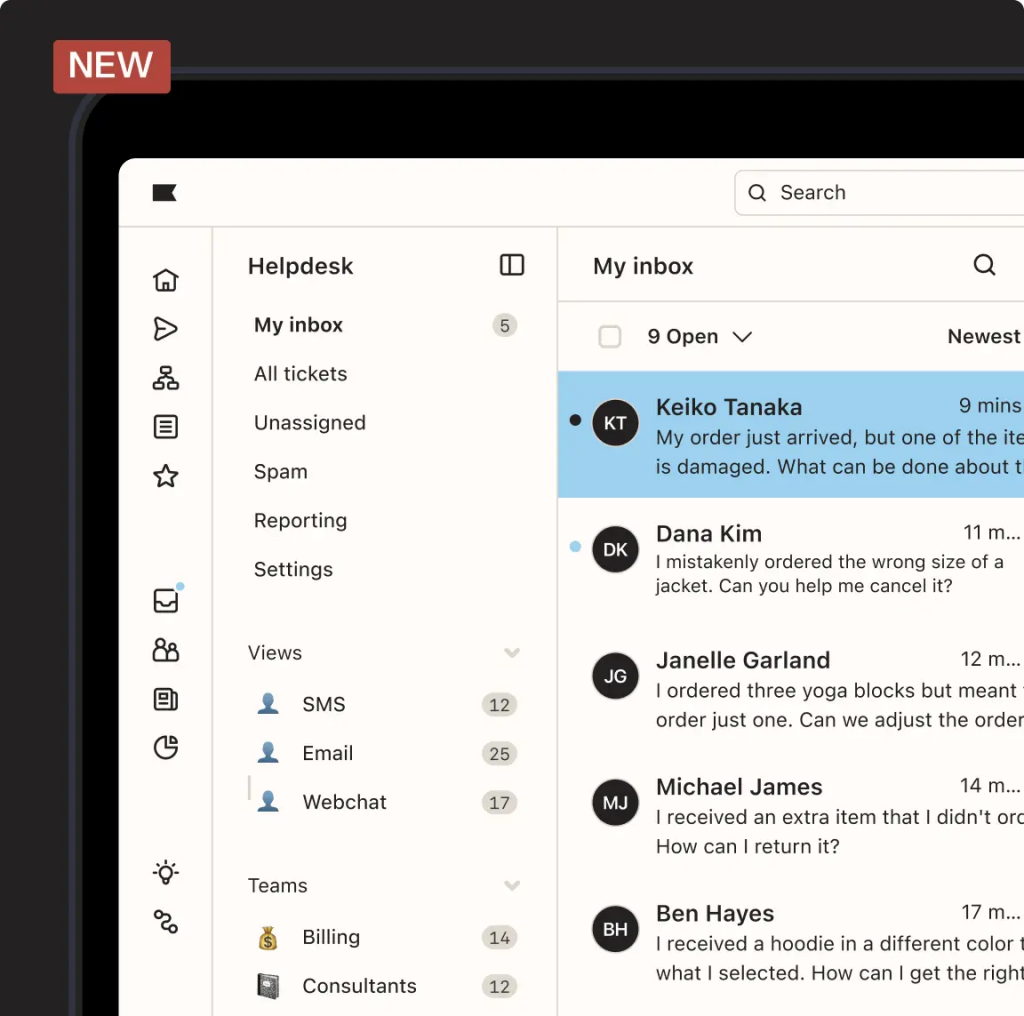
Klaviyo has become a leading email and SMS marketing automation platform for ecommerce brands, with strong behavioral personalization.
Designed specifically for online retailers, the platform integrates deeply with e-commerce systems to track browsing behavior, purchase patterns, and engagement activity.
This enables marketers to create highly personalized campaigns based on real-time shopping behavior.
Key features and highlights
- Event-based automation triggers: Klaviyo can automatically send campaigns triggered by actions such as cart abandonment, product views, or purchase milestones across email and SMS, enabling highly contextual marketing.
- Advanced customer segmentation: Marketers can create audience segments based on purchase history, browsing behavior, predicted lifetime value, and engagement signals.
- Predictive analytics for customer insights: Klaviyo’s predictive models estimate customer lifetime value (CLV), repeat purchase likelihood, and churn risk, helping brands prioritize high-value audiences.
- Ecommerce platform integrations: The platform integrates directly with platforms like Shopify and Magento, enabling real-time synchronization of product catalogues and customer data.
- Revenue attribution and ROI tracking: Klaviyo provides detailed reports that connect campaigns directly to revenue generated, enabling marketers to measure return on investment accurately.
For ecommerce brands focused on maximizing customer lifetime value through personalized messaging, Klaviyo is a popular, feature-rich solution.
The role of AI-driven automation in modern email marketing
Automation has evolved significantly in recent years. What once consisted of simple autoresponders now involves AI-driven systems capable of analyzing large volumes of customer data and optimizing messaging in real time.
Modern email platforms use machine learning to identify patterns in user behavior, predict engagement outcomes, and automatically adjust campaigns to improve results.
Examples of AI-driven automation include:
- Predictive send-time optimization: Platforms analyze historical engagement data to determine when each subscriber is most likely to open emails.
- Behavior-based campaign triggers: Emails can be triggered automatically when users browse products, abandon carts, or interact with content.
- Dynamic product recommendations: AI models suggest products based on browsing history and purchase behavior.
- Churn prediction and retention campaigns: Platforms can identify subscribers who are likely to disengage and automatically send retention-focused messaging.
For enterprise marketing teams managing millions of interactions, AI-driven automation improves both campaign efficiency and personalization accuracy.
How to choose the right email platform for automation and personalization
Selecting the right platform requires evaluating how well each solution supports your organization’s automation strategy, personalization needs, and integration requirements.
Important criteria include:
Automation capabilities
Look for platforms with advanced workflow builders, behavioral triggers, and AI-driven automation tools capable of scaling with complex marketing operations.
Personalization engine
A personalization engine allows marketers to tailor email content dynamically using customer data such as demographics, browsing behavior, or purchase history.
Integration capabilities
Effective automation depends on seamless connections with CRM systems, e-commerce platforms, analytics tools, and customer data platforms.
Scalability
Enterprise organizations should choose platforms capable of handling large contact databases, high sending volumes, and complex campaign workflows.
Pricing and support
Pricing models vary widely, and enterprise teams should consider support availability, onboarding resources, and global service coverage when selecting a vendor.
Evaluating these factors helps organizations select a platform that supports long-term marketing automation and personalization strategies.
Turning automation and personalization into competitive advantage
Email marketing has evolved into a sophisticated ecosystem where automation, predictive analytics, and personalization engines work together to deliver highly relevant customer experiences.
The platforms highlighted in this list each bring unique strengths to the table. Some excel in enterprise-scale orchestration, while others focus on automation flexibility, e-commerce integrations, or multichannel engagement.
For enterprise marketing teams, the right choice often depends on factors such as:
- The complexity of customer journeys
- The need for cross-channel coordination
- Integration requirements with existing marketing technology
- Scalability for growing customer databases
Platforms like Insider One stand out for organizations that need deep personalization, AI-driven automation, and cross-channel orchestration at scale. At the same time, other tools provide strong solutions for specific use cases such as CRM-centric marketing or e-commerce engagement.
Ultimately, the most effective platforms are those that enable marketers to activate customer data in real time, automate meaningful interactions, and deliver consistent experiences across every touchpoint.
To learn how Insider One can transform your marketing campaigns, book a personalized demo or take a platform tour today. Experience how AI-driven automation, predictive analytics, and real-time personalization can boost engagement, streamline campaigns, and accelerate ROI for your enterprise.
FAQs
Focus on features such as advanced segmentation, dynamic content personalization, automation workflow builders, predictive analytics, and integrations with your marketing technology stack. These capabilities enable more targeted campaigns and efficient marketing operations.
Most platforms offer entry-level plans suitable for smaller lists, while enterprise tiers unlock advanced automation features, higher sending limits, and deeper personalization capabilities. Pricing typically scales based on contact volume and feature access.
Integrations with CRM systems, ecommerce platforms, analytics tools, and social media channels enable marketers to unify customer data and trigger automated campaigns based on cross-channel interactions.
Leading platforms automatically segment audiences using behavioral data, demographics, or engagement signals. This allows marketers to deliver dynamic content tailored to each recipient’s interests and actions.
Maintaining clean contact lists, using double opt-in signup methods, authenticating sender domains, and avoiding spam-triggering content help ensure emails reach subscribers’ inboxes consistently.

Keep Reading
7 min.

Muharrem Derinkok
4 Jun 2026
11 min.

Chris Baldwin
2 Jun 2026
4 min.
Chris Baldwin
3 Feb 2026