

 Platform Overview

 Integration Hub

 Agent One™

 Agent One Teams™

 Customer Data Management

 Personalization

 Journey Orchestration

 Reporting & Data

 Behavioral Analytics

 Web
Web

 Email
Email

 Site Search

 Conversational CX

 WhatsApp

 Web Push

 InStory

 App
App

 SMS & RCS

 Join the $0 Migration Movement™

 The Insider One Difference

 Compare Vendors

 Switch to Insider One

 Success Story

 Retail & Ecommerce

 Financial Services

 Travel & Hospitality

 Beauty & Cosmetics

 Automotive

 Telecommunications

 Total Economic Impact™ Study

 Blog
Blog

 E-Books & Guides

 Glossary
Welcome Email Series Best Practices for a Sequence That Actually Converts

Updated on 4 Aug 2026
8 min.
Table of Contents
Most Popular
Summary
- Treat your welcome series as a diagnosable revenue engine: assign each email one conversion job, then measure that job’s performance individually
- Blended open rates are unreliable after Apple Mail Privacy Protection (MPP) inflated opens across the board; click-to-open rate (CTOR) and conversion rate tell the real story
- A five-email arc, gratitude, brand story, social proof, education, and offer, gives new subscribers a reason to open every message instead of skimming one and ignoring the rest
- The first email should fire within minutes of signup; spacing the remaining emails across seven to 14 days keeps momentum without fatiguing new subscribers
- Segment by signup source and capture zero-party preference data early so the series can route each subscriber down the path most likely to convert
A welcome email series is the automated sequence a subscriber receives after opting in, and it is the single highest-intent moment you get with a new contact all year. This article is for lifecycle, customer relationship management (CRM), and ecommerce marketers who own email automation and answer for series revenue, not just open rates.
You will learn how to structure a five-email arc with one conversion job per message, time each sent to match buying intent, segment by signup source, and diagnose exactly which email in the sequence is breaking conversion.
The goal is not another template to copy. It is a framework for treating the welcome series as a system you can measure, isolate, and fix one email at a time.
Why the first 14 days decide your sender reputation
The engagement a new subscriber shows in their first two weeks sets the trajectory for every campaign you send them afterward. Inbox providers use those early signals, opens, clicks, replies, and deletions, to decide how much of your future mail lands in the primary inbox versus promotions or spam.
A welcome series that gets ignored teaches the algorithm to deprioritize you before your best offers ever reach the subscriber.
That makes the stakes of this sequence bigger than the revenue it generates directly. A weak welcome series quietly suppresses deliverability for every newsletter and promotional campaign that follows, which is why it deserves the same scrutiny as your highest-volume automated flow.
Marketers who treat it as a “set it and forget it” flow are often the same ones puzzled by declining inbox placement months later.
Raw open-rate numbers have also become less trustworthy since Apple Mail Privacy Protection began pre-loading tracking pixels, which inflates opens regardless of whether a subscriber is actually engaged.
If your welcome series shows a strong open rate but flat clicks and conversions, you’re likely looking at an MPP artefact, not real interest.
Shift your primary diagnostic metric to CTOR, the percentage of people who clicked out of everyone who opened, along with conversion rate per email. These two numbers are harder to inflate and far more honest about which message is actually working.
Mapping each email to one conversion job
A welcome series converts when every email has exactly one job and one call-to-action (CTA) built to complete it. Multi-link, multi-offer emails ask a brand-new subscriber to make several decisions at once, and new subscribers who don’t yet trust you enough to make a single decision certainly won’t make three.
A focused five-email arc gives each message a clear reason to exist and a clear way to measure whether it worked.
• Welcome and gratitude: confirm the signup, set expectations for what’s coming, and ask for one small action like adding your address to their contacts
• Brand story: explain what makes the brand different, with a single CTA to explore the story further or browse a starting category
• Social proof: feature reviews, ratings, or user-generated content, with the CTA pointed at the products or content most requested by similar subscribers
• Education: show how to use the product or service well, positioning the brand as useful rather than promotional
• Offer and urgency: introduce a first-purchase incentive with a deadline, the one email in the series built to close
Each email should be judged against its own job. If email three’s job is social proof, a strong CTOR there but weak conversion may be fine, since its purpose is trust, not the sale.
Email five carries the conversion burden, and that’s where you should hold the highest bar.
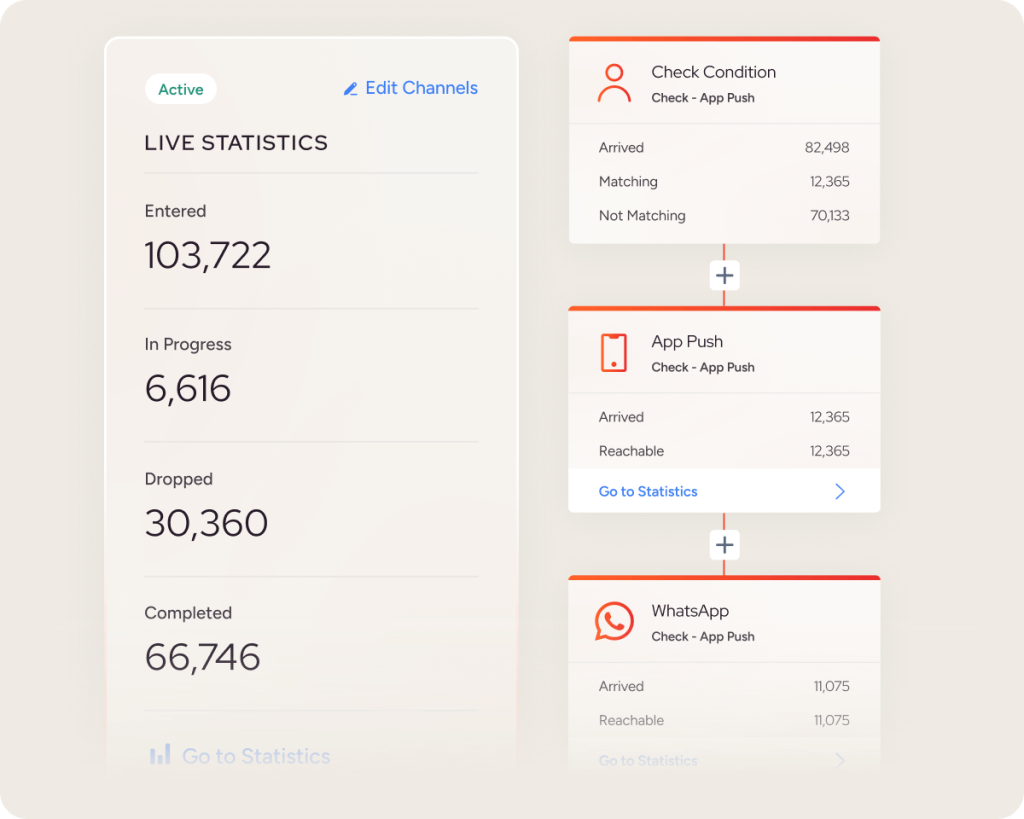
Building this logic inside Journey Orchestration lets you map each step, branch by engagement, and see per-email performance without stitching together spreadsheets.
Timing and cadence that match buying intent
Email one should fire within minutes of signup, while intent is at its peak and the subscriber still remembers exactly why they gave you their address.
A delay of even a few hours lets that intent cool, and by the next day many subscribers won’t recall opting in at all, which shows up as lower opens and higher spam complaints on an email that should be your best performer.
Spacing the remaining emails
After the immediate welcome send, space the rest of the series across seven to 14 days rather than front-loading every message into the first 48 hours. A common working cadence sends email two around day two or three, email three around day five or six, email four around day eight or nine, and the offer email around day 11 to 14.
This gives subscribers room to engage with your brand outside the inbox, through the website or app, before you ask for a purchase decision. Sending too fast reads as pressure; sending too slow lets the moment go cold, so the middle path is the one worth testing against your own audience’s response curve.
Segmenting the series by signup source and intent
Where a subscriber came from tells you a lot about what they’re ready to hear, and building that into the series from the start lifts conversion more reliably than tweaking copy after the fact.
Someone who signed up from a discount pop-up is primed for an offer; someone who signed up from a loyalty program page wants to understand benefits first. Sending both groups an identical five-email arc wastes the intent signal you already captured at the point of entry.
Building signup-source segmentation
Use the source field captured at opt-in, whether that’s a pop-up, a checkout account creation, an app install, or a content download, to route subscribers into distinct versions of the series.
A checkout-driven signup can skip straight to product education, while a content-driven signup benefits from more brand story before any offer appears.
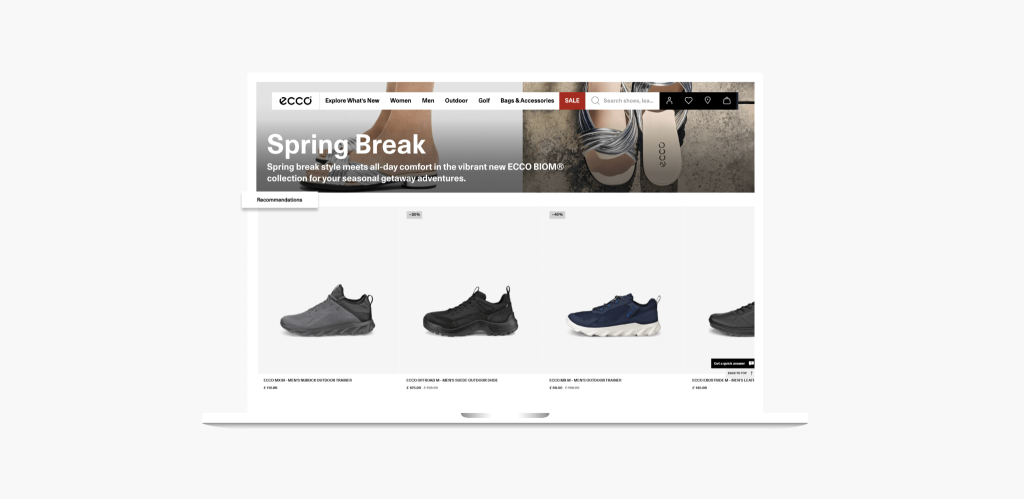
ECCO built segmentation like this into its customer data strategy and saw a 95% lift in conversion rate alongside a 7.4x return on the broader program, evidence that routing subscribers by intent rather than treating them as one audience compounds results.
Capturing zero-party data at signup
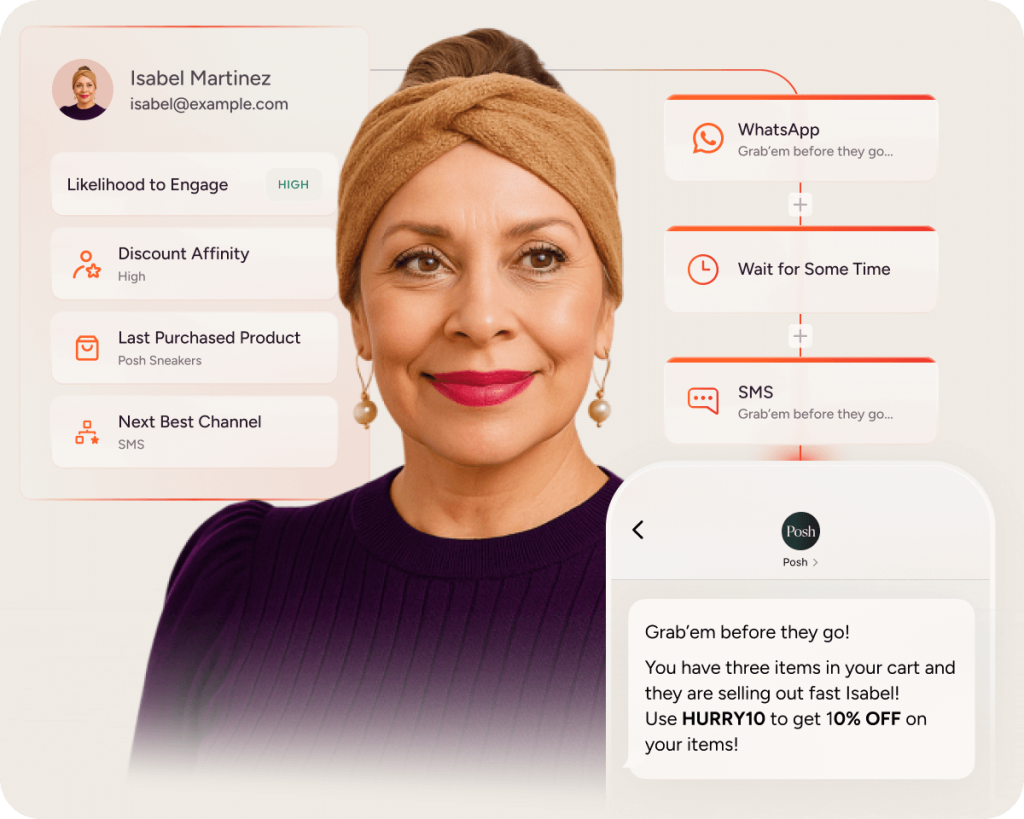
Zero-party data, the preferences a subscriber tells you directly rather than data you infer from behavior, is the fastest way to route someone correctly from message one.
A short preference question at signup, category interest, gender, or purchase occasion, lets you personalize email two onward without waiting weeks for behavioral data to accumulate. Combined with a unified Customer Data Management layer, that preference signal can also inform every other channel the subscriber touches next.
Diagnosing and testing an underperforming series
The fastest way to fix a weak welcome series is to stop looking at it as one flow and start looking at it as five separate diagnostic checkpoints. Pull open rate, CTOR, and conversion rate for each individual email, then compare them against each email’s specific job.
A collapse in CTOR between email one and email two usually points to a subject line or send-time problem. A collapse in conversion at email five, despite healthy clicks, usually points to a weak or poorly timed offer rather than a messaging problem.
Reading the pattern correctly
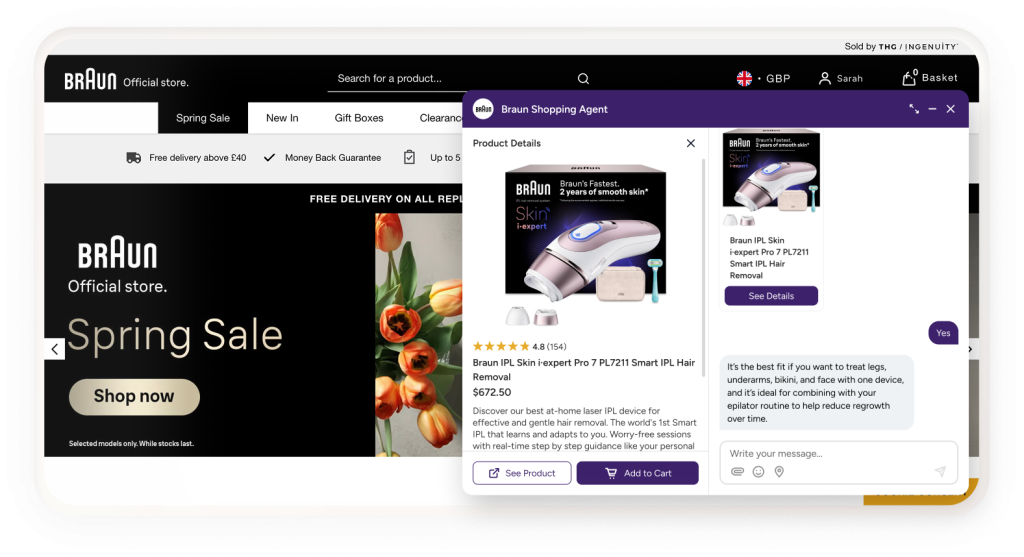
If open rates stay flat across all five emails but conversion drops sharply after email three, the issue isn’t deliverability, it’s relevance: subscribers are opening out of habit but no longer finding a reason to act. Braun addressed a similar drop-off using an artificial intelligence (AI) shopping agent to keep recommendations relevant deeper into the journey, contributing to an 18% lift in revenue influence.
That kind of pattern only becomes visible once you stop averaging performance across the whole series and start reading each email as its own signal.
Testing one variable at a time
Once you’ve isolated the weak email, test one variable at a time, not three at once, so you know what actually moved the number.
• Subject line phrasing and personalization tokens against your current control
• Offer placement, testing the incentive higher in the email versus reserved for a final push
• Send timing, shifting by a day or two to see whether cadence, not content, is the real issue
• CTA copy and button placement when clicks lag behind opens
Layering AI capabilities into this process helps surface which subject lines and send windows are already working for similar segments, so testing builds on a stronger baseline instead of starting from zero every time.
Why choose Insider One for welcome series automation
Diagnosing a welcome series email by email depends on whether your platform reports at the step level or only on the flow as a whole.
In Architect, each of the five emails is a discrete step you can report on individually, and branches route subscribers by the signup source held in their profile, so a checkout signup and a pop-up signup follow different arcs from message one. Preference data captured at opt-in sits in that same profile, available to email two onward and to every other channel the subscriber touches.
For the timing questions above, Send Time Optimization triggers each send at the hour an individual subscriber is most likely to engage rather than one window for the whole list, and Auto-Winner Selection resolves subject line tests without manual monitoring.
To evaluate the fit of Journey Orchestration, Customer Data Management, and AI capabilities for your use case, book a personalized demo to review your goals, data requirements, and implementation constraints with the Insider One team.
FAQs
Five emails is a strong working baseline: gratitude, brand story, social proof, education, and offer. Fewer than three rarely gives you enough room to build trust before asking for a sale, and more than six risks fatigue without adding a distinct conversion job for each new message.
Blended open-rate benchmarks are unreliable due to Apple Mail Privacy Protection inflating results across inbox providers. Focus on click-to-open rate and conversion rate per email instead, and compare each email against its own historical baseline rather than an industry-wide open-rate number.
Within minutes of signup, the intent is highest. Delaying even a few hours lets the subscriber’s original motivation fade, which shows up as lower engagement and a higher chance the subscriber forgets they opted in at all.
No. Reserve the strongest offer for the final email in the arc, once you’ve built brand story and social proof. Leading every message with a discount trains subscribers to wait for markdowns and undercuts full-price conversion later.
Compare click-to-open rate and conversion rate for each email against its intended job. A drop in clicks after email one usually points to subject lines or timing; a drop in conversion at the final email usually points to the offer itself, not the messaging around it.

Keep Reading
7 min.

Muharrem Derinkok
4 Jun 2026
11 min.

Chris Baldwin
2 Jun 2026
4 min.
Chris Baldwin
3 Feb 2026