

 Platform Overview


 Integration Hub


 Agent One™


 Agent One™ Teams


 Customer Data Management


 Personalization


 Journey Orchestration


 Reporting & Data


 Behavioral Analytics


 Web


 Email


 Site Search


 Conversational CX


 WhatsApp


 Web Push


 InStory


 App


 SMS & RCS


 Join the $0 Migration Movement™


 The Insider One Difference


 Compare Vendors


 Switch to Insider One


 Success Story


 Retail & Ecommerce


 Financial Services


 Travel & Hospitality


 Beauty & Cosmetics


 Automotive


 Telecommunications


 Total Economic Impact™ Study


 Blog


 E-Books & Guides


 Events


 Glossary
SMS Automation Strategies: 8 Flows, Real Examples and 5 Tools Compared

Updated on 18 Nov 2026
20 mins.
Table of Contents
- Summary
- What SMS automation is, and how it differs from bulk texting
- 8 SMS automation strategies that drive revenue
- 1. Welcome series: Turn new SMS subscribers into first-time buyers
- 2. Cart abandonment: Recover sales that stall at checkout
- 3. Browse abandonment: Follow up on product interest before it fades
- 4. Price drop and back-in-stock alerts: Bring shoppers back when price or stock changes
- 5. Order, shipping and delivery updates: Keep customers informed and reduce "where is my order" contacts
- 6. Replenishment reminders: Secure the reorder before customers run out
- 7. Win-back: Re-engage customers who have gone quiet
- 8. Post-purchase reviews and loyalty: Turn a first order into a lasting relationship
- Beyond ecommerce
- How to build an SMS automation flow in 7 steps
- SMS compliance and deliverability in 2026
- Cost traps to plan for
- SMS automation metrics to track
- The 5 best SMS automation tools in 2027, compared
- Conclusion
- Frequently Asked Questions
Most Popular
Summary
- The best SMS automation strategies are triggered by what a customer does, such as leaving a cart, buying or going quiet, not by a sending calendar.
- Eight flows cover most of the revenue: welcome, cart abandonment, browse abandonment, price drop and back in stock, order and delivery updates, replenishment, win-back and post-purchase.
- Every flow needs the same building blocks: a consent check, quiet hours, a frequency cap, an exit rule and a fallback channel for customers who cannot receive texts.
- US compliance moved in 2025 and 2026: unregistered 10DLC traffic is blocked, and revised TCPA opt-out rules apply from November 25, 2026.
- The biggest gains come when SMS runs inside a cross-channel journey and AI decides which customers a text will actually influence. Levi’s used Agent One in its inactive-customer journey to reserve SMS for fans it was more likely to bring back, and reached 2.6X the reactivation rate of an equivalent rule-based journey.
Text messages reach customers on the one device they keep closest, which makes SMS powerful and easy to overuse. The difference between a text that drives a sale and one that drives an opt-out is usually timing and relevance, and both come from automation that reacts to real customer behavior.
This guide covers eight SMS automation strategies with the trigger, timing and fallback for each, a framework for building any flow, the compliance rules that apply in 2026, and how five SMS automation tools compare.\
What SMS automation is, and how it differs from bulk texting
SMS automation sends text messages when a set condition is met: a customer subscribes, abandons a cart, places an order or stops buying. Each message is triggered by an event or a data change, personalized with profile data and governed by rules for timing, frequency and consent.
Bulk texting sends the same message to a list at a scheduled time. It still has a place for flash sales or announcements. Automated flows are more relevant by design, because each message arrives when the customer has just interacted with the brand.
In 2027, SMS automation also works best as one step in a cross-channel journey rather than a standalone channel. A journey orchestration platform can decide which channel each customer gets at each step.
In Architect, Insider One’s customer journey orchestration solution, Next Best Channel uses machine learning to predict how likely each customer is to engage on SMS, email, WhatsApp, web push and app push, takes reachability into account, and routes them to the channel with the highest probability.
For more on how SMS fits alongside other channels, see Insider One’s guide to omnichannel SMS marketing.
Where RCS fits
Rich Communication Services (RCS) adds branded sender profiles, images, carousels and buttons to the native messaging app. iPhone support has grown: Apple’s iOS 26.5 brought end-to-end encryption to iPhone and Android RCS conversations with supported carriers, MacRumors reports. Availability still depends on country, carrier and device, so treat RCS as an upgrade on top of SMS rather than a replacement.
With Insider One’s SMS and RCS, messages can show a verified brand profile with logo and badge, carry rich cards or carousels of up to six cards, and include call-to-action and quick-reply buttons.
Quick-reply answers, such as a preferred style, can be captured as profile attributes and used for later segmentation. Teams can enable SMS fallback so customers whose device or carrier does not support RCS still receive a text.
8 SMS automation strategies that drive revenue
1. Welcome series: Turn new SMS subscribers into first-time buyers
Trigger: a new SMS opt-in.
Flow: send a confirmation right away that states what the subscriber signed up for, how often the brand will text and how to opt out. Follow with one or two messages over the next few days that deliver any promised offer and point to best-sellers or a category the subscriber browsed.
Exit rule: stop the series once the subscriber buys.
Metric to watch: first-purchase conversion and opt-out rate in the first 30 days.
2. Cart abandonment: Recover sales that stall at checkout
Trigger: a cart or checkout started without an order within a set window.
Flow: send the first reminder within about an hour, showing the product left behind. Email or push can carry this first touch, with SMS following a few hours later if the cart is still open, as in the example timeline below. A second message, if any, can add a reason to buy, such as free shipping or low stock. Keep discounts for later steps or for price-sensitive segments, so customers do not learn to wait for a code.
Exit rule: stop when an order is placed.
Example: sports brand Slazenger sent cart reminders across email, web push and SMS, with SMS carrying coupon codes. Slazenger used Architect with Insider One AI to design the journey, choosing the channels, wait times and send times that performed best. Slazenger reports recovering 40% of abandoned revenue in a single campaign and a 49X ROI within eight weeks.
Metric to watch: recovered revenue per message and the share of carts recovered.
3. Browse abandonment: Follow up on product interest before it fades
Trigger: repeated views of a product or category without an add to cart.
Flow: send one message within a day or two that features the viewed product or a close alternative. Browse intent is weaker than cart intent, so keep this to a single text and use email for further follow-up.
Exit rule: stop if the shopper adds to cart, which moves them into the cart flow.
Metric to watch: click-through and conversion, compared with the opt-out rate.
4. Price drop and back-in-stock alerts: Bring shoppers back when price or stock changes
Trigger: a change in product data: a price falls past a set threshold, or an out-of-stock item returns.
Flow: text only shoppers who showed interest in that product, through a view, a wishlist, a cart or a back-in-stock sign-up. Set a minimum discount so small price changes do not create noise.
Exit rule: send once per product and price change.
Metric to watch: conversion rate per alert.
5. Order, shipping and delivery updates: Keep customers informed and reduce “where is my order” contacts
Trigger: order confirmation, dispatch, out for delivery and delivered events.
Flow: keep these messages transactional and fast. Clear delivery updates can also reduce “where is my order” contacts to customer service. If the flow adds a cross-sell, it should wait until a few days after delivery and base it on what the customer bought.
Metric to watch: delivery rate and customer service contacts about order status.
6. Replenishment reminders: Secure the reorder before customers run out
Trigger: the expected run-out date for a consumable, based on product size or the customer’s own reorder history.
Flow: if a customer reorders roughly every 45 days, send a reminder around day 40 with a direct link to reorder the same product.
Exit rule: cancel the reminder if the customer reorders early.
Metric to watch: repeat purchase rate and time between orders.
7. Win-back: Re-engage customers who have gone quiet
Trigger: no purchase within the customer’s usual buying cycle, or a set period such as 60 or 90 days.
Flow: start with something relevant, such as new arrivals in a category they bought from. Test whether an offer is needed before adding one. If a customer does not respond after two or three touches, lower their SMS frequency rather than keep texting.
Example: Levi’s used Agent One, the self-optimizing intelligence system for customer engagement, in its inactive-customer journey. Agent One chose the channel, timing, content and offer for each fan within the budgets, contact frequency limits and allowed offers the team set, and reserved SMS for the fans it was more likely to influence.
Against an equivalent rule-based journey, it delivered 2.6X the reactivation rate, and the share of reactivated purchases that needed a discount fell by 72%.
Metric to watch: reactivation rate and opt-outs per send.
8. Post-purchase reviews and loyalty: Turn a first order into a lasting relationship
Trigger: delivery confirmed plus enough time to use the product.
Flow: ask for a review with a one-tap link, share loyalty points earned, or suggest a product that pairs with the purchase. Choose one goal per message.
Metric to watch: review submissions and second-order rate.
Beyond ecommerce
The same logic applies in other industries. A SaaS company can text a trial user who has not used a core feature by day three with a link to that feature. Travel brands can send check-in and gate updates, and service businesses can send appointment confirmations and reminders with reply keywords to confirm or reschedule.
How to build an SMS automation flow in 7 steps
1. Set one goal. Recover carts, drive a second order or reduce no-shows. One goal per flow keeps the messages focused.
2. Define the trigger and exit rule. Name the exact event that starts the flow and the event that ends it, such as an order placed.
3. Check eligibility. Confirm the customer has SMS marketing consent for promotional messages, and check reachability before the SMS step.
4. Set timing rules. Add waits that match intent, quiet hours in the recipient’s time zone and a frequency cap shared with the brand’s other SMS flows.
5. Write for the screen. Lead with the reason for the text, name the brand, add one link and keep the message within one segment where possible.
6. Add branches and a fallback. Branch on whether the customer clicked or bought. Route customers who cannot receive SMS to email, push or WhatsApp instead of dropping them.
7. Measure against a control group. Hold out a small share of the audience to see the revenue the flow actually adds.
Example: a cart abandonment timeline
| Step | Timing | Channel | Content |
| 1 | 30 to 60 minutes after abandonment | Push or email | Reminder with product image |
| 2 | If no order after about 4 hours, outside quiet hours | SMS (or RCS with SMS fallback) | Short reminder with a direct cart link |
| 3 | If no order after 24 hours | Reviews, alternatives or free shipping | |
| 4 | If no order after 48 hours, price-sensitive segment only | SMS | Limited-time code |
Exit at any step when an order is placed. Adjust the timings by testing, because the right waits depend on category and price point.
SMS compliance and deliverability in 2026
Compliance rules change often and differ by country. The points below describe the US situation as of November 2026. They are a starting point for a conversation with a legal team, not legal advice.
10DLC registration
Businesses texting US customers from standard 10-digit long codes must register their brand and campaigns through The Campaign Registry. Bandwidth states that unregistered outbound traffic has been blocked across the industry since February 1, 2025. Registration also affects throughput and carrier fees, so it should be completed before volume scales up.
TCPA consent
Marketing texts generally require prior express written consent. In January 2025, the US Court of Appeals for the Eleventh Circuit vacated the FCC’s “one-to-one” consent rule before it took effect, as Morrison Foerster summarized, so consent does not have to name a single seller. Keep a record of when, where and how each subscriber opted in, and what they agreed to.
Opt-outs and revocation
Since April 2025, senders must honor opt-out requests made by any reasonable means and process them within 10 business days. A revised FCC rule applies from November 25, 2026, according to CommLaw Group:
• An opt-out from marketing messages still covers all future marketing texts from that sender.
• For informational messages, an opt-out can be treated as covering only the category it was sent in response to.
• Senders may name specific opt-out methods as the only accepted ones, if they disclose them clearly. For texts, the keywords STOP, QUIT, END, REVOKE, OPT OUT, CANCEL and UNSUBSCRIBE must always be honored.
The FCC is also consulting on further changes, including a shorter processing deadline, so teams should check the status before finalizing an opt-out process.
Quiet hours
Build quiet hours into every flow and apply them in the recipient’s time zone. Some US states set stricter windows than others. Klaviyo’s documentation, for example, notes that Florida limits sending to between 8 a.m. and 8 p.m., and that France blocks marketing texts on Sundays and public holidays. Messages that arrive during quiet hours should wait until the next allowed time, not be sent anyway.
Outside the US
Sender registration, consent rules and quiet hours vary by country. Confirm sender ID requirements and data protection rules, such as GDPR in Europe, for each market before launch.
Cost traps to plan for
• Message segments: an SMS is billed per segment. A message using the standard GSM-7 character set fits 160 characters in one segment, but a single emoji or special character switches it to Unicode, which fits 70. Longer messages split into several segments and cost more.
• Carrier and registration fees: 10DLC registration, carrier surcharges and short code leases add to per-message prices.
• Volume growth: ask vendors for pricing at 10 times current volume, and model costs by country and sender type.
• Lock-in: check whether segments, journeys and consent records can be exported, and get an estimate for rebuilding flows before switching platforms.
SMS automation metrics to track
| Metric | What it shows |
| Delivery rate | Whether registration, sender setup and list quality are in order |
| Click-through rate | Whether the message and timing are relevant |
| Conversion rate | Whether the flow drives the action it was built for |
| Revenue per message | The commercial value of each send, useful for comparing flows |
| Opt-out rate per send | Whether frequency or relevance is pushing subscribers away |
| Incremental revenue | Revenue compared with a holdout group that did not get the flow |
The 5 best SMS automation tools in 2027, compared
Most platforms send automated texts. The differences show up in three places: how well SMS fits into cross-channel journeys, how much compliance work the tool handles, and what it costs once volume grows.
The profiles below cover automation and compliance features each vendor documents. For a broader comparison that includes Attentive and Salesforce, see Insider One’s roundup of SMS marketing platforms.
| Tool | Best fit | Documented automation and compliance features |
| Insider One | Enterprise brands orchestrating SMS with 12+ channels from one customer profile | SMS and RCS with automatic SMS fallback, SMS in Architect journeys, Agent One for channel, timing, content and offer decisions, Next Best Channel, send time optimization, silent hours, frequency capping, reachability checks, AI text generation |
| Klaviyo | Ecommerce teams using Klaviyo for email | SMS flows alongside email, quiet hours by recipient time zone with state and country rules |
| Braze | Mobile-first brands with in-house engineering | SMS, MMS and RCS; A2P 10DLC, short code and long code setup; keyword handling, double opt-in and link shortening |
| Iterable | Cross-channel marketing teams | SMS double opt-in components, quiet hours adjusted to each user’s inferred time zone |
| Bloomreach | Commerce brands using Bloomreach for data and journeys | SMS sign-up units, double opt-in, keyword auto-responses, TCPA list validation |
Insider One

Insider One’s SMS and RCS channel is native to Architect, so a text can be triggered by real-time behavior and coordinated with email, web push, WhatsApp and other channels from one customer profile. Several capabilities map directly to the flows above:
- Price drop and back-in-stock journeys: On Price Drop and On Back in Stock starters enroll shoppers automatically when the product feed records a change, if they viewed, wishlisted or otherwise engaged with that product. Product filters keep small discounts from triggering texts.
- Smarter discounting: the Discount Affinity predictive segment separates shoppers who respond to discounts from those likely to buy at full price, so codes go where they change the outcome.
- Stock control before send: a check confirms the product is still in stock immediately before the SMS goes out.
- Channel and timing decisions: Next Best Channel uses machine learning to route each customer to the channel they are most likely to engage with, and send time optimization finds each customer’s best hour outside silent hours.
- RCS with SMS fallback: verified brand profiles, carousels and quick-reply buttons, with an SMS fallback teams can enable for customers RCS cannot reach.
- Agent One: Agent One decides channel, timing, content and offer for each customer within the budgets, frequency limits and allowed offers a team sets, as in the Levi’s win-back example above.
Silent hours, frequency capping, reachability checks and click-based branching are available in every journey, and pre-built, compliant opt-in templates and gamified forms help grow the subscriber list.
Klaviyo
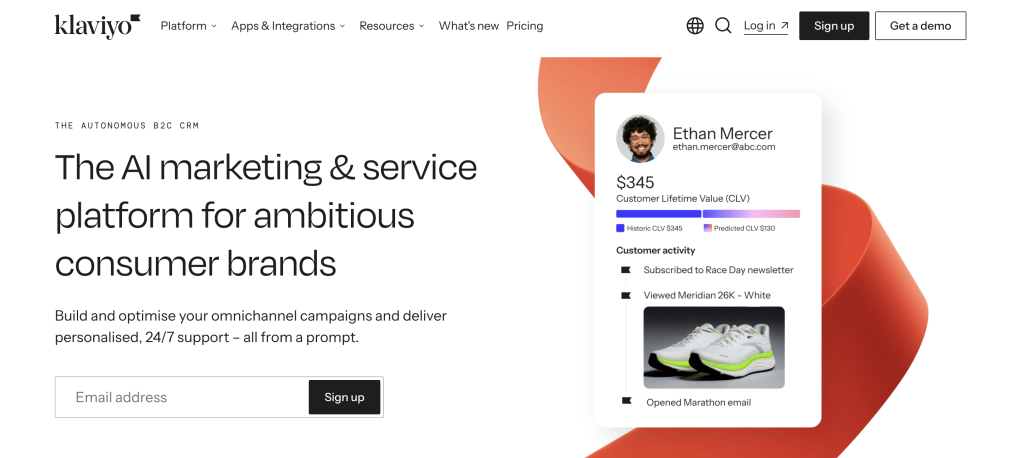
Klaviyo pairs SMS with its email and customer data tools, which suits ecommerce teams already using it. Its flows apply quiet hours based on each recipient’s time zone, with stricter rules for certain US states and countries, and messages wait until the next allowed time. Teams should check pricing against expected message volume.
Braze
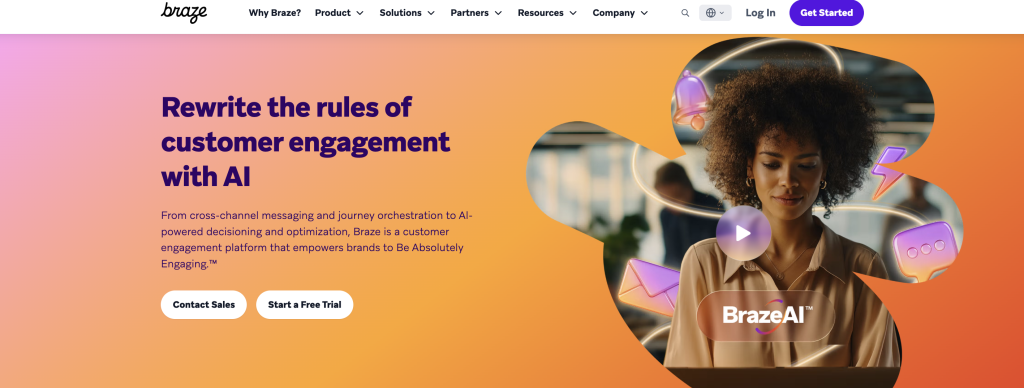
Braze supports SMS, MMS and RCS in its cross-channel platform, with documentation for A2P 10DLC, short codes, long codes and alphanumeric sender IDs. It also documents opt-in and opt-out keyword processing, double opt-in and link shortening. Braze notes that RCS availability depends on country, carrier and device support.
Iterable
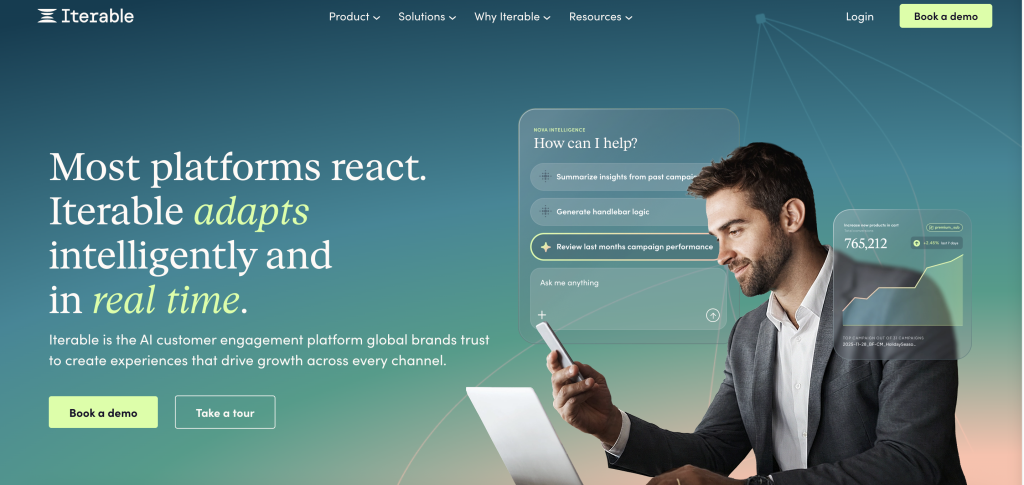
Iterable provides SMS within its cross-channel platform, with double opt-in components. Since November 2025, it can infer each user’s time zone from SMS link clicks, so quiet hours apply in local time.
Bloomreach
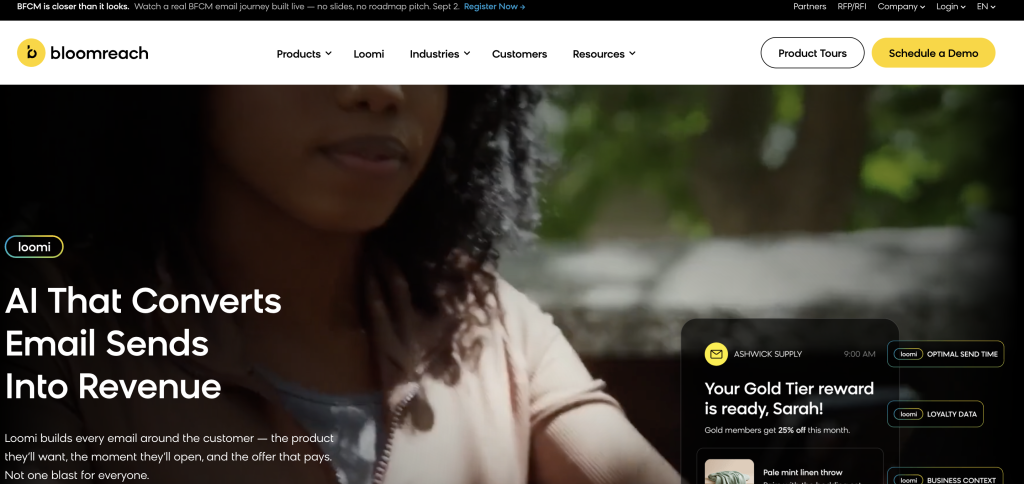
Bloomreach Engagement combines SMS with customer data and journey orchestration for commerce brands. Its documentation covers SMS double opt-in, sign-up units, keyword auto-responses and TCPA list validation for US programs.
Conclusion
Effective SMS automation strategies start with the customer’s behavior and end with a clear exit rule. Begin with the flows closest to purchase, such as cart abandonment and order updates, then add welcome, replenishment and win-back once consent, quiet hours, frequency caps and fallback channels are in place. Review compliance with a legal team, especially with the revised US opt-out rules in effect from November 25, 2026.
To see how SMS and RCS work inside Insider One’s journeys, take the interactive platform tour or book a personalized demo.
Frequently Asked Questions
The flows closest to purchase usually come first: cart abandonment, order and delivery updates, price drop and back-in-stock alerts, and a welcome series. Replenishment, win-back and post-purchase flows add repeat revenue once those are running.
Bulk SMS sends one message to a list at a set time. SMS automation sends individual messages when a customer does something, such as abandoning a cart, and personalizes them with that customer’s data.
Yes, for any business that sends texts to US numbers from a standard 10-digit long code. Brand and campaign registration goes through The Campaign Registry, and unregistered traffic has been blocked by carriers since February 2025. Short codes and toll-free numbers have their own approval processes.
In the US, marketing texts generally require prior express written consent under the TCPA, and senders must honor opt-outs. Other countries have their own rules. Keep records of every opt-in and confirm the approach with legal counsel.
There is no universal number. Set a frequency cap across all SMS flows, tell subscribers how often to expect messages when they sign up, and watch opt-out rate per send. If opt-outs rise, reduce frequency for less engaged customers first.
Use RCS where it is supported for richer, branded messages, but keep SMS as the fallback. RCS availability depends on country, carrier and device, so SMS remains the channel that reaches almost any mobile phone.
Aim for one segment: 160 characters with standard characters, or 70 if the message includes emojis or special characters. State the reason for the text, include the brand name and one link, and add opt-out instructions where required.

Keep Reading
4 min.

Chris Baldwin
3 Feb 2026
10 mins.
Chris Baldwin
18 Nov 2026
10 mins.
Chris Baldwin
18 Nov 2026