

 Platform Overview

 Integration Hub

 Agent One™

 Agent One Teams™

 Customer Data Management

 Personalization

 Journey Orchestration

 Reporting & Data

 Behavioral Analytics

 Web
Web

 Email
Email

 Site Search

 Conversational CX

 WhatsApp

 Web Push

 InStory

 App
App

 SMS & RCS

 Join the $0 Migration Movement™

 The Insider One Difference

 Compare Vendors

 Switch to Insider One

 Success Story

 Retail & Ecommerce

 Financial Services

 Travel & Hospitality

 Beauty & Cosmetics

 Automotive

 Telecommunications

 Total Economic Impact™ Study

 Blog
Blog

 E-Books & Guides

 Glossary
Product Recommendation Engines: Turning Attributed Revenue Into Real Life

Updated on 7 Aug 2026
7 min.
Table of Contents
Most Popular

Summary
- Widget-attributed revenue overstates impact; a holdout test is the only reliable way to isolate real incremental lift
- Match algorithm type to the moment: collaborative and personalized models for known users, generic and trending models for cold-start products with no history
- Cross-channel extension into email, push, and in-app closes the loop on browsing behavior that single-placement recommendations miss
- B2B recommendation use cases, including account-level and industry-based suggestions, remain underused despite multi-stakeholder buying cycles
- Track average order value (AOV) lift, repeat purchase rate, and category discovery, not just click-through rate
A product recommendation engine is the system that decides which products to show each shopper, using behavioral, transactional, and catalog data instead of a merchandiser’s fixed list. The harder question isn’t whether the engine works, it’s whether the revenue your dashboard credits to it would have happened anyway.
That’s the tension this article addresses: recommendation engines get sold as a merchandising feature, but run correctly, they’re a measurement discipline first.
This is written for ecommerce and lifecycle marketing leaders, CRO and CX managers, and RevOps teams who already run a recommendation engine and need to defend its return, or who are evaluating one and want to skip the vanity metrics from day one.
You’ll learn how the main algorithm types map to specific moments in the customer journey, where placements actually move revenue, and how to separate attributed revenue from incremental lift with a properly structured holdout test.
What a product recommendation engine actually does
A product recommendation engine scores and serves individual products to each visitor using machine learning, replacing the static “related products” rules a merchandiser sets once and rarely revisits.
Where a fixed rule says “always show these three accessories with this jacket,” the engine recalculates the ranking for every session based on what that visitor, and visitors like them, have actually done.
The difference matters because static rules go stale the moment inventory, pricing, or demand shifts, while an engine adjusts automatically as those conditions change.
That adjustment depends on four inputs: behavioral signals such as clicks and dwell time, transactional history including past purchases and order value, catalog attributes like category and stock level, and contextual signals such as device or location.
Unifying these across channels usually requires a customer data management layer rather than treating each channel’s data in isolation, which is where most fragmented stacks lose the thread. For a broader look at how these systems fit into a personalization strategy, see our breakdown of what a product recommendation engine does.
The main algorithm types and when each fits
Three families of algorithms cover most recommendation strategies: collaborative filtering, content-based filtering, and hybrid models that blend both, each with different catalog-size and cold-start tradeoffs.
Collaborative filtering vs. content-based vs. hybrid models
Collaborative filtering recommends products based on the behavior of similar users, comparing viewing, purchase, or cart activity to surface items a lookalike shopper engaged with that the current visitor hasn’t seen. It needs a substantial pool of behavioral data to work well, which makes it strongest for high-traffic catalogs with steady purchase volume.
Content-based filtering works from product relationships instead, pairing items frequently viewed or bought together, or suggesting substitutes and complements based on shared attributes.
This approach performs better on smaller or highly technical catalogs where purchase history is thin but product metadata is rich. Hybrid models blend both signals, and our detailed look at similarity and complementary algorithms in Smart Recommender covers how that blend gets tuned in practice.
Session-based and real-time models for the cold-start problem
The cold-start problem, new products or new customers with no behavioral history is one of the most common reasons recommendations underperform right after launch, yet it rarely gets addressed in vendor content. Without purchase or browsing history, collaborative and content-based models have nothing to work from.
The practical fix is a layered approach: use generic algorithms such as most popular, trending, or new arrivals as a bridge until enough behavioral signal accumulates, then shift weight toward personalized models as data builds.
Session-based models help too, since they draw on in-session actions like recently viewed or viewed-together items rather than a historical profile, making them useful for anonymous or first-time visitors regardless of how new the product is.
Where recommendations actually move revenue
Placement determines whether an algorithm’s output ever gets seen, which makes it as important as the algorithm choice itself. The same model performs differently on a product page than in a cart, because shopper intent shifts at each step of the journey.
- Product pages: substitute and complementary products work best here, since the shopper has already signaled category interest; see our product detail page best practices for placement specifics
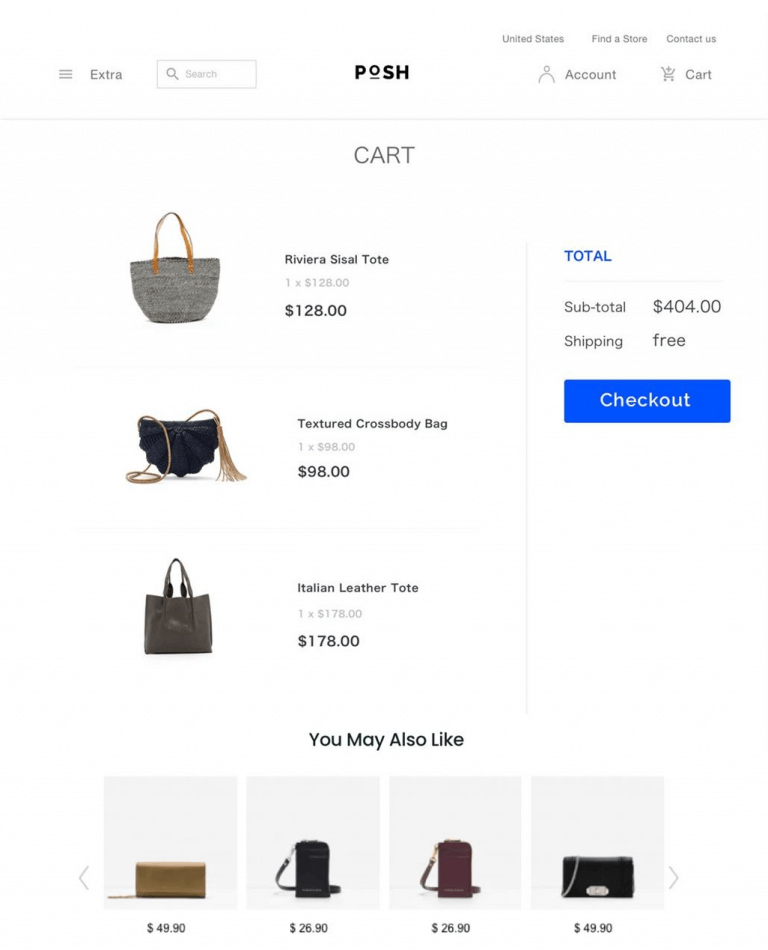
- Cart and checkout: “purchased together” and checkout-specific recommendations lift AOV by catching shoppers already committed to buying
- Homepage: personalized or trending algorithms work well for returning visitors without a clear current-session signal
- Search results: substitute products and category-based recommendations reduce zero-result frustration and keep intent-driven traffic on-site
Recommendations that stop at the website leave revenue on the table, since most shoppers browse across more than one channel before buying.
Extending the same signals into email, push notifications, and in-app placements closes that loop, and our guide to cross-channel product recommendation strategies covers how to sequence them without repeating the same product across every touchpoint.
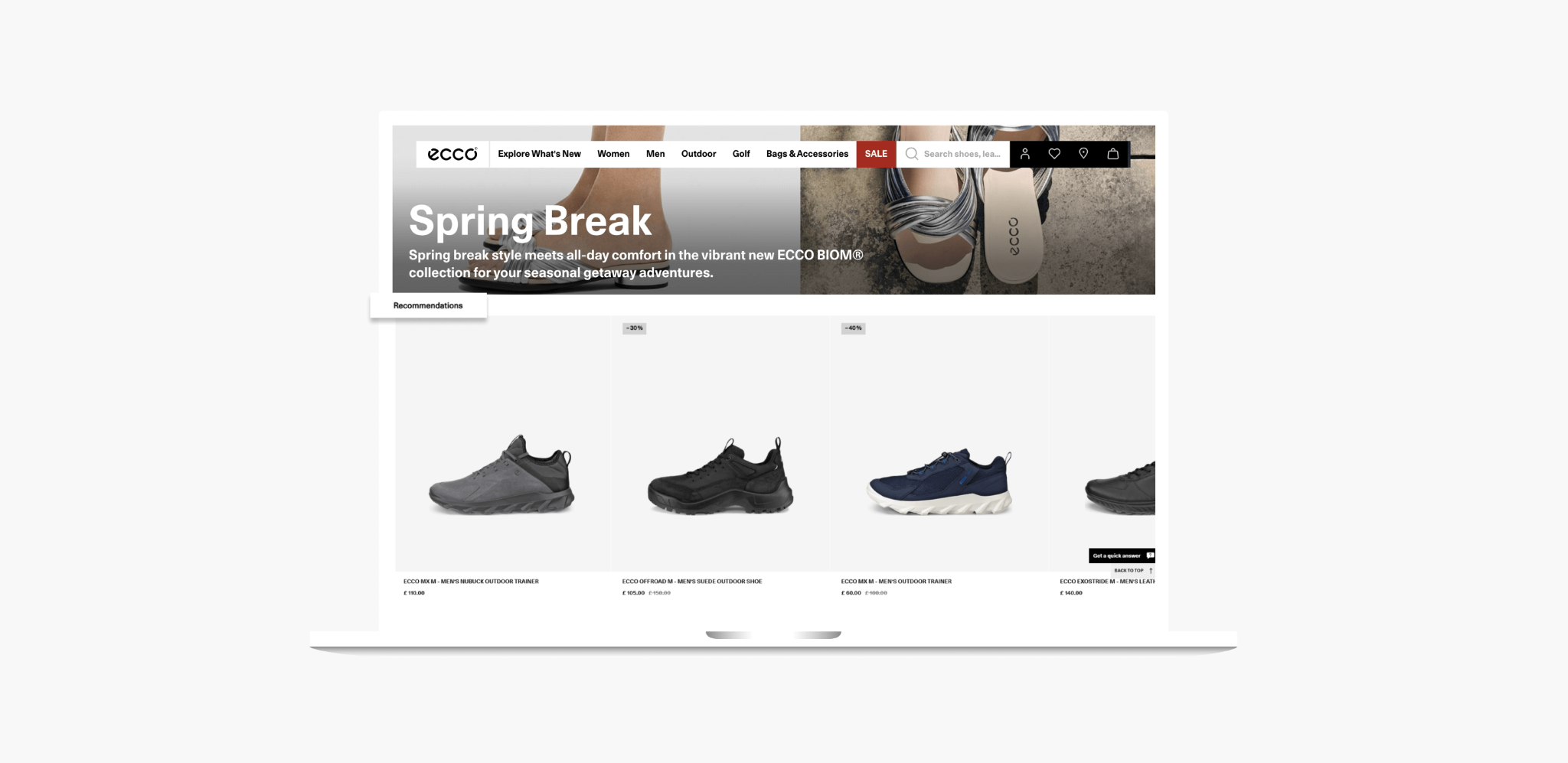
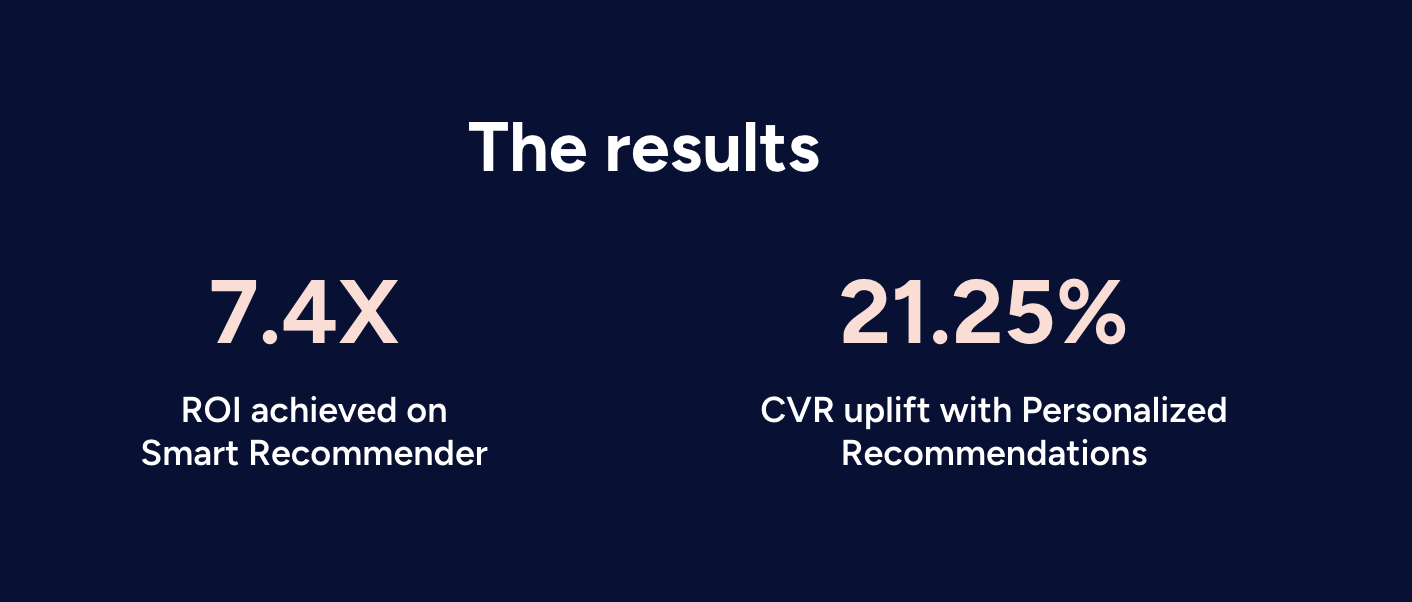
Footwear brand ECCO saw a 7.4x return on investment and a 95% uplift in conversion rate after coordinating on-site and cross-channel recommendation placements, an outcome that came from placement discipline as much as algorithm choice.
Proving impact: attribution vs. incremental lift
Widget-attributed revenue counts every purchase made by a shopper who saw a recommendation, regardless of whether that shopper would have bought the product anyway. That inflates the number, and it’s why so many teams can’t defend the return on investment behind their recommendation strategy when finance asks.
The fix is a holdout test: randomly withhold recommendations from a control group of visitors while the rest see the engine as usual, then compare conversion rate and order value between the two groups over a defined window.
The gap between them, not the attributed revenue figure, is the true incremental lift. It’s a structurally different number, and it’s usually smaller than the dashboard suggests, which is exactly why it’s the one worth reporting.
Beyond click-through rate, three metrics tell you whether the engine is actually working: AOV lift measured through the holdout comparison, repeat purchase rate among shoppers who engaged with recommendations, and category discovery, meaning purchases in categories a shopper hadn’t browsed before.
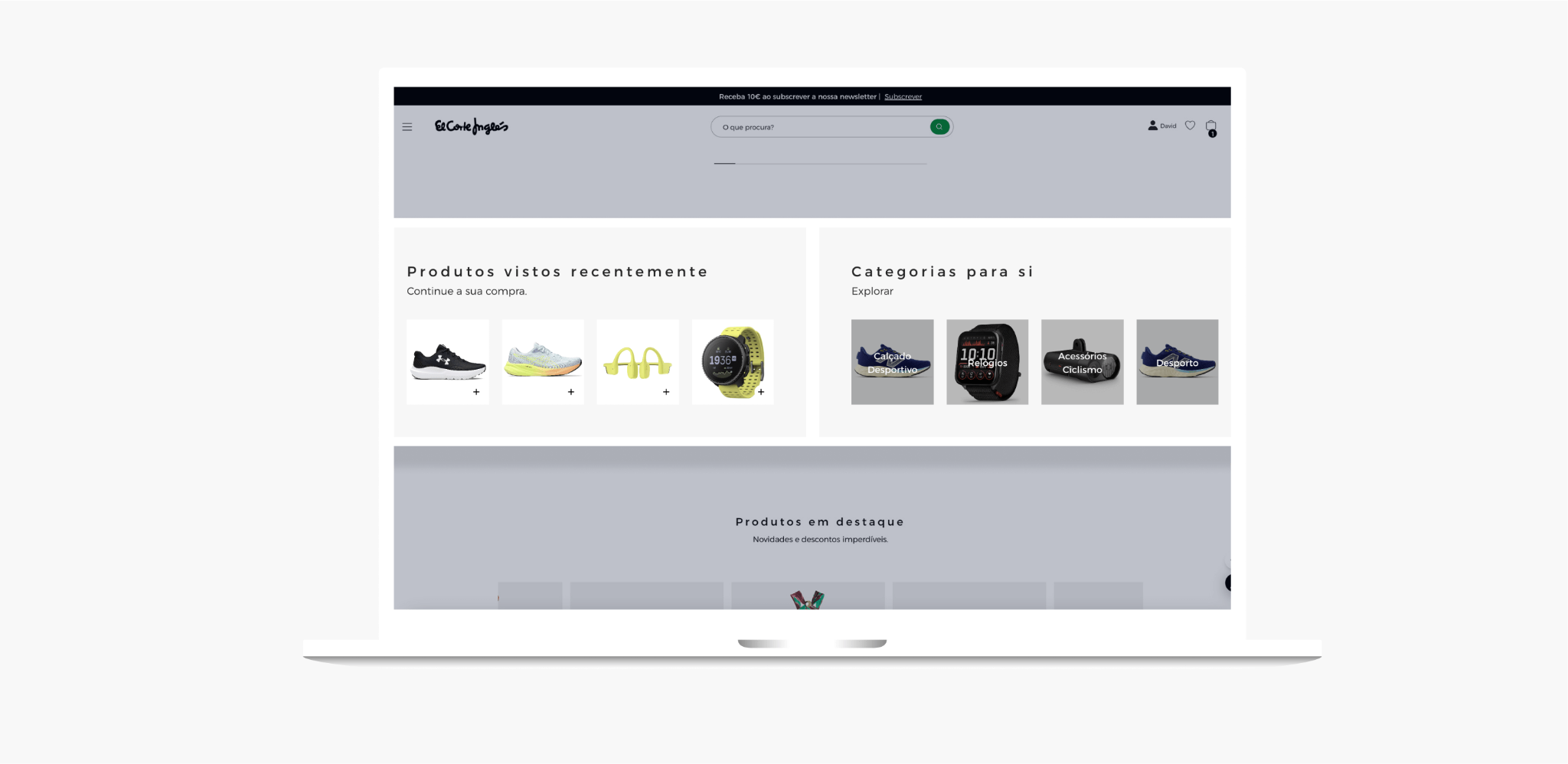
Retailer El Corte Inglés PT increased AOV by 37% after restructuring its recommendation and personalization approach, a gain that shows up clearly in basket-level metrics rather than in surface-level click data alone.
Use cases beyond standard ecommerce upsell
B2B scenarios with multiple stakeholders
B2B buying rarely involves one decision-maker, which most consumer-focused recommendation guides overlook entirely.
Account-level recommendations that reflect what an entire organization has purchased, rather than one individual’s session history, and industry-based suggestions tailored to a buyer’s sector both perform better than generic collaborative filtering in these longer, multi-stakeholder cycles.
Technology brand Lenovo worked through exactly this kind of complexity, using personalization to remove friction across a buying journey that spans both individual and organizational purchases.
Retention plays beyond the first sale
Recommendation logic extends past the initial purchase into retention, where the highest-margin opportunity often sits.
Win-back campaigns can use a customer’s last purchased category to suggest a relevant re-entry point, replenishment nudges apply purchase-cycle data to consumable products, and loyalty-tier personalization adjusts recommendations based on a customer’s tier status and lifetime spend.
These plays turn a one-time transaction into a longer relationship instead of treating every visit as a first visit.
Conclusion
A recommendation engine is only as credible as the measurement behind it. Attributed revenue tells you what happened near a recommendation; a holdout test tells you what the recommendation actually caused.
Pair the right algorithm to the right moment, whether that’s a cold-start product on a homepage or an account-level suggestion in a B2B deal, and the lift becomes something you can defend, not just report.
See how Smart Recommender matches algorithm type to journey moment, and how Insider One’s platform structures holdout testing so you can show finance real incremental lift, not just attributed revenue, from your next demo.
Frequently Asked Questions
A product recommendation engine is a machine learning system that selects and ranks products for each visitor based on behavioral, transactional, catalog, and contextual data, replacing static “related products” rules that don’t adjust as inventory or demand changes.
They typically use generic algorithms, such as most popular or trending items, as a bridge for new products or customers with no history, then shift toward personalized or collaborative models as behavioral data accumulates over the first few weeks.
Attributed revenue counts every purchase a shopper made after seeing a recommendation, including sales that would have happened anyway. Incremental lift isolates the actual gain by comparing a group that saw recommendations against a randomized control group that didn’t.
Yes, though the logic differs from consumer use cases. Account-level recommendations based on an organization’s full purchase history, and industry-based suggestions tailored to a buyer’s sector, tend to outperform standard collaborative filtering in multi-stakeholder B2B buying cycles.
AOV lift measured through a holdout comparison, repeat purchase rate among engaged shoppers, and category discovery, meaning purchases in categories a customer hadn’t previously browsed, give a clearer read on impact than click-through rate alone.

Keep Reading
7 min.

Muharrem Derinkok
4 Jun 2026
11 min.

Chris Baldwin
2 Jun 2026
4 min.
Chris Baldwin
3 Feb 2026