

 Platform Overview

 Integration Hub

 Agent One™

 Agent One Teams™

 Customer Data Management

 Personalization

 Journey Orchestration

 Reporting & Data

 Behavioral Analytics

 Web
Web

 Email
Email

 Site Search

 Conversational CX

 WhatsApp

 Web Push

 InStory

 App
App

 SMS & RCS

 Join the $0 Migration Movement™

 The Insider One Difference

 Compare Vendors

 Switch to Insider One

 Success Story

 Retail & Ecommerce

 Financial Services

 Travel & Hospitality

 Beauty & Cosmetics

 Automotive

 Telecommunications

 Total Economic Impact™ Study

 Blog
Blog

 E-Books & Guides

 Glossary
Email Campaign Optimization for 2026: Build a Lifecycle Optimization Framework

Updated on 4 Aug 2026
9 min.
Table of Contents
- Summary
- Why is open rate lying to you, and what should you track instead?
- How do you build a single-variable testing framework that scales?
- What segmentation and send-time tactics work for AI-filtered inboxes?
- Why does deliverability determine whether any optimization tactic works?
- How do you turn campaign data into a continuous optimization loop?
- Conclusion
- FAQs
Most Popular
Summary
- Open rates are structurally inflated by Apple Mail Privacy Protection and other mailbox-level automation, so track click-to-open rate, conversion rate, and campaign analytics alongside downstream revenue signals instead
- Run single-variable A/B tests with exactly two variants on supported single campaigns and statistically significant sample sizes, then sequence subject line, call-to-action, and send-time tests across the campaign lifecycle
- Replace static demographic lists with behavior-based segments tied to recency and purchase intent, and use Segment-Based Send Time Optimization on supported single campaigns to counter algorithmic inbox sorting
- Authenticate every sending domain with SPF, DKIM, and DMARC before testing content, since undelivered email can’t be optimized
- Tie monthly campaign reviews to campaign analytics, email analytics, and downstream revenue signals, then feed cross-channel data back into segmentation and triggered journeys for compounding gains
Your open rate dashboard says 42%. Your downstream business results say something else, and nobody on your team can explain the gap.
That disconnect is not a fluke. Apple’s Mail Privacy Protection and similar mailbox-level automation can make open data less reliable than it looks.
Email campaign optimization is the ongoing process of testing, segmenting, and refining campaigns based on how recipients actually behave, not on inflated engagement signals.
This article is for lifecycle and customer relationship management (CRM) marketers running frequent campaigns who already understand the basics of subject lines and send times, but need a rigorous Insider One process built for a mailbox environment where open data is less reliable and orchestration matters more.
You’ll learn which metrics still tell the truth, how to structure valid single-variable tests, how segmentation and send-time tactics need to adapt to artificial intelligence (AI)-filtered inboxes, and why deliverability has to come before any of it.
Why is open rate lying to you, and what should you track instead?
Open rate stopped being a clean human-behavior signal once Apple started pre-fetching images inside Mail Privacy Protection.
Other mailbox-level automation can muddy engagement data further, even when the campaign itself has not improved.
The result is a metric that can look strong on a dashboard while masking a campaign that is actually underperforming with real recipients.
The fix isn’t to ignore engagement data. It’s to change which numbers you treat as decision-grade. Click-to-open rate filters out a portion of the bot noise because it compares clicks against opens rather than against your full send volume.
Conversion rate and revenue per recipient go further, tying campaign performance to what recipients actually did after landing on your site.
- Click-to-open rate: a cleaner engagement signal than raw open rate, since it isolates behavior among people who already interacted with the message
- Conversion rate: ties the campaign directly to the action you actually wanted, whether that’s a purchase, a sign-up, or a booking
- Revenue and conversion signals: useful commercial validation for whether a change mattered, best read alongside campaign analytics and email analytics rather than as the only test-winning lens
Teams that keep optimizing toward open rate are optimizing toward noise. Shifting the review process toward click quality, conversion behavior, campaign analytics, and downstream revenue signals changes which subject lines, sends, and segments get scaled, and it often overturns decisions that looked settled under the old model.
How do you build a single-variable testing framework that scales?
A valid test changes one variable at a time and runs long enough to reach statistical significance before you call a winner.
Testing subject line, preview text, and send time simultaneously might feel efficient, but it makes it impossible to know which change actually moved the number, and teams end up scaling a “winner” for the wrong reason.
Setting the rules before you launch
Run experiment campaigns with exactly two variants when you’re testing a single campaign, and avoid A/B testing on recurring, send time-optimized, or warm-up-phase campaigns.
Insider One’s platform lets you set a winning metric before launch, whether that’s unique click rate, unique open rate, lowest unsubscribe rate, or lowest spam rate, so the team isn’t debating the outcome after the fact.
- Change one variable per test: subject line, CTA copy, layout, or send time, never several at once
- Set the sample size and significance threshold before the send, not after seeing early results
- Define the winning metric in advance, ideally click-to-open rate or conversion rate rather than raw opens
- Document every test result in a shared log so findings compound instead of getting relearned by the next campaign manager

Sequencing tests across the campaign lifecycle
One-off tests answer one question and then get forgotten.
A sequenced Insider One workflow builds a cumulative picture: test subject lines or creative with two-variant single campaigns, review the result in campaign analytics and email analytics, then roll the winning pattern into the next round of segmentation, dynamic content, or triggered journeys.
For deeper tactics specific to subject lines, our guide to email subject line best practices covers testing variables worth prioritizing first.
What segmentation and send-time tactics work for AI-filtered inboxes?
Static demographic lists (age, location, gender) tell you almost nothing about whether someone is close to buying. Behavior-based segments built on recency, frequency, and purchase intent are what actually predict whether a recipient will engage, and they hold up regardless of how Gmail or Apple Mail sorts inboxes behind the scenes.
Moving from demographic lists to behavior signals
Insider One’s Email Engagement segments group recipients by how recently and how often they’ve interacted with your emails, which helps you separate active subscribers from lapsed ones using current behavior instead of guesswork inside a broader lifecycle program.
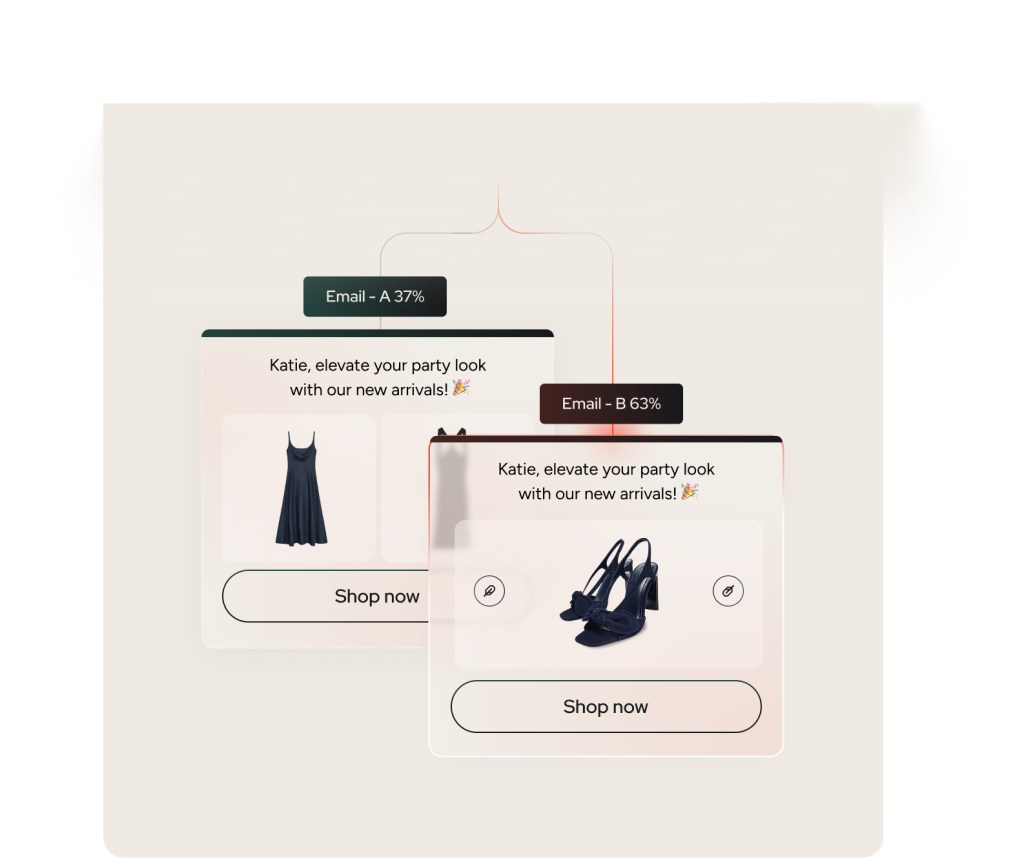
Layering in browsing behavior, cart activity, and purchase signals sharpens that view for onboarding, cart recovery, reactivation, and post-purchase retention, while dynamic content and a well-timed triggered email help turn those signals into more relevant follow-up across the customer journey.
Our guide to advanced email segmentation strategies walks through building these segments in more depth.
Countering algorithmic inbox sorting with predictive send times
Gmail’s Priority Inbox and Apple Mail’s filtering both weigh delivery timing when deciding where a message lands, which makes a fixed nine a.m. send schedule less reliable than it used to be.
Insider One’s Segment-Based Send Time Optimization for supported single campaigns uses each recipient’s historical email engagement to choose a better send window, while Architect can coordinate what happens next across email, SMS, push, and other touchpoints.
Braun applied this kind of personalization logic alongside its AI shopping agent, illustrating that individualized timing and relevance work best when email is part of a connected customer journey.
Why does deliverability determine whether any optimization tactic works?
None of the testing or segmentation work above matters if the message never reaches the inbox.
Deliverability is the foundation every other optimization tactic depends on, and skipping it is the most common reason a well-designed campaign underperforms without an obvious cause.
Authenticating your sending domain
Sender Policy Framework (SPF), DomainKeys Identified Mail (DKIM), and Domain-based Message Authentication, Reporting, and Conformance (DMARC) records confirm to mailbox providers that your emails are genuinely coming from you and haven’t been altered in transit.
Current sender requirements also make one-click List Unsubscribe, a clear Preference Center, and authenticated domains part of the practical deliverability baseline before you scale testing or volume.
Protecting sender reputation before you scale volume
Sunset policies (removing recipients who haven’t engaged in a defined window) keep your list clean and your engagement rates honest, which in turn protects the sender reputation that determines inbox placement.
Monitoring bounce and complaint rates before a high-volume send, using Email Throttling to pace delivery, prevents a single campaign from damaging deliverability for every campaign that follows it.
- Confirm SPF, DKIM, and DMARC are correctly configured for every sending domain, not just the primary one
- Apply a sunset policy that removes or re-engages recipients inactive for 90 to 180 days
- Monitor bounce and spam complaint rates continuously, not only after a campaign underperforms
- Use throttling to pace large sends and avoid tripping spam filters tied to sudden volume spikes
How do you turn campaign data into a continuous optimization loop?
A single strong test result is a data point, not a strategy. The teams that see compounding gains treat optimization as a recurring monthly process tied to campaign analytics, email analytics, and downstream business results, not a one-time project that ends once a “winning” subject line gets found.
Run a monthly review that connects campaign metrics directly to campaign analytics and email analytics rather than stopping at click-to-open rate or conversion rate alone.
El Corte Inglés PT and Philips are useful examples to study on Insider One’s case-study hub when you want proof of how personalization strategy connects to commercial outcomes without reducing optimization decisions to raw engagement.
Use those examples as directional proof, then apply the same review discipline to your own mix of revenue, engagement, unsubscribe, and deliverability signals.
Cross-channel signals sharpen the loop further. SMS engagement, push notification response, and in-app behavior all feed useful context back into email segmentation and timing decisions, and Architect can orchestrate those touchpoints around a unified customer profile instead of treating email as a standalone channel.
Our customer data management approach unifies these signals so segmentation reflects a recipient’s full behavior rather than email activity alone, and our personalization capabilities apply that view across triggered journeys, dynamic content, and the next send.
Conclusion
Open rate stopped being trustworthy once privacy protections and mailbox-level automation started distorting what looks like human attention.
The teams pulling ahead combine cleaner engagement metrics, conversion behavior, campaign analytics, and email analytics with disciplined single-variable testing, and they treat deliverability as the prerequisite it always was. Optimization in 2026 is a connected lifecycle loop, not a checklist.
See how Insider One’s email capabilities combine Segment-Based Send Time Optimization, two-variant A/B testing for supported single campaigns, Email Engagement segments, deliverability controls, dynamic content, triggered journeys, and cross-channel orchestration in one workflow.
Book a personalized demo to see behavior-based segmentation, campaign analytics, and email analytics applied to your own campaign data.
FAQs
Apple Mail Privacy Protection pre-loads images, and other mailbox-level automation can make open data look stronger than real human attention. That inflates your open rate independent of real engagement. Conversion rate and downstream revenue signals are more reliable indicators when you read them alongside campaign analytics and email analytics, since they require actual recipient action after the send.
One. Testing subject line, send time, and layout simultaneously makes it impossible to know which change drove the result. In Insider One, experiment campaigns compare exactly two variants and are designed for supported single campaigns rather than recurring, send time-optimized, or warm-up-phase sends.
SPF, DKIM, and DMARC records all need to be correctly configured for your sending domain. Without them, mailbox providers are more likely to route campaigns to spam regardless of subject line or content quality, which makes any content or timing test unreliable since the email never reliably reaches the inbox.
Monthly reviews tied to campaign analytics, email analytics, and downstream business results tend to surface the clearest patterns. Reviewing too frequently doesn’t allow enough send volume to reach statistical significance, while reviewing quarterly lets underperforming segments or sunset-worthy contacts sit too long before action.
Demographic segments group recipients by static traits like age or location, which say little about purchase readiness. Behavior-based segments group recipients by recency, frequency, and intent signals such as browsing or cart activity, which correlate far more directly with whether that recipient is likely to engage or convert.

Keep Reading
7 min.

Muharrem Derinkok
4 Jun 2026
11 min.

Chris Baldwin
2 Jun 2026
4 min.
Chris Baldwin
3 Feb 2026