

 Platform Overview

 Integration Hub

 Agent One™

 Agent One™ Teams

 Customer Data Management

 Personalization

 Journey Orchestration

 Reporting & Data

 Behavioral Analytics

 Web
Web

 Email
Email

 Site Search

 Conversational CX

 WhatsApp

 Web Push

 InStory

 App
App

 SMS & RCS

 Join the $0 Migration Movement™

 The Insider One Difference

 Compare Vendors

 Switch to Insider One

 Success Story

 Retail & Ecommerce

 Financial Services

 Travel & Hospitality

 Beauty & Cosmetics

 Automotive

 Telecommunications

 Total Economic Impact™ Study

 Blog
Blog

 E-Books & Guides

 Events

 Glossary
Web personalization and Ecommerce Conversion: What Actually Moves the Needle

Updated on 25 Aug 2026
9 min.
Table of Contents
- Summary
- The real math behind personalization and conversion lift
- Where web personalization recovers lost revenue in the funnel
- Behavioral segmentation vs static rules: what actually moves conversion
- Building a personalization stack that doesn't feel creepy
- Measuring what matters: Key performance indicators beyond conversion rate
- Conclusion
- Frequently asked questions
Most Popular
Summary
- Personalization lifts conversion when it compounds across discovery, cart, and post-purchase stages, not when it’s deployed as a single homepage widget and left alone
- Cart abandonment is the largest recoverable-revenue leak in most funnels, and the right fix depends on why shoppers are leaving, not just that they left
- Real-time behavioral triggers, such as browse abandonment and repeat-visit intent, outperform static rule-based segments because they respond to what a shopper is doing right now
- First-party and zero-party data collection replace cookie-based targeting under current privacy expectations, without giving up relevance
- Average order value, repeat purchase rate, and customer lifetime value show whether personalization is working past the first transaction, which conversion rate alone can’t tell you
Web personalization improves ecommerce conversion when it’s mapped to a specific funnel stage and a specific dollar leak, not deployed as one homepage carousel and left to run indefinitely.
A generic recommendation widget might nudge click-through rate up slightly, but it won’t recover the revenue lost to cart abandonment or turn a one-time buyer into a repeat customer.
This article is for ecommerce marketing and growth leaders at mid-market and enterprise retailers who already run some personalization and need a framework for prioritizing what to build next.
You’ll get a structural breakdown of where personalization tactics apply across discovery, cart, and post-purchase, a way to prioritize which funnel leak to fix first, and the behavioral triggers that replace static segmentation.
We’ll also cover the privacy constraints shaping personalization now that cookie-based targeting is fading, and the metrics that tell you whether a program is working beyond conversion rate alone.
The real math behind personalization and conversion lift
Personalization increases conversion when it acts across multiple stages of the funnel at once, not as an isolated tactic bolted onto the homepage. A product recommendation on one page and a generic discount banner on another don’t compound, they compete for the same attention and dilute each other’s impact.
The financial logic is straightforward once you stop treating personalization as a feature and start treating it as a distribution problem.
Every visitor you convert without paying for additional traffic effectively lowers your blended customer acquisition cost (CAC), because the same media spend now produces more revenue. That’s the real lever: not more clicks, better yield from the clicks you already have.
Where this compounds is across the journey. A shopper who sees relevant products during discovery is more likely to add to cart.
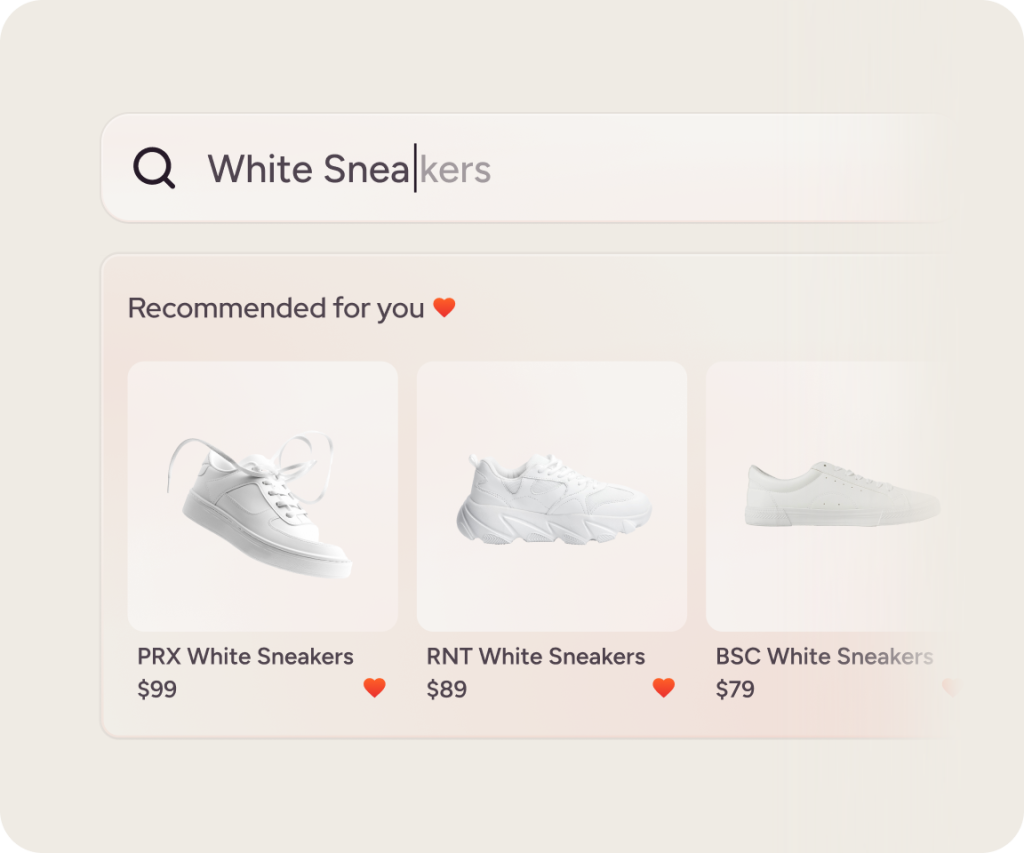
A cart page that addresses their specific hesitation, whether that’s shipping cost or product fit, is more likely to convert. And a post-purchase experience tuned to what they bought is more likely to bring them back without another acquisition dollar spent.
Adidas saw this play out directly, increasing average order value by 259% and conversion rate by 13% once personalization moved from a single-page tactic to a connected strategy across the funnel.
Where web personalization recovers lost revenue in the funnel
Cart abandonment is one of the largest recoverable-revenue leaks in ecommerce, and most teams treat it as a single problem when it’s actually several distinct ones stacked together.
Shoppers leave carts for different reasons: sticker shock at checkout, comparison shopping across tabs, distraction, or simple indecision about whether the product is right for them.
Each cause needs a different intervention, and lumping them into one generic “recover the cart” campaign wastes the opportunity.
Dynamic recommendations on the cart page work well against indecision, showing complementary products or alternatives that resolve uncertainty about fit.
Exit-intent offers address comparison shopping, giving a reason to complete the purchase before the shopper opens a competitor’s tab.
Transparent shipping and cost messaging earlier in the flow prevents the sticker-shock exit before it happens at checkout, rather than trying to win the shopper back after they’ve already left.
Which leak to fix first
Prioritization should follow traffic volume and margin impact, not whichever tactic is easiest to ship. A useful sequence:
- Audit where in the funnel drop-off is steepest relative to your own historical baseline, not an industry average
- Segment abandonment by device and entry channel, since the causes and fixes often differ between mobile and desktop
- Test one intervention per identified cause rather than launching several simultaneously, so you can attribute the lift correctly
- Prioritize fixes on high-traffic, high-margin categories first, since the same percentage recovery produces more absolute revenue there
Fixing the highest-volume leak first, even if it’s not the flashiest tactic, produces more measurable revenue recovery than chasing every cart-abandonment idea at once.
For a deeper look at how these tactics play out across different page types, see our ecommerce personalization examples.
Behavioral segmentation vs static rules: what actually moves conversion
Static, rule-based audience segments plateau in impact because they describe who a customer was, not what they’re doing right now. A “high-value customer” bucket built from last quarter’s purchase history still treats a shopper the same way whether they’re browsing casually today or actively comparing checkout options. That gap between description and intent is where conversion lift stalls.
Real-time behavioral triggers close that gap by responding to signals as they happen rather than to a label assigned weeks earlier. Browse abandonment, where a shopper views a product repeatedly without purchasing, is a far stronger predictor of near-term intent than a broad demographic segment.
Repeat-visit patterns, cart-add-without-checkout behavior, and time-on-category signals all outperform static rules because they reflect the moment, not the history.
This is also where automated decisioning earns its place in the stack. Braun used a real-time artificial intelligence (AI) shopping agent to drive 18% revenue influence, responding to live shopper behavior instead of relying on pre-built audience rules that update on a delay.
The lesson isn’t that segmentation is obsolete, it’s that segments should feed real-time triggers rather than replace them. Static buckets still help with strategic targeting; behavioral triggers handle the moment-to-moment decisions that actually move conversion.
Building a personalization stack that doesn’t feel creepy
First-party and zero-party data collection now carry more weight than cookie-based tracking, and that shift is a permanent feature of the current privacy environment, not a temporary workaround.
First-party data comes from behavior you observe directly on your own properties: browsing patterns, purchase history, and on-site engagement.
Zero-party data is what customers tell you explicitly, through preference centers, quizzes, or account settings, and it tends to produce sharper personalization because intent is stated rather than inferred.
Collecting data without the cookie dependency
Preference centers, post-purchase surveys, loyalty program sign-ups, and progressive profiling during account creation all generate usable signal without third-party cookies.
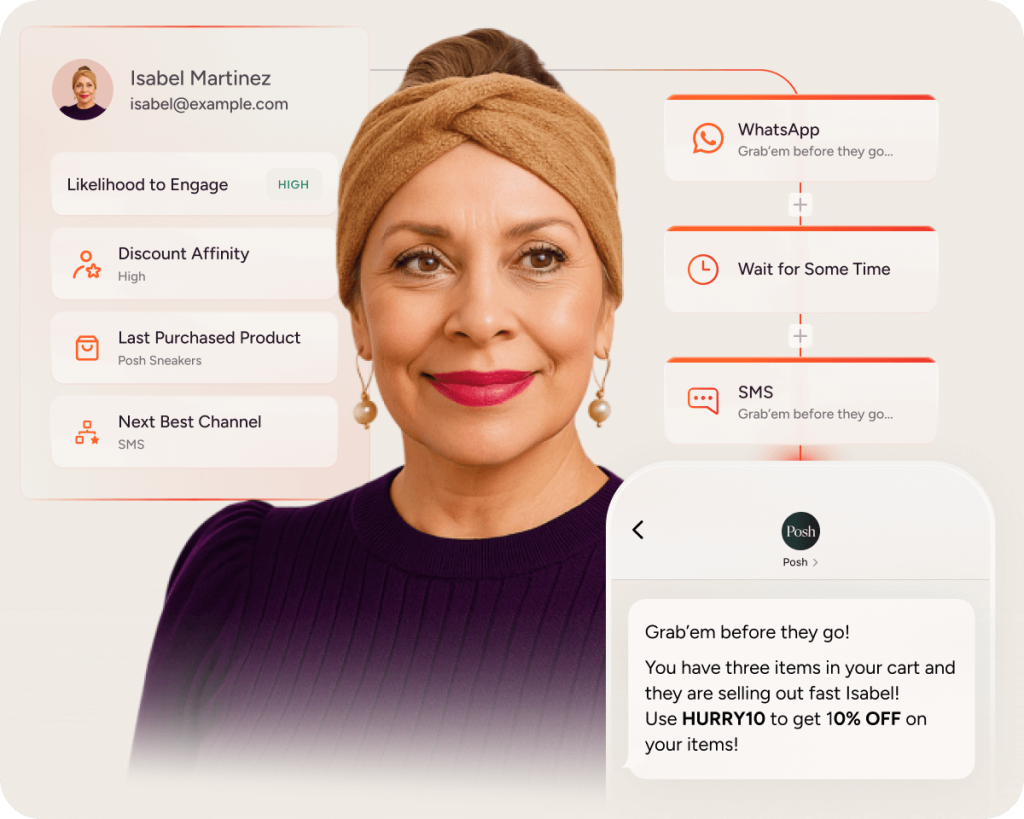
A Customer Data Management layer that unifies these signals across web, app, and email gives you one behavioral record per customer instead of five disconnected profiles that never sync in time to matter.
The relevance-versus-trust tradeoff
Over-personalization can suppress conversion just as easily as under-personalization, particularly when it signals to a shopper that they’re being tracked more closely than they expect.
Referencing a browsing session too explicitly, or retargeting within minutes of a single product view, tends to read as surveillance rather than service.
The better approach uses aggregate behavioral signal, such as category interest or lifecycle stage, rather than surfacing a specific product a shopper viewed once and didn’t act on. That distinction keeps personalization feeling like better service rather than a reminder that they’re being watched.
Measuring what matters: Key performance indicators beyond conversion rate
Conversion rate tells you whether a specific interaction worked, but it doesn’t tell you whether personalization built a better customer relationship.
Average order value, repeat purchase rate, and customer lifetime value together show whether the gains are durable or whether they’re pulling revenue forward from future purchases without adding net value. OTTO used onsite personalization to boost average order value by 5%, a metric that conversion rate alone would have missed entirely.
Repeat purchase rate matters because personalization that only optimizes the first transaction can undercut retention if it leans too heavily on discounting to close the sale.
Customer lifetime value is the metric that ultimately validates whether the acquisition math from earlier in this article holds up, since a personalization program that lowers effective CAC but also lowers retention hasn’t actually improved the P&L.
A test-and-audit cadence that doesn’t outrun your evidence
Run a simple audit cycle before scaling any tactic further:
- Test one variable at a time against a held-out control group to isolate real impact
- Review results across a full purchase cycle, not just the first week, since some tactics show short-term lift and long-term drag
- Audit AOV and repeat purchase rate alongside conversion rate every time you evaluate a test
- Kill or revise tactics that lift conversion but flatten repeat purchase rate within two cycles
This cadence keeps the program honest and prevents scaling a tactic that looks good on a single metric but quietly erodes retention. For teams building this out, our guide to real-time website personalization walks through the testing infrastructure in more detail.
Conclusion
Personalization moves conversion when it’s built as a connected system across discovery, cart, and post-purchase, measured against funnel-specific revenue leaks rather than a single dashboard number. The teams that treat it as a distribution and retention strategy, not a widget, are the ones seeing durable gains in average order value and lifetime value, not just a short-term click-through bump.
To evaluate the fit of Customer Data Management for your use case, book a personalized demo to review your goals, data requirements, and implementation constraints with the Insider One team.
Frequently asked questions
Web personalization is the practice of adapting site content, product recommendations, and messaging to an individual shopper’s behavior, preferences, or lifecycle stage in real time. It differs from generic segmentation by responding to live signals like browsing behavior rather than static customer labels assigned in advance.
Personalization increases conversion by addressing the specific reason a shopper hesitates at each funnel stage, such as indecision on a product page or cost concerns at checkout. The lift compounds when discovery, cart, and post-purchase experiences are all tuned to the same behavioral signal instead of running as isolated tactics.
Static rules group customers by historical attributes, like past purchase category, and rarely update in real time. Behavioral segmentation responds to live actions, such as repeated product views or cart abandonment, making it a stronger predictor of near-term purchase intent.
Yes. First-party data collected directly on your properties and zero-party data that customers share explicitly, through preferences or account settings, now carry more weight than cookie-based tracking. A unified customer data layer makes this data usable for real-time personalization without third-party cookie dependency.
Conversion rate shows whether a single interaction worked, but average order value, repeat purchase rate, and customer lifetime value reveal whether the gains are durable. Reviewing all four together, on a consistent test-and-audit cadence, prevents scaling a tactic that lifts one metric while quietly eroding retention.
Prioritize based on where your own funnel shows the steepest drop-off and the highest traffic volume, not on industry benchmarks or whichever tactic is easiest to launch. Fixing the highest-volume leak first produces more measurable revenue recovery than spreading effort across every possible tactic at once.

Keep Reading
4 min.

Chris Baldwin
3 Feb 2026
8 mins.
Chris Baldwin
8 Oct 2026
8 mins.
Chris Baldwin
8 Oct 2026