

 Platform Overview


 Integration Hub


 Agent One™


 Agent One™ Teams


 Customer Data Management


 Personalization


 Journey Orchestration


 Reporting & Data


 Behavioral Analytics


 Web


 Email


 Site Search


 Conversational CX


 WhatsApp


 Web Push


 InStory


 App


 SMS & RCS


 Join the $0 Migration Movement™


 The Insider One Difference


 Compare Vendors


 Switch to Insider One


 Success Story


 Retail & Ecommerce


 Financial Services


 Travel & Hospitality


 Beauty & Cosmetics


 Automotive


 Telecommunications


 Total Economic Impact™ Study


 Blog


 E-Books & Guides


 Events


 Glossary
10 Signs It’s Time to Change Customer Engagement Solutions

Updated on 23 Nov 2026
16 mins.
Table of Contents
- Summary
- What are customer engagement solutions?
- 10 signs it's time to change customer engagement solutions
- 1. The team uses a fraction of the platform but pays for all of it
- 2. Customer data is scattered across tools
- 3. Personalization still happens in batches
- 4. Every new channel means a new tool
- 5. Campaigns wait on developers or IT
- 6. AI features don't deliver what was promised
- 7. No one can prove what drives revenue
- 8. Costs rise faster than results
- 9. Integrations are fragile and the stack keeps growing
- 10. Support and the roadmap don't keep pace
- Customer engagement solution scorecard
- What to look for in a new customer engagement solution
- How to build the business case for switching
- How to switch customer engagement solutions without disruption
- Brands that switched customer engagement solutions
- Why brands switch to Insider One
- Conclusion
- Frequently Asked Questions
Most Popular
Summary
- A customer engagement solution should make it easier to turn customer data into relevant messages and revenue. When it slows the team down instead, it costs both revenue and time.
- The clearest signs are low utilization, fragmented customer data, batch-only personalization, missing channels, dependence on developers, AI that doesn’t deliver, weak measurement, rising costs, fragile integrations and poor support.
- Gartner’s 2025 research found martech utilization at 49%, and 45% of martech leaders with AI agents in pilots or production said vendor-offered AI agent capabilities fail to meet their expectations.
- Three or more signs usually justify a structured evaluation, a business case and a phased migration plan.
- Switching doesn’t have to disrupt live campaigns: Allianz migrated over 90% of its active campaigns from Salesforce to Insider One within 30 days, with zero downtime for live customer journeys.
For most B2C brands, the customer engagement platform is where customer data turns into action. It holds the customer profile, decides what each person sees on the website and app, and sends messages across email, SMS, WhatsApp and push notifications.
When the platform fits the business, marketers can go from idea to live campaign quickly and see what each campaign earned. When it doesn’t, their week fills up with manual exports, IT tickets and workarounds.
The problem rarely shows up all at once. It builds through small compromises: a manual export to fix a segment, an extra tool to add a new channel, a renewal quote that’s higher than last year’s.
This guide covers 10 signs it’s time to change customer engagement solutions, each with a simple way to check it. It then walks through a scorecard, what to look for in a replacement, how to build the business case and how to switch without disrupting live campaigns.
What are customer engagement solutions?
Customer engagement solutions are the software brands use to understand their customers and communicate with them across channels. A complete solution usually starts with a customer data platform (CDP), which merges website, app, purchase and messaging data into one profile per customer.
On top of that sit segmentation and AI personalization, which decide who sees what, and journey orchestration, which automates multi-step flows across channels, such as a welcome series or a reminder about items left in the cart. Messaging channels deliver each interaction, and analytics show what it earned. Some brands run all of this on one customer engagement platform (CEP). Others connect several point tools, each covering one part of the job.
For a comparison of leading vendors, see Insider One’s guide to the best customer engagement platforms.
10 signs it’s time to change customer engagement solutions
1. The team uses a fraction of the platform but pays for all of it
Low adoption is often the first sign that a platform is too complex or no longer fits how the team works. The 2025 Gartner Marketing Technology Survey found that martech utilization has dropped to 49%. In other words, marketing teams use only about half of the capabilities in their martech stack.
How to check: List the modules in the current contract and mark which ones ran a live campaign in the last 90 days.
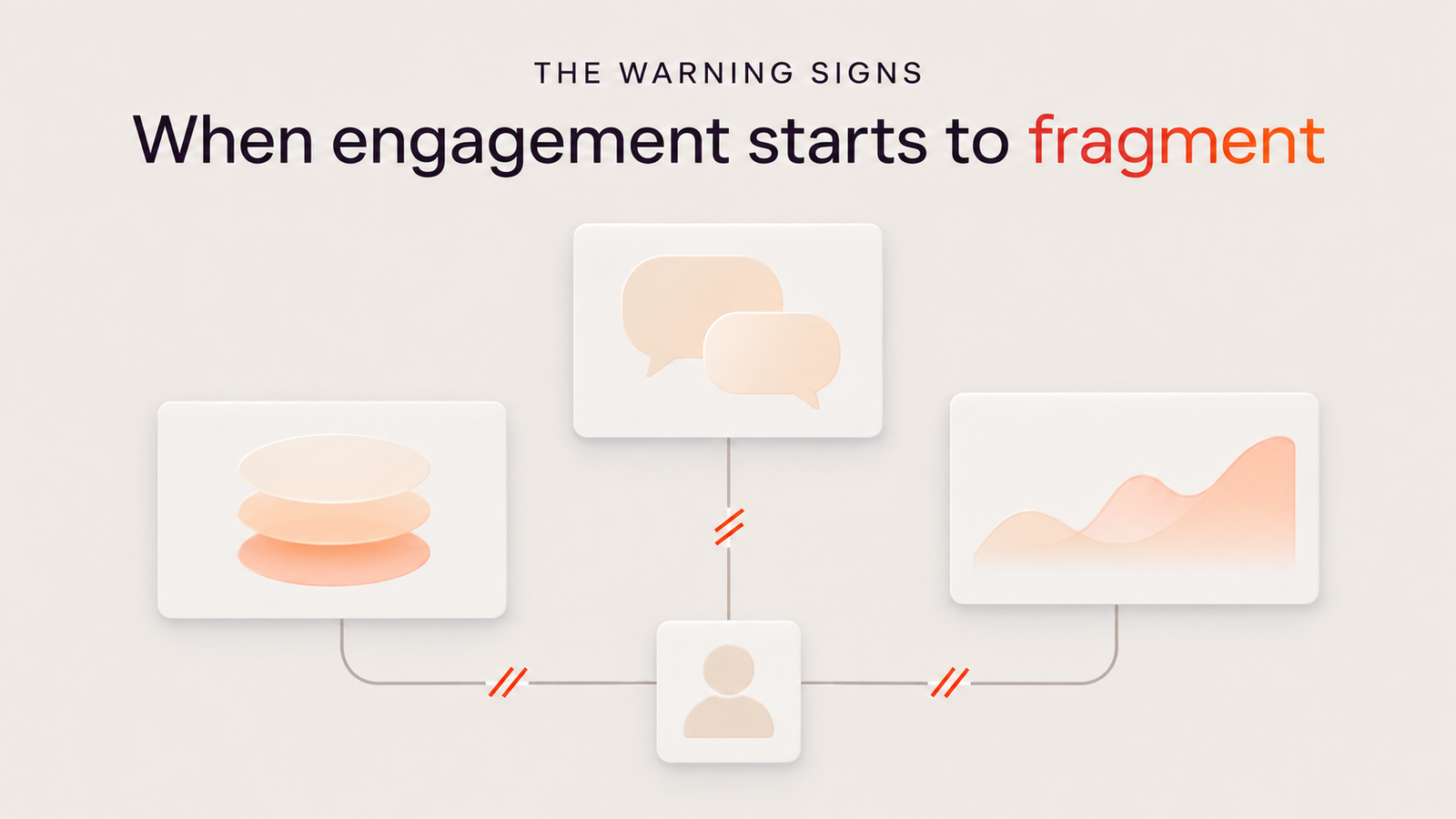
2. Customer data is scattered across tools
If web behavior lives in one system, purchases in another and messaging data in a third, no channel has the full picture. Teams end up exporting lists, segments go stale and customers get messages that ignore what they just did, like a discount email for a product they bought the day before.
How to check: Time how long it takes to build a segment that combines web behavior, purchase history and channel engagement, and how fresh that data is.
3. Personalization still happens in batches
Batch personalization means segments and recommendations are refreshed on a schedule, often overnight, so a message reflects what the customer did yesterday rather than what they’re doing now. Real-time personalization reacts while the customer is still engaged: someone browses running shoes, and the homepage, the next email and the next app push already reflect that interest.
Customers notice the difference. In Twilio’s 2025 State of Customer Engagement Report, 88% of consumers said they are more likely to buy when engagement is personalized in real time, but only 44% of brands said they deliver at that level. A platform that refreshes segments overnight can’t close that gap.
How to check: Use a test account to add a product to the cart, leave the site and measure how long it takes for the personalized reminder to arrive. The sooner it lands, the better the chance of bringing that shopper back to complete the purchase.
4. Every new channel means a new tool
Adding WhatsApp, RCS (Rich Communication Services, which adds images, buttons and a verified brand name to text messages), in-app messages or on-site personalization shouldn’t require another vendor, another contract and another data sync. Separate tools also make it hard to coordinate frequency and avoid sending the same customer three messages in an hour.
How to check: Count the vendors involved in one cross-channel journey, such as a cart recovery flow that reminds shoppers about the items they left behind with a web push, then an email, then a WhatsApp message.
5. Campaigns wait on developers or IT
When marketers need developer time to build segments, edit templates or launch journeys, campaigns launch later and teams test less. Allianz cited slow, IT-dependent campaign execution as one reason it left Salesforce.
How to check: Track the average days from campaign brief to launch, and how many steps need a technical team.
6. AI features don’t deliver what was promised
AI is now a standard line in vendor pitches, but not every AI feature moves business results. It helps to separate two kinds. Generative AI helps teams produce content faster, such as subject lines or product descriptions.
Agentic AI works toward a business outcome: it plans, acts and learns from results within the guardrails the team sets. In a Gartner survey of 413 martech leaders published in October 2025, 45% of those with AI agents in pilots or production said existing vendor-offered AI agent capabilities don’t meet their expectations of promised business performance. Half said their organizations lack the technical and data stack readiness to deploy AI agents.
How to check: List the AI features in use and the business metric each one has moved. Then check what data those features can see. AI can only act on the customer data available to it, so features running on partial or day-old data will make limited decisions.
7. No one can prove what drives revenue
If each channel reports its own results and no one trusts the totals, budget decisions become guesswork. Leadership asks which journeys drive revenue, and the answer takes a week of spreadsheets.
How to check: See whether the platform can report revenue by journey and channel against a control group, without manual exports. A control group is a small share of customers who don’t receive the campaign, so the difference in results shows what the campaign actually added.
8. Costs rise faster than results
Add-on modules, overage fees, extra charges for users or data points, professional services and annual price increases can push the total cost far above the original quote. When costs grow but conversion, retention and revenue per customer don’t, the platform is losing value.
How to check: Add up the full annual cost, including services, overages and the tools needed to fill gaps, and compare it with revenue attributed to the platform.
9. Integrations are fragile and the stack keeps growing
Point-to-point connections, nightly file transfers and custom scripts break when any system changes. Each new tool adds another connection to maintain and another place for data to go out of sync.
How to check: Count the integrations maintained in-house and the incidents caused by sync failures in the last quarter.
10. Support and the roadmap don’t keep pace
Slow responses, paid support tickets, frequent account manager changes and a roadmap that doesn’t match the team’s needs all slow growth. New Balance cited declining support quality and fees for individual support requests as reasons it left SAP Emarsys.
How to check: Review average support response times, unresolved tickets and roadmap items promised but not delivered in the past year.
Customer engagement solution scorecard
Score the current platform against the 10 signs. Three or more “yes” answers usually justify a formal evaluation.
| Sign | Question |
| Low utilization | Are fewer than half of the paid modules in active use? |
| Fragmented data | Does building a cross-channel segment require exports or manual joins? |
| Batch personalization | Do triggered messages take hours rather than seconds? |
| Channel gaps | Does adding a channel require another vendor? |
| Developer dependence | Do most campaigns need technical help to launch? |
| Underperforming AI | Are AI features unused or unable to show business impact? |
| Weak measurement | Is revenue by journey and channel hard to report? |
| Rising costs | Has total cost grown faster than attributed revenue? |
| Fragile integrations | Did sync failures cause incidents last quarter? |
| Poor support | Are support response times or fees slowing the team? |
What to look for in a new customer engagement solution
- Unified, real-time customer data: a built-in CDP that combines online, offline and channel data in one profile, updated in real time.
- Channel coverage in one platform: web, app, email, SMS, RCS, WhatsApp, push and conversational channels orchestrated from one journey builder.
- AI that works on that data: predictive segments (for example, customers most likely to buy), recommendations, send-time and channel optimization, and AI agents that plan, act and learn toward the outcomes the team sets, within its guardrails.
- Ease of use: marketers can build segments, templates and journeys without developers.
- Measurement: revenue attribution by journey and channel, with control groups.
- Integrations: prebuilt connectors to ecommerce, CRM, analytics and data warehouse tools.
- Transparent pricing: clear terms for users, data, messages and services, with no surprise overages.
- Migration support: data migration tools, deliverability warm-up, journey rebuild help and a realistic timeline.
- Security and compliance: certifications such as ISO 27001 and SOC 2, and consent management for each channel.
How to build the business case for switching
Leadership approves changes based on numbers, not frustration. A strong business case covers four areas:
1. Cost: The full current cost (licenses, overages, services and gap-filling tools) compared with the proposed platform’s total cost over three years.
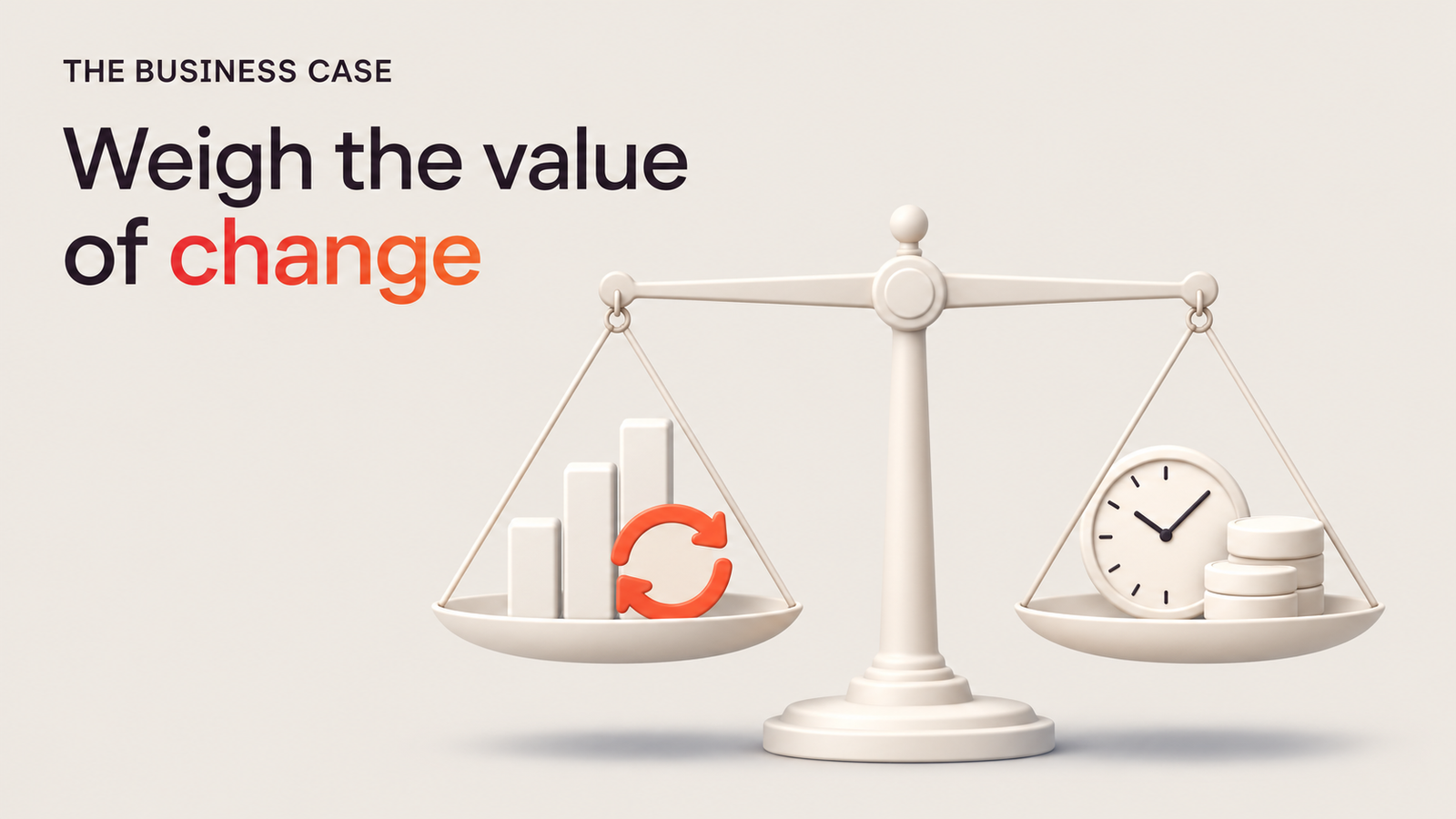
2. Time: Hours spent each week on manual exports, workarounds and developer requests, converted to cost.
3. Revenue: The expected uplift in conversion, retention and average order value, based on vendor case studies in the same industry and a conservative estimate.
4. Risk: How the migration will protect live journeys, deliverability and data, with a timeline and named owners.
Independent ROI studies help. In a Total Economic Impact study commissioned by Insider One, Forrester calculated a 449% ROI over three years and a payback period of under six months for a composite organization based on interviews with Insider One enterprise customers.
How to switch customer engagement solutions without disruption
1. Audit the current setup: List active journeys, segments, templates, integrations and data sources, and decide what to migrate, rebuild or retire.
2. Map and migrate data: Define the customer profile, events and attributes, then migrate historical data and set up real-time feeds.
3. Warm up deliverability: Plan IP and domain warm-up for email, which means increasing send volume gradually so mailbox providers learn to trust the new sender. Register sender details for SMS, RCS and WhatsApp early, as approvals can take time.
4. Rebuild priority journeys first: Start with the journeys that drive the most revenue, such as welcome, cart recovery and win-back.
5. Run in parallel: Keep the old platform live for critical flows until the new journeys match or beat their results.
6. Cut over and optimize: Switch remaining traffic, retire old integrations and start testing improvements the old platform couldn’t support.
Contract timing matters. Starting the evaluation 6 to 9 months before renewal leaves room to run a pilot and plan the migration without paying for two platforms longer than necessary.
Brands that switched customer engagement solutions
| Brand | Switched from | Results with Insider One |
| Allianz | Salesforce | Migration in one month with zero downtime for live journeys, 37% higher ROI and 1.3X more revenue |
| BBVA | Oracle | Full migration in under three months, with a 21% increase in eKYC (digital identity verification) completion rate and 11% higher ROI |
| New Balance | SAP Emarsys | Email migration completed in six weeks, 35% increase in repeat purchase rate and 16% increase in CLTV |
| L’Occitane | Adobe | 27% lift in average order value and 32% increase in purchase frequency in the first three months |
Why brands switch to Insider One
Insider One is an agentic platform for autonomous, end-to-end customer engagement. It brings customer data, AI personalization, journey orchestration and channels including web, app, email, SMS, RCS, WhatsApp and conversational experiences together on one shared customer profile, so every channel works from the same, up-to-date view of each customer.
Agent One, the self-optimizing intelligence system for customer engagement, plans, acts and learns toward the outcomes the team sets, within the guardrails and approvals it defines. Every result feeds the next decision, so performance keeps improving over time. Forrester’s Total Economic Impact study found a 25% increase in average order value with Agent One. The Integration Hub connects Insider One to the rest of the stack with 100+ integrations.
To lower the cost and risk of switching, the $0 Migration Movement buys out existing contracts and includes implementation, onboarding and professional services at no extra cost. It also offers one-year terms and a full refund if a customer isn’t satisfied and opts out within the first three months. More detail on the process is on the Switch to Insider One page, and side-by-side comparisons are on the Compare Vendors page.
Conclusion
A customer engagement solution should make it easier to grow, not harder. If the team works around the platform more than with it, the cost shows up in slower campaigns, missed revenue and rising bills. Score the current platform against the 10 signs, quantify the impact and plan a phased switch that protects live journeys.
To see how Insider One handles data, journeys and AI agents in one platform, take the interactive platform tour or book a personalized demo.
Frequently Asked Questions
Customer engagement solutions are software tools that help brands collect customer data, personalize experiences and communicate across channels such as email, SMS, WhatsApp, push, app and web. They often include a CDP, segmentation, AI personalization, journey orchestration and analytics.
Common signs include low use of paid features, data spread across tools, slow or batch personalization, campaigns that depend on developers, AI features with no measurable impact, unclear revenue attribution and costs that grow faster than results. Three or more of these usually justify an evaluation.
It depends on data volume, channels and the number of journeys. Published examples range from one month for Allianz’s move from Salesforce to Insider One, to under three months for BBVA’s move from Oracle. Email deliverability warm-up and journey rebuilds usually take the most planning.
Costs can include overlapping licenses, migration services, integration work and team time. Some vendors reduce these costs. Insider One’s $0 Migration Movement, for example, covers contract buyouts and includes implementation services at no extra cost.
Start evaluating 6 to 9 months before the current contract renews. That leaves time for a structured evaluation, a pilot and a phased migration without long periods of paying for two platforms.
An all-in-one platform keeps data, AI and orchestration in one place and reduces integration work. Best-of-breed tools can offer depth in single areas but need more integration and coordination. Teams with lean martech resources often benefit most from consolidation.
Audit current journeys first, migrate priority flows before others, warm up email deliverability early, run old and new platforms in parallel for critical journeys and agree on success metrics before cutover.

Keep Reading
4 min.

Chris Baldwin
3 Feb 2026
11 mins.
Chris Baldwin
23 Nov 2026
20 mins.

Nicolas Algoedt
23 Nov 2026