

 Platform Overview


 Integration Hub


 Agent One™


 Agent One™ Teams


 Customer Data Management


 Personalization


 Journey Orchestration


 Reporting & Data


 Behavioral Analytics


 Web


 Email


 Site Search


 Conversational CX


 WhatsApp


 Web Push


 InStory


 App


 SMS & RCS


 Join the $0 Migration Movement™


 The Insider One Difference


 Compare Vendors


 Switch to Insider One


 Success Story


 Retail & Ecommerce


 Financial Services


 Travel & Hospitality


 Beauty & Cosmetics


 Automotive


 Telecommunications


 Total Economic Impact™ Study


 Blog


 E-Books & Guides


 Events


 Glossary
Predictive targeting for AI personalization: how to score intent, act on it and prove lift

Updated on 23 Nov 2026
11 mins.
Table of Contents
- Summary
- What is predictive targeting for AI personalization?
- How predictive targeting works, from signal to personalized action
- The predictions that matter most for personalization
- Propensity is not the same as persuadability
- A decision matrix for turning predictions into actions
- Predictive targeting in practice: three examples
- How to implement predictive targeting in six steps
- How to measure whether predictive targeting is working
- Guardrails for responsible predictive targeting
- Where generative and agentic AI fit
- Put predictive targeting to work with Insider One
- Frequently asked questions
Most Popular
Summary
- Predictive targeting uses AI to estimate what customers are likely to do next, such as making a purchase, churning or responding to a discount.
- Predictions like purchase likelihood, churn risk and discount affinity help marketers decide who to target and which experience to offer.
- Turn scores into actions by choosing the right audience, message, offer, channel and send time. Insider One connects predictive segments with personalized experiences and Architect journeys.
- A high purchase score doesn’t mean a customer needs a discount. Reserve incentives for customers they are likely to persuade, not those who would buy anyway.
- Measure incremental conversions and revenue against a randomized control group, while monitoring model accuracy, customer consent and messaging frequency.
Most personalization programs still decide who sees what based on what a customer has already done: viewed a category, abandoned a cart, opened last week’s email. That approach reacts after the fact, and it treats a first-time browser and a loyal buyer who view the same page as the same person.
Predictive targeting for AI personalization changes the question from “what did this customer do?” to “what is this customer likely to do next, and what would change it?”
Machine learning models score each visitor or customer on outcomes such as purchase likelihood, churn risk or sensitivity to discounts. Your personalization layer then uses those scores to choose the audience, the offer, the channel and the timing.
The expectation is already there. In its 2021 personalization research, McKinsey found that 71% of consumers expect personalized interactions, 76% get frustrated when they do not get them, and personalization most often drives a 10 to 15% revenue lift.
This guide covers how predictive targeting works, which predictions to use, how to turn scores into decisions, how to measure incremental impact, and which guardrails to set.
What is predictive targeting for AI personalization?
Predictive targeting is the practice of selecting audiences and experiences based on a model’s forecast of future behavior, rather than on fixed rules or past actions alone.
In AI personalization, those forecasts decide which customers enter a campaign, which content or offer they receive, and which channel and time are used to reach them.
A predictive model learns from historical patterns, for example which combinations of product views, cart events and visit frequency usually came before a purchase, and applies them to each current visitor.
The output is a probability or a band (high, medium, low) that updates as behavior changes. For definitions of the segment types involved, see our glossary entry on predictive segmentation.
| Approach | Selects audiences by | Example | Main limitation |
| Rules-based targeting | Fixed attributes and conditions set by a marketer | Country is UK and device is mobile | Static, does not adapt to intent |
| Behavioral targeting | Actions the customer has already taken | Viewed the sneakers category twice this week | Reacts after the fact and treats every viewer alike |
| Predictive targeting | Modeled probability of a future action | High likelihood to purchase in the next 7 days | Depends on data quality and needs a control group to prove impact |
The three approaches work best together. Precise audiences usually combine a standard attribute, a recent behavior and a prediction, for example app users who viewed a product page yesterday and have a high likelihood to purchase. Our guide to customer targeting covers how standard, pre-defined and predictive audiences combine.
How predictive targeting works, from signal to personalized action
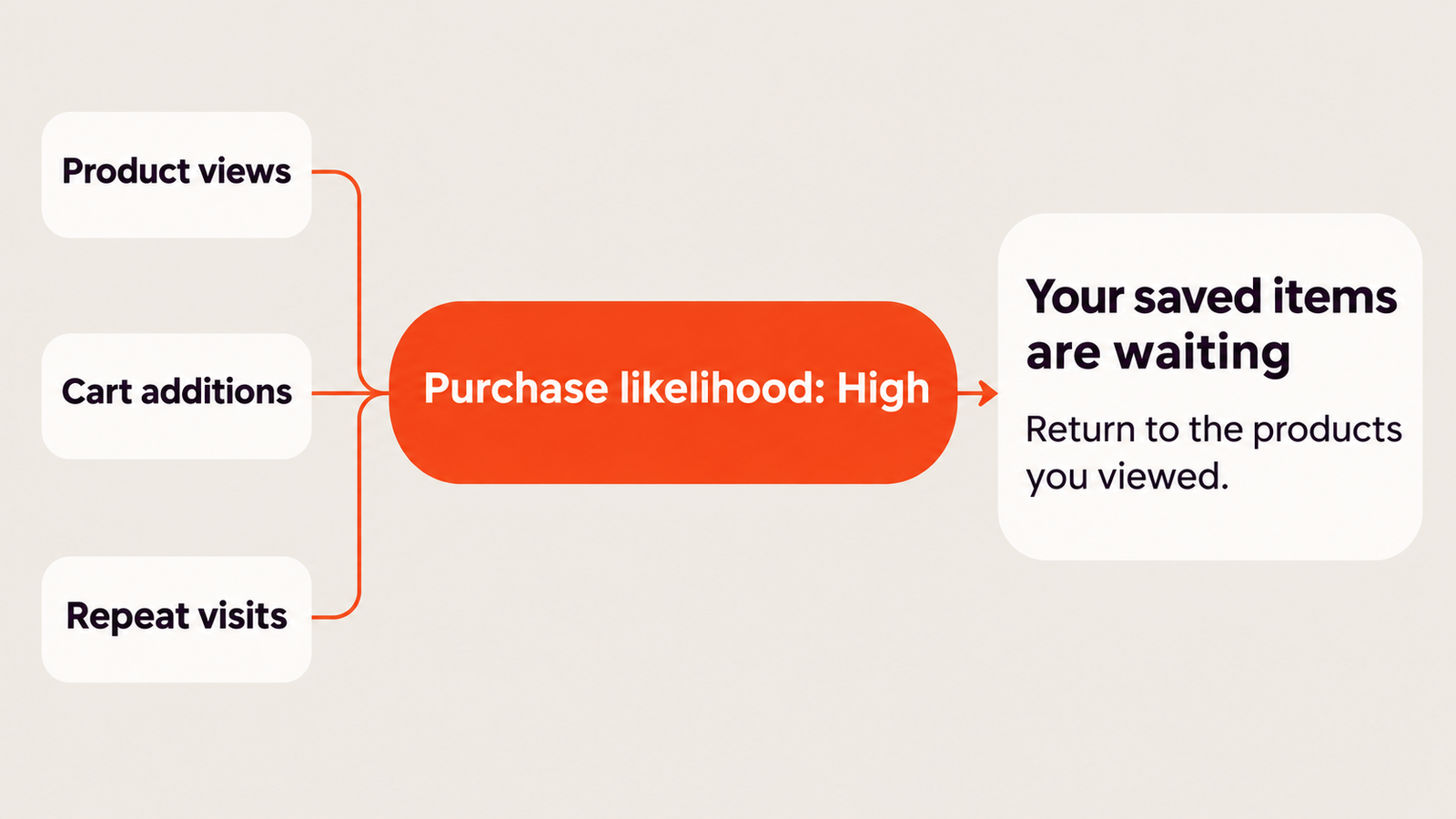
1. Signals: the data the models learn from
- On-site and in-app behavior: product views, repeat visits to the same item, add-to-cart events, searches, session depth
- Transactions: purchase recency and frequency, order value, returns
- Engagement: opens, clicks and unsubscribes across email, push, SMS and WhatsApp
- Context: device, traffic source, time of day
A model can only score what it can see. If web sessions, app activity and purchase history sit in separate systems, the model scores a fragment of each customer. That is why a unified profile in a customer data management layer comes before any predictive work.
2. Scores: from probability to an actionable segment
Models output a score for each person, usually a probability between 0 and 1 or a rank. Most platforms group scores into bands so marketers can act on them without handling raw numbers. Insider One’s Likelihood to Purchase model, for example, predicts the probability of a purchase within a set timeframe from real-time behavior such as repeat product views and cart additions.
Every visitor, logged in or anonymous, receives a score that updates in real time, and users who pass a model-determined threshold are expected to buy within the next seven days. Because the model runs on session behavior rather than CRM records, it can score first-time visitors who have never identified themselves.
3. Activation: where scores change the experience
A score has no value until it changes a decision. The five most common activation points are:
- Audience entry: who enters a campaign or journey
- Branching: which path a customer takes inside a journey
- Offer selection: full-price message, value message or incentive
- Channel and timing: where and when to reach the customer
- Suppression: who should not receive a message or a paid impression
In Insider One, predictive segments can feed onsite experiences, messaging channels and ad audiences, and can act as entry or branch conditions in journey orchestration with Architect.
The predictions that matter most for personalization
Each prediction answers a different question, so match it to the decision you need to make.
| Prediction | Question it answers | Personalization decision it informs |
| Likelihood to purchase | Who is close to buying? | Prioritize reminders, recommendations or urgency; reduce paid spend on low-intent users |
| Lifecycle status or churn risk | Who is new, active, at risk or lapsed? | Onboarding, retention or win-back journey |
| Discount affinity | Who responds mainly to price? | Who gets a coupon, price-drop alert or outlet banner, and who sees full-price messaging |
| Attribute or product affinity | Which categories, brands or price ranges does this person lean toward? | Banners, category sorting and recommendations |
| Channel engagement | Where is this person most likely to respond? | Channel selection per customer |
| Send time | When is this person most responsive? | Message scheduling |
| Predicted customer lifetime value | How valuable is this customer likely to become? | Retention investment, service level and acquisition bids |
Insider One’s predictive segments cover likelihood to purchase, customer lifecycle status, discount affinity, attribute affinity and user engagement, and its journey capabilities include next-best channel predictions and send-time optimization, as described in our predictive marketing guide. If you plan to use predicted lifetime value, confirm whether your platform offers it natively or whether you need a custom model.
Propensity is not the same as persuadability
This is where many predictive targeting programs lose margin. A high likelihood-to-purchase score tells you who is likely to buy. It does not tell you whether your message caused the purchase. Uplift modeling frames this with four groups:
- Persuadables: buy only because they were targeted
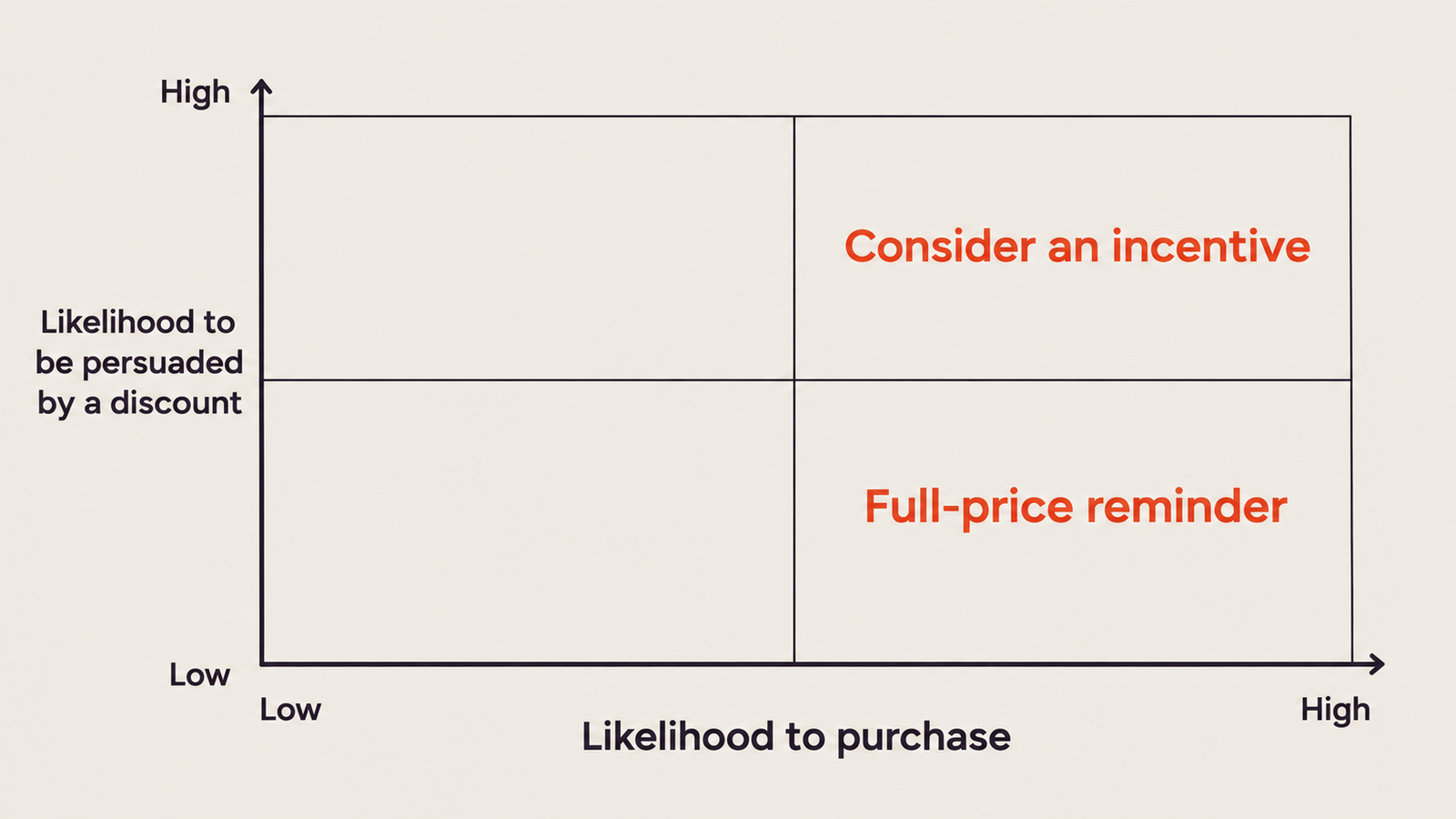
- Sure things: buy whether or not they are targeted
- Lost causes: do not buy either way
- Sleeping dogs: become less likely to buy because they were targeted, for example by unsubscribing after one message too many
Only persuadables produce incremental revenue. A standard propensity model places sure things at the top of its ranking, so sending your strongest discount to the “high” band can mean paying for conversions you would have had anyway. Three practical rules follow:
1. Do not default to discounts for high-intent customers. Use reminders, social proof, stock or delivery information instead, and keep incentives for customers with high discount affinity.
2. Test the middle band. Customers with medium purchase likelihood are interested but undecided, which is where a well-chosen incentive or reassurance message is most likely to change the outcome.
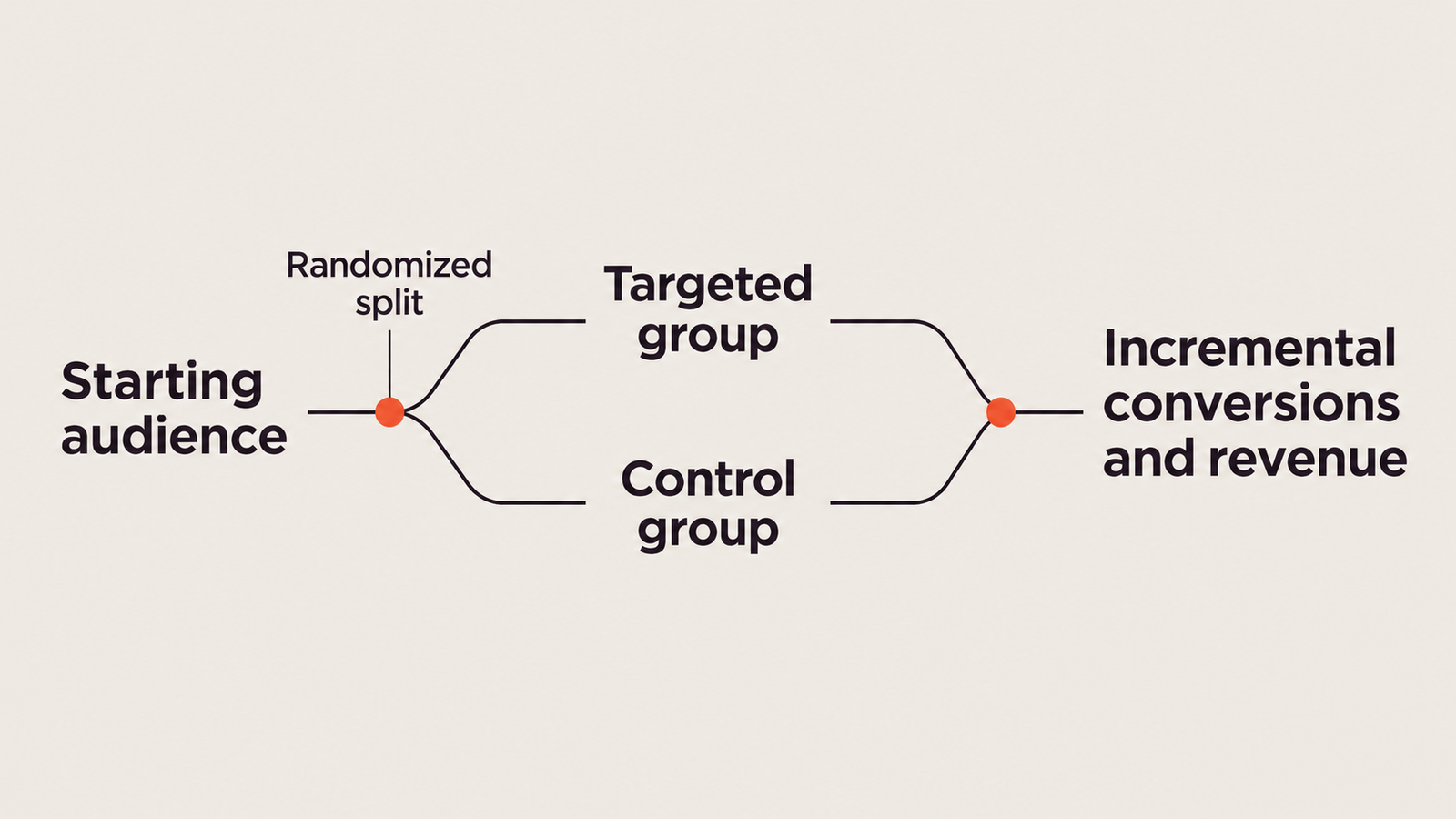
3. Keep a holdout. Exclude a random share of each predicted segment from the campaign and compare results within the segment. Comparing a high-intent segment with the site average shows how concentrated intent is, not how much your campaign added.
A decision matrix for turning predictions into actions
A single score rarely maps to a single best action. Pairing purchase intent with discount affinity covers most promotional decisions and is a useful starting point.
| Likelihood to purchase | High discount affinity | Low discount affinity |
| High | Price-drop alerts on items already viewed or access to an existing sale. Avoid new blanket codes and test any small incentive against a holdout. | Full-price nudges: cart reminders, low-stock or delivery cut-off messages, recommendations. No coupon. |
| Medium | The main zone for a targeted, time-bound incentive. Track incremental conversion and margin, not conversion rate alone. | Reduce uncertainty with reviews, size or fit guidance, returns information, comparison content and personalized recommendations. |
| Low | Low-cost channels only, such as onsite outlet banners or price alerts for opted-in users. Limit paid retargeting. | Inspiration and discovery content, preference capture, and suppression from expensive paid audiences. |
Then add three layers on top of the grid:
- Lifecycle status overrides promotion logic. A customer flagged as at risk of churning moves to a retention path, whatever their discount band.
- Channel and send-time predictions decide where and when, so the same action reaches each customer on the channel they are most likely to engage with.
- A cross-channel frequency cap applies to everyone. A high score is a reason to be more relevant, not a reason to send more messages.
Treat the bands and actions as hypotheses. Your holdout results will show which cells deserve more budget and which should be switched off.
Predictive targeting in practice: three examples
Paid media: spending where intent is
Pierre Cardin used Insider One’s Predictive Ad Audiences to segment users by lifecycle status (such as high churn risk), likelihood to purchase and discount affinity, then focused ad budgets on users showing purchase intent. The brand reported a 67.95% reduction in cost per acquisition, a 445% conversion rate uplift and a 164.83% increase in return on ad spend (ROAS).
A side-by-side test of predictive and non-predictive audiences
A European luxury brand pushed a high likelihood-to-purchase segment into Google Ads for dynamic remarketing and ran a second campaign against a non-predictive segment without scoring, then compared the two. The brand reported a 239% uplift in ROAS. The design is worth copying: same channel, same creative approach, one variable changed.
Web push to high-intent visitors
A global fashion retailer sent a web push announcing its yearly sale to a high likelihood-to-purchase segment and saw a 757% uplift in ecommerce conversion rate compared with the site average.
Because the benchmark is the site average, the result mainly shows how concentrated buying intent is in that segment. To size the revenue the push itself created, pair a campaign like this with a holdout from the same segment.
How to implement predictive targeting in six steps
1. Start with one decision and one metric. “Who receives the cart-recovery coupon, measured by incremental margin” is a better first project than “personalize with AI”.
2. Unify data and identity. Connect web, app, messaging and transaction data to one profile, and check that product view, add-to-cart and purchase events are tracked consistently across platforms.
3. Choose the prediction and check readiness. Use built-in models where they fit the decision. Custom models need enough historical outcomes to learn from, so confirm data minimums with your vendor. Look at the score distribution: if most users land in “high”, the band is too broad to be useful.
4. Map scores to actions. Use the matrix above and document what each band receives, including bands that receive nothing.
5. Launch with a holdout. Keep a randomly selected control group in every predicted segment, large enough to read results with confidence.
6. Monitor and refresh. Seasonality, pricing and assortment changes shift behavior, so model performance drifts. Review band performance at least monthly and before peak periods.
How to measure whether predictive targeting is working
Conversion rate alone can hide wasted incentives. Track a small set of metrics that separate correlation from impact.
| Metric | What it tells you | Watch out for |
| Incremental conversion rate (treated vs holdout) | The true effect of targeting | Requires a randomized control in the same segment |
| Incremental revenue or margin per recipient | Whether the effect pays for itself | Discount and channel costs |
| Band separation (conversion by high, medium, low) | Whether the model still ranks customers correctly | Drift after seasonal peaks or catalog changes |
| Discount cost per incremental order | Whether incentives reach persuadables | Rising costs hidden by rising conversions |
| CPA and ROAS for predictive ad audiences | Paid media efficiency | Attribution window differences between platforms |
| Unsubscribes, opt-outs and complaints | Whether targeting has turned into over-targeting | Signs of “sleeping dogs” in a segment |
Guardrails for responsible predictive targeting
- Consent and data rights. Use first-party data collected with appropriate consent and respect channel opt-ins. Requirements differ by region, so involve your privacy and legal teams before activating new predictions.
- No sensitive inferences. Avoid models that infer sensitive traits such as health or financial difficulty, and be careful when predictions influence prices or eligibility for offers.
- Cross-channel frequency limits. Cap total touches across email, SMS, push and WhatsApp, not per channel.
- Explainability. Your team should be able to describe each prediction in plain terms: which signals it uses, what outcome it predicts and over what time window.
- Ask, not only infer. Observed behavior has limits. Preference centers, quizzes and conversations capture what customers state directly. Insider One’s Agent One™ Audiences, for example, captures intent from customers’ own words in conversation and adds it to the live customer profile alongside observed behavior.
Where generative and agentic AI fit
Predictive models answer who and when. Generative AI helps with what: copy, subject lines and content variants for each segment. Agentic AI connects the two by planning, running and optimizing campaigns within the goals and guardrails a team sets.
In Insider One, Insider One AI can create segments from a plain-language description of a use case and goal, and Agent One™ Teams can plan, run and optimize customer engagement on a team’s behalf. The predictive layer still matters: agents and generative content perform only as well as the audience and timing decisions underneath them.
Put predictive targeting to work with Insider One
Insider One is the leading Agentic Customer Engagement Platform, used by 2,000+ customers. It brings unified customer profiles, predictive segments, AI personalization, Architect journeys and native channels together, so a prediction made on your website can shape an email, a WhatsApp message or an ad audience without exporting data between systems.
To see how predictive segments would apply to your data and channels, request a personalized demo or explore use cases on your own in the Product Demo Hub.
Frequently asked questions
Behavioral targeting selects people based on actions they have already taken, such as viewing a category. Predictive targeting uses those actions, plus transaction and engagement data, to estimate what a person is likely to do next. Two visitors with the same recent behavior can receive different predictions and therefore different experiences.
Yes, if the model uses real-time session behavior. Insider One’s Likelihood to Purchase model scores both logged-in and anonymous visitors from on-site signals such as repeat product views and cart events, so first-time visitors can be targeted before they share an email address.
It depends on the model. Built-in models such as purchase likelihood are trained on behavior patterns across your site traffic, while custom predictions need enough historical examples of the outcome you want to predict. Check the minimum data requirements with your vendor, and make sure core events are tracked consistently first.
They are closely related. Propensity modeling produces the scores, and predictive targeting is how you use them to select audiences and experiences. Lead scoring is the B2B sales version, ranking accounts or leads for follow-up rather than personalizing consumer experiences.
Intent signals such as purchase likelihood are most useful when they update in real time or daily, because buying intent changes quickly. Slower-moving predictions, such as lifecycle status or affinities, can refresh less often. Whatever the cadence, review how each band performs at least monthly.
No. Predictions decide who is eligible for an experience; testing tells you which experience works for them and whether it adds incremental value. Run holdouts and A/B tests inside predicted segments rather than comparing segments with each other.
It can be, but compliance depends on how data is collected and used, not on the technique itself. Base predictions on first-party data collected with appropriate consent, honor opt-outs across channels, avoid sensitive inferences, and review requirements for each market with your legal team. This is general guidance, not legal advice.

Keep Reading
4 min.

Chris Baldwin
3 Feb 2026
10 mins.

Nicolas Algoedt
23 Nov 2026
16 mins.
Chris Baldwin
23 Nov 2026