

 Platform Overview

 Integration Hub

 Agent One™

 Agent One™ Teams

 Customer Data Management

 Personalization

 Journey Orchestration

 Reporting & Data

 Behavioral Analytics

 Web
Web

 Email
Email

 Site Search

 Conversational CX

 WhatsApp

 Web Push

 InStory

 App
App

 SMS & RCS

 Join the $0 Migration Movement™

 The Insider One Difference

 Compare Vendors

 Switch to Insider One

 Success Story

 Retail & Ecommerce

 Financial Services

 Travel & Hospitality

 Beauty & Cosmetics

 Automotive

 Telecommunications

 Total Economic Impact™ Study

 Blog
Blog

 E-Books & Guides

 Events

 Glossary
8 Predictive Churn Modeling Tools to Consider in 2026

Updated on 7 Sep 2026
10 mins.
Table of Contents
Most Popular
Summary
- Predictive churn tools vary in how they collect and use customer data, generate risk signals, and turn those signals into retention actions
- Insider One, Adobe Experience Platform, Salesforce, Braze, Bloomreach, Iterable, CleverTap, and Klaviyo take different approaches, ranging from broad customer data and engagement platforms to ecommerce- and mobile-focused tools
- Enterprise platforms such as Adobe Experience Platform and Salesforce generally offer broader customer data and orchestration capabilities, while platforms such as Bloomreach, CleverTap, and Klaviyo are more closely aligned with specific commerce or mobile use cases
- Insider One combines predictive and behavioral audience capabilities with customer data management, personalization, and customer engagement
- The right choice depends on your data maturity, implementation needs, and how easily you can act on churn signals
Predictive churn modeling helps retention teams identify customers who are likely to disengage before they actually leave. Instead of relying only on historical churn rate reports, predictive models use signals such as purchase behavior, engagement, browsing activity, and customer lifecycle changes to identify potential churn risks.
But predictive churn isn’t only about generating a risk score. The more important question is what a business can do after identifying an at-risk customer.
Some platforms focus on predictive analytics, while others connect predictive or behavioral audiences directly to segmentation, personalization, and customer engagement. That distinction matters when choosing a platform because a churn prediction sitting in a dashboard doesn’t reduce churn on its own.
This list compares eight predictive churn modeling tools based on their approach to customer data, predictive and behavioral segmentation, activation, transparency, and implementation.
What to look for in a predictive churn modeling tool
Before comparing vendors, it helps to establish the criteria that matter when evaluating predictive churn analytics.
Data requirements
Predictive models need enough behavioral data to identify meaningful patterns. The amount required varies based on customer volume, purchase frequency, business model, and data quality.
Ask your prospect vendor:
- How much historical behavioral data is recommended?
- Which customer events are used?
- How many active customers are typically required?
- How does the model perform when data is limited?
Model transparency
A churn prediction is only useful if teams understand how to act on it.
Look for visibility into the behavioral signals, customer attributes, or segments contributing to a prediction. This becomes particularly important for regulated or data-sensitive businesses.
Time to value
A sophisticated model can still be a poor choice if it takes months to connect data sources and deploy.
Consider the complete implementation process, including data integration, identity resolution, event tracking, model configuration, validation, and campaign activation.
Activation capabilities
Prediction is only the first step. The platform should make it possible to act on customers identified as being at risk.
That could mean triggering an email, sending a push notification, personalizing a website or app experience, or changing a customer journey.
1. Insider One
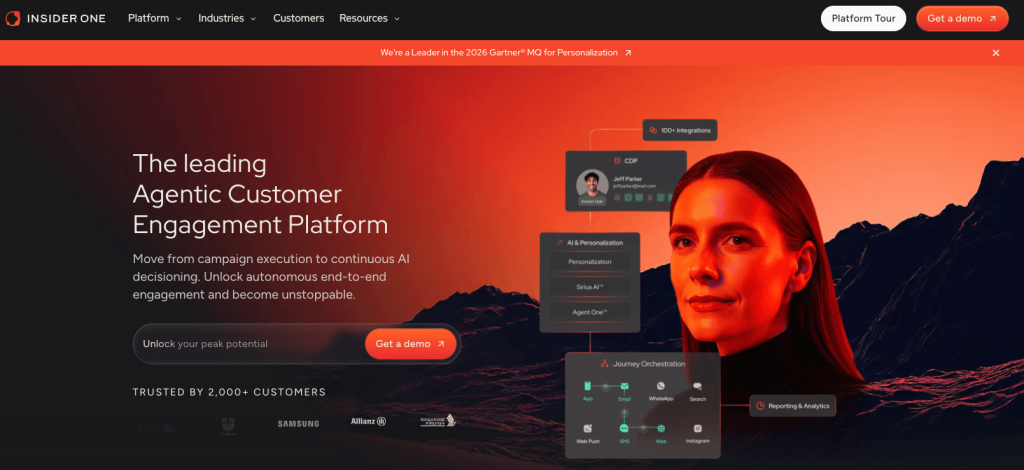
Best for: B2C brands that want to connect predictive customer intelligence with segmentation, personalization, and omnichannel engagement
Insider One takes a broader approach to churn prevention than platforms focused primarily on generating a churn probability.
Its Customer Data Management capabilities bring customer data and behavioral signals together to create audiences based on customer lifecycle, purchase likelihood, and other behaviors. This gives retention teams a way to identify customers whose behavior is changing and turn those signals into actionable audiences.
Predictive and behavioral signals for identifying at-risk customers
Insider One includes predictive audience capabilities such as customer lifecycle status and likelihood to purchase. These can help teams identify where customers are in their lifecycle and which customers may be becoming less likely to purchase.
The platform also supports RFM-based At Risk segmentation. This can flag customers who previously purchased frequently but whose purchase recency is declining.
For teams with limited historical data, this type of transparent behavioral segmentation can provide a practical starting point instead of immediately relying on a complex predictive model.
From identifying churn risk to taking action
The key advantage of Insider One is that customer intelligence doesn’t have to stop at audience creation.
Once an at-risk audience is identified, teams can use it across personalization and engagement activities. That creates a shorter path between identifying a potential churn signal and responding to it.
For example, retention teams can use an at-risk audience to:
- Trigger a personalized email journey
- Send a relevant push notification
- Personalize website or app experiences
- Adjust customer journeys based on lifecycle status
- Combine purchase behavior with other customer attributes
- Build targeted retention campaigns
This makes Insider One particularly relevant for B2C teams that don’t want predictive customer intelligence to remain isolated from their marketing execution.
Who should consider Insider One?
Insider One is worth evaluating if:
- You want customer data and engagement capabilities in one platform
- Behavioral segmentation is an important part of your retention strategy
- You want to activate at-risk audiences across multiple channels
- You need customer lifecycle and purchase-likelihood signals alongside behavioral data
- You prefer having transparent behavioral audiences alongside predictive capabilities
- Your marketing team needs to turn customer insights into campaigns without moving data between multiple systems
Watch out for: Organizations looking specifically for a dedicated data science environment to develop highly customized proprietary churn models may still need specialized modeling infrastructure.
2. Adobe Experience Platform
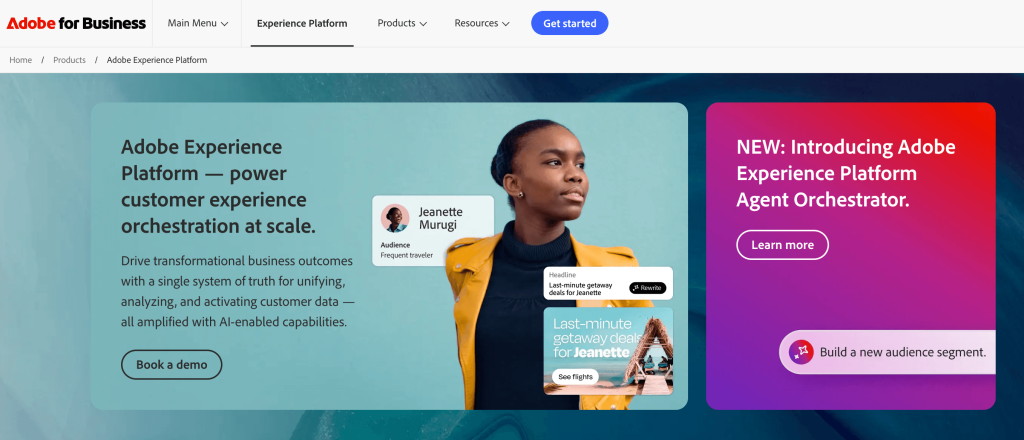
Best for: Large enterprises with complex customer data environments
Adobe Experience Platform combines customer data, analytics, AI, and activation within a broader enterprise ecosystem. Its predictive capabilities can be useful for organizations with substantial volumes of customer and behavioral data already flowing through Adobe.
Its breadth is an advantage for enterprises that need customer profiles, analytics, personalization, and journey orchestration in the same ecosystem.
The trade-off is implementation complexity. Businesses with fragmented data or limited technical resources should assess how much work is required before predictive use cases become operational.
3. Salesforce
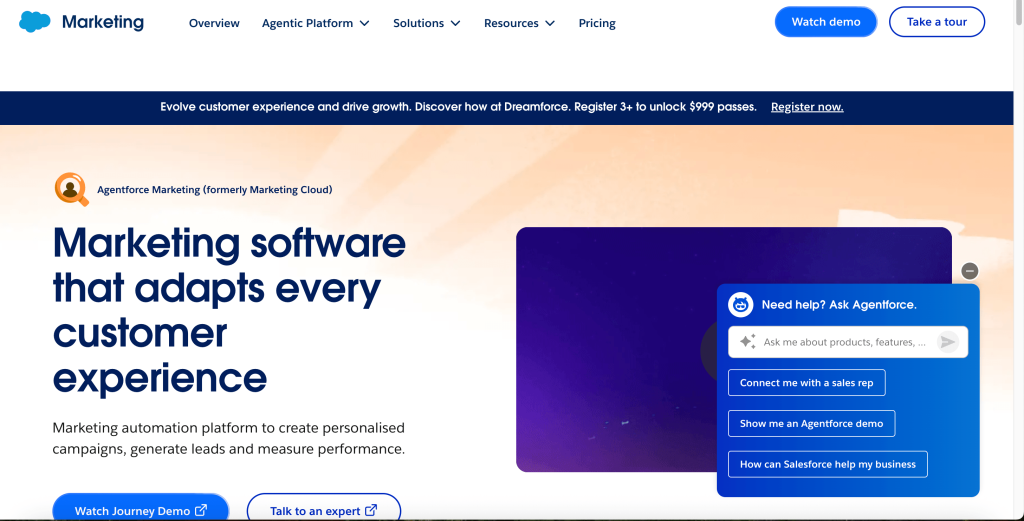
Best for: Organizations already using Salesforce across CRM and customer operations
Salesforce can connect customer intelligence with CRM data and downstream engagement. This makes it relevant for organizations that want churn-related insights to become part of broader customer management workflows.
Its strongest fit is with businesses where customer information is already centralized within the Salesforce ecosystem.
4. Braze
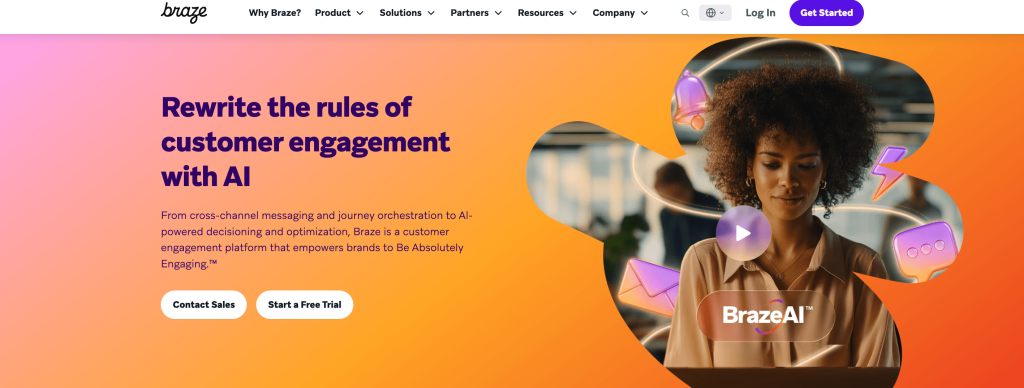
Best for: Customer engagement teams focused on lifecycle messaging
Braze is primarily an engagement platform, making it relevant for teams that want behavioral intelligence to feed directly into customer messaging and journeys.
For churn prevention, the important consideration is how quickly customer behavior can become an intervention through channels such as email, push, and in-app messaging.
5. Bloomreach
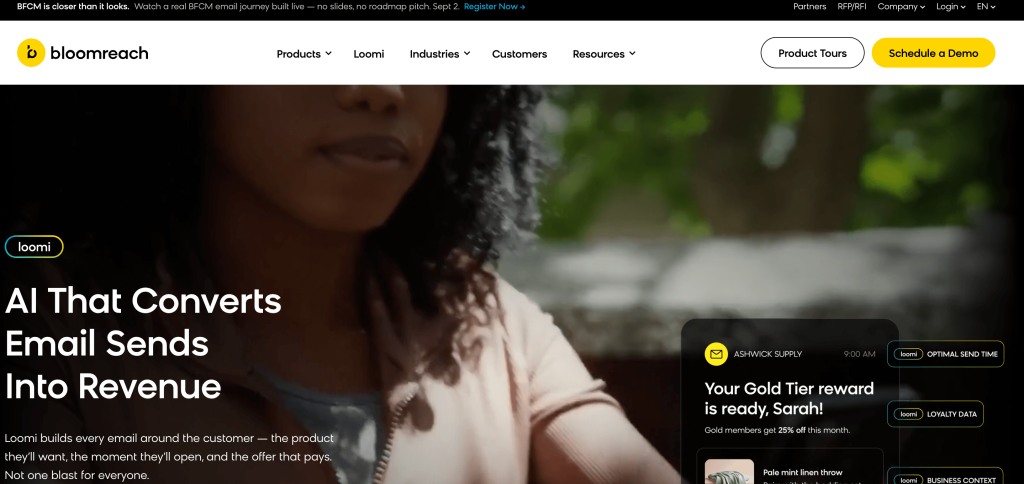
Best for: Ecommerce and retail businesses
Bloomreach has a strong commerce orientation, making it relevant for businesses where purchase behavior, product discovery, browsing, and merchandising activity are important churn signals.
This makes it a natural fit for ecommerce-led retention strategies, particularly when purchase behavior provides much of the available customer data.
6. Iterable
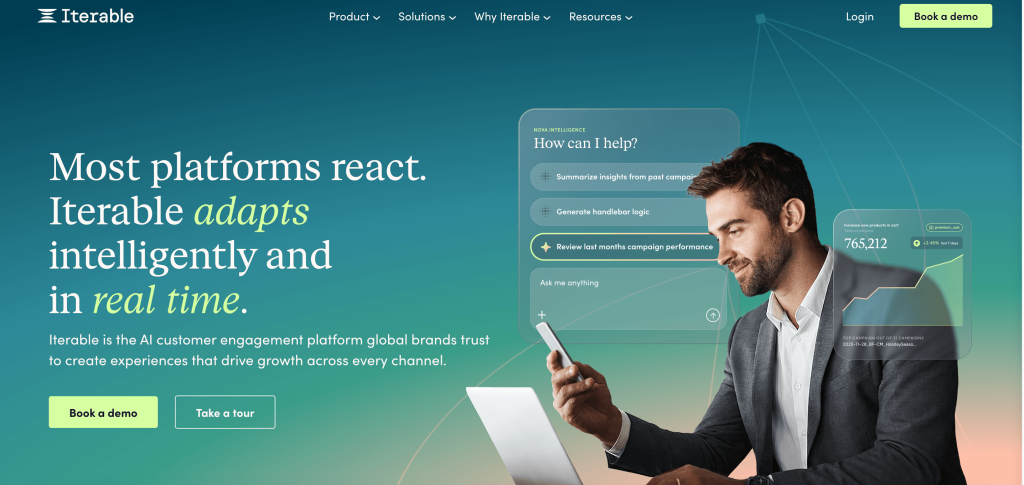
Best for: Cross-channel lifecycle marketing teams
Iterable combines customer data, segmentation, experimentation, and messaging, making it relevant for retention teams that want to incorporate behavioral or predictive insights into lifecycle campaigns.
Its strength is the connection between customer behavior and activation through marketing channels.
7. CleverTap
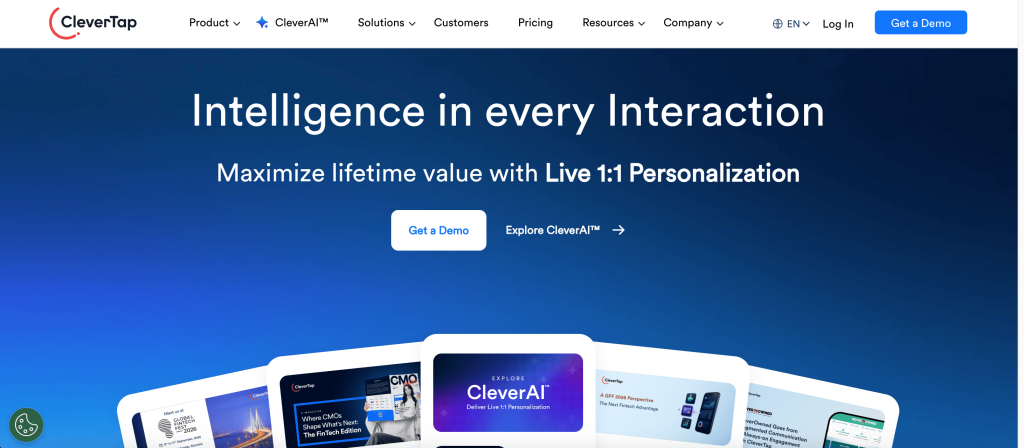
Best for: Mobile-first businesses and app-based customer journeys
CleverTap has a strong focus on mobile engagement, making app activity an important part of its customer intelligence.
For subscription apps, media products, fintech apps, and other mobile-first businesses, signals such as session frequency, feature usage, and declining engagement can be useful for identifying customers who may churn.
8. Klaviyo
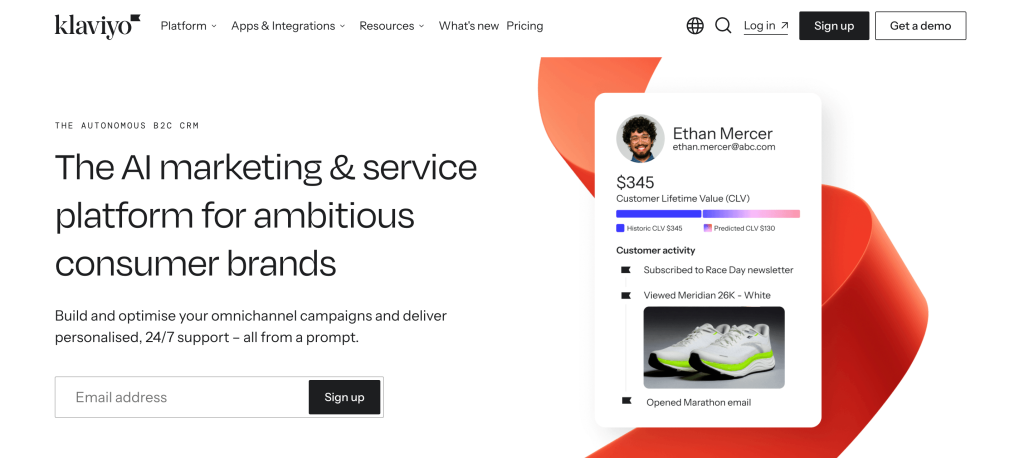
Best for: Ecommerce brands looking for accessible predictive capabilities
Klaviyo’s ecommerce orientation makes it an appealing option for brands that want predictive customer insights within an existing marketing automation workflow.
Because customer, purchase, and engagement data can already be connected within the platform, ecommerce teams can move from customer analysis to retention campaigns without necessarily introducing a separate predictive analytics system.
How to choose the right predictive churn platform
There isn’t one predictive churn tool that fits every business. The right choice depends on data maturity, business model, customer volume, and how predictions will be used.
Before choosing a platform, ask:
Do you have enough behavioral data?
Review your historical purchase, engagement, browsing, app, and customer-service data.
If your business has limited historical data, a transparent rules-based approach such as RFM segmentation may provide a more useful starting point than immediately adopting a complex predictive model.
Do you need prediction or activation?
A standalone analytics tool may be enough if your data science team only needs churn scores.
If marketers need to act on those insights immediately, consider platforms such as Insider One that connect customer intelligence with segmentation, personalization, and campaign activation.
How much control do you need?
Ask the prospect vendors how much visibility you get into:
- The signals contributing to churn risk
- Segment definitions
- Model performance
- Data inputs
- Prediction updates
- False positives and false negatives
How long can implementation take?
Don’t compare platforms based solely on feature lists.
Ask how long it takes to connect customer data, establish reliable identities, collect sufficient behavioral history, validate predictions, and activate resulting audiences.
Predictive churn is only valuable when teams can act on it
A churn prediction sitting in a dashboard doesn’t reduce churn by itself.
The most useful platforms connect customer intelligence to action. This is where Insider One’s broader approach becomes relevant: customer data management, predictive and behavioral audiences, personalization, and omnichannel engagement can work together rather than treating churn prediction as a standalone output.
For example, an RFM-based At Risk audience can identify frequent customers whose purchase recency is declining. That audience can then become an input for a retention journey or personalized experience.
The result is a more practical workflow:
Customer data → behavioral or predictive signal → audience → personalized action → measurement
That’s an important distinction to consider when comparing predictive churn tools. A platform may have sophisticated predictive capabilities, but if marketers cannot easily act on those insights, the operational value can be limited.
Conclusion
Predictive churn modeling in 2026 is moving beyond simple churn scores. The strongest approach depends on the quality of your behavioral data, the transparency you need, and how easily your team can turn predictions into customer actions.
When comparing vendors, look beyond claims about AI accuracy. Evaluate data requirements, model transparency, implementation time, activation capabilities, and fit with your business model.
Insider One is particularly relevant for B2C organizations that want to connect customer intelligence with action, combining customer data management, predictive and behavioral segmentation, personalization, and omnichannel engagement.
Want to see how Insider One can help your team turn customer signals into personalized retention experiences? Request a demo or take a platform tour to explore the platform.
FAQs
Predictive churn modeling uses behavioral data, such as purchase recency, engagement frequency, and browsing activity, to score how likely a customer is to stop buying before they actually leave. Unlike historical churn reports, it updates continuously, giving retention teams a window to act while the customer relationship is still active.
Most platforms need several months of consistent behavioral tracking, commonly cited as six to 12 months, before predictions stabilize enough to trust. Below that threshold, scores can still generate, but accuracy drops and false positives increase, which matters if the model triggers automated offers or discounts.
Yes. Brands without six months of clean behavioral history or a large active user base often get more reliable signal from rule-based segmentation, like RFM scoring, than from a thin predictive model. Enterprise-scale predictive churn analytics tools assume data volumes that many mid-market teams have not yet reached.
Transparency shows which signals drove a given churn score, which matters for regulated or data-sensitive categories where a marketing team needs to explain automated decisions. Black-box scoring makes it harder to audit why a customer was flagged, or to trust the resulting campaign spend.
A churn rate report measures customers who have already left over a set period, while predictive churn modeling forecasts which active customers are likely to leave next. The report is a lagging indicator; the model is a leading one, built to trigger retention action before the loss happens.
Ask about data requirements, model transparency, prediction accuracy, implementation time, customer identity resolution, model maintenance, activation options, and how the vendor validates predictions with real customer data.
Insider One combines customer data management with predictive and behavioral segmentation, personalization, and omnichannel engagement. Teams can use signals such as customer lifecycle status, likelihood to purchase, and At Risk audiences to identify changing customer behavior and activate targeted retention experiences.

Keep Reading
4 min.

Chris Baldwin
3 Feb 2026
9 min.
Chris Baldwin
22 Oct 2026
8 mins.
Chris Baldwin
8 Oct 2026