

 Platform Overview

 Integration Hub

 Agent One™

 Agent One™ Teams

 Customer Data Management

 Personalization

 Journey Orchestration

 Reporting & Data

 Behavioral Analytics

 Web
Web

 Email
Email

 Site Search

 Conversational CX

 WhatsApp

 Web Push

 InStory

 App
App

 SMS & RCS

 Join the $0 Migration Movement™

 The Insider One Difference

 Compare Vendors

 Switch to Insider One

 Success Story

 Retail & Ecommerce

 Financial Services

 Travel & Hospitality

 Beauty & Cosmetics

 Automotive

 Telecommunications

 Total Economic Impact™ Study

 Blog
Blog

 E-Books & Guides

 Events

 Glossary
How to Choose Predictive Analytics Software Solutions in 2026

Updated on 7 Sep 2026
8 mins.
Table of Contents
- Summary
- How to score predictive analytics vendors before you shortlist
- Where enterprise marketing suites fall short on prediction
- Customer engagement platforms: built-in vs. bolt-on predictive features
- Mid-market vs. enterprise: Matching predictive analytics tools to team size
- Red flags that signal a predictive analytics vendor won't scale
- Conclusion
- FAQs
Most Popular
Summary
- Compare predictive analytics vendors based on how prediction works in practice: whether it is built in, explainable, and connected to the data your campaigns already use
- Be cautious with platforms where predictive analytics requires third-party tools, dependencies, or professional services before you can use it
- Mid-market teams should look for ready-to-use predictive segments, while enterprise teams should prioritize explainability, governance, and scalability
- Watch for black-box scoring, vague model inputs, and predictive features gated behind top pricing tiers or custom contracts
- Insider One provides native predictive segments such as likelihood to purchase, customer lifecycle status, discount affinity, and engagement, so teams can use predictions directly within the same platform they use to activate campaigns
Predictive analytics vendors split into two camps: platforms where prediction runs on the same data layer that powers your campaigns, and platforms where prediction is a separate module, partner integration, or professional services engagement bolted on after the contract is signed.
The difference between vendors rarely shows up in a demo. It shows up three months into implementation, when someone asks which fields actually feed the churn score and the honest answer involves a data science ticket.
This shortlist is for marketing and revenue operations (RevOps) leaders evaluating predictive analytics software companies or customer engagement platforms, particularly teams who have sat through vendor comparisons that treat “predictive analytics” as a single checkbox instead of a spectrum of maturity.
You will learn how to score vendors on native versus add-on prediction, how team size and data maturity should shape your shortlist, and which red flags mean a platform will not hold up once you need explainable, governable predictions at scale.
How to score predictive analytics vendors before you shortlist
A useful scorecard rates three dimensions: whether prediction is native or bolted on, whether the model is explainable, and how deep the data integration goes before a prediction ever reaches a live channel.
Most vendor comparison pages skip all three and default to a feature checklist that says “predictive segmentation: yes,” with no indication of what building, training, or maintaining that segment actually requires from your team.
Define the three criteria that matter
Native prediction means the scoring model runs inside the same platform that executes campaigns, using the same customer data without an export-import cycle. Explainability means you can see the inputs and confidence level behind a score, not just the output.
Integration depth means the platform can ingest behavioral, transactional, and catalog data without a separate data warehouse project first.
- Native prediction: does the score live inside the platform, or does it require a separate AI module purchased on top
- Explainability: can your team see which signals drove a “high likelihood to purchase” tag, or is the model a black box
- Integration depth: does the vendor need a data engineering project before the first predictive segment goes live
Align the framework with your buying committee
Marketing, data, and IT teams weigh these criteria differently, and that mismatch is where deals stall. Marketing wants a segment live this quarter.
Data teams want governance and audit trails. IT wants to know what the integration touches. Score the vendor against all three before demos start, not after a champion has already fallen for the interface.
Where enterprise marketing suites fall short on prediction
Many enterprise marketing suites treat prediction as an add-on module rather than a core capability, which means the “AI-powered” claim on the homepage often refers to a separate license, a partner integration, or a services statement of work.
That distinction matters more than the demo suggests, because the sales cycle rarely surfaces until legal is reviewing the second contract.
The practical cost shows up in the timeline and total cost of ownership. A platform that requires a bolted-on analytics module typically adds implementation weeks, a second vendor relationship, and a separate data pipeline before the first predictive score reaches a channel.
Buying committees that map predictive analytics capability against implementation timeline, not just feature parity, tend to catch this before signing, not after.
Customer engagement platforms: built-in vs. bolt-on predictive features
Some customer engagement platforms ship churn, lifetime value, and next-best-action scoring inside the base product.
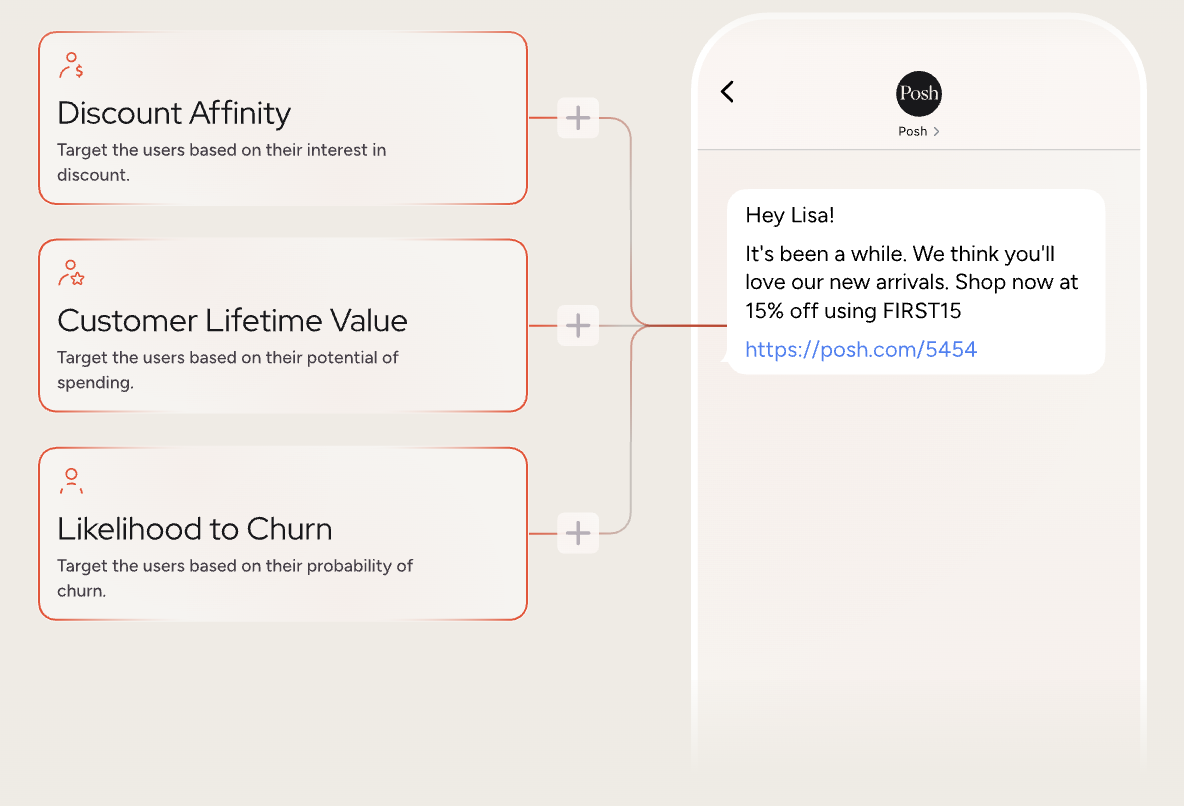
Others rely on rules-based segmentation and expect teams to layer a third-party analytics tool on top before predictive capabilities can be used in production.
The difference matters because predictive functionality is only useful when it can be applied directly to customer engagement workflows, rather than requiring teams to move data between multiple systems
Insider One‘s behavioral analytics and Predict module generate predictive segments natively, including likelihood to purchase, customer lifecycle status, discount affinity, attribute affinity, and user engagement, all visible inside a single predictive dashboard rather than a separate analytics environment.
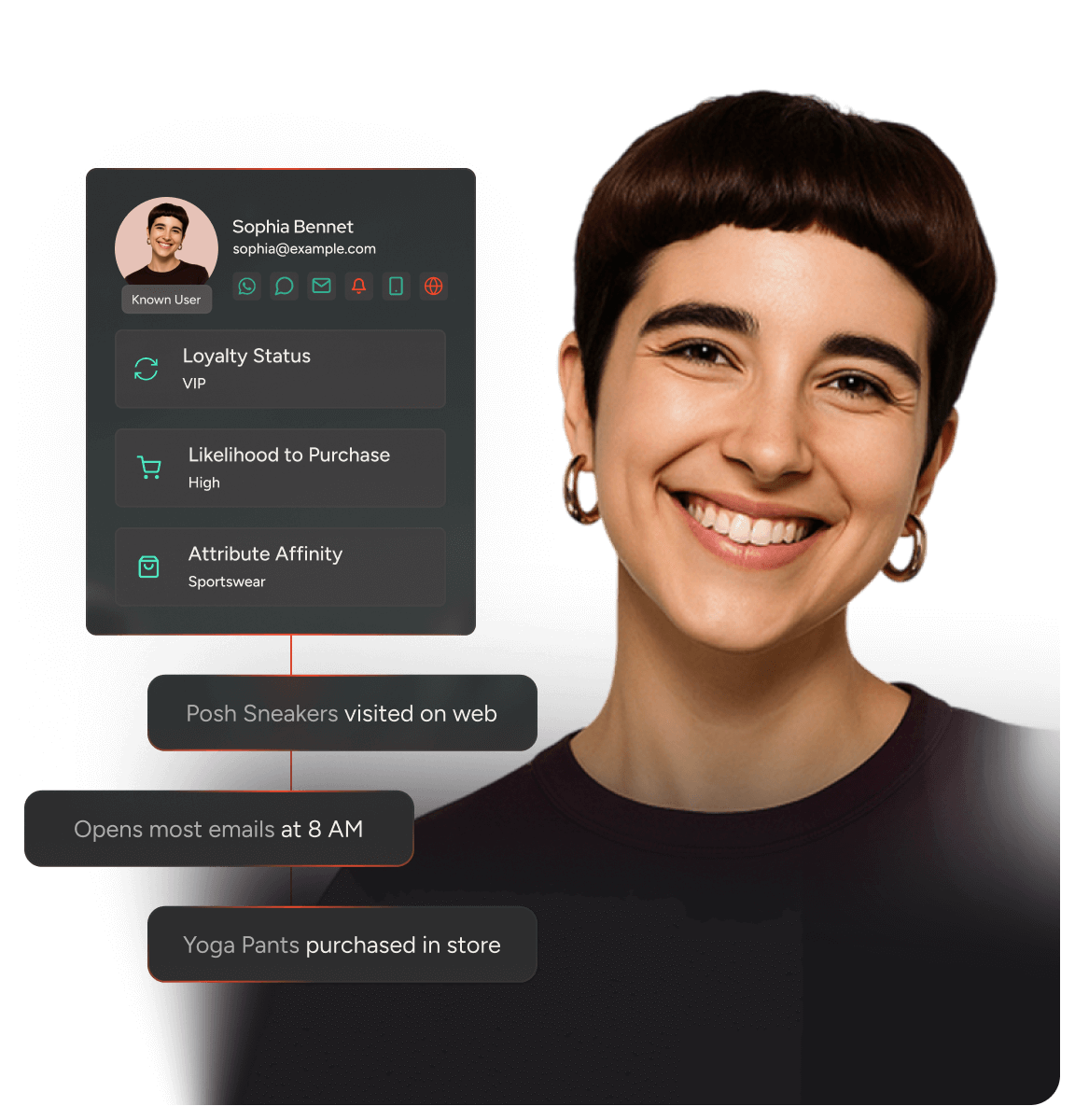
When evaluating a platform, look beyond whether it lists “predictive segmentation” as a feature. Check whether the underlying models use current behavioral and transactional data, how frequently they update, and whether their outputs can be activated directly across customer engagement channels.
The pattern to watch for is last-touch attribution dressed up as prediction. If a platform’s “predictive” segment is really a static rule; for example, customers who bought once in the last 90 days, it will not adapt as behavior shifts.
Genuine predictive marketing relies on models that retrain against new behavioral and transactional data, not a saved filter renamed to sound smarter.
Mid-market vs. enterprise: Matching predictive analytics tools to team size
The right predictive analytics vendor depends heavily on team size and data maturity, not just feature depth. A lean marketing team without a dedicated analyst needs prebuilt predictive segments that work out of the box. An enterprise team running multiple brands or regions needs explainable models, audit trails, and governance controls that a smaller platform may not have built yet.
What lean teams should prioritize
Teams without a data science function should prioritize predictive analytics software companies that ship segments ready to activate, not raw model outputs that require interpretation.
Look for platforms where a marketer, not an analyst, can view a customer lifecycle status or discount affinity score and act on it inside the same interface used to build a campaign in Architect.
What enterprise teams should prioritize
Enterprise buyers need more than accuracy. They need to know why a model flagged a customer as high-risk churn, who has access to adjust thresholds, and how the vendor handles data governance across regions.
Watsons improved return on ad spend by 50% during a major sales event using predictive segmentation that stayed explainable and governable at enterprise scale, which is the harder problem most enterprise predictive analytics tools underdeliver on.
Red flags that signal a predictive analytics vendor won’t scale
The clearest warning sign is a black-box score with no visibility into inputs or confidence levels. If a vendor cannot show you which behavioral, transactional, or catalog signals feed a prediction, your data team will not be able to defend that score to leadership when results shift, and marketing will lose trust in the segment within a quarter.
The second warning sign is pricing structure. Predictive features gated behind the top-tier plan, a custom enterprise contract, or a mandatory professional services fee are not really part of the platform you are buying.
They are a future negotiation, and they should be priced and scoped before the deal closes, not discovered during onboarding.
- Black-box scoring with no visibility into model inputs, training data, or confidence levels
- Predictive segments gated behind the highest pricing tier, a custom contract, or a required services engagement
- No documented retraining cadence, meaning scores go stale as customer behavior changes
- A separate login or environment for predictive analytics, disconnected from the customer data management layer that runs campaigns
- Vendor references to “AI-powered” prediction that turn out to be static, rules-based segments on closer inspection
A model you cannot explain is a model you cannot defend to your chief marketing officer or your data governance team, and that gap gets more expensive the longer it stays hidden.
Coca-Cola increased conversion rate by 19% using predictive segmentation built on a transparent, native model, which is the standard buying committees should hold every shortlisted vendor to before signing.
Conclusion
Predictive analytics vendors earn a spot on your shortlist by proving prediction is native, explainable, and integrated into the data your team already owns, not by claiming “AI-powered” on a homepage.
Score native versus bolted-on capability, match the platform to your team’s data maturity, and treat pricing gates and black-box scoring as disqualifiers. The buying committees that get this right avoid a second procurement cycle 12 months later.
To evaluate the fit of the Architect for your use case, book a personalized demo to review your goals, data requirements, and implementation constraints with the Insider One team.
FAQs
Native means the predictive model runs inside the same platform and data layer used to execute campaigns, with no export-import cycle. Bolted-on means prediction lives in a separate module, partner tool, or services engagement purchased after the core license, which adds integration time and a second vendor relationship to manage.
Explainability lets your team see which signals, such as browsing behavior or purchase recency, drove a prediction, and how confident the model is. Without it, marketing cannot defend a segment’s performance to leadership, and data teams cannot audit the model when results shift or compliance questions arise.
Not exactly. Mid-market teams generally need prebuilt, ready-to-activate predictive segments that a marketer can use without a data science hire. Enterprise teams need those same segments plus governance controls, audit trails, and explainability at scale across multiple brands, regions, or business units.
Ask whether the segment retrains against new behavioral and transactional data or stays fixed once created. A genuine predictive model, such as a customer lifecycle status score, updates as behavior changes. A static filter labeled “predictive” will not adapt and should be treated as basic segmentation, not prediction.
Watch for predictive features locked behind the highest pricing tier, a custom enterprise contract, or a mandatory professional services fee. If prediction is not included in the core license you are evaluating, treat it as a separate, unscoped cost, and get it priced in writing before signing.

Keep Reading
4 min.

Chris Baldwin
3 Feb 2026
9 min.
Chris Baldwin
22 Oct 2026
8 mins.
Chris Baldwin
8 Oct 2026