

 Platform Overview

 Integration Hub

 Agent One™

 Agent One Teams™

 Customer Data Management

 Personalization

 Journey Orchestration

 Reporting & Data

 Behavioral Analytics

 Web
Web

 Email
Email

 Site Search

 Conversational CX

 WhatsApp

 Web Push

 InStory

 App
App

 SMS & RCS

 Join the $0 Migration Movement™

 The Insider One Difference

 Compare Vendors

 Switch to Insider One

 Success Story

 Retail & Ecommerce

 Financial Services

 Travel & Hospitality

 Beauty & Cosmetics

 Automotive

 Telecommunications

 Total Economic Impact™ Study

 Blog
Blog

 E-Books & Guides

 Glossary
Omnichannel Retail Strategy: How to Close the Maturity Gap in 2026

Updated on 4 Aug 2026
7 min.
Table of Contents
- Summary
- What omnichannel retail strategy looks like when it actually works
- Where execution breaks down for omnichannel retail strategy
- The data and orchestration layer teams usually miss
- How to fix omnichannel retail strategy without adding more channel chaos
- What to evaluate before choosing a platform
- Conclusion
- FAQs
Most Popular


Summary
- Omnichannel maturity is measured by whether one customer signal changes what happens in every channel, not by how many channels are technically live
- Retailers that unify buy-online-pick-up-in-store (BOPIS), curbside, ship-from-store, and WhatsApp around a single customer record remove the friction that quietly drives churn
- The most common failure point is data fragmentation, not missing channels, and it shows up as duplicate offers, mistimed messages, and inventory promises the store can’t keep
- A six-step framework, starting with a unified customer record and ending with tested orchestration, gives you a repeatable way to close the gap
- Brands like Adidas and Carrefour show what unified decisioning delivers once the data layer is fixed, not just extended
Your customer buys a jacket in-store on Saturday and gets an email on Monday offering ten percent off the same jacket. That is not a channel problem. It is a sign that the purchase signal never reached the system deciding what to send next.
Omnichannel retail strategy is the discipline of making every channel, store, app, email, WhatsApp, act on the same customer record in real time, so one action changes the offer everywhere else.
This article is for retail and ecommerce marketing directors, customer experience (CX) leaders, and digital transformation managers who have already turned on most of the obvious channels and are now asking why conversion, retention, and average order value have not moved the way the roadmap promised.
If that sounds familiar, the gap usually isn’t a missing channel.
You’ll get a way to benchmark where execution typically breaks, a look at the data and orchestration layer that separates mature programs from connected-but-disjointed ones, and a six-step framework to close the gap without bolting on another channel.
What omnichannel retail strategy looks like when it actually works
A working omnichannel retail strategy means a single customer action, a purchase, a return, a browse session, updates every channel’s next decision within minutes.
It is not about running email, SMS, push, and in-store promotions in parallel. It is about those channels sharing one source of truth so none of them contradicts what just happened somewhere else.
Unified commerce vs omnichannel: what’s the difference?
Unified commerce is the technical foundation: one inventory record, one customer profile, one order management system feeding every channel. Omnichannel is the customer-facing result built on that foundation.
You can run omnichannel messaging without unified commerce, but it breaks at fulfillment, when a BOPIS order shows as available online but the store already sold it.
Mature programs treat real-time inventory visibility as a prerequisite, not an add-on, so curbside and ship-from-store logic can trust the numbers they act on.
WhatsApp gets treated as a commerce channel with order updates and product discovery, not a support-only inbox bolted onto the stack.
For example, Adidas increased average order value by 259% and conversion rate by 13% after connecting personalization decisions to a shared customer view instead of running channel-specific campaigns in isolation.

Where execution breaks down for omnichannel retail strategy
Execution breaks down at the handoff points between channels, not within any single channel.
Each individual channel can perform well on its own metrics while the customer still experiences a disjointed brand, because nothing forces those channels to reconcile what they know about the same person.
The channel-first trap
Most retail programs add channels sequentially: email first, then push, then an app, then WhatsApp. Each new channel arrives with its own segmentation logic and its own definition of an active customer.
Without a shared record underneath, every addition becomes a new silo instead of a new surface for the same strategy, and the omnichannel strategy on paper stops matching what customers actually experience.
Where complexity compounds
BOPIS, curbside, and ship-from-store depend on inventory systems that were often built to serve a single channel first. When a store’s point-of-sale system does not sync with ecommerce inventory in real time, the gap surfaces exactly where customers notice it most: at pickup, at checkout, or in a “your item is ready” message that turns out to be wrong. Common breakdowns include:
- A customer gets a win-back discount for an item they already picked up curbside the same day
- Loyalty tier benefits apply online but not at the register
- WhatsApp order confirmations arrive after the customer already called the store to ask
- Ship-from-store promises a delivery date the local inventory can’t support
The data and orchestration layer teams usually miss
The layer most programs skip is the one that turns a unified customer record into a live decision, not just a report. Dashboards that show a complete customer history are useful for analysis, but they don’t stop a duplicate offer from going out five minutes after a purchase. That requires orchestration sitting on top of unified data, not next to it.
System dependencies retailers underestimate
A customer data platform (CDP) that unifies point-of-sale, ecommerce, app, and support data into one profile is the prerequisite, not the finish line. Our Customer Data Management layer is built to combine these sources into a single, actionable profile, and Journey Orchestration then uses that profile to decide, in real time, which channel should act next and with what message.
How disconnected systems show up to customers
When those two layers aren’t connected, the symptoms are predictable: repeated offers, mistimed messages, and fulfillment promises that don’t match store reality. Out-of-stock moments are a clear example.
A customer who cannot buy an item in-store should not need to start over online; the retailer that reconnects that signal is the one that keeps the sale. Carrefour increased conversion rate by 350% by connecting its data layer to real-time personalization decisions instead of running separate rules per channel.
How to fix omnichannel retail strategy without adding more channel chaos
Fixing this is a sequencing problem: the data layer has to be right before the channel list gets longer. The following six steps are the order we see work consistently across mid-market and enterprise retail programs.
- Unify the customer record across point-of-sale, ecommerce, app, and support systems into one profile using Customer Data Management
- Map the moments that matter most, purchase, return, out-of-stock, store visit, before adding any new channel
- Build orchestration rules with Journey Orchestration that fire off those moments in real time, across channels, from one rule set
- Extend fulfillment channels, BOPIS, curbside, ship-from-store, only after the inventory layer feeds them accurate, real-time data
- Bring WhatsApp and other conversational channels into the same customer record rather than treating them as a separate helpdesk tool
- Test and benchmark against retention and spend, not channel count, then refine the rules that underperform
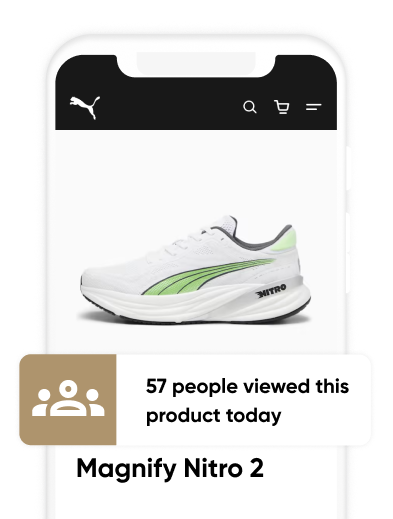
Tying fixes to outcomes matters more than the sequence itself. PUMA increased conversion rate by 27% after consolidating decisioning into a single system rather than adding parallel campaign tools for each new touchpoint, which is the pattern this framework is built to repeat.
What to evaluate before choosing a platform
Choose a platform based on whether it can unify data and orchestrate decisions across every channel, not by how many channels appear in its interface. A long channel list with no shared decisioning underneath just recreates the fragmentation this article started with, only inside a single vendor contract.
Decision criteria for enterprise scale
Before signing anything, check for these capabilities directly against your current stack, not just the vendor’s roadmap slides:
- Real-time data unification across POS, ecommerce, app, and support systems, not batch syncs run overnight
- Native orchestration across web, app, store, and WhatsApp from one rule set, reviewed through Integrations with your existing systems
- Proven scalability for enterprise catalog size and traffic volume, not a pilot built for a single region
- Verifiable retention and average order value outcomes at retail scale, reviewed on Why Insider One and the broader Platform overview
Conclusion
Closing the omnichannel maturity gap is not about adding channels; it is about giving the channels you already run one customer record to act on. The retailers pulling ahead fixed the data and orchestration layer first, then extended BOPIS, curbside, ship-from-store, and WhatsApp on top of it. That sequence, not a longer channel list, is what turns omnichannel from a slide deck into a measurable result.
To evaluate the fit of Journey Orchestration and Customer Data Management for your use case, book a personalized demo to review your goals, data requirements, and implementation constraints with the Insider One team.
FAQs
Multichannel means running several channels that operate independently, each with its own rules and data. Omnichannel retail strategy connects those channels to one customer record so an action in one, like a store purchase, changes what happens next everywhere else, rather than each channel working from its own version of the customer.
Unified commerce is the technical foundation: one inventory system, one customer profile, and one order management system across every channel. Omnichannel is the customer-facing outcome built on that foundation. Without unified commerce, omnichannel messaging looks consistent but breaks at fulfillment, especially for BOPIS and ship-from-store orders.
BOPIS, curbside pickup, ship-from-store, and WhatsApp have become core revenue drivers, not support add-ons, because they sit at the point where inventory accuracy and customer trust intersect. Retailers that treat these as extensions of the same customer record, rather than separate operational tools, see fewer broken promises at fulfillment.
Check whether a single customer action changes decisions across every channel within minutes. If a purchase, return, or store visit doesn’t immediately update the offers, messages, and inventory promises a customer sees elsewhere, the program is still channel-connected rather than data-unified.
Unify the customer record across point-of-sale, ecommerce, app, and support systems before adding or optimizing any channel. Every other fix, orchestration rules, fulfillment expansion, WhatsApp integration, depends on that single profile being accurate and available in real time.

Keep Reading
7 min.

Muharrem Derinkok
4 Jun 2026
11 min.

Chris Baldwin
2 Jun 2026
4 min.
Chris Baldwin
3 Feb 2026