

 Platform Overview

 Integration Hub

 Agent One™

 Agent One™ Teams

 Customer Data Management

 Personalization

 Journey Orchestration

 Reporting & Data

 Behavioral Analytics

 Web
Web

 Email
Email

 Site Search

 Conversational CX

 WhatsApp

 Web Push

 InStory

 App
App

 SMS & RCS

 Join the $0 Migration Movement™

 The Insider One Difference

 Compare Vendors

 Switch to Insider One

 Success Story

 Retail & Ecommerce

 Financial Services

 Travel & Hospitality

 Beauty & Cosmetics

 Automotive

 Telecommunications

 Total Economic Impact™ Study

 Blog
Blog

 E-Books & Guides

 Events

 Glossary
How to Increase Mobile App Engagement and Retention

Updated on 5 Oct 2026
8 min.
Table of Contents
- Summary
- Why engagement, not acquisition, is now the core mobile growth lever
- Map your engagement strategy to the user lifecycle
- Personalization tactics that move the needle on DAU
- Cross-channel orchestration: connecting push, in-app, and email without friction
- Measuring mobile app engagement: metrics that predict lifetime value
- How Insider One turns silent users into habitual ones
- FAQs
Most Popular
Summary
Sustainable mobile app engagement comes from a lifecycle-driven strategy powered by behavioral triggers and predictive segmentation. Aligning messaging with each user stage and measuring business outcomes helps improve retention and long-term growth.
A user downloads your app, opens it twice, and quietly disappears. No uninstall, no complaint, just silence. The DAU/MAU (daily active users to monthly active users) ratio tells you exactly how often that pattern repeats, and apps without a deliberate engagement strategy tend to see an uncomfortable story in that number.
Acquisition is visible. Churn by inactivity is invisible until it compounds into a serious unit-economics problem.
That invisibility is what makes a deliberate mobile app engagement strategy so important. When the cost of acquiring each install rises, the return on that install depends entirely on what happens after the download.
A strategy built around long-term engagement depth doesn’t just improve retention metrics: it directly defends every dollar allocated to growth. That’s the lens this article uses throughout.
Why engagement, not acquisition, is now the core mobile growth lever
The DAU/MAU ratio is often treated as a product health metric, but it functions equally well as a financial one. A higher ratio means each acquired user is generating more sessions, more data, and more downstream revenue.
A declining ratio means your user acquisition (UA) spend is filling a leaky bucket. Teams that own DAU/MAU as a north-star metric tend to build fundamentally different roadmaps from teams that optimize for install count or even first-day retention.
The displacement risk hiding in ambient AI
There is a structural shift worth naming directly. As artificial intelligence (AI)-powered assistant interfaces become more capable at completing tasks without requiring users to open specific apps, the apps most at risk are those that have not built habitual usage.
When AI can surface a result, complete a purchase, or answer a service question without a user ever entering your app, your engagement advantage shrinks fast.
Apps with strong behavioral habits, high feature adoption, and reliable personalized value are far harder to displace than apps that users open only when they remember to. Engagement depth is now a competitive defense, not just a retention metric.
Map your engagement strategy to the user lifecycle
Stage 1: Onboarding
The goal at onboarding is a single thing: get the user to a first meaningful action inside the app. That first action should signal real intent rather than mere setup completion. Your channel priority here is in-app messaging, not push.
The user is present, so guide them in context. Trigger the first message off a behavioral event, such as reaching a specific screen, rather than a time delay after install.
Stage 2: Activation
Activation is the moment a user understands what the app does for them specifically. It’s a personal relevance threshold, and it’s fragile. If you have not helped a user reach it within the first few sessions, the probability of long-term retention drops sharply.
Use in-app surveys and preference signals captured during onboarding to personalize the activation path. Showing a returning user exactly the product category, content type, or feature set they engaged with first dramatically increases the likelihood they return for a third and fourth session.
Stage 3: Habit formation
Once a user has activated, the job is to build a routine. Habit formation depends on two things: consistency of value delivery and well-timed prompts. Push notifications earn their place here, provided they are triggered by behavioral gaps rather than arbitrary schedules.
A three-day inactivity signal, a feature the user has not discovered yet, or a product category they browsed but did not act on are all better triggers than “haven’t sent a push in a while.”
The difference in engagement rates between behavioral triggers and batch sends is significant enough to justify rebuilding your push logic from scratch if needed.
Stage 4: Win-back
That’s not a rescue campaign sent to an “inactive” segment every 30 days. Win-back is a sequenced re-engagement journey triggered by inactivity thresholds that vary by user segment.
A user who activated and then went quiet after 10 days needs a different message than a user who engaged daily for two months and then stopped. The behavioral context embedded in each user’s history is what makes win-back sequences work.
Without it, you are sending the same generic message to users with fundamentally different reasons for leaving.
Personalization tactics that move the needle on DAU
Predictive segmentation: intervene before the gap
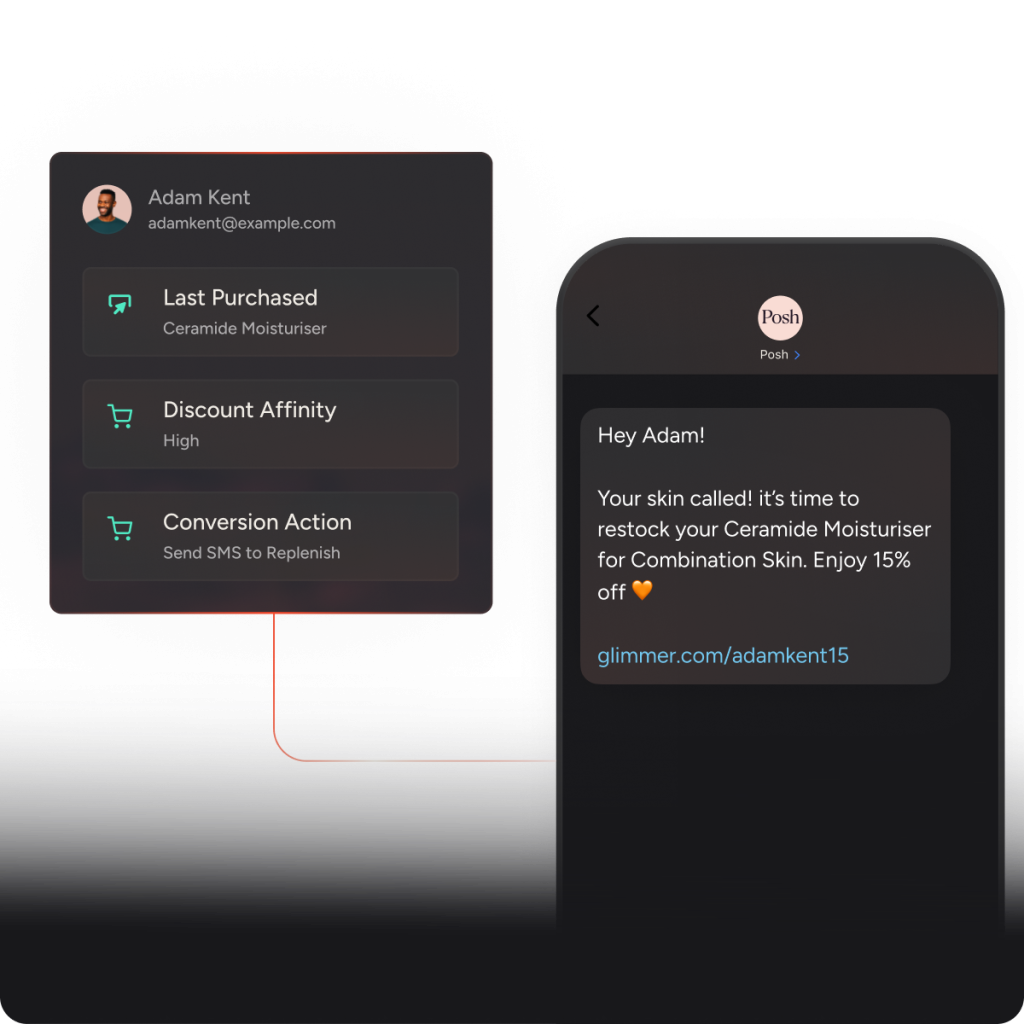
Proactive intervention is more efficient than reactive win-back, and predictive segmentation makes that proactive posture possible. Churn-risk scoring and propensity modeling built on behavioral data let you identify users who are trending toward inactivity before they reach it.
A user whose session frequency has dropped, whose session depth has shortened, and who has not triggered a purchase-adjacent event in several days is statistically at risk. You can reach them with a targeted, value-led message while they are still marginally engaged, rather than after the habit has broken entirely.
Insider One’s AI personalization capabilities apply this kind of predictive logic at scale, using behavioral signals across web and app to build segments that update in real time.
For example, Adidas increased average order value (AOV) by 259% and conversion rate by 13% in one month using Insider One’s onsite personalization, demonstrating how behavioral data applied at the right moment changes outcomes meaningfully.
Zero- and first-party data as personalization fuel
As third-party tracking becomes structurally less reliable across mobile platforms, apps that build rich first-party behavioral profiles inside the app itself gain a compounding personalization advantage.
Preference centers, onboarding surveys, feature-usage events, and in-session micro-interactions such as category taps, swipe patterns, and search queries all generate high-quality signals that directly inform personalized messaging.
These signals work without depending on external data sources, but the collection has to be intentional and explicitly tied to a better user experience, not bolted on as a tracking afterthought.
Cross-channel orchestration: connecting push, in-app, and email without friction
The sequenced multi-touch cadence
A single well-timed push notification can re-enter a dormant user into the app, but re-entry alone is not the goal. What converts a re-entry into a completed action is what happens next: an in-app message that picks up exactly where the push left off, guiding the user toward the specific action the push promised.
Then, if the session ends without conversion, a follow-up email that reinforces the value context and offers a clean re-entry path closes the loop.
This three-step sequence, push to in-app to email, only works when all three messages draw from the same unified user profile. If each channel operates in isolation, the experience fragments and the sequence fails.
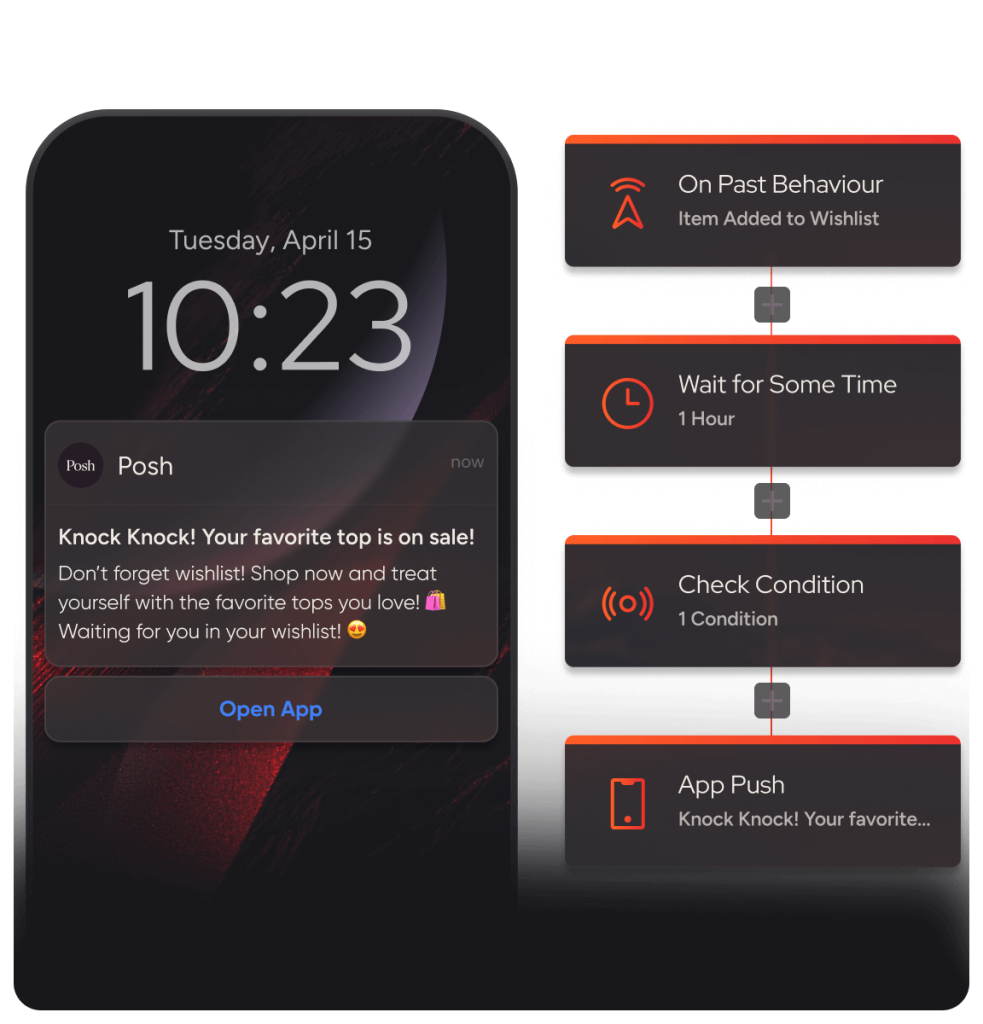
Insider One’s journey orchestration capability, Architect, is built specifically for this kind of sequenced cross-channel logic, connecting behavioral triggers to channel decisions in real time so the cadence adjusts based on what the user actually does.
DeFacto drove an 8X higher conversion rate with behavioral app push notifications using this approach, with the channel sequence responding to user behavior rather than a broadcast schedule.
Frequency governance and channel-priority logic
Building a multi-channel engagement program creates a new operational risk: message fatigue. Users who receive push notifications, in-app messages, and emails about the same topic in rapid succession do not feel engaged; they feel pestered.
Frequency governance means setting channel-level and aggregate daily caps, enforcing quiet hours based on timezone and user behavior patterns, and establishing channel-priority logic.
When multiple triggers fire simultaneously, the system should deliver the highest-value message through the best-fit channel rather than all of them at once. This operational discipline is unglamorous, but it is what separates sustainable engagement growth from a short-term open-rate spike that leaves long-term opt-out damage behind.
Measuring mobile app engagement: metrics that predict lifetime value
The engagement metric stack
Vanity metrics tell you what happened. Leading indicators tell you what will happen. The engagement metric stack that predicts long-term lifetime value (LTV) typically includes:
• DAU/MAU ratio: directional improvement should be a constant program goal regardless of category baseline, because higher ratios signal habitual usage and healthier downstream revenue
• Session depth: measures the average number of meaningful events per session rather than just time-on-app; depth correlates with activation quality and feature discovery
• Feature adoption rate: low adoption among activated users is often the first sign of an engagement plateau before churn indicators appear
• D7 and D30 retention: the proportion of users still active at Day 7 and Day 30 after their first session; these are the most reliable early indicators of eventual LTV
• Push opt-in rate and opt-out rate: direct signals of whether your notification strategy is delivering value or eroding trust
Connecting engagement to revenue
The metrics above matter internally. What makes them matter in a broader business conversation is connecting them to downstream revenue outcomes.
Subscription conversion rate among users who crossed a specific session-depth threshold, repeat purchase rate among users who activated within seven days, and average revenue per user (ARPU) uplift among users reached by behavioral push sequences versus batch sends are the kinds of connections that turn an engagement program into a growth investment.
Insider One’s platform connects engagement event data to revenue attribution so teams can build that case with actual numbers rather than directional assumptions.
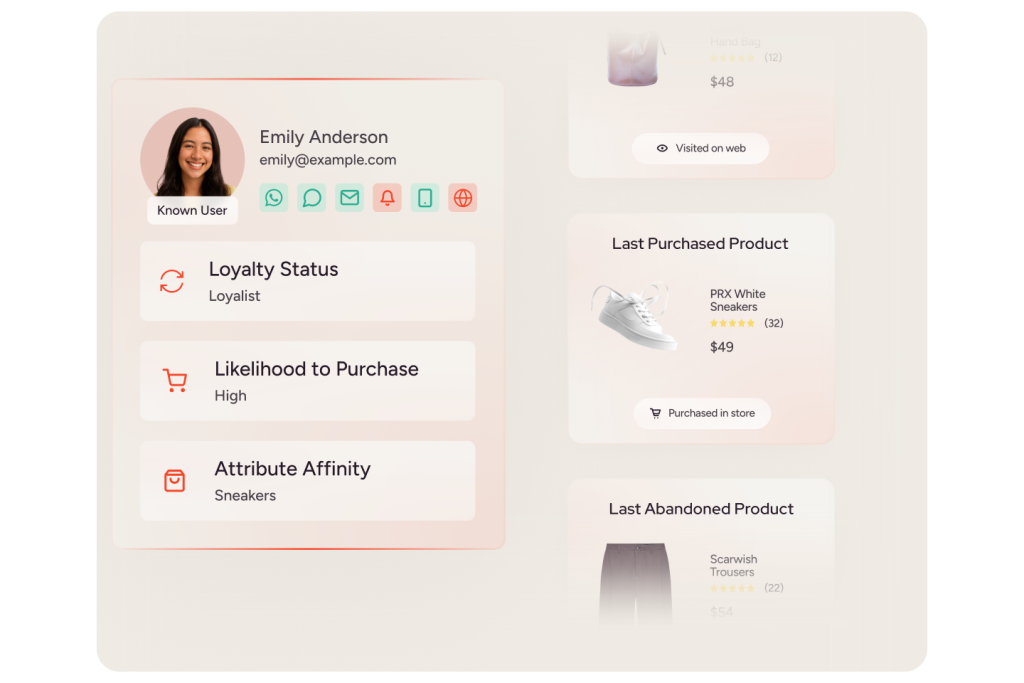
For a practical example of what this looks like at scale, Ebebek improved mobile app revenue with cart reminder push notifications by connecting re-engagement logic directly to cart recovery attribution, making the revenue contribution of the mobile engagement program measurable and repeatable.
You can also explore the mobile marketing definitive guide and tactics for reducing app uninstall rates to round out the operational picture.
How Insider One turns silent users into habitual ones
The push-to-in-app handoff is native. App Templates can be triggered directly from an app push, so the in-app message a returning user lands on continues the notification that brought them back rather than starting a fresh conversation.
Onboarding and activation. Insider One’s mobile SDK, with guided integration for iOS, Android, React Native and Flutter, collects events, transactional behavior and custom attributes, so a first in-app message can fire on reaching a specific screen rather than on a delay after install. App Survey captures which features and products are landing, feeding stated preference into the activation path alongside observed behavior.
Habit formation. App Push covers rich, contextual notification types, and InStory adds full-screen swipeable Stories inside the app, a more immersive surface for feature discovery than a banner. Dover Saddlery reported $1.7M in incremental revenue from InStory.
Win-back before dormancy. Predictive churn scoring re-engages a fading user when early disengagement signals appear, rather than waiting for a fixed seven to fourteen day inactivity window to elapse.
Fatigue governance. Unified frequency capping applies across app push, in-app, email and web from the Architect canvas, and Journey Prioritization resolves simultaneous triggers by selecting the most relevant message rather than firing all of them.
Revenue attribution. A cross-channel ROI dashboard reports incremental revenue, conversion rate and channel health with drill-down by channel, so app engagement carries a revenue figure rather than an engagement one.
Book a demo to map your lifecycle stages onto these triggers, or take the platform tour first.
FAQs
It depends heavily on app category. Social and utility apps tend to achieve higher ratios, while retail or travel apps have different usage patterns. What matters more than hitting a fixed benchmark is directional improvement over time and understanding which user segments are driving your ratio up or down.
There is no universal answer, but the more reliable principle is relevance over frequency. A behaviorally triggered push that delivers genuine value can be sent daily without eroding trust. A batch broadcast with low relevance will generate opt-outs at any frequency. Let behavioral response rates, not a fixed schedule, guide your cadence.
Both matter, but they operate on different timelines. New user activation affects your future retention curve. Win-back affects your current active base. If your D7 retention is weak, fixing activation will have a larger compounding impact. If your D30+ retention is deteriorating among previously activated users, that signals an engagement depth problem that a win-back sequence addresses more directly.
Push notifications reach users outside the app and are best for re-entry, time-sensitive prompts, and behavioral nudges. In-app messages appear during an active session and are best for guiding actions, surfacing features, and delivering contextual value while the user is already engaged. A strong mobile app engagement strategy uses both in sequence rather than as substitutes for each other.

Keep Reading
4 min.

Chris Baldwin
3 Feb 2026
10 min.
Chris Baldwin
24 Oct 2026
9 min.
Chris Baldwin
24 Oct 2026