

 Platform Overview

 Integration Hub

 Agent One™

 Agent One Teams™

 Customer Data Management

 Personalization

 Journey Orchestration

 Reporting & Data

 Behavioral Analytics

 Web
Web

 Email
Email

 Site Search

 Conversational CX

 WhatsApp

 Web Push

 InStory

 App
App

 SMS & RCS

 Join the $0 Migration Movement™

 The Insider One Difference

 Compare Vendors

 Switch to Insider One

 Success Story

 Retail & Ecommerce

 Financial Services

 Travel & Hospitality

 Beauty & Cosmetics

 Automotive

 Telecommunications

 Total Economic Impact™ Study

 Blog
Blog

 E-Books & Guides

 Glossary
Marketing Attribution Strategies That Finally Earn the CFO’s Trust

Updated on 4 Aug 2026
9 min.
Table of Contents
- Summary
- Why most attribution models fail to convince your CFO
- Choosing the right attribution model for your growth stage
- Building a hybrid MTA and MMM framework that holds up under scrutiny
- Turning touchpoint data into budget reallocation decisions
- Operationalizing attribution across marketing, sales, and finance
- Conclusion
- FAQs
Most Popular


Summary
- Multi-touch attribution and marketing mix modeling answer different questions, and using only one is why finance keeps discounting marketing’s revenue claims
- Match your attribution model to growth stage: single-touch models work early, multi-touch or algorithmic models earn their keep once conversion volume and channel count grow
- Reconcile multi-touch attribution with marketing mix modeling by using the former for weekly channel shifts and the latter for quarterly budget decisions
- Replace parallel dashboards with one reporting cadence marketing, sales, and finance all sign off on
- Clean, unified customer data underneath any attribution model determines whether the output survives an executive’s first hard question
A campaign dashboard says paid social drove a third of last quarter’s pipeline. Finance’s model barely credits it. Both teams are looking at the same quarter, and neither trusts the other’s number.
Marketing attribution strategies are the frameworks teams use to assign revenue credit across the touchpoints a customer interacts with before converting, from a multi-touch attribution model that tracks individual clicks to marketing mix modeling that works from aggregate spend and outcomes.
This piece is for marketing ops leads, growth marketers, and CMOs who need finance to believe the numbers, not just see them.
We’ll walk through choosing a model by growth stage, reconciling multi-touch attribution with marketing mix modeling instead of picking a side, and turning touchpoint data into budget decisions and coordinated customer actions finance will actually approve.
The goal isn’t a better dashboard. It’s a shared source of truth teams can use to segment audiences, coordinate cross-channel journeys, and act on attribution insights across channels, which is where Insider One makes the difference by connecting unified customer profiles, segmentation, personalization, and analytics in one marketer-friendly environment.
Why most attribution models fail to convince your CFO
Most attribution models fail with finance because they measure activity, not the incremental revenue finance budgets against.
A last-click report showing which channel closed the deal tells you nothing about whether that spend was necessary or whether the sale would have happened anyway. Finance teams are trained to ask about causation, and most marketing attribution software is built to report correlation dressed up as certainty.
The fix isn’t a fancier model. It’s reframing attribution as a boardroom credibility tool instead of a dashboard metric marketing owns in isolation.
That means agreeing on definitions with finance before the reporting starts: what counts as a conversion, what window counts as influence, and which model applies to which decision.
Teams that skip this step end up defending numbers reactively, in the meeting, under pressure, instead of walking in with a framework finance already helped build.
Choosing the right attribution model for your growth stage
The right attribution model depends on how much conversion data you generate, not on which model looks most sophisticated.
Early-stage and lower-volume teams often get more reliable signal from single-touch models, while teams with enough scale to support statistical modeling should graduate to multi-touch or algorithmic approaches.
Matching model to data maturity
First-touch and last-touch models are simple and directionally useful when you don’t have the volume to support anything more complex.
Linear and time-decay models split credit across the path but still rely on rule-based assumptions rather than statistical inference.
Algorithmic, or data-driven, models use machine learning to weight touchpoints based on actual conversion patterns, but they need enough conversion volume to train on before the output is trustworthy.
- First-touch or last-touch: fewer than a few hundred monthly conversions, one or two primary channels
- Linear or time-decay: multiple channels in play, moderate volume, but not enough data science support to validate a model
- Algorithmic or data-driven: high conversion volume, multiple channels, a team that can audit and explain the model’s logic to finance
Signals it’s time to graduate models
A single-touch model stops working the moment your buyer journey spans more than two or three channels, which is the norm for most B2B marketing attribution scenarios involving sales cycles, nurture sequences, and multiple stakeholders.
If finance keeps flagging that your reported numbers don’t reconcile with pipeline in the customer relationship management (CRM) system, or if two channels are both claiming credit for the same deal, that’s the signal to move to a multi-touch attribution model.
Building a hybrid MTA and MMM framework that holds up under scrutiny
The most defensible approach doesn’t choose between multi-touch attribution and marketing mix modeling. It runs both, at different altitudes, for different decisions.
Multi-touch attribution works at the tactical level, telling you which channel or campaign deserves credit for a specific conversion path.
Marketing mix modeling works at the strategic level, using aggregate spend and outcome data to estimate the incremental impact of an entire channel over a longer period, independent of individual user-level tracking.
Running MTA for tactical decisions alongside MMM for strategic ones
Use multi-touch attribution to decide which campaigns to pause, which creative to scale, and which channel earns more budget this week.
Use marketing mix modeling to answer the bigger question finance actually asks: if we cut paid search spend by 20%, what happens to revenue next quarter?
Running both side by side, and being explicit about which model informed which decision, is what separates a credible attribution strategy from a set of numbers nobody can defend under questioning.
Adapting to cookie deprecation and privacy limits
Multi-touch attribution depends on observable, user-level data, and that data pool keeps shrinking as browsers restrict tracking and privacy regulation tightens what can be collected without consent.
Marketing mix modeling becomes more valuable in this environment precisely because it doesn’t require individual-level tracking.
It’s built from aggregate spend and outcome data, which makes it more resilient as identity resolution gets harder across paid and owned channels.
Turning touchpoint data into budget reallocation decisions
Attribution only earns its keep when it changes where money goes next quarter. The mistake most teams make is treating a single reporting period’s attribution output as gospel and shifting an entire budget based on one model run.
A model that shows a channel underperforming for one quarter isn’t necessarily a channel to defund. It might be a channel that needs a longer view, a cleaner audience, or a different creative approach before you touch the spend.
Translating insights into spend shifts
Move budget in increments tied to a testing plan, not in a single dramatic reallocation based on one attribution snapshot.
Shift ten to fifteen percent of spend toward a channel the model favors, hold it for a full cycle, and confirm the lift shows up in both the attribution model and the top-line revenue finance tracks before committing further.
This is where journey orchestration inside Insider One helps teams act on attribution insights, using unified customer profiles and shared analytics across web, app, email, SMS, push, and WhatsApp to see whether a reallocation actually changed customer behavior or just moved credit between channels.
Common misallocation traps
- Acting on one attribution cycle’s output without confirming the pattern holds across a second period
- Reallocating budget away from a brand or upper-funnel channel that marketing mix modeling would show has long-term incremental value multi-touch attribution can’t see, especially when paid media performance should be read alongside owned-channel nurture, audience suppression, and channel sequencing
- Ignoring re-eligibility windows, audience overlap, and duplicate credit across channels, which inflates the apparent performance of overlapping campaigns and can trigger duplicate outreach instead of coordinated activation
- Comparing channels on raw conversion counts instead of a shared revenue metric finance recognizes
Operationalizing attribution across marketing, sales, and finance
Attribution only becomes credible once marketing, sales, and finance are pulling numbers from the same underlying data instead of three separate exports.
Fragmented data across ad platforms, CRM, and analytics tools is the root cause of most attribution disputes, not the model itself.
A model built on inconsistent, siloed inputs will produce inconsistent, indefensible outputs no matter how sophisticated the math behind it is.
Building one source of truth
Unifying customer, campaign, and revenue data into a single layer, the role customer data management plays inside an AI-powered Growth Management Platform, gives marketing, sales, and finance one dataset to argue from instead of three while making those insights usable for audience segmentation, personalization, and cross-channel action.
When everyone reports from the same reporting and analytics foundation, disagreements shift from “whose number is right” to “which model best answers this specific decision,” and teams can turn the answer into coordinated journeys, personalized outreach, and governed audience activation instead of stopping at the dashboard.
For teams that want external examples, Generali is one Insider One case study to review separately, while the broader operational takeaway here is that a shared data layer helps marketing and sales align on which touchpoints moved a lead toward conversion and where overlapping outreach should be suppressed.

That kind of unified visibility is what makes an attribution conversation with finance shorter, not longer.
A reporting cadence that builds trust quarter over quarter
Set a recurring cadence, monthly for tactical multi-touch attribution reviews and quarterly for marketing mix modeling and budget conversations, and keep the format consistent every time.
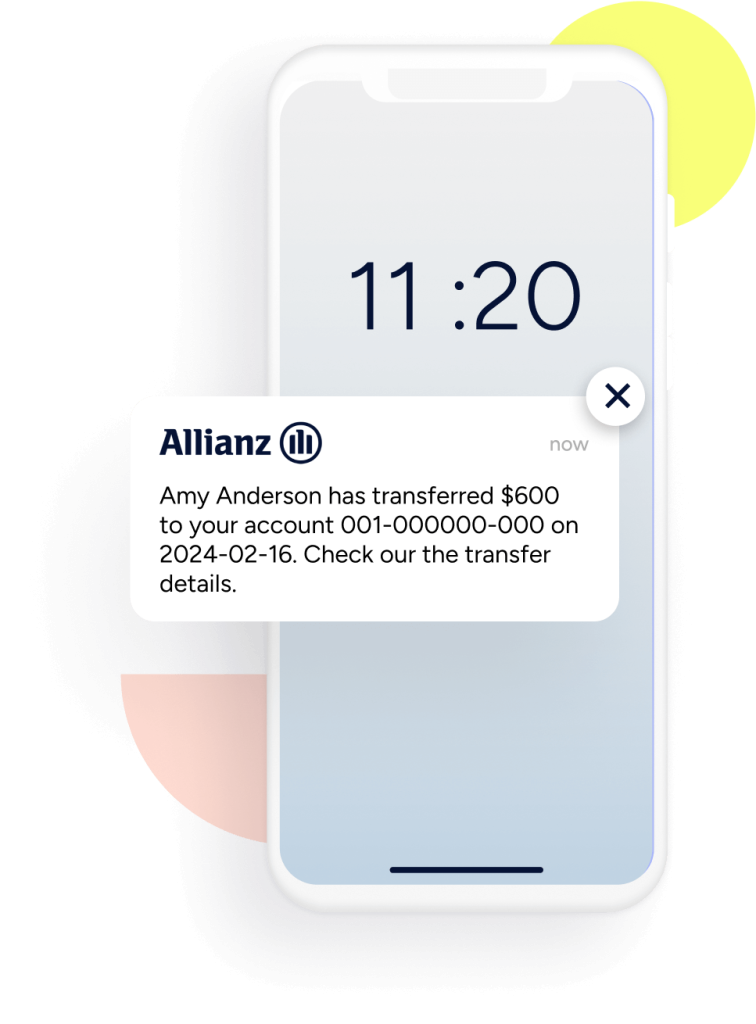
Allianz is another Insider One case study teams can review alongside the wider success story library, but the core point here is the operating model: shared data, segmentation, and activation make quarterly budget reviews easier to run with a consistent decision framework.
Consistency in format matters as much as the numbers themselves, and AI-assisted analysis can help teams prepare recurring reviews without changing the attribution governance finance expects.
Conclusion
Attribution stops being a source of friction the moment marketing treats it as a shared discipline with finance rather than a reporting exercise owned in isolation.
The teams that close the credibility gap run multi-touch attribution and marketing mix modeling together, tie every reallocation to a testing plan, and report from one unified dataset.
That combination is what turns attribution from a defensive exercise into a genuine growth lever, especially when Insider One helps teams move from fragmented reporting to segmentation, personalization, cross-channel execution, and governed measurement in one environment.
To evaluate the fit of customer data management for your use case, book a personalized demo to review how Insider One can support unified customer profiles, audience activation, journey orchestration, and measurement governance around your goals, data requirements, and implementation constraints.
FAQs
Multi-touch attribution tracks individual user-level touchpoints to assign credit for a specific conversion path, while marketing mix modeling uses aggregate spend and outcome data to estimate a channel’s incremental impact over time. Use multi-touch attribution for tactical, channel-level decisions and marketing mix modeling for strategic, budget-level decisions.
Tie every reported number to a shared data source finance also has access to, agree on conversion definitions and attribution windows before reporting starts, and pair tactical multi-touch attribution with periodic marketing mix modeling so spend shifts can feed governed audiences, suppression logic, and coordinated owned-channel follow-up instead of just reassigning credit.
B2B buying cycles usually involve multiple stakeholders and channels over weeks or months, so single-touch models rarely reflect reality. Linear, time-decay, or algorithmic multi-touch models paired with CRM-sourced pipeline data give a more accurate picture of which touchpoints influenced a deal, and the same insight becomes more useful when it can inform segmentation, nurture sequencing, and sales-aligned follow-up across channels.
Review tactical, multi-touch attribution monthly to catch channel-level shifts early, and reserve marketing mix modeling and major budget conversations for a quarterly cadence. Keeping the format consistent across periods helps finance build trust in the numbers over time.
No, but it does limit the observable data multi-touch attribution depends on. Marketing mix modeling becomes more valuable as tracking restrictions tighten, since it works from aggregate outcomes rather than individual-level data, making a hybrid approach more resilient than relying on multi-touch attribution alone while still leaving room for Insider One to unify consented data, segment audiences, and coordinate owned-channel action.

Keep Reading
7 min.

Muharrem Derinkok
4 Jun 2026
11 min.

Chris Baldwin
2 Jun 2026
4 min.
Chris Baldwin
3 Feb 2026