

 Platform Overview


 Integration Hub


 Agent One™


 Agent One™ Teams


 Customer Data Management


 Personalization


 Journey Orchestration


 Reporting & Data


 Behavioral Analytics


 Web


 Email


 Site Search


 Conversational CX


 WhatsApp


 Web Push


 InStory


 App


 SMS & RCS


 Join the $0 Migration Movement™


 The Insider One Difference


 Compare Vendors


 Switch to Insider One


 Success Story


 Retail & Ecommerce


 Financial Services


 Travel & Hospitality


 Beauty & Cosmetics


 Automotive


 Telecommunications


 Total Economic Impact™ Study


 Blog


 E-Books & Guides


 Events


 Glossary
Hande Cilingir on AI’s Next Chapter: From Campaigns to Decisions

Updated on 26 Nov 2026
9 mins.
Table of Contents
Most Popular
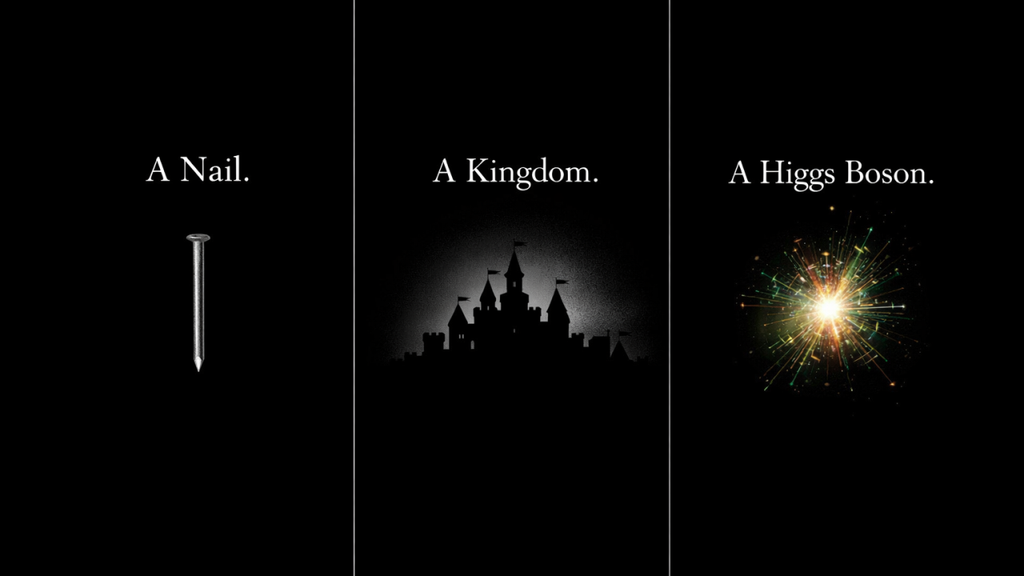
For want of a nail, the shoe was lost.
For want of a shoe, the horse was lost.
For want of a horse, the rider was lost.
For want of a rider, the battle was lost.
For want of a battle, the kingdom was lost.
A single missing nail. A lost kingdom.
The proverb has survived for centuries because it captures something essential about complex systems: large systems rarely collapse because of large failures. They collapse because small decisions cascade.
For centuries, leaders, generals, and strategists have tried to understand and control these cascades. Today, machines are beginning to make millions of small decisions every second.
In AI Chronicles No. 1, Hande Cilingir, Co-Founder and CEO of Insider One, explores why this shift could fundamentally change marketing.
The question is not simply how AI can help marketers execute campaigns faster. It is whether campaigns and messages are still the right way to think about the foundations of marketing.
The sentence that built an industry
For decades, marketing has been explained through one familiar principle:
“Send the right message to the right person at the right time through the right channel.”
That sentence built an entire industry. Campaign builders, segmentation engines, and customer journey orchestration platforms were designed around its underlying concepts: campaigns, segments, messages, and journeys.
But Hande identifies a hidden assumption in this model. It treats the message as the smallest meaningful unit of marketing.
AI is beginning to challenge that assumption.
Campaigns, segments, and predefined journeys were practical ways to organize marketing when systems could not reason about every customer interaction in real time. They may not, however, represent the fundamental building blocks of marketing itself.
As AI capabilities evolve, marketers have an opportunity to rethink the system beneath these familiar tools.
A story from CERN
In July 2012, scientists at CERN announced the discovery of the Higgs boson after decades of theoretical work and experimental investigation.
The discovery mattered because it provided evidence for the Higgs field, a fundamental part of the Standard Model of particle physics that helps explain how elementary particles acquire mass.
The significance extended beyond identifying another particle. It helped confirm a deeper structure underlying the physical world.
Hande uses this discovery as an analogy for marketing’s next stage.
For decades, campaigns have appeared to be the fundamental objects of marketing. Everything revolved around campaign calendars, orchestration, and performance.
But what if campaigns are only the visible components of a deeper system?
In Hande’s framing, campaigns are the particles, decisions are the field, and AI is beginning to expose that field.
The analogy invites marketers to question whether the structures they have built around campaigns are the most fundamental way to organize customer engagement.
Campaigns were the particles
A campaign is static by design. It is planned, scheduled, and executed against defined objectives.
A decision is different. It depends on context and can change as new information becomes available.
A campaign is designed once. A decision can be evaluated continuously. A campaign follows a plan, while an individual decision may need to respond to a customer’s behavior in milliseconds.
This distinction changes how marketing can be understood.
Instead of viewing marketing as a collection of campaigns, Hande proposes looking at the millions of decisions that interact across customer experiences.
Which message should a customer receive? Which channel is appropriate? When should the interaction happen? Should the brand communicate at all?
Each decision contributes to the wider customer experience, and the consequences of one decision can influence what happens next.
This is where AI decisioning becomes relevant to the argument. Rather than relying exclusively on predefined segments and static rules, AI decisioning can help evaluate the next best action, message, channel, and timing for an individual customer.
The broader point is not that campaigns become irrelevant overnight. It is that decisions may be a more useful way to understand how marketing systems operate.
The if-else era
For much of its history, marketing technology has worked like a giant if-else machine.
If a user does not open an email, send a push notification.
If a customer completes a purchase, move them to the next stage.
These rules create predictable flows. They allow marketers to define scenarios in advance and automate the actions that follow.
Hande connects this model to a wider pattern in how people approach problem-solving, growth strategies, and conflict resolution. We tend to structure processes as sequences of conditions and responses:
If this happens, do that. Otherwise, do something else.
Claude Shannon, whose work helped establish information theory, is associated with the idea of information as a reduction in uncertainty.
Hande uses this broader concept to contrast traditional marketing with the possibilities AI introduces. Traditional systems attempt to anticipate scenarios and resolve uncertainty through predefined rules. AI systems can help evaluate changing signals as they arrive.
The difference is between planning every possible response in advance and building systems that can evaluate what to do as circumstances change.
From linear systems to dynamic fields
The complexity of a system changes as its components interact.
In classical mechanics, the two-body problem can be described with a clean mathematical solution under standard assumptions. Add a third gravitational body, and the system becomes significantly more complicated. Interactions can produce behavior that is much harder to predict.
Hande draws on the three-body problem to illustrate what happens when more factors begin influencing one another.
Marketing faces a similar challenge. Customer intent, brand strategy, machine optimization, regulation, culture, and product economics all influence the decisions a business makes.
These factors do not operate independently. A decision that improves one outcome can affect another, and a small change in one part of the system can have consequences elsewhere.
As the number of interactions increases, marketing becomes harder to manage through linear processes alone.
The challenge is no longer just to design a sequence of messages. It is to build systems that can account for changing context and the relationships between decisions.
This is also why customer journey orchestration matters. It connects interactions across channels and helps coordinate experiences around customer behavior, rather than treating every campaign as an isolated activity.
The scarcity has shifted
For years, marketers viewed content as a major bottleneck. More recently, attention has been a central concern.
AI is changing both assumptions. Content can be generated at scale, while algorithms increasingly influence how attention is distributed.
Hande argues that the next scarce resource is legitimate judgment.
The central challenge becomes deciding what should actually be optimized.
A tactic that improves short-term growth may damage long-term trust. Personalization can create value in one context and feel intrusive in another. An interaction may increase engagement without improving the customer’s experience.
These trade-offs cannot be resolved by maximizing a single metric.
Marketing systems need to account for questions such as:
- Which growth tactics could undermine long-term customer trust?
- Which forms of personalization are useful, and which cross the line into being intrusive?
- Which moments genuinely deserve intervention?
- When is the best decision to remain silent?
That last question is particularly important. A system capable of sending a message does not mean that it should.
AI-powered personalization can help brands adapt experiences to individual customer behavior and preferences. But Hande’s argument goes beyond the ability to personalize. The real challenge is deciding when personalization adds value and when it does not.
Milliseconds replace meetings
Traditionally, many marketing decisions have been made in strategy sessions, campaign planning meetings, and quarterly reviews.
AI systems can make decisions continuously, potentially millions of times per second. That changes not only the speed of marketing but also the requirements for managing it.
Hande argues that future marketing systems will need to resemble institutions, with principles, constraints, experiments, and governance.
The system needs more than the ability to act. It needs boundaries that define which actions are acceptable and objectives that clarify what it should achieve.
This raises important questions for marketing leaders.
What should the system optimize? Which constraints must it respect? How should experiments be evaluated? How can businesses ensure that individual decisions remain aligned with their broader goals?
Hande also references John Boyd’s OODA loop, a decision-making framework built around observing, orienting, deciding, and acting. In an environment where AI participates in the decision cycle itself, the cycle is not simply accelerated. Its structure changes.
The responsibility for setting principles and evaluating outcomes becomes more important as the time available for individual decisions decreases.
Automation is the wrong word
The common narrative describes AI as a technology that automates marketing.
Hande argues that this description misses the deeper shift.
Automation assumes that the existing system remains fundamentally the same while tasks become more efficient. AI can do more than accelerate an established process. It can change how decisions are evaluated and how the system operates.
If the smallest unit of marketing shifts from the campaign to the decision, the architecture built around campaigns may no longer be sufficient on its own.
This is the distinction between automating marketing and turning marketing into decision infrastructure.
For Hande, the opportunity is not simply to add another feature to the existing technology stack. It is to build the next system layer.
The analogy returns to the Higgs boson. Just as its discovery helped reveal a deeper structure in physics, AI may be helping marketers understand the decision-making system beneath campaigns and customer interactions.
The question that matters now
If the decision becomes the smallest meaningful unit of marketing, the challenge is no longer limited to sending the right message.
It becomes the task of designing systems capable of making good decisions at scale, in milliseconds, with judgment that organizations can trust.
That requires marketers to look beyond individual campaigns and consider the architecture, principles, and constraints that shape every interaction.
Hande’s argument also sets up the next article in her series, AI Chronicles No. 2: Speed vs. Taste in Judgment.
AI can give organizations speed. But speed alone does not guarantee the quality of a decision. The question of how to preserve good judgment as decisions happen faster remains central to the future of marketing.
As Hande puts it, the focus is on eliminating the box itself, rather than simply improving a feature within it.
Marketing’s next chapter may be defined not by how many campaigns businesses can execute, but by the quality of the decisions their systems make.
Explore how Insider One’s AI-powered customer engagement platform supports more connected, personalized customer experiences.

Keep Reading
4 min.

Chris Baldwin
3 Feb 2026
8 mins.
Chris Baldwin
26 Nov 2026
8 mins.
Chris Baldwin
26 Nov 2026