

 Platform Overview

 Integration Hub

 Agent One™

 Agent One™ Teams

 Customer Data Management

 Personalization

 Journey Orchestration

 Reporting & Data

 Behavioral Analytics

 Web
Web

 Email
Email

 Site Search

 Conversational CX

 WhatsApp

 Web Push

 InStory

 App
App

 SMS & RCS

 Join the $0 Migration Movement™

 The Insider One Difference

 Compare Vendors

 Switch to Insider One

 Success Story

 Retail & Ecommerce

 Financial Services

 Travel & Hospitality

 Beauty & Cosmetics

 Automotive

 Telecommunications

 Total Economic Impact™ Study

 Blog
Blog

 E-Books & Guides

 Events

 Glossary
How Event-Triggered Messaging Strategies Turn Behavior into Revenue

Updated on 9 Jul 2026
9 min.
Table of Contents
Most Popular
Summary
Effective triggered marketing goes beyond cart abandonment by responding to high-intent customer behaviors in real time. Prioritizing the right triggers, choosing the best channel, and using AI-powered predictions help brands deliver more relevant experiences and drive greater revenue.
There is a quiet ceiling that lifecycle marketers hit around the 18-month mark of running automations. Cart abandonment is live. The welcome series is dialed in. Maybe there is a win-back flow catching churned users three months out.
The dashboard looks busy, but revenue from triggers has plateaued, and the team can feel it even before the numbers confirm it. The problem is not execution. It is scope.
The behavioral signals your customers produce every session are far richer than the handful of events your trigger library actually fires on. Browse depth, loyalty tier upgrades, post-purchase silence, category affinity shifts: these are the events that predict future purchase intent with more precision than a dropped cart ever could.
This article is a practitioner’s framework for mapping those signals to cross-channel trigger logic, sequencing them intelligently, and measuring the revenue they actually generate.
Effective event-triggered messaging strategies depend on closing the gap between the signals customers produce and the events your automation actually acts on.
Why trigger programs leave revenue on the table
The cart abandonment trap
Cart abandonment remains one of the highest-converting trigger flows for a reason: the purchase intent is explicit and the recency is tight.
But when it becomes the anchor of your trigger strategy, something predictable happens. Audiences learn the pattern, and savvy shoppers start adding items to cart specifically to receive the discount in the follow-up email, which raises cost per conversion and compresses margin.
The deeper problem is what over-indexing on cart abandonment crowds out. Every engineering hour spent refining that one flow is an hour not spent instrumenting the mid-funnel events that reveal intent before the cart is even loaded: browse abandonment after three or more product views in a single session, repeated visits to the same category across multiple days, or a loyalty tier upgrade that unlocks new price sensitivity.
These events are upstream, they are frequent, and they are almost always untouched.
The instrumentation gap
The typical brand fires on a narrow set of events: page views, cart adds, purchases, and perhaps email opens. What goes unmeasured, and therefore untriggered, is the behavioral layer beneath those macro-events.
Post-purchase inaction windows, such as the 14-day silence after a first order that predicts whether a customer will ever buy again, are rarely connected to any outbound flow.
Loyalty tier changes fire in a customer relationship management (CRM) system that has no live connection to the messaging platform, and wishlist additions sit in a database that nobody queries in real time.
Closing this gap is not primarily a technology problem but a prioritization problem, and that is where a structured approach pays off.
Building your trigger event hierarchy
A tiered prioritization model
Before instrumenting a new event, every candidate trigger deserves a fast evaluation across three axes: signal strength, data availability, and incremental revenue potential. Signal strength asks how reliably the event predicts the behavior you want to drive.
Data availability asks whether the event is already being captured somewhere in your stack, or whether it requires new engineering work. Incremental revenue potential asks what a realistic conversion rate on this trigger would generate, net of cannibalization from other active flows.
Mapping candidate events on these three dimensions quickly surfaces a priority tier.
Tier one contains events with high signal strength and available data that have never been connected to a trigger flow: these are your fastest wins.
Tier two contains high-potential events that require moderate instrumentation lift.
Tier three holds aspirational events that need infrastructure investment before they become actionable. Building in this order means you generate revenue from new triggers before the engineering backlog for tier three even clears.
Event taxonomy design
Trigger libraries that start without a naming convention become unmaintainable quickly. By the time you have ten flows running, ambiguous event names like “product_view” versus “item_viewed” will cause suppression logic to fail silently, and debugging a misfire in production is costly.
Establish a taxonomy early: a consistent verb-noun format such as product_viewed, cart_abandoned, or tier_upgraded, standardized property keys, and a suppression rule schema that travels with every event definition.
Suppression rules deserve particular attention. Every trigger should carry explicit logic that prevents it from firing when the user has already converted, is mid-journey in a higher-priority flow, or has reached a channel-level frequency cap.
Embedding this logic at the event definition layer, rather than bolting it onto individual campaign configurations, keeps the library clean as it scales.
Cross-channel sequencing that respects the customer
Channel-moment matching
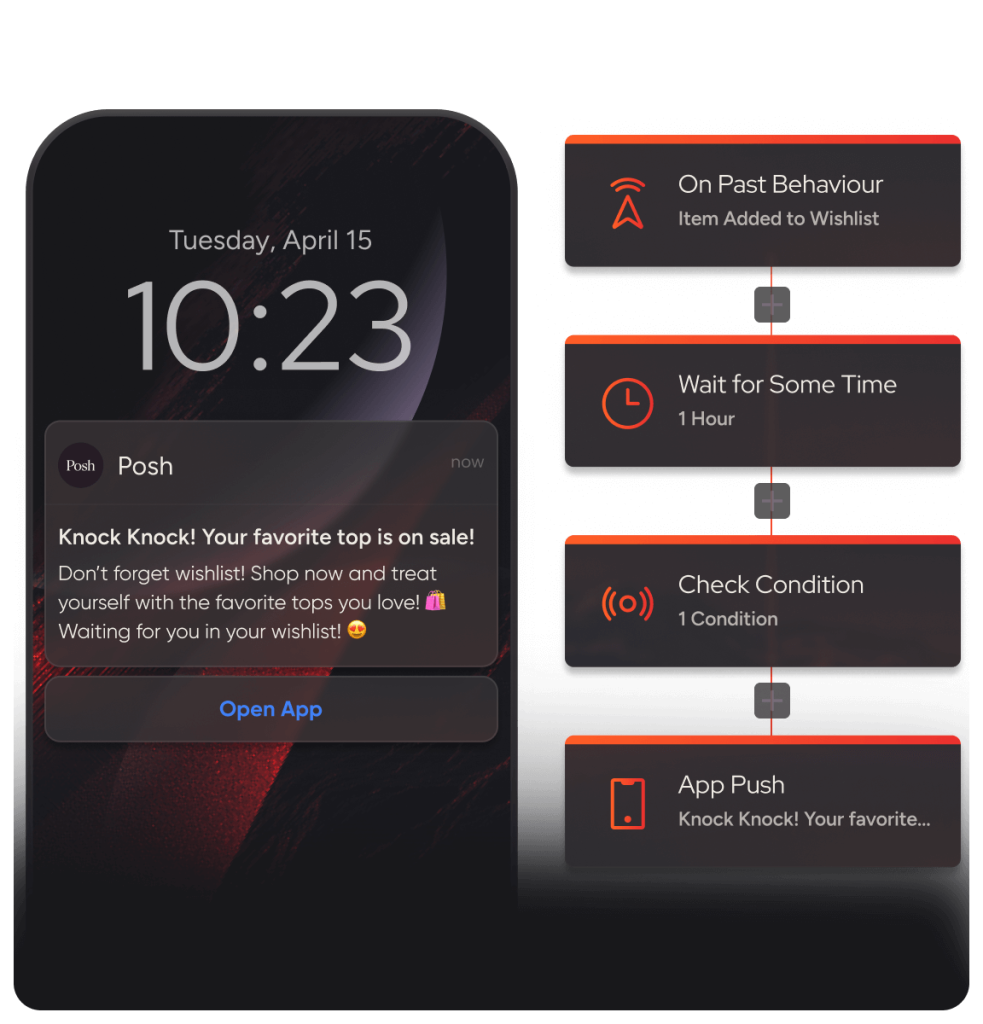
A common mistake in omnichannel triggered messaging is defaulting to the platform’s native channel rather than the channel the customer actually responds to. An event like a price drop on a wishlisted item might warrant an SMS alert for a user who has a high SMS open rate and has not opened an email in 90 days.
That same event might warrant an email for a user who ignores push notifications but consistently clicks promotional messages. The event is identical; the channel decision should not be.
Behavioral analytics make this routing decision systematic. When you have each user’s historical engagement rate by channel, recency of last interaction per channel, and the time sensitivity of the triggering event, you can set routing logic that selects the highest-affinity channel for that moment.
High-urgency events like flash sale launches or same-day shipping cutoffs skew toward push and SMS. Relationship-building events like loyalty tier upgrades or post-purchase education skew toward email, where there is room to communicate value without pressure.
Frequency governance and fatigue thresholds
Even well-designed trigger flows will erode trust if they fire without coordination. A user who triggers a browse abandonment flow, a price drop alert, and a loyalty reminder within the same 48-hour window will experience your messaging stack as noise rather than relevance.
Frequency governance requires two things most platforms support but few teams configure rigorously: message caps at the user level across all active flows, and cool-down windows that suppress lower-priority triggers when a higher-priority one has recently fired.
Exception logic deserves equal attention and should not be treated as an afterthought. A user who just made a purchase should exit all active retention and abandonment flows immediately, and re-entry rules should carry a suppression window that reflects a realistic post-purchase satisfaction period.
Getting this logic right requires coordination between whoever owns the trigger library and whoever owns deliverability, because the reputational cost of unsubscribing from fatigued users compounds over time.
AI and real-time data as force multipliers
Predictive trigger layering
Reactive triggers fire after a signal; predictive triggers fire before intent decays. The difference matters because the window between expressed intent and decision closure is often narrower than the lag time in a standard trigger flow. A user who visits a product page three times in 36 hours and carries a high propensity score for that category is more likely to convert if reached at hour 24 than at hour 48 when a standard abandon sequence finally fires.
Insider One AI™ supports this kind of predictive trigger layering by combining propensity modeling with send-time optimization, so the message reaches the user when their likelihood to engage is highest rather than simply when the event clock runs out.
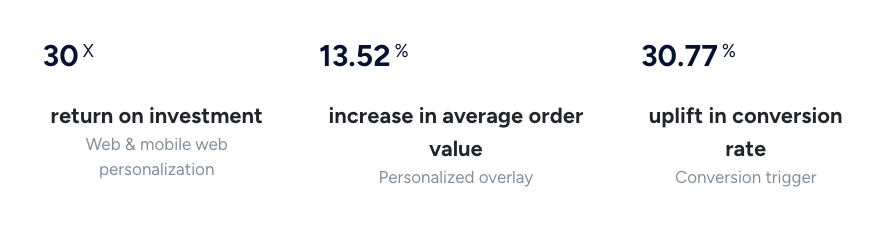
Martes Sport achieved 30X ROI with web personalization by building trigger logic around predictive segments rather than flat behavioral rules alone. The shift from reactive to anticipatory messaging is where the next layer of incremental revenue lives for teams who have already optimized their standard flows.
First-party data infrastructure requirements
Predictive triggers are only as good as the data pipeline feeding them. Before AI-driven trigger logic can operate reliably, several infrastructure conditions need to hold: unified customer profiles that merge online and offline identity, event streaming that delivers behavioral signals in close to real time rather than batch-delayed overnight, and a customer data platform (CDP) that can expose those profiles to the trigger engine without manual export steps.
Insider One’s Customer Data Management layer is designed to handle this unification, connecting behavioral event streams to persistent customer profiles that downstream triggers can query without latency gaps.

Teams that lack this foundation often discover the gap during implementation rather than planning, which delays the go-live for every predictive flow they want to build. Auditing your identity resolution and event streaming capabilities before committing to a trigger roadmap will save significant time.
Measuring trigger revenue accurately
Incremental lift over last-touch
Standard conversion attribution assigns credit to the last message a user received before converting, which flatters trigger performance considerably.
A user who would have returned and purchased regardless of your browse abandonment email will still appear as a triggered conversion in last-touch reporting, inflating the apparent revenue contribution of the flow.
Over time, this creates false confidence in flows that are intercepting organic intent rather than generating new purchasing behavior.
The only clean way to measure incremental contribution is through holdout groups. For each trigger flow, withhold the message from a randomly sampled share of qualifying users, typically around 10 to 20 percent, and compare their conversion rate to the group that received the trigger.
The revenue difference between the two groups, adjusted for statistical confidence, is the true incremental lift.
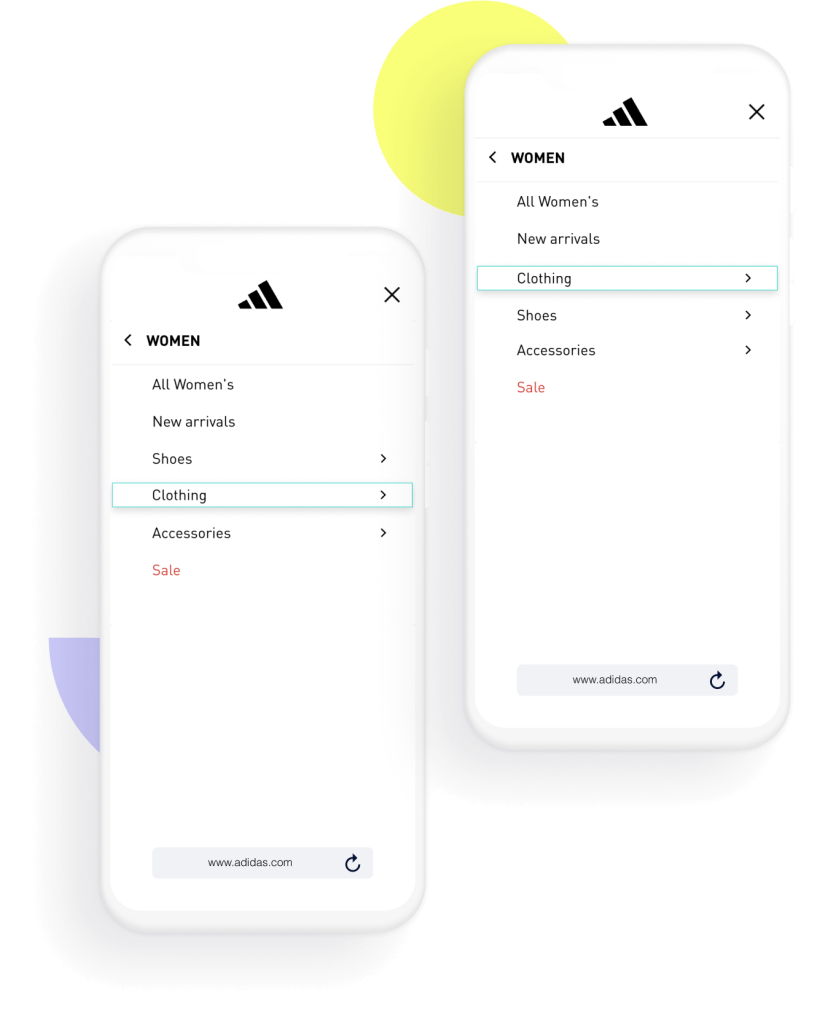
Adidas achieved a 259% increase in average order value partly by shifting their optimization focus toward proven incremental performance rather than credited conversions that obscured what was actually driving purchase behavior.
The trigger health scorecard
Once multiple flows are running, a single performance dashboard becomes hard to act on. A trigger health scorecard built around four operational metrics gives you a faster signal on where to optimize:
• Event fire rate measures whether the triggering event is being captured reliably; a rate that drops week-over-week usually points to a tracking implementation issue, not a messaging problem
• Suppression hit rate reveals how often users are excluded from a flow due to frequency caps or competing journeys, indicating whether your governance logic is working or whether flows are over-suppressing
• Revenue per trigger is the core efficiency metric: total incremental revenue attributable to the flow divided by the number of times the trigger fired
• Unsubscribe delta measures the change in unsubscribe rate for users who received the trigger versus those who did not, capturing the reputational cost of each flow over time
Reviewing these four metrics monthly surfaces the optimization opportunities that open rate and click-through rate (CTR) data routinely obscure.
Insider One’s Journey Orchestration layer makes this kind of cross-flow performance monitoring measurable across a unified trigger library rather than requiring separate reporting pulls from each channel.
If you want to see how Insider One’s Architect, Customer Data Management, and Insider One AI™ turn live customer data into coordinated, revenue-driving experiences, book a personalized demo to see the exact use cases, decision logic, and growth levers most relevant to your team.
Frequently asked questions
There is no universal number, but frequency governance becomes the binding constraint before scale does. A brand running eight well-governed flows with clean suppression logic will almost always outperform one running 20 flows without coordination. Start with the highest tier-one events from your hierarchy and expand once governance and holdout measurement are in place.
At minimum, you need unified customer profiles with persistent IDs that survive session gaps, event data available within a few minutes of the triggering behavior, and a customer data platform (CDP) that can expose propensity scores to your messaging platform without a manual export step. Batch-delayed pipelines will undercut the time-sensitivity advantage that predictive triggers exist to capture.
Assign a priority rank to every active flow, and configure suppression so that a lower-priority flow pauses or exits when a higher-priority one is active. Post-purchase flows, for instance, should almost always supersede retention or abandonment flows the moment a conversion is confirmed. Building this hierarchy into the event taxonomy rather than individual campaign settings keeps the logic consistent as your library grows.
Monthly reviews of the four-metric scorecard are a practical cadence for most teams. Event fire rate should be monitored more frequently, ideally weekly, because a silent tracking failure can suppress an entire flow for weeks before it shows up in revenue reporting.

Keep Reading
4 min.

Chris Baldwin
3 Feb 2026
8 mins.
Chris Baldwin
8 Oct 2026
8 mins.
Chris Baldwin
8 Oct 2026