

 Platform Overview

 Integration Hub

 Agent One™

 Agent One Teams™

 Customer Data Management

 Personalization

 Journey Orchestration

 Reporting & Data

 Behavioral Analytics

 Web
Web

 Email
Email

 Site Search

 Conversational CX

 WhatsApp

 Web Push

 InStory

 App
App

 SMS & RCS

 Join the $0 Migration Movement™

 The Insider One Difference

 Compare Vendors

 Switch to Insider One

 Success Story

 Retail & Ecommerce

 Financial Services

 Travel & Hospitality

 Beauty & Cosmetics

 Automotive

 Telecommunications

 Total Economic Impact™ Study

 Blog
Blog

 E-Books & Guides

 Glossary
How to Build an Ecommerce CRM Strategy That Turns First-Time Buyers Into Lifetime Customers

Updated on 4 Aug 2026
7 min.
Table of Contents
- Summary
- What makes CRM different in ecommerce than in B2B sales
- The data foundation every ecommerce CRM needs before it works
- Mapping lifecycle stages to the CRM triggers that move revenue
- Choosing between a lightweight CRM and a full CDP-led platform
- Proving your CRM is actually improving customer relationships
- Conclusion
- FAQs
Most Popular
Summary
- Ecommerce customer relationship management (CRM) works as a lifecycle engine that reacts to real-time behavior, not a static sales pipeline built for deal stages
- Unifying order history, browsing signals, and support interactions into one customer record is the foundation before any behavioral trigger can work
- Mapping first-purchase, repeat-purchase, and churn-risk stages to specific behavioral triggers replaces demographic guesswork with timely, relevant outreach
- Mid-market brands can run lifecycle-stage CRM without the cost and implementation timeline of a full enterprise customer data platform (CDP) build
- Repeat purchase rate, customer lifetime value (CLV), and win-back recovery prove retention impact to leadership better than open rates ever will
Your customer relationship management (CRM) shows a customer opened three emails last month. It doesn’t show that she abandoned a $400 cart yesterday, messaged support twice about a delayed order, and hasn’t logged in since.
That gap is why customer relationship management systems built on sales-pipeline logic rarely survive contact with real ecommerce buying behavior.
This guide is for ecommerce marketing leaders, lifecycle managers, and operations directors at mid-market direct-to-consumer and retail brands who are evaluating or rebuilding their ecommerce CRM strategy.
It treats CRM as a behavior-driven lifecycle engine rather than a sales tool or a glorified email platform.
You’ll learn how to unify commerce, browsing, and support data into one customer record, map lifecycle stages to concrete triggers, decide between a lightweight ecommerce CRM system and a full customer data platform (CDP)-led platform, and prove retention gains in terms leadership actually cares about.
What makes CRM different in ecommerce than in B2B sales
Ecommerce CRM breaks down when it borrows deal-stage logic from business-to-business (B2B) sales, because ecommerce customers don’t move through a linear pipeline.
They browse, buy, disengage, and return in patterns that a “lead, opportunity, close” model was never built to capture.
Why pipeline-and-deal-stage CRM logic breaks down for high-volume, behavior-driven buyers
A B2B sales CRM tracks a handful of accounts moving through defined stages over months. Ecommerce involves thousands of anonymous and known visitors making fast, emotional, often impulsive purchase decisions.
Forcing that volume into deal stages produces static lists that go stale within days and miss the moment a customer actually needs outreach.
How ecommerce CRM must unify marketing, support, and commerce data instead of just sales activity
Effective CRM and ecommerce strategy depends on pulling order history, product returns, live chat transcripts, and browsing behavior into a single view. A customer who just filed a support ticket about a damaged item shouldn’t receive a “we miss you” discount email the same week.
That kind of misfire happens constantly when sales-activity logs are the only input into the CRM.
The data foundation every ecommerce CRM needs before it works
No trigger, segment, or campaign works until the underlying customer record is complete. Any ecommerce CRM software evaluation should start with data architecture, not campaign templates, because fragmented data produces fragmented relationships no matter how sophisticated the messaging layer looks.
Unifying order history, browsing behavior, and support interactions into one customer record
A usable customer record blends transactional data (what someone bought, when, and at what value) with behavioral data (what they viewed, added, or abandoned) and service data (tickets, returns, complaints).
Customer Data Management is built to consolidate these signals so lifecycle decisions reflect the whole relationship, not just the last purchase.
Why real-time event data beats batch-imported CRM records for timely personalization
Batch imports that sync overnight are fine for reporting but too slow for relationship management. A customer who abandons a cart at 9 p.m. needs a response before the next scroll session, not the next nightly sync.
Real-time event streams let triggers fire on behavior as it happens, which is the difference between a CRM that reacts and one that observes after the fact.
Mapping lifecycle stages to the CRM triggers that move revenue
The strongest ecommerce CRM strategy assigns every customer a lifecycle stage based on behavior, then connects each stage to a specific trigger, not a generic newsletter.
This is the structural shift that separates a lifecycle engine from an email tool wearing a CRM label.
Defining first-purchase, repeat-purchase, and churn-risk stages with concrete behavioral signals
Behavioral segmentation models classify customers by frequency and recency of purchase, session depth, and category interaction rather than by age or location.
Predictive Customer Lifecycle Status grouping, for example, distinguishes new or infrequent visitors from Potential Buyers who browse like frequent shoppers, and flags Silent Visitors whose visit frequency has quietly dropped, often before a brand notices the decline in reporting.
Replacing static demographic segments with behavior-based triggers for each stage
Once a stage is defined, the trigger should follow the behavior instead of a calendar. A first-time buyer who hasn’t returned within a typical repeat-purchase window gets a different message than a loyal customer whose session time just fell off. Practical trigger mapping looks like this:
- First purchase, no return visit within the typical repurchase window: send a category-relevant follow-up instead of a blanket discount
- Repeat buyer with rising session frequency: surface loyalty or early-access offers through Personalization rather than generic promotions
- Silent Visitor pattern (dropping frequency, shorter sessions): trigger a win-back sequence before churn risk becomes churn
- Support ticket logged within the past 48 hours: suppress promotional sends and prioritize service follow-up
Sequencing these triggers across email, SMS, WhatsApp, and on-site messaging is where Journey Orchestration does the coordination work that spreadsheets and rule-based email tools can’t handle at scale.
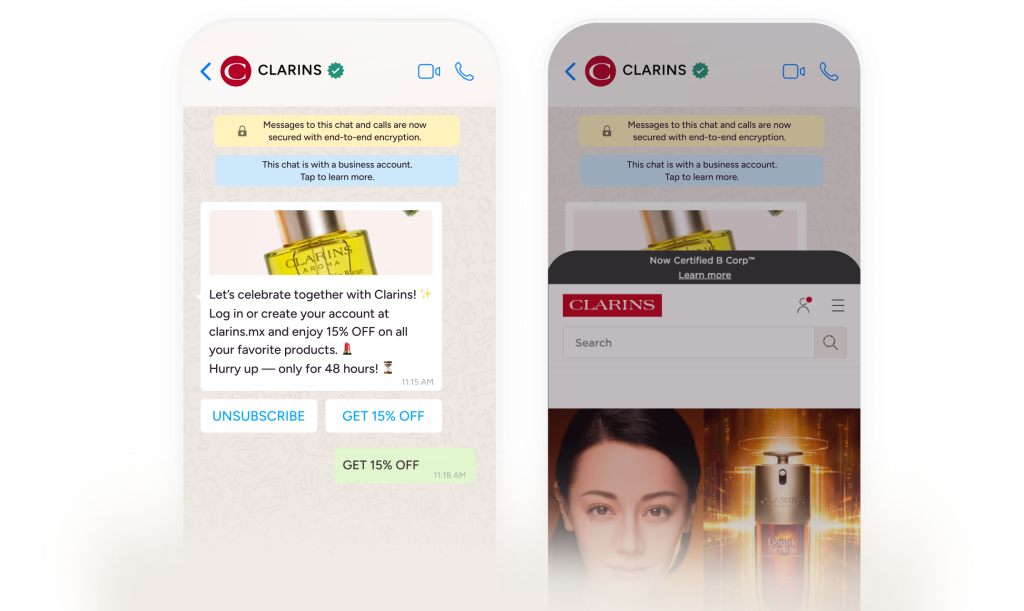
Clarins México used behavior-triggered messaging on WhatsApp to grow sales 20x, a result that a demographic-only segment list would not have produced.
Choosing between a lightweight CRM and a full CDP-led platform
The right platform depends on data complexity and team capacity, not brand size alone. Many mid-market teams over-invest in enterprise CDP infrastructure they don’t need, or under-invest in a system too thin to run real lifecycle logic.
Cost, complexity, and implementation tradeoffs between enterprise CDPs and ecommerce-native CRM tools
A full enterprise CDP build often requires dedicated engineering resources, months of data modeling, and ongoing platform administration. That investment pays off for organizations running complex, multi-brand data environments.
For a single-brand or multi-channel mid-market retailer, that timeline and cost can outweigh the retention gains for a year or more before the platform is fully operational.
Signs your brand has outgrown spreadsheets and email-only tools but doesn’t need a heavy enterprise build
A brand is ready for an ecommerce-native CRM system, not a full CDP overhaul, when segments are still built manually in spreadsheets, when support and marketing data live in separate tools nobody cross-references, or when campaigns go out on a schedule instead of a behavioral trigger.
The Insider One platform is built to run this lifecycle-stage model without demanding an enterprise-scale implementation timeline, and our integrations connect existing commerce, support, and CRM systems, including platforms like Microsoft Dynamics CRM, so teams activate lifecycle data without rebuilding their stack from scratch.
Proving your CRM is actually improving customer relationships
Retention proof requires metrics tied to revenue, not engagement vanity numbers. Open rates and click-through rates describe attention, but they say nothing about whether a customer bought again or how much they’re worth over time.
Retention metrics that matter more than open rates: repeat purchase rate, CLV, win-back recovery
Three numbers tell leadership whether the CRM strategy is working:
- Repeat purchase rate: the share of customers who buy a second time within a defined window
- Customer lifetime value (CLV): total revenue attributed to a customer across their full relationship with the brand
- Win-back recovery rate: the percentage of Silent Visitors or lapsed buyers reactivated through targeted triggers
LC Waikiki used behavior-driven personalization to lift conversion rate by 11.31 percent, a result rooted in matching triggers to real customer behavior rather than blanket campaigns.
Connecting CRM-driven retention gains to profit impact for leadership buy-in
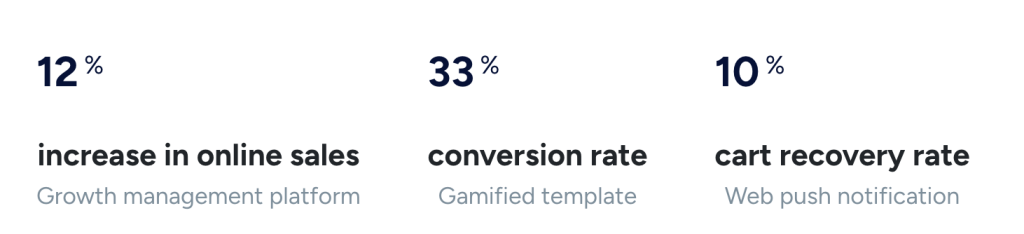
Retention metrics only earn budget when they’re translated into margin impact. Frame repeat purchase rate lift as incremental revenue per cohort, and win-back recovery as recovered customer lifetime value that would otherwise have gone to churn. Lenovo’s 12 percent uplift in online sales illustrates how lifecycle-driven engagement converts directly into a figure a finance team recognizes.
Conclusion
An ecommerce CRM strategy earns its budget when it reacts to behavior instead of tracking activity after the fact. Unified data, lifecycle-stage triggers, and revenue-tied metrics turn CRM from a reporting exercise into a retention engine. Brands that make this shift stop guessing who’s at risk and start acting before the churn happens.
To evaluate the fit of Customer Data Management for your use case, book a personalized demo to review your goals, data requirements, and implementation constraints with the Insider One team.
FAQs
A traditional CRM tracks sales activity through deal stages for a small number of accounts. An ecommerce CRM system unifies order history, browsing behavior, and support data for high-volume customers, then triggers outreach based on real-time behavior instead of a manual pipeline update.
The best CRM for ecommerce mid-market brands is one that runs lifecycle-stage triggers on unified commerce, behavioral, and support data without demanding a multi-month enterprise implementation. Evaluate platforms on integration depth and real-time trigger capability, not feature count alone.
Ecommerce CRM personalization pairs lifecycle-stage data with content and offer selection: a customer flagged as a Potential Buyer sees different messaging than a Silent Visitor at churn risk. The CRM data foundation determines which trigger fires; personalization determines what the customer sees when it does.
Repeat purchase rate, customer lifetime value, and win-back recovery rate prove retention impact more reliably than open or click rates. These metrics tie directly to revenue and margin, which is what leadership needs to justify continued CRM investment.
Not necessarily. A full customer data platform build suits organizations with complex, multi-brand data environments. Mid-market brands with a single primary storefront often get comparable lifecycle-trigger results from an ecommerce-native CRM system with strong integrations, at a fraction of the implementation cost and timeline.

Keep Reading
7 min.

Muharrem Derinkok
4 Jun 2026
11 min.

Chris Baldwin
2 Jun 2026
4 min.
Chris Baldwin
3 Feb 2026