

 Platform Overview

 Integration Hub

 Insider One AI™

 Customer Data Management

 Personalization

 Journey Orchestration

 Reporting & Data

 Behavioral Analytics

 Web
Web

 Email
Email

 Site Search

 Conversational CX

 WhatsApp

 Web Push

 InStory

 App
App

 SMS & RCS

 Join the $0 Migration Movement™

 The Insider One Difference

 Compare Vendors

 Switch to Insider One

 Success Story

 Retail & Ecommerce

 Financial Services

 Travel & Hospitality

 Beauty & Cosmetics

 Automotive

 Telecommunications

 Total Economic Impact™ Study

 Blog
Blog

 E-Books & Guides

 Glossary
How Data Enrichment in a CDP Turns Raw Profiles Into Revenue-Driving Intelligence

Updated on 9 Jul 2026
9 min.
Table of Contents
- Summary
- Why most CDPs collect data but never truly enrich it
- The four types of CDP data enrichment that actually move revenue
- How real-time vs. batch enrichment changes campaign outcomes
- AI-powered predictive enrichment: from attributes to actions
- Building an enrichment-first CDP strategy: a practical framework
- Frequently asked questions
Most Popular

Summary
Customer data enrichment transforms raw data into actionable profiles by adding real-time behavioral and predictive insights. Richer customer profiles enable more accurate segmentation, personalization, and cross-channel marketing.
Somewhere between “we have the data” and “we can actually use it” there is a gap that costs brands revenue every quarter.
Marketing teams have spent years investing in customer data platforms (CDPs) to break down silos and unify records, but unified is not the same as intelligence. A profile that tells you a customer exists, holds a valid email address, and bought something 14 months ago is technically complete. It is also nearly useless for real-time personalization.
The distinction worth drawing here is between unification and enrichment. In Insider’s Unified Customer Database, unification resolves identity across sources by combining events and attributes from online and offline touchpoints under shared identifiers such as email address, phone number, or user ID.
Enrichment goes further: it layers behavioral and intent signals onto that unified record and keeps the profile current enough for audience segmentation, recommendations, and cross-channel journeys.
The gap between those two capabilities is where most personalization programs stall, and where a well-built CDP data enrichment strategy begins to separate brands that grow from those that plateau.
Why most CDPs collect data but never truly enrich it
Step one: understand the difference between ingestion, unification, and enrichment
Data ingestion is a pipeline problem. Data unification is an identity problem. Data enrichment is an intelligence problem, and it is the hardest of the three to solve because it requires more than connecting sources.
Ingestion pulls data from your website, mobile app, customer relationship management (CRM) system, and transaction systems into a central store. Unification stitches those records together under a single customer identifier, resolving conflicts and eliminating duplicates.
Neither step automatically turns raw data into timely action. That inference layer is enrichment, and without it, your segments are defined mainly by what customers did rather than by the signals that help teams personalize what should happen next.
Step two: recognize how siloed enrichment creates profile drift
Channel-specific enrichment is a particularly costly pattern. When one platform enriches only email behavior and another enriches only app engagement, the signals never combine.
A customer can browse six product pages on mobile, abandon a cart, open a re-engagement email, and click through to the site without any single system seeing the full arc of intent. Each platform acts on a fragment, and the customer receives generic treatment at every touchpoint because no system holds the complete picture.
This fragmentation worsens over time. Batch data syncs between separate tools introduce lag, and intent signals that were accurate at 9 a.m. may be irrelevant by the time a nightly export runs and a campaign fires the next morning.
That lag is what practitioners mean when they talk about profile drift: the profile in the system no longer reflects the customer who is actually browsing right now.
Building unified customer profiles that update continuously is the structural fix, but it requires enrichment to happen inside the same system that handles audience segmentation, recommendations, and campaign activation rather than upstream in a disconnected tool.
The four types of CDP data enrichment that actually move revenue
Demographic and firmographic enrichment
Demographic enrichment fills in descriptive attributes such as location, age range, life stage, household composition, and other customer details that help teams understand context.
On its own, this layer is table stakes. Combined with behavioral signals, it sharpens segmentation considerably. A parent of young children browsing furniture in a mid-sized metro has a materially different purchase context than a single professional browsing the same category in the same city.
Behavioral enrichment
Behavioral enrichment is where CDP customer profile enrichment becomes more actionable for segmentation and personalization. Browse events, search activity, and category-level engagement contribute to a clearer picture of what a customer is responding to right now.
That richer context can support more relevant product recommendations and create more opportunities to improve average order value (AOV) without relying only on past purchases.
Intent enrichment
Intent enrichment uses recency, frequency, and depth of engagement to help teams recognize when interest is strengthening. A visitor who returns to the same product category multiple times is showing a pattern that may deserve different messaging than a first-time browser.
When those signals update quickly enough to inform segmentation and activation, teams can respond with more relevant messages or experiences before the moment passes. Without that layer, the opportunity is easier to miss.
Predictive enrichment and the compounding profile
Each enrichment type makes the others more accurate. Demographic context improves the relevance of behavioral predictions. Behavioral patterns sharpen intent scoring. Intent signals inform which customers may need a different message, offer, or journey branch next.
The result is a compounding profile: an asset that becomes progressively more valuable with each interaction rather than decaying into stale, flat data.
Predictive profile enrichment adds the final layer by assigning AI-generated signals and attributes directly to the profile, enabling more responsive segmentation, personalization, and activation without constant manual rebuilds.
This is the mechanism that connects enriched data to downstream revenue outcomes, and it is explored further in the customer data platform guide for teams evaluating which architecture supports it.
How real-time vs. batch enrichment changes campaign outcomes
The cost of nightly batch syncs
Batch enrichment runs on a schedule, typically nightly or every few hours, which means it is always working from a snapshot of the past. For low-frequency categories like luxury furniture or automotive, this lag is manageable.
For high-frequency retail, travel, and financial services, where a customer’s intent can shift dramatically within a single session, batch enrichment means campaigns fire on outdated signals. A customer who browsed flights in the morning, booked one by midday, and then received a flight promotion email that evening is experiencing a failure of timing, not a failure of creativity.
Real-time enrichment in action
Real-time data enrichment CDP systems work differently. They update the customer profile continuously during an active session, refreshing segment membership and activation logic as new behavioral signals arrive.
This means a personalization engine can update experiences during the same visit as new behavior arrives, rather than waiting for the next sync.
Consider a concrete scenario: a visitor lands on a sportswear site, browses running shoes repeatedly, and then navigates to the sale section. In a batch-enriched environment, that behavior is less likely to influence the live experience until a later sync.
In a real-time enriched environment, those behavioral signals can update segment membership quickly enough to support a more relevant web experience or a coordinated follow-up in another eligible channel. That is a more defensible expression of the value: faster activation on fresher signals, not a guarantee of one specific intervention every time.
New Balance remains a useful customer proof example for onsite personalization, but the case-study link should be read as supporting evidence of the broader use case rather than proof of every mechanism described here.
Curious how enriched your own customer profiles actually are? Book a personalized demo and we’ll walk through a profile completeness audit against your current data sources.
AI-powered predictive enrichment: from attributes to actions
What predictive attributes actually do
Predictive enrichment can make a customer profile a stronger input for segmentation and personalization. AI models trained on behavioral, transactional, and engagement data can add predictive signals that help teams prioritize audiences, messages, recommendations, or journey paths with less manual effort.
These signals can inform reporting, segmentation, and journey setup when teams want to operationalize enriched profiles across channels without rebuilding audiences manually.
Insider One’s enrichment architecture
Insider One’s personalization platform centers that profile strategy on a Unified Customer Database that ingests events and attributes from online and offline sources, unifies them by identifier, and makes them available for segmentation and activation. Insider One AI™ supports the predictive layer, while recommendations and journey logic help teams turn enriched profiles into personalized experiences.
Those signals and audiences feed directly into Architect, Insider One’s journey orchestration canvas, which automates personalized experiences across multiple channels including email, SMS, WhatsApp, in-app messaging, web, and push.
The architecture means data ingestion, enrichment, segmentation, recommendations, and activation happen inside the same platform, reducing sync lag, lowering profile drift, and helping teams launch more consistent cross-channel experiences faster.
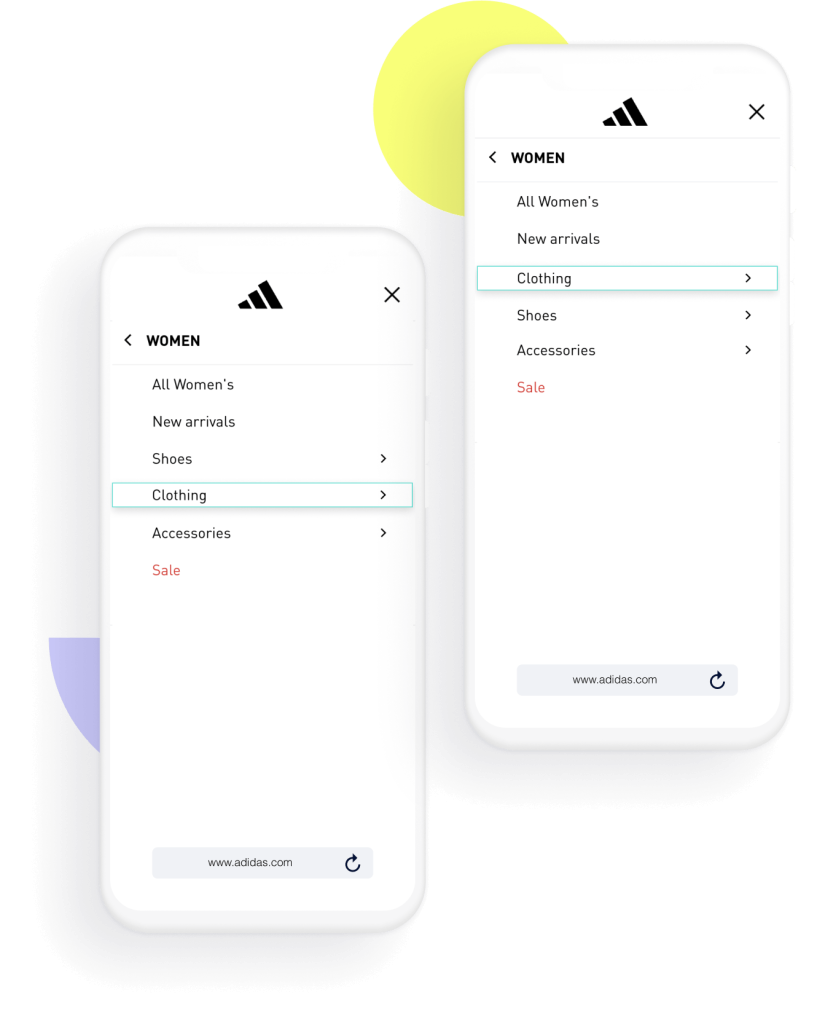
Adidas is another customer proof example aligned with the broader argument for using enriched profiles, recommendations, and cross-channel activation together, but the case-study link should not be read as proof of every claim in this section.
Building an enrichment-first CDP strategy: a practical framework
Audit your current data sources
Map every system that generates customer data: your ecommerce platform, mobile app analytics, email engagement logs, CRM, offline transaction systems, and any other source that can feed attributes or events into a unified profile.
The goal at this stage is not just to identify gaps. It is to understand what you actually have, in what form, under which identifiers, and at what latency, before deciding which enrichment investments will move the needle fastest.
Score your profile completeness
For each customer record, evaluate which enrichment types are present and which are missing. A profile completeness score gives you a concrete measure of enrichment quality rather than a vague sense that the data is suboptimal.
That kind of score gives teams a practical way to prioritize which profiles still lack the behavioral, attribute, and engagement data needed for segmentation and activation. Profiles missing behavioral data are often the highest-priority enrichment targets because those signals are closest to current intent and personalization opportunities.
Map gaps to activation use cases
Each enrichment gap corresponds to a specific personalization failure. Missing intent signals mean browse abandonment flows cannot distinguish between a casual visitor and a high-intent prospect.
Missing engagement signals mean journey orchestration defaults to the same channel logic for everyone, regardless of whether that customer is more responsive to email, push, SMS, or WhatsApp.
The same gap also limits practical use cases such as re-engaging inactive app users, guiding new web sign-ups toward app install, or activating CRM-based loyalty and churn-risk audiences across channels. Mapping gaps to use cases forces a prioritization conversation: which enrichment investments will unlock the most valuable downstream activation?
Set a continuous enrichment cadence
Enrichment is not a one-time data append. A profile enriched in Q1 begins to decay by Q2 if it is not updated with new behavioral signals.
Setting a continuous cadence means treating the profile as a living asset: new web sessions, email engagement, and app interactions can refresh the record, update audience eligibility, and support more current segmentation and activation. The activation layer should be able to reflect those updates quickly enough that campaign teams do not need to rebuild logic each time the underlying data shifts.
A mature profile updates with every interaction, carries current behavioral and predictive signals, feeds audience segmentation without requiring a SQL query, and powers consistent personalization logic across web, email, SMS, WhatsApp, and push.
It is not a snapshot of the past. It is a continuously refreshed model of the customer’s current state, and it is the foundation on which behavioral analytics, recommendations, and cross-channel activation all depend.
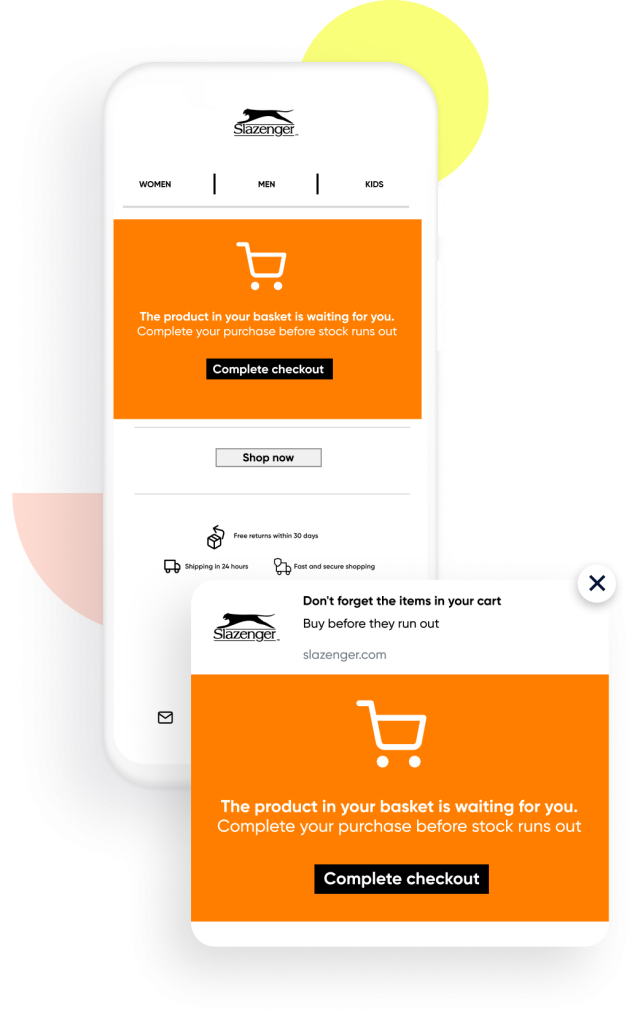
Slazenger offers a case-study example aligned with Insider One’s omnichannel marketing approach, but the link works best as supporting proof of cross-channel use cases rather than as evidence for every enrichment claim in this article.
If you want to see how Insider One’s Architect and Insider One AI™ turn live customer data into coordinated, revenue-driving experiences, book a personalized demo to see the exact use cases, decision logic, and growth levers most relevant to your team.
Frequently asked questions
Unification resolves identity across sources and merges duplicate records into a single customer profile.
Enrichment adds intelligence to that profile by layering behavioral signals, intent indicators, and AI-powered attributes, turning a static record into an actionable asset that improves with every interaction.
Batch enrichment updates profiles on a scheduled interval, typically nightly, meaning campaigns fire on signals that may be hours out of date.
Real-time enrichment updates the profile continuously during an active session, allowing personalization engines to respond to current intent rather than historical behavior.
Behavioral enrichment is often the clearest driver of relevance because it improves timing, segmentation, and product recommendations, which can create more opportunities to influence average order value (AOV) when the experience matches current customer interest.
AI-powered signals and attributes can further support personalization by helping teams prioritize which audience, message, or journey path to use next.
Enrichment is most effective when it happens inside the same platform that activates campaigns. Separate enrichment tools create sync lag and profile drift, meaning the data your campaign fires against may be less current than the customer’s actual behavior.
Platforms that handle enrichment and activation natively can reduce that gap.

Keep Reading
7 min.

Muharrem Derinkok
4 Jun 2026
11 min.

Chris Baldwin
2 Jun 2026
4 min.
Chris Baldwin
3 Feb 2026