

 Platform Overview

 Integration Hub

 Agent One™

 Agent One Teams™

 Customer Data Management

 Personalization

 Journey Orchestration

 Reporting & Data

 Behavioral Analytics

 Web
Web

 Email
Email

 Site Search

 Conversational CX

 WhatsApp

 Web Push

 InStory

 App
App

 SMS & RCS

 Join the $0 Migration Movement™

 The Insider One Difference

 Compare Vendors

 Switch to Insider One

 Success Story

 Retail & Ecommerce

 Financial Services

 Travel & Hospitality

 Beauty & Cosmetics

 Automotive

 Telecommunications

 Total Economic Impact™ Study

 Blog
Blog

 E-Books & Guides

 Glossary
Why Bulk SMS Campaigns Aren’t the Most Effective SMS Marketing Strategy

Updated on 29 Jun 2026
8 min.
Table of Contents
- Summary
- What is bulk SMS marketing?
- When do bulk SMS campaigns make sense?
- What are the risks of relying on bulk SMS campaigns?
- How can you run SMS campaigns that outperform bulk blasts?
- How do you measure SMS campaign effectiveness beyond open rates?
- Can you send bulk SMS for free?
- What should you look for in SMS marketing tools?
- How does Insider One power smarter SMS campaigns?
- FAQs
Most Popular
Summary
Bulk SMS is effective for urgent, high-volume alerts, but segmented, behavior-based campaigns deliver better engagement, higher ROI, and lower opt-out rates. The best SMS strategies prioritize relevance over reach.
Most marketing teams treat bulk SMS campaigns as their default text strategy. They send identical promotions to entire subscriber lists and watch deliverability collapse. Carriers penalize this approach with filtering and throttling, while subscribers opt out at rates that erode list value faster than acquisition can replace it.
Behavior-triggered, segmented SMS often outperforms mass blasts on conversion rate, opt-out rate, and revenue per message. Yet teams default to bulk sends because their platforms make targeted campaigns too slow or too complex to execute.
What is bulk SMS marketing?
Most marketing teams conflate bulk SMS with text message marketing. They send the exact same message to their entire list, then wonder why deliverability tanks or opt-outs spike.
Bulk SMS is a delivery method within a broader strategy. It sends one message to many recipients simultaneously. That’s it. It’s one tactic within a broader SMS marketing program.
To protect your sender reputation, you need to understand the three message types that matter for compliance and deliverability:
- Marketing messages: Promotional content like sales and product launches requiring express written consent under the Telephone Consumer Protection Act (TCPA)
- Transactional messages: Order confirmations and shipping updates tied to a specific customer action
- Informational messages: Service alerts and policy updates that don’t require promotional consent
Carriers and regulators treat each type differently. Misclassifying a marketing message as transactional is a fast path to filtering or fines.
When do bulk SMS campaigns make sense?
Bulk sends aren’t inherently bad. They fail when marketers use them as a default rather than a deliberate choice.
Bulk SMS is the right tool when time sensitivity is non-negotiable. Flash sales ending soon or event-day reminders require immediate, widespread delivery. It also works when the audience is uniformly relevant, like all subscribers in a region needing the same store closure update.
When relevance varies by subscriber, bulk SMS is the wrong tool. If product interest or lifecycle stage differs across your list, a mass blast wastes money. You also risk carrier filtering if you send frequent promotional mass messages.
| Use bulk SMS when… | Use targeted SMS when… |
| A site-wide flash sale ends soon | A user abandons a high-value cart |
| A local store closes due to weather | A customer needs a replenishment reminder |
| You launch a major brand rebrand | A loyalty member nears the next tier |
If you want to move beyond “send to all” without adding more work for your team, book a demo and see how behavior-triggered SMS runs at enterprise speed.
What are the risks of relying on bulk SMS campaigns?
Picture this: a retail brand sends a flash sale to its full list. The team sees a massive spike in opt-outs and notices delivery rates drop on subsequent campaigns.
That’s carrier filtering in action.
Why do carrier filtering and sender reputation matter?
Carriers like Verizon and T-Mobile actively monitor message patterns. High-volume sends with low engagement or high complaint rates trigger throttling or blocking. Sender reputation is cumulative. One bad campaign affects future deliverability.
Carriers look for specific triggers:
- High opt-out rates on a single campaign: Signals low relevance
- Uniform resource locator (URL) shorteners or suspicious links: Flagged as potential spam
- Rapid send velocity without warm-up: New sender IDs sending large volumes of messages immediately
- Content patterns matching known spam: Excessive capitalization, aggressive punctuation
What compliance risks and opt-out requirements should you plan for?
TCPA violations carry steep penalties per message. Even unintentional non-compliance creates massive legal exposure.
Build these operational requirements into your business SMS marketing strategy:
- STOP handling: Honor opt-outs immediately
- Quiet hours: Many jurisdictions prohibit marketing messages late at night or early in the morning local time
- Required disclosures: Include message frequency, opt-out instructions, and sender identification
How do low-relevance sends increase SMS costs?
Bulk SMS pricing is volume-based. The real cost is sending messages that don’t convert. Automated messages outperform bulk campaigns in revenue per send.
Every message to a subscriber who isn’t interested is wasted spend plus increased opt-out risk. Hidden costs escalate quickly:
- Carrier surcharges: Fees per message segment and per carrier network
- Opt-out replacement cost: Acquiring a new subscriber costs significantly more than retaining one
- Opportunity cost: Sending to the wrong segment means missing the right buyer
If you’re seeing deliverability drop or opt-outs climb, use the product demo hub to learn what enterprise-grade compliance and deliverability controls look like in practice.
How can you run SMS campaigns that outperform bulk blasts?
The most effective SMS marketing program shifts focus from sending to everyone to targeting the right person. Instead of “send to all,” the question becomes “who should receive this message, and when?”
Why should you complete 10DLC registration before scaling?
Application-to-person (A2P) messaging in the United States (US) requires 10-digit long code (10DLC) registration. Skip this, and carriers block unregistered A2P traffic, causing failed deliveries.
The process involves:
- Brand registration: Submit your business details to The Campaign Registry
- Campaign registration: Define your message use cases
- Trust score: Secure a higher score to unlock higher throughput limits
- Timeline: Expect approval to take some time depending on vetting complexity
How do you build compliant opt-ins and clear opt-outs?
Consent quality determines your deliverability and legal exposure. A double opt-in process helps reduce complaints and improve overall list quality.
Your opt-in process must meet strict requirements:
- Opt-in language: Disclose message frequency, data rates, and opt-out instructions
- Opt-out handling: Honor STOP and UNSUBSCRIBE keywords immediately
- Audit trail: Store the timestamp, source, and consent language for every subscriber
How should you segment audiences and personalize offers?
Market segmentation is the difference between bulk blasting and targeted SMS. Start with segments that have clear behavioral signals and high conversion potential.
Prioritize these high-intent segments:
- Cart abandoners: High-intent users needing a time-sensitive recovery opportunity
- Browse abandoners: Users who viewed product pages without adding to cart
- Post-purchase: Customers ready for a cross-sell or replenishment reminder
- Lapsed customers: Inactive buyers needing re-engagement with a new incentive
- Very important person (VIP) / high lifetime value (LTV): Exclusive access, early sale entry, loyalty rewards
How should you set frequency caps and quiet hours?
Without frequency capping, over-messaging becomes the fastest path to opt-outs. Under-messaging wastes your list potential.
Follow these defaults:
- Promotional messages: Start with a low monthly cadence and increase only for engaged segments
- Transactional messages: Send as triggered with no artificial cap but suppress duplicates
- Quiet hours: Block promotional messages late at night or early in the morning local time
- Fatigue monitoring: Track the opt-out rate per campaign and reduce frequency if it spikes
If you’re ready to operationalize segmentation, caps, and compliance without turning every change into a ticket, book a demo and see how orchestrated SMS works end to end.
How do you measure SMS campaign effectiveness beyond open rates?
High open rates don’t mean high return on investment (ROI). A message can be opened and ignored. It can also be opened and drive a purchase that would have happened anyway.
Incrementality testing separates real lift from background noise.
What core metrics should you track, and what do they tell you?
Track the metrics that tie directly to deliverability and revenue:
| Metric | What it indicates |
| Delivery rate | Carrier filtering or list hygiene issues |
| Click-through rate | Message relevance and offer appeal |
| Conversion rate | The direct tie to revenue |
| Opt-out rate | Over-messaging or poor targeting |
| Revenue per message | Overall campaign efficiency |
How do you run incrementality tests to prove true lift?
A/B testing message variants is useful. But it doesn’t prove the message itself drove incremental revenue.
Set up a proper test:
- Holdout group: Randomly exclude a portion of the eligible audience from receiving the message
- Holdout size: Use a meaningful portion of the audience to maintain statistical power
- Measurement window: Match the attribution window to your typical purchase cycle
- Lift calculation: Compare the conversion rate between the message group and the holdout group
To see how teams measure lift without stitching together spreadsheets and silos, explore the product demo hub for real-world measurement workflows.
Can you send bulk SMS for free?
Free tiers exist, but they come with strict caps, limited features, and poor deliverability. For any meaningful volume, SMS has a hard cost.
The pricing tiers break down like this:
- Free trials: Platforms offer a small credit to test basic functionality
- Pay-as-you-go: No monthly fee but higher per-message rates for low-volume senders
- Monthly plans: Lower per-message rates at committed volumes
- Enterprise contracts: Custom pricing with dedicated support and higher throughput
Hidden costs will inflate your bill if you aren’t careful. Carrier surcharges, A2P registration fees, and overage charges add up fast.
What should you look for in SMS marketing tools?
The right platform depends on your volume, technical resources, and channel mix. A basic tool that works for a small store sending cart abandonment messages will fail an enterprise running cross-channel journeys.
Evaluate vendors based on these criteria:
- Throughput and deliverability: Direct carrier relationships and strong sender reputation
- Compliance tooling: Automated 10DLC registration, quiet hours, and opt-out handling
- Segmentation and personalization: Behavioral segments and dynamic content
- Journey orchestration: Event-triggered messages coordinated with other channels
- Integrations: Connections to your ecommerce platform, customer data platform (CDP), and customer relationship management (CRM) system
- Pricing transparency: Predictable pricing without hidden fees for segments or overages
How does Insider One power smarter SMS campaigns?
Bulk blasting is a symptom of fragmented tools. When your SMS platform doesn’t know what your CDP knows, you can’t send the right message to the right person.
Insider One connects customer data, segmentation, journey orchestration, and channel execution in one place.
Architect, Insider One’s customer journey orchestration solution, enables behavior-triggered SMS campaigns without developer involvement. Unified customer profiles connect web, app, and offline data so every SMS is informed by full customer context.
Insider One AI™, Insider One’s extensive set of artificial intelligence (AI) capabilities, powers send time optimization and next best channel selection.

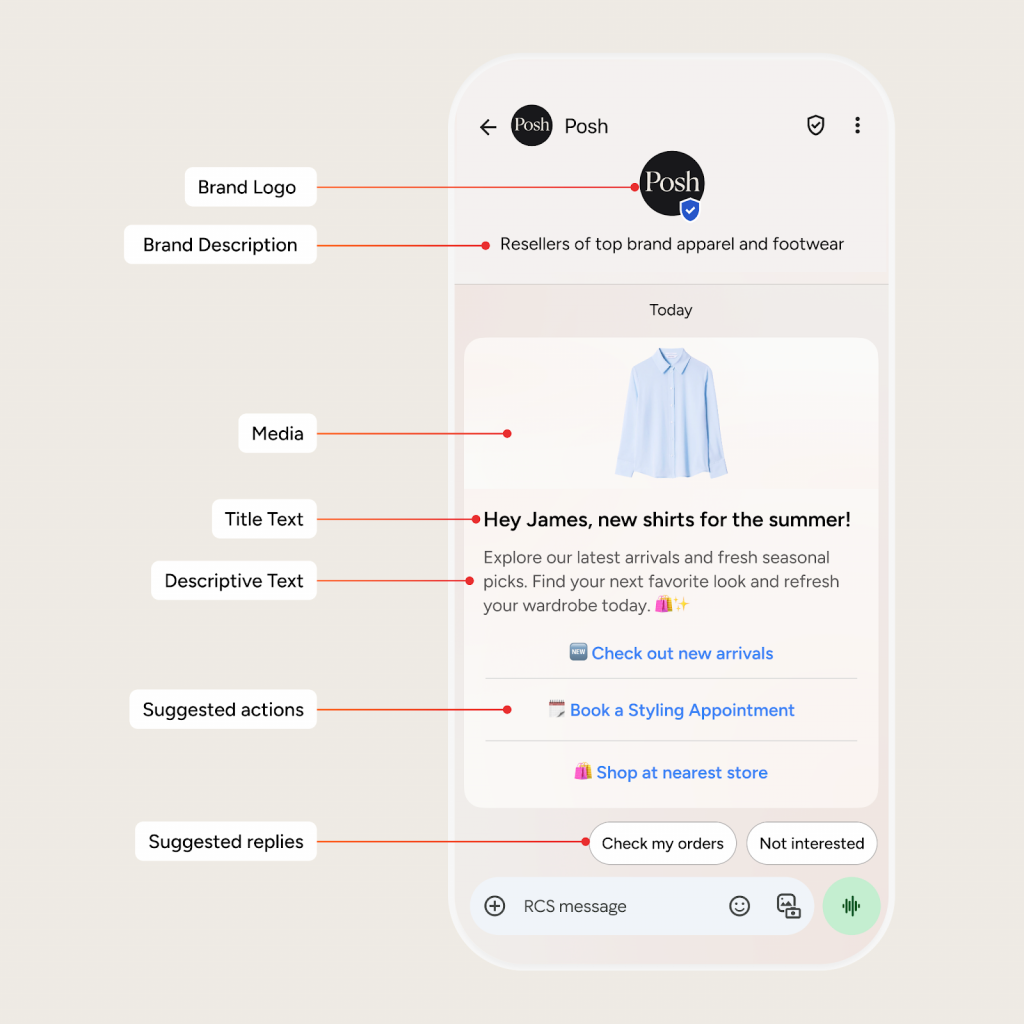
Native SMS and WhatsApp support means no third-party integrations or data syncing delays. Two-way conversational SMS, powered by Agent One, turns campaigns into real conversations so subscribers can reply and get instant, contextual answers, and native RCS adds rich, interactive media beyond plain text.
Compliance is built in: schedule sends based on each recipient’s local time zone, configure multiple silent-hours periods, and track subscriber health and per-campaign opt-out trends with built-in Subscriber Analytics, so you can scale responsibly and catch fatigue before it costs you a list.
Segmentation is just as fast: Smart Segment Creator turns a plain-English prompt into a targeted audience in seconds, removing the usual excuse for blasting everyone, and Smart Recommender can drop personalized product suggestions into each text, so a segmented send is also a personalized one.
Teams go live with Migration Lab™ support for onboarding. Predictable MTU-based pricing eliminates hidden charges for data, storage, or duplicated events.
If you want to see what “one place” looks like for segmentation, orchestration, and sending, start in the product demo hub and pick the workflows that match your SMS goals.
FAQs
10DLC brand registrations are portable, but the new provider often needs to re-submit campaign registrations. Plan for a parallel run during migration to avoid delivery gaps.
TCPA and carrier guidelines require honoring opt-out requests immediately. Most platforms process STOP keywords automatically and suppress the number from future sends.
Start with a low monthly cadence. Increase frequency only for segments showing high engagement, and monitor opt-out rates closely.
Yes. 10DLC and toll-free numbers support A2P messaging for most use cases. Short codes offer higher throughput and better support very high-volume campaigns or two-way interactions.
Common triggers include high opt-out rates, suspicious URLs, rapid send velocity without warm-up, and content patterns matching known spam. Review your sender reputation, message content, and sending patterns to diagnose the issue.

Keep Reading
7 min.

Muharrem Derinkok
4 Jun 2026
11 min.

Chris Baldwin
2 Jun 2026
4 min.
Chris Baldwin
3 Feb 2026