

 Platform Overview

 Integration Hub

 Insider One AI™

 Customer Data Management

 Personalization

 Journey Orchestration

 Reporting & Data

 Behavioral Analytics

 Web
Web

 Email
Email

 Site Search

 Conversational CX

 WhatsApp

 Web Push

 InStory

 App
App

 SMS & RCS

 Join the $0 Migration Movement™

 The Insider One Difference

 Compare Vendors

 Switch to Insider One

 Success Story

 Retail & Ecommerce

 Financial Services

 Travel & Hospitality

 Beauty & Cosmetics

 Automotive

 Telecommunications

 Total Economic Impact™ Study

 Blog
Blog

 E-Books & Guides

 Glossary
Why Should I Choose Insider One Over Braze?

Updated on 25 May 2026
5 min.
Table of Contents
- Start by diagnosing the real problem
- Five questions that make the decision concrete
- 1. Does your website convert as well as your mobile app?
- 2. How long does it take a marketer to launch a new journey without engineering help?
- 3. Is your AI helping you build audiences and content, or only optimize sends?
- 4. What is your projected MTU and revenue trajectory over the next three years?
- 5. Does your team trust vendor support, and how localized is it?
- When you should stay with Braze
- How to validate the decision before you commit
- Making the final call
Most Popular
If you’re asking this question, you’re probably in one of three situations: evaluating both platforms for a first-time enterprise buy, sitting on a Braze contract that isn’t delivering, or building an internal business case to switch.
None of those decisions is well served by another feature comparison. What helps is a clearer way to diagnose what’s actually broken in your customer engagement stack, and a framework for deciding whether Insider One solves the right problem for you. This article walks through that decision logic.
Start by diagnosing the real problem
The wrong question to ask first is “Which platform has more features?” The right question is “where is my customer engagement program leaking value, and which platform fixes that specific leak?” Most enterprise buyers fall into one of four diagnoses, and the answer is different for each:
- The website underperforms the app. If your highest-traffic surface converts worse than your secondary surfaces, it is more likely that you have a personalization problem, not a messaging problem.
- Campaigns ship too slowly. If every new journey requires engineering tickets and weeks of QA, you have a workflow problem.
- AI exists in pockets, not across the stack. If predictive segmentation lives in one tool, content generation in another, and decisioning in a third, you have a consolidation problem.
- Costs scale faster than results. If MTU growth is outpacing revenue growth, you have a pricing model problem.
The next five questions help you figure out which of these is actually true for your team.
Five questions that make the decision concrete
1. Does your website convert as well as your mobile app?
If the answer is no, Insider One is the more direct fix. Native web personalization, product recommendations, and site search sit inside the same canvas as outbound messaging, with no separate vendor required.
Braze does not provide a comparable native website personalization layer; its strength lies in messaging out to channels rather than reshaping the website itself. If the answer is yes (your app outperforms the web by design), Braze remains a competitive option.
2. How long does it take a marketer to launch a new journey without engineering help?
Time for the last three campaigns. If marketers needed engineering for any of them, including Liquid templates, custom event setup, or integration work, your platform is creating dependency rather than removing it. Insider One’s WYSIWYG editor and 100+ pre-built templates are explicitly designed to remove that dependency.
Customer evidence reflects it: VogaCloset migrated and launched in eight weeks, and Slazenger achieved 49X ROI in eight weeks with marketer-led journeys.
3. Is your AI helping you build audiences and content, or only optimize sends?
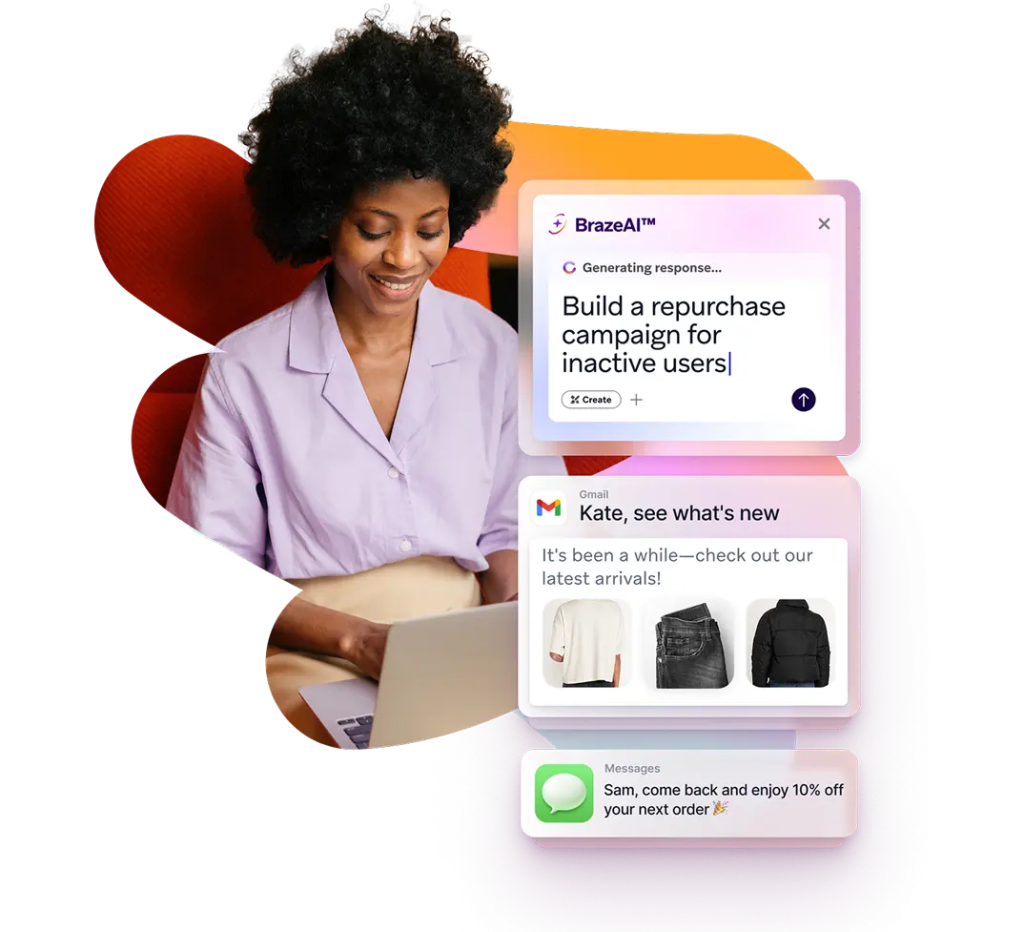
Braze’s AI shines at messaging optimization. Channel selection, send time, and decisioning are continuously adapted by reinforcement-learning agents. That is genuinely useful, but it is a narrow scope.
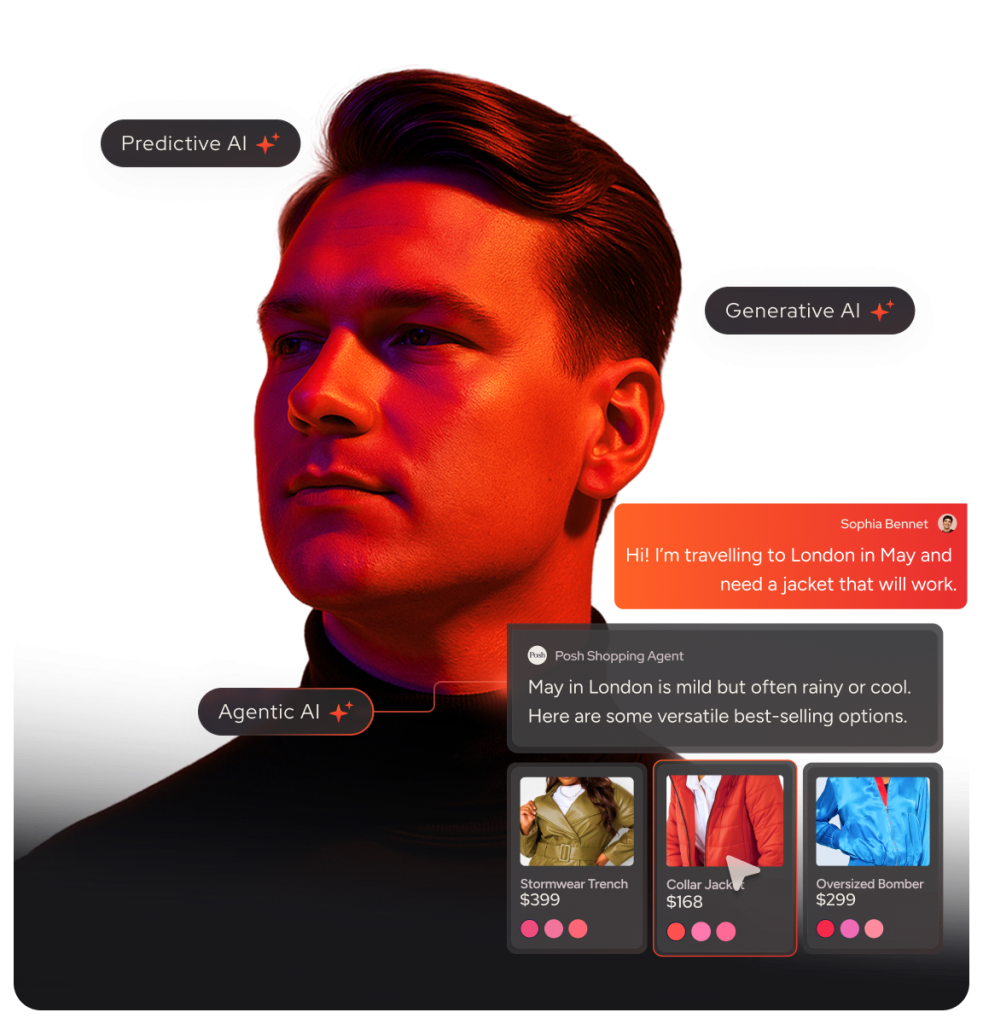
Insider One AI (Sirius AI) combines generative, predictive, and conversational AI with autonomous agents, extending into segmentation, product recommendations, AI-generated content, and on-site decisioning. If your team needs AI before the message goes out, not just at delivery, Insider One’s scope is wider.
4. What is your projected MTU and revenue trajectory over the next three years?
This is the question most buyers underweight. Braze pricing is based on Monthly Tracked Users, which can quickly increase costs as audiences grow. If your audience is growing faster than your average revenue per user, MTU pricing will compress your margins.
Insider One’s commercial model, combined with the Zero-Dollar Migration program, is built for predictable scaling. Run the three-year math before you commit.
5. Does your team trust vendor support, and how localized is it?
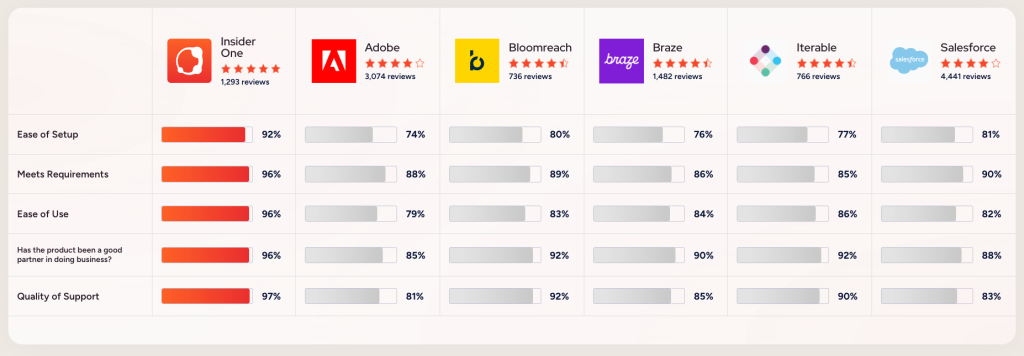
Insider One has scored 92/100 for ease of use and setup, and 97/100 for onboarding and customer support, with localized support available in 28 countries across six continents. If you operate across multiple regions, having on-the-ground growth consultants in your time zone changes how fast programs ramp.
When the Switch Pays Off Fastest
The brands that get the quickest payback from moving to Insider One usually show the following attributes: the website is a primary revenue driver, marketing teams want to ship without engineering bottlenecks, and the engagement program spans channels Braze doesn’t natively cover.
Lexus drove 12X ROI, Spotlight Retail Group hit 37X, Adidas lifted AOV 259%, and Avon raised AOV 11% and CTR 13%. The named outcomes are public and concrete, which makes them useful for benchmarking what your own program could realistically deliver.
When you should stay with Braze
There are real scenarios where Insider One isn’t the better answer. If your customer relationship genuinely lives inside a mobile app, such as gaming, streaming, or mobile-only fintech, Braze’s depth in push, Content Cards, and Live Activities is hard to beat.
If your engineering team is already proficient in Liquid and Canvas and you’ve invested in custom integrations, switching costs may outweigh the upside. And if your program is purely messaging-led with no need for on-site personalization, Braze’s narrower scope is a feature, not a limitation. Be honest about which scenario describes your team.
How to validate the decision before you commit
Three steps make the choice defensible internally:
- Run a proof of concept on the channel you care most about, usually web personalization or WhatsApp, and measure the lift over your current setup, not over a vendor benchmark.
- Talk to two reference customers in your industry, not just the marquee logos. Ask specifically how long onboarding took, where it got stuck, and what they would do differently.
- Stress-test the three-year cost. Model your projected MTU or audience growth, factor in the channels you will consolidate, and compare the total cost of ownership rather than list price.
Making the final call
You should choose Insider One over Braze when consolidation, web personalization, faster marketer-led execution, and predictable enterprise pricing matter more than mobile-message-specific depth.
You should stay with Braze when your engagement program genuinely lives inside a mobile app, and you have the engineering capacity to operate it.
Most enterprise B2C brands across retail, ecommerce, beauty, fashion, travel, and financial services fall in the first camp, which is why Insider One increasingly wins these evaluations.
If your diagnosis matches the first profile, the next step is concrete: book a personalized demo and ask the team to map Insider One to your specific channels, growth trajectory, and current bottlenecks.

Keep Reading
7 min.

Muharrem Derinkok
4 Jun 2026
11 min.

Chris Baldwin
2 Jun 2026
4 min.
Chris Baldwin
3 Feb 2026