

 Platform Overview

 Integration Hub

 Agent One™

 Agent One™ Teams

 Customer Data Management

 Personalization

 Journey Orchestration

 Reporting & Data

 Behavioral Analytics

 Web
Web

 Email
Email

 Site Search

 Conversational CX

 WhatsApp

 Web Push

 InStory

 App
App

 SMS & RCS

 Join the $0 Migration Movement™

 The Insider One Difference

 Compare Vendors

 Switch to Insider One

 Success Story

 Retail & Ecommerce

 Financial Services

 Travel & Hospitality

 Beauty & Cosmetics

 Automotive

 Telecommunications

 Total Economic Impact™ Study

 Blog
Blog

 E-Books & Guides

 Events

 Glossary
AI Sales Automation Tools: What Revenue Teams Should Actually Buy in 2026

Updated on 25 Aug 2026
8 min.
Table of Contents
- Summary
- What AI sales automation looks like when it actually works
- Where execution breaks down for AI sales automation
- The data and orchestration layer teams usually miss
- How to fix AI sales automation without adding more channel chaos
- What to evaluate before choosing a platform
- Conclusion
- Frequently asked questions
Most Popular
Summary
- Group AI sales automation tools by the bottleneck they fix, prospecting, conversation intelligence, or forecasting, instead of ranking them by feature count
- Run a CRM data-readiness check before buying anything: incomplete or duplicate records undermine AI-driven scoring no matter how advanced the model
- Distinguish agentic AI workflows that reason and act across systems from repackaged automation scripts relabeled as “AI”
- Prioritize platforms that connect directly into your customer data layer instead of adding another disconnected point solution to an already fragmented stack
- Buy for the specific gap in your pipeline, not the vendor with the loudest roadmap or biggest feature list
AI sales automation is software that applies artificial intelligence to specific revenue tasks, such as prospecting, deal scoring, conversation analysis, or forecasting, so sales teams spend less time on manual pipeline work and more time closing.
For revenue operations (RevOps) leaders, sales ops managers, and chief revenue officers (CROs) at B2B software as a service (SaaS) companies, the challenge in 2026 is not finding a tool. It is finding the right one for a bottleneck that is often poorly diagnosed before the purchase order goes out.
This piece groups sales AI tools by the revenue problem they solve, not by feature count, and pairs each category with a customer relationship management (CRM) data check RevOps should run before signing.
You will learn how to tell agentic AI workflows apart from repackaged automation scripts, why dirty pipeline data undermines even strong AI sales tools, and what to evaluate before committing budget to a platform.
What AI sales automation looks like when it actually works
AI sales automation works when it removes a specific, named constraint in the pipeline, not when it adds a new dashboard.
The standard is simple: if the tool cannot point to a measurable change in conversion rate, cycle time, or forecast accuracy within a quarter, it is not solving a real bottleneck. Most sales AI tools list features. Few name the constraint they remove.
Prospecting tools fix pipeline generation, not lead volume
Prospecting AI should increase qualified pipeline, not just contact volume. Before buying, check whether your CRM has clean firmographic and intent fields; a prospecting tool layered on top of stale account records will just automate outreach to the wrong people faster.
For example, Lenovo drove a measurable uplift in online sales by pairing behavioral targeting with a unified customer view, which is the same data foundation prospecting AI depends on.
Conversation intelligence tools fix deal visibility, not call volume
Conversation intelligence should surface which deals are actually stalling and why, not just transcribe calls. This only works if call and email activity sync reliably into your CRM’s opportunity records. If reps log activity inconsistently, the AI has nothing accurate to analyze, and its risk flags will lag reality.
Forecasting tools fix pipeline accuracy, not dashboard aesthetics
Forecasting AI should tighten the gap between committed and closed revenue. That requires consistent stage definitions and close-date discipline in the CRM long before the model ever sees the data.
Generali improved sales outcomes by applying cross-channel lead scoring to a cleaner, better-structured customer dataset, a prerequisite many teams skip before layering on forecasting AI.
Where execution breaks down for AI sales automation
Execution breaks down when RevOps buys a tool before diagnosing which stage of the pipeline is actually broken.
A CRO under pressure sees a competitor’s AI sales tools list, buys the top-ranked platform, and discovers months later that the constraint was never prospecting volume; it was deal visibility, or the reverse. The tool performs exactly as advertised. It just was not solving the right problem.
Complexity compounds when multiple point tools get stacked without a shared data layer underneath them. A prospecting tool, a conversation intelligence tool, and a forecasting tool from three different vendors each build their own partial view of the customer.
None of them see the full picture, so their outputs contradict each other, and reps stop trusting any of the scores. This is the tool-stack consolidation problem RevOps teams are quietly navigating in 2026, and it rarely shows up in vendor comparison content.
The data and orchestration layer teams usually miss
The dependency almost every sales AI purchase misses is data readiness. Predictive scoring, next-best-action recommendations, and forecast models are only as good as the CRM fields feeding them. Duplicate accounts, inconsistent stage naming, and missing close-date history are not cosmetic issues; they are the reason AI outputs get ignored by reps who have seen the model be wrong before.
This is also where the agentic AI distinction matters. A genuine agentic workflow reasons across systems and takes multi-step action, such as re-prioritizing a rep’s queue based on live signals from the CRM, product usage, and email engagement together. A repackaged automation script just triggers a fixed sequence when a field changes.
Insider One’s own approach to this problem, through Agent One™, coordinates specialized AI agents against a unified customer record rather than running isolated rules, which is the structural difference RevOps should be evaluating for, not just the marketing language on the label.
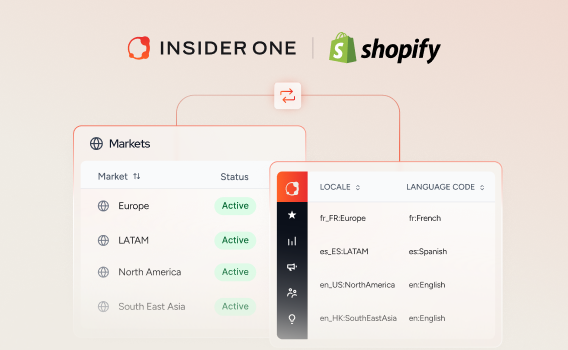
Connecting these systems to a single customer data management layer is what lets prospecting, conversation intelligence, and forecasting tools reference the same customer record instead of three conflicting ones.
How to fix AI sales automation without adding more channel chaos
The fix starts with a CRM audit, not a vendor shortlist. Before evaluating any AI sales automation software, RevOps should confirm that account, contact, and opportunity data is deduplicated, that stage definitions are consistent across teams, and that activity logging is reliable enough to feed a model.
This single step prevents most of the post-purchase disappointment teams report with sales AI tools.
Once the data is sound, prioritize root-cause fixes over adding another channel or tool. If forecasting is the real gap, do not buy a fourth prospecting tool because it had the better demo.
Tie every new AI sales tool to one measurable outcome, whether that is qualified pipeline growth, reduced deal cycle time, or tighter forecast variance, and review it against that single metric before renewal.
Our guide to AI marketing automation tools, trends, and benefits covers the same data-first sequencing for adjacent marketing use cases, and the logic transfers directly to sales.
What to evaluate before choosing a platform
Evaluate a platform against your diagnosed bottleneck, not its feature list. A useful decision framework includes:
- Which specific pipeline stage does this tool improve, and how will you measure it in 90 days
- Does it read and write to your existing CRM natively, or does it require a separate data export process
- Can it act across systems (agentic) or does it only trigger fixed rules (scripted automation)
- What CRM data quality does it require to function accurately, and do you meet that bar today
- Does it consolidate with tools you already run, or does it add another disconnected system to the stack
These criteria matter more as revenue teams scale, because a tool that works cleanly for one region or one segment can break down once it needs to reconcile data across markets, currencies, or business units. Our breakdown of enterprise marketing automation tools applies the same scaling logic, and a strong platform should extend into journey orchestration across sales and marketing rather than sitting in a silo.
Conclusion
The revenue teams that get real value from AI sales automation in 2026 are the ones who diagnose the bottleneck first and check their CRM data before they check a vendor’s roadmap. Tools ranked by feature count will keep multiplying. The teams that win will be the ones buying for their actual gap, on a data foundation solid enough to support it.
To evaluate the fit of Insider One for your use case, book a personalized demo to review your goals, data requirements, and implementation constraints with the Insider One team.
Frequently asked questions
AI sales automation is software that uses artificial intelligence to handle specific revenue tasks, including prospecting, conversation analysis, lead scoring, and forecasting. Rather than replacing reps, it removes manual work from a defined pipeline stage so teams can focus effort on qualified deals and higher-value conversations.
Agentic AI reasons across multiple systems and takes multi-step action, such as re-prioritizing outreach based on live product usage and CRM signals together. A scripted automation tool triggers one fixed action when a single field changes. The distinction matters because agentic workflows adapt as conditions change; scripts do not.
Predictive scoring and forecasting models are only as accurate as the data feeding them. Duplicate accounts, inconsistent stage names, and missing close dates produce unreliable outputs regardless of how advanced the underlying model is, which is why a data audit should precede any AI sales tool purchase.
Start by naming the specific pipeline bottleneck you are solving, whether it is pipeline generation, deal visibility, or forecast accuracy. Evaluate tools only against that constraint, confirm native CRM integration, and check whether the tool consolidates your stack or adds another disconnected system.
Yes. The bottleneck-first approach and CRM data-readiness check apply regardless of company size. Smaller teams may prioritize consolidation even more heavily, since they have less operational capacity to manage multiple disconnected point solutions and reconcile conflicting AI outputs manually.

Keep Reading
4 min.

Chris Baldwin
3 Feb 2026
8 mins.
Chris Baldwin
8 Oct 2026
8 mins.
Chris Baldwin
8 Oct 2026