

 Platform Overview

 Integration Hub

 Agent One™

 Agent One™ Teams

 Customer Data Management

 Personalization

 Journey Orchestration

 Reporting & Data

 Behavioral Analytics

 Web
Web

 Email
Email

 Site Search

 Conversational CX

 WhatsApp

 Web Push

 InStory

 App
App

 SMS & RCS

 Join the $0 Migration Movement™

 The Insider One Difference

 Compare Vendors

 Switch to Insider One

 Success Story

 Retail & Ecommerce

 Financial Services

 Travel & Hospitality

 Beauty & Cosmetics

 Automotive

 Telecommunications

 Total Economic Impact™ Study

 Blog
Blog

 E-Books & Guides

 Events

 Glossary
7 Ways AI in eCommerce Is Revolutionizing Shopping in 2026

Updated on 7 May 2026
9 min.
Table of Contents
Most Popular
eCommerce was an early adopter of AI, and tools like AI-powered recommendations, smarter search ranking, and scripted chatbots delivered real efficiency gains. But these tools were narrow, reactive, and siloed, and while they made existing processes faster, they rarely changed how shopping actually worked.
2026 is different. Advances in generative AI, real-time data processing, and agentic AI have moved the technology from assistant to decision maker. AI can now reason across complex inputs, better predict likely behavior, and automate decisions across much more of the customer journey. Now personalization, relevance, and speed are the baseline of customer expectations, no longer differentiators. As online sales take a growing share of total retail and margins stay under pressure, automation and optimization have become operationally essential.
This article breaks down seven eCommerce AI trends reshaping the industry in 2026, along with key challenges, best practices, and what the rise of agentic AI means for the future.
7 Ways AI is revolutionizing e-commerce in 2026
1. From personalization to fully individualized commerce journeys
For most of the past decade, personalization meant segmentation: grouping customers into cohorts and serving content based on static rules. It was better than nothing, but it aged the moment customer behavior shifted. AI in 2026 works differently. Instead of placing customers into pre-defined groups, AI continuously interprets real-time signals like browsing behavior, purchase history, stated and inferred intent, timing, and device context. The result is an experience that adapts to each individual in the moment.
Personalization is no longer limited to product recommendations. AI now determines what content a customer sees, what offer is worth extending, what messaging tone is most likely to resonate, and when and where to engage. And it does this while ensuring consistency and relevance across site search, email, messaging, and post-purchase interactions.
Brands that deploy AI-driven ecommerce personalization report measurable lifts in conversion rate, average order value, and customer lifetime value, alongside reduced reliance on blanket promotional spend. Being understood (instead of just “marketed to”) drives the kind of engagement that no discount can replicate.
2. Intent-aware search and discovery becomes the core conversion engine
Traditional keyword search was transactional: a customer typed something in and got the closest lexical match in return. However, it is still a long way to go to understand what people actually want based on what they type. AI-powered search in 2026 closes that gap. By combining behavioral context, historical purchase data, and situational signals, AI understands why a customer is searching and can enable predictive discovery, surfacing relevant products or bundles before customers have fully articulated their needs.

What’s changed with AI is that search, recommendations, and merchandising are increasingly unified as a single system, making the entire discovery experience more intelligent over time. The business impact is substantial: faster paths to purchase, lower bounce rates, reduced cart abandonment, and search that functions as a primary revenue driver rather than a navigation tool.
3. Conversational commerce becomes a primary shopping interface
The scripted chatbot era is fading, and what’s emerging in 2026 is fundamentally different: AI-powered shopping assistants that persist across sessions, remember context, and engage in genuine natural language dialogue. And these assistants aren’t confined to a chat window. They’re embedded throughout the shopping experience on product pages, in cart flows, and across messaging channels, supporting discovery, decision-making, checkout, and post-purchase engagement.
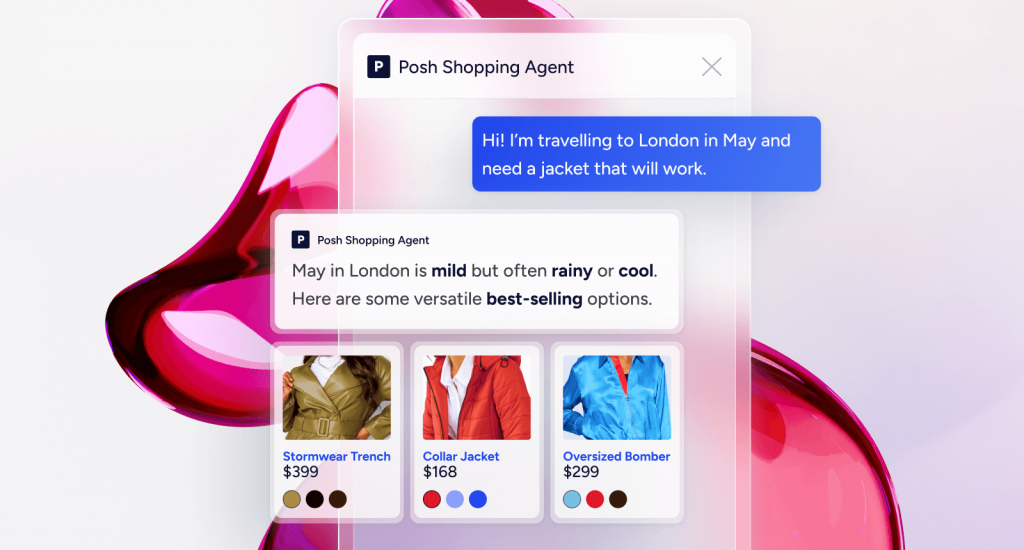
This combination of memory, context awareness, and natural language understanding means these systems can handle complex, high-consideration purchases that previously required human support. The outcomes are measurable with higher conversion rates on complex SKUs, improved customer satisfaction scores, and meaningful reductions in support ticket volume.
4. Dynamic pricing and promotions become always-on revenue engines
Pricing and promotional strategy used to be manual and time-delayed, with calendar-driven promotions, sporadically monitored competitors, and markdowns that often eroded margin unnecessarily. In 2026, AI has changed the speed and intelligence of this process. Pricing systems now continuously analyze demand signals, inventory, competitive data, and individual customer value, making decisions in real time.
Unlike earlier systems that optimized only for the short-term transaction, AI in 2026 balances immediate revenue with long-term profitability, so a high-lifetime-value customer isn’t trained to wait for a discount, and clearance strategies protect margin rather than destroy it. The impact shows up across the P&L: improved gross margins, faster inventory turnover, and a significant reduction in unnecessary promotional spend and discounting.
5. Multimodal shopping goes from niche to everyday (visual, voice, natural language)
The assumption that shoppers will describe what they want in a precise text query has always been a limitation of e-commerce, especially on mobile, where typing is friction-heavy, and intent is often visual. Multimodal AI removes that constraint: Visual search lets customers upload an image and find matching products instantly; voice commands allow hands-free discovery; and conversational interfaces in a natural language handle queries that don’t fit neatly into a search box. Each modality captures intent (that text alone misses) and feeds that signal back into the personalization layer.

Emerging AR experiences are adding another dimension: the ability to visualize products in context before purchasing. A customer who can see how a sofa looks in their living room is more likely to buy an item (and less likely to return it). The combination of reduced discovery friction, higher purchase confidence, and lower return rates aligns eCommerce with real-world shopping behavior.
6. Predictive commerce overtakes purely reactive operations
Traditional eCommerce operations were reactive. Brands didn’t know they had a stockout until a customer hit an empty shelf or a demand surge until orders backed up in the warehouse. Predictive AI inverts that model. By analyzing historical demand patterns, external signals, and real-time behavioral inputs, AI forecasts what customers will want before they want it, then coordinates inventory, fulfillment, and supply chain decisions accordingly. Practical applications include preventing stockouts on high-velocity SKUs, optimizing delivery promise accuracy, and right-sizing warehouse labor ahead of demand spikes.
The business impact is threefold: lower operational costs, higher service levels, and stronger customer trust. When product availability is accurate, delivery promises are kept, and fulfillment is fast, customers are more likely to return, and brands are better positioned to protect margin.
7. Fraud prevention evolves into a broader focus on protecting customer trust
For years, fraud prevention operated in tension with customer experience. Aggressive filters caught bad actors but also blocked legitimate customers with declined transactions, unnecessary authentication steps, and checkout friction that eroded confidence and conversion. AI in 2026 has resolved much of that tension. Modern fraud systems use behavioral analysis, device fingerprinting, and transaction context to assess risk dynamically and in real time, allowing low-risk transactions to pass through seamlessly and suspicious ones to get flagged.
The shift from “stopping fraud” to “protecting legitimate customers” is more than semantic. Fewer false positives mean higher checkout approval rates, fewer support escalations, and an experience that builds trust rather than erodes it. And as AI systems accumulate behavioral data over time, their accuracy improves, making fraud prevention a compounding capability, not a static cost center.
Benefits of AI in e-commerce
AI adoption in e-commerce directly affects revenue growth, cost structure, and customer experience quality. Here’s where AI delivers the most value:
24/7 customer support: AI handles inquiries around the clock, reducing response times and support costs while maintaining experience quality.
Hyper-personalization: Tailored recommendations, content, and offers across every channel drive higher conversion rates and stronger long-term loyalty.
Cart recovery and sales optimization: AI platforms proactively identify at-risk shoppers and engage them with relevant messages at key moments, recovering revenue that would otherwise be lost.
Operational efficiency and scalability: Routine tasks are automated, and systems scale without proportional increases in headcount (which is critical during peak periods).
Data-driven insights: Behavioral analysis surfaces patterns across the customer journey, enabling smarter decisions that improve marketing performance, reduce excess inventory, and increase merchandising effectiveness.
Enhanced trust and security: Real-time fraud detection reduces financial losses and protects the checkout experience for legitimate customers.
Challenges of AI implementation in eCommerce
The opportunity is real, but so are the obstacles. Data quality and fragmentation are among the most common barriers because AI is only as effective as the data it learns from. Adding to this is that siloed systems amplify these gaps rather than fix them. Privacy, consent, and regulatory compliance are non-negotiable, so navigating GDPR, CCPA, and an evolving AI regulatory landscape must run alongside any personalization strategy.
Organizational readiness for AI is consistently underestimated. Since AI-driven decision-making changes how teams operate, the team needs to invest in change management, not just new technology. Measuring ROI adds further complexity, especially when AI systems operate continuously and autonomously. Because these systems are always running and constantly improving, it can be difficult to isolate what’s driving results and quantify the full impact over time.
Best practices for implementing AI in e-commerce
Getting AI right is less about choosing individual tools and more about building the right foundation. Define clear goals before deploying as the data requirements and success metrics look different depending on whether you want to improve customer experience, increase revenue, or drive operational efficiency. Equally important as clear objectives is the quality of the data powering these systems. AI performs best when it draws from unified, well-governed data across eCommerce platforms, marketing channels, and customer touchpoints.
Implementation should also include continuous evaluation as AI systems require ongoing monitoring, testing, and optimization to maintain accuracy and business value over time. Design for privacy from the start, embedding consent and compliance into how systems are built rather than adding it afterward. Finally, phased rollouts allow teams to test models in controlled environments, refine performance, and support change management across the organization before scaling AI more broadly.
From automation to autonomy: The rise of agentic AI in e-commerce
Most AI in e-commerce today still operates within defined tasks: a recommendation system here, a pricing algorithm there, a fraud filter at checkout. Agentic AI commerce changes this. These goal-driven systems don’t just execute tasks; they reason, they learn, and they act autonomously. An agentic system doesn’t just personalize the homepage; it can help orchestrate personalization, search, promotional strategy, and post-purchase engagement as a continuously learning system.
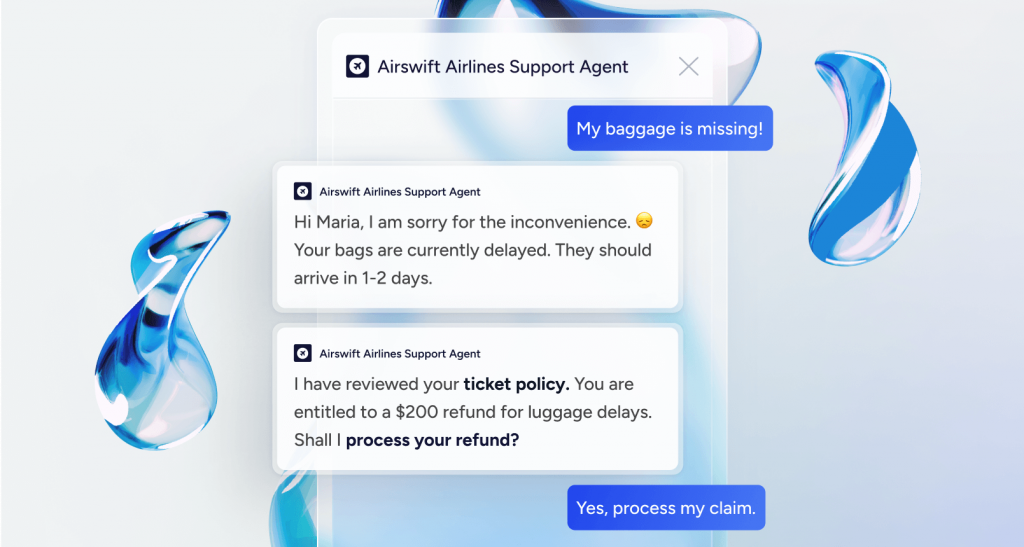
For eCommerce teams, the implication is significant. Human roles shift from operators to strategists, from configuring AI systems to setting objectives, evaluating outcomes, and making judgment calls that AI isn’t equipped to make. This creates a compounding competitive advantage: systems that continuously learn from expanding datasets across channels and time improve far more quickly than those repeatedly rebuilt from scratch.
How Insider One powers AI-driven eCommerce at scale
Succeeding in this environment requires more than a collection of AI tools. Point solutions for personalization, search, pricing, and fraud generate siloed intelligence that can’t compound. What’s needed is a purpose-built AI platform for ecommerce that unifies those capabilities into a single, continuously learning system that gets smarter across every touchpoint with every interaction.
This is what Insider One is built for. As an AI-powered customer engagement platform for mid-market to enterprise brands, Insider One unifies personalization, journey orchestration, engagement, and optimization across channels, giving your team a single place to manage the full customer lifecycle. The outcomes are measurable: higher conversion rates, reduced operational costs, improved customer satisfaction, and faster time-to-value than managing multiple disconnected point solutions.
Ready to see what that looks like for your brand? Book a demo or take a platform tour to see Insider One in action.
FAQs
AI has moved from a supporting tool to a decision-maker, reasoning across complex inputs, acting autonomously across the customer journey, and reshaping everything from search and personalization to pricing and fulfillment.
The highest-impact use cases include individualized personalization, intent-aware search and discovery, conversational commerce, dynamic pricing, multimodal shopping, predictive operations, and AI-driven fraud prevention.
AI continuously interprets real-time signals (browsing behaviour, purchase history, intent, and context, for example) to deliver individualised content, offers, and messaging across all channels. This helps customers feel understood rather than marketed to.
AI continuously interprets real-time signals (browsing behaviour, purchase history, intent, and context, for example) to deliver individualised content, offers, and messaging across all channels. This helps customers feel understood rather than marketed to.
Yes. Brands using AI-driven personalization, smarter search, and autonomous pricing report measurable lifts in conversion rate, average order value, and customer lifetime value, alongside reduced reliance on blanket promotional spend.
The most common barriers are data quality and fragmentation, privacy and regulatory compliance, organizational readiness, and the complexity of measuring ROI when AI systems operate continuously and autonomously.
Agentic AI orchestrates personalization, search, marketing, and operations as a unified, self-optimizing system, which shifts human roles from operators to strategists and compounds competitive advantage over time.

Keep Reading
4 min.

Chris Baldwin
3 Feb 2026
8 mins.
Chris Baldwin
8 Oct 2026
8 mins.
Chris Baldwin
8 Oct 2026