

 Platform Overview

 Integration Hub

 Insider One AI™

 Customer Data Management

 Personalization

 Journey Orchestration

 Reporting & Data

 Behavioral Analytics

 Web
Web

 Email
Email

 Site Search

 Conversational CX

 WhatsApp

 Web Push

 InStory

 App
App

 SMS & RCS

 Join the $0 Migration Movement™

 The Insider One Difference

 Compare Vendors

 Switch to Insider One

 Success Story

 Retail & Ecommerce

 Financial Services

 Travel & Hospitality

 Beauty & Cosmetics

 Automotive

 Telecommunications

 Total Economic Impact™ Study

 Blog
Blog

 E-Books & Guides

 Glossary
How Agentic AI Changes Customer Journey Orchestration

Updated on 16 Jun 2026
9 min.
Table of Contents
- What is agentic AI in customer journey orchestration?
- Why agentic AI in customer journey orchestration matters.
- How agentic AI for customer journey orchestration works.
- Agentic AI orchestration examples across industries.
- Governance and safety for autonomous customer actions.
- How Insider One powers agentic customer journey orchestration.
- FAQs
Most Popular

Summary
Agentic AI orchestrates customer journeys by understanding context, planning actions, and executing across channels autonomously within your guardrails. It adapts journeys in real time using live data rather than fixed rules, keeps every decision within brand, compliance, and margin policies, and logs all actions for governance and optimization.
Most customer journey orchestration tools execute predefined paths. They automate what you’ve already mapped, but they can’t adapt when customers behave unpredictably. Agentic artificial intelligence (AI) in customer journey orchestration changes this by letting AI agents perceive customer context, reason about the best next action, and execute autonomously within the guardrails you set. Instead of managing every possible branch, you define outcomes and policies, and the agent handles the rest in real time.
This guide explains how agentic orchestration works, why it matters for enterprise marketing and customer engagement teams, and how to implement it without losing control. You’ll learn the difference between rule-based orchestration and agentic execution, see real-world examples across ecommerce, financial services, and travel, and understand the governance frameworks that make autonomous customer actions safe at scale.
We’ll also show you how Agent One™, Insider One’s suite of purpose-built agents for customer engagement, powers agentic orchestration with unified data, policy enforcement, and full traceability across every channel.
What is agentic AI in customer journey orchestration?
Most teams use “journey orchestration” to describe drag-and-drop workflow builders. These tools automate predefined paths, but they still require you to anticipate every branch. If a customer does something unexpected, they hit a dead end or get a generic fallback.
Agentic AI changes this. Instead of following a rigid map, an AI agent observes the customer’s current state, reasons about the best next step, and acts, all in real time.
| Capability | Journey mapping | Journey orchestration | Agentic orchestration |
| Primary function | Visualization | Execution | Decisioning and execution |
| Logic source | Human intuition | Predefined rules | AI reasoning |
| Adaptability | None | Limited to branches | Real-time planning |
| Human role | Designer | Architect of logic | Architect of policy |
The agent operates on a continuous loop. It perceives the customer’s state from your customer data platform (CDP), reasons about the best action given your business objectives and constraints, then calls the appropriate channel to execute. This loop repeats with every new event.
Autonomy exists on a spectrum:
- Assisted: The agent recommends, but a human approves every action
- Supervised: The agent acts within guardrails, and humans review exceptions
- Autonomous: The agent acts independently within hard policy limits
Here’s a quick test: if your current system can’t adapt a journey mid-flight based on an event it wasn’t explicitly programmed to handle, you have orchestration, not agentic orchestration.
Why agentic AI in customer journey orchestration matters.
Rule-based journeys break when customer behavior diverges from the paths you anticipated. The result is generic experiences or manual intervention that doesn’t scale.
Agentic AI shifts the focus from managing paths to managing outcomes:
- Acquisition: Agents adjust channel mix and timing based on real-time engagement, reducing wasted spend on non-responders
- Activation: Onboarding adapts to user progress rather than following a fixed cadence
- Retention: Churn signals trigger proactive outreach with offers calibrated to customer value and margin constraints
- Expansion: Cross-sell recommendations consider inventory, margin, and affinity simultaneously
This approach introduces operational complexity. Teams with relatively few active journeys and low event volume may not see enough lift to justify the governance overhead. The payoff scales with journey complexity and customer heterogeneity.
How agentic AI for customer journey orchestration works.
Most orchestration failures trace back to missing context, conflicting actions across channels, or decisions that violate business rules. Agentic architectures address these by separating concerns into distinct layers.
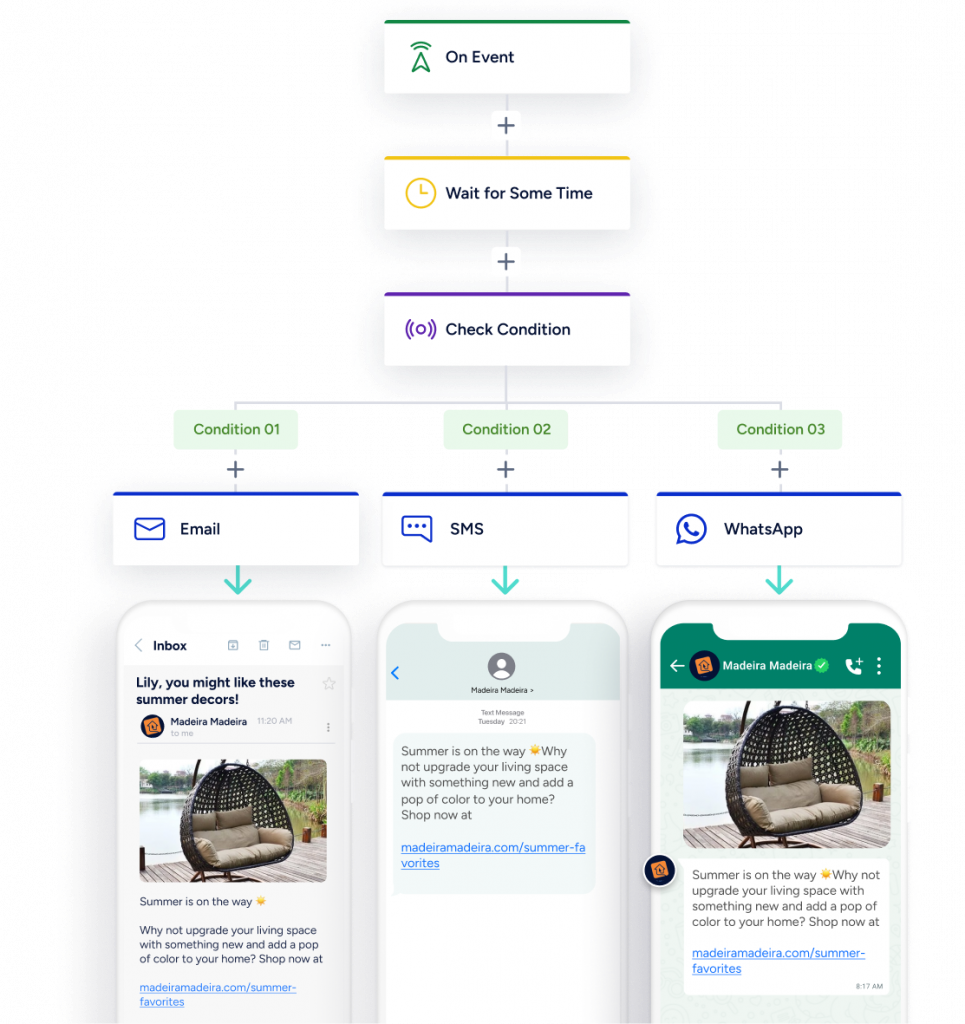
The system follows a lifecycle:
- Perceive: The agent ingests real-time events and profile data from the CDP
- Reason: A planner decomposes the goal, evaluates constraints, and selects the best action
- Act: The execution layer calls the appropriate channel and logs the outcome
- Learn: The outcome feeds back into the profile and model
Memory and identity resolution.
Agents without unified memory send contradictory messages. A discount offer arrives after the customer already purchased. Memory prevents this.
Identity resolution uses deterministic matching on known identifiers like email and phone, plus probabilistic stitching for anonymous sessions. Teams with high anonymous traffic need probabilistic resolution; teams with mandatory login can rely on deterministic only.
Beyond profile attributes, agents need access to recent interaction history. Vector stores enable retrieval of relevant context, like a complaint made in the past, at the moment of inference.
Memory must respect opt-outs and right-to-erasure requests immediately. Suppressed identifiers should be excluded from agent context entirely, not just from send lists.
Decision planner and policy guardrails.
An agent optimizing for conversion without constraints will offer the deepest discount to every customer. Policies shape agent behavior toward sustainable business objectives.
The planner functions as a reasoning engine, receiving a high-level objective like “recover this cart” and breaking it into sub-tasks: check inventory, evaluate margin floor, select channel, compose message, schedule send.
Constraints fall into two categories:
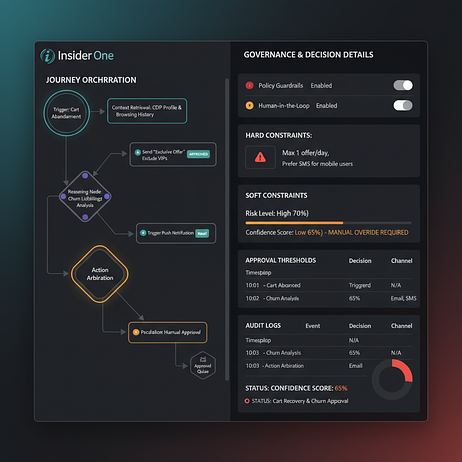
- Hard constraints: Actions the agent must never take, like contacting a suppressed user or exceeding a discount cap
- Soft constraints: Preferences the agent should respect but can override with justification, like preferring email over short message service (SMS)
Policies can be expressed as rules, decision tables, or learned from historical outcomes. Teams in regulated industries often start with explicit rules. Encoding too many soft constraints as hard constraints makes the agent overly conservative.
Execution layer and channel actions.
A customer might be eligible for a cart recovery email, a loyalty SMS, and a retargeting ad simultaneously. Without arbitration, all three fire at once.
The execution layer evaluates competing actions and selects based on priority, recency, and customer preference. You define a global contact cap and quiet hours to prevent messages from landing at inconvenient times.
Suppression rules prevent actions that conflict with recent events. Don’t send a win-back offer to someone who purchased yesterday. Suppression lists must sync in real time across all systems.
| System | Actions |
| Send, suppress | |
| SMS/WhatsApp | Send, suppress |
| Ad platforms | Add to audience, remove |
| Support | Create ticket, escalate |
Human-in-the-loop and escalation.
“Agentic” doesn’t mean unsupervised. Most enterprise deployments start with supervised autonomy.
| Action type | Risk level | Approval required |
| Send marketing email | Low | None |
| Offer discount above threshold | Medium | Queue for review |
| Cancel subscription | High | Human approval |
Escalation triggers include confidence below threshold, actions that would exceed budget, negative customer sentiment, or compliance flags. Requiring approval for too many actions defeats the purpose. Start with irreversible, high-stakes actions and expand autonomy as trust builds, and if you want to see what this architecture looks like in a real enterprise setup, request a demo.
Monitoring and continuous optimization.
How do you know if the agent performs better than the rule-based journey it replaced?
Track these metric types:
- Task success: Did the agent complete the action?
- Goal completion: Did the customer take the desired action?
- Policy compliance: Did the agent stay within guardrails?
Use holdout groups to measure incremental lift. A portion of customers receives the rule-based journey as a control. Compare conversion and revenue per user against the agentic cohort.
Every agent decision should be traceable. Log the input context, the planner’s reasoning, the action taken, and the outcome. This enables debugging and provides the audit trail compliance teams require.
Agentic AI orchestration examples across industries.
The perceive-reason-act loop applies across industries, but triggers, constraints, and actions differ.
Ecommerce cart recovery.
Rule-based cart recovery applies fixed timing and discounts to everyone, even with average cart abandonment near 70%. High-value customers get the same treatment as discount-seekers, exactly the gap retail AI agents close.
The agentic flow:
- Trigger: Cart abandoned above threshold
- Perceive: Agent retrieves customer lifetime value (CLV) segment, discount history, channel preference, margin on items
- Reason: Planner evaluates whether a discount is needed, selects tier based on margin floor, chooses channel based on engagement history
- Act: Sends personalized message and logs action
- Learn: Outcome feeds back into CLV model
The agent won’t offer a discount that drops margin below the floor, even if the propensity model predicts higher conversion with a deeper discount. If you want to pressure-test this against your own cart recovery rules and margin floors, start with the product demo hub.
Financial services churn prevention.
Financial services firms can’t offer retention incentives without suitability checks. Certain actions require human approval regardless of model confidence.
- Trigger: Churn propensity crosses threshold
- Perceive: Agent retrieves account tenure, product holdings, recent interactions, consent status
- Reason: Planner evaluates eligible offers based on suitability rules and flags high-value accounts for review
- Act: Agent queues recommendation for relationship manager approval
- Learn: Outcome informs propensity model
Accounts above a value threshold or with recent complaints always route to human review.
Travel disruption rebooking.
A flight cancellation affects a large number of passengers. Manual rebooking creates long queues.
- Trigger: Flight status application programming interface (API) reports cancellation
- Perceive: Agent retrieves affected passengers, loyalty status, onward connections
- Reason: Planner prioritizes passengers with tight connections and high loyalty
- Act: Booking agent rebooks, notification agent confirms, compensation agent applies voucher if service-level agreement (SLA) breached
- Learn: Resolution time feeds back into prioritization
Separate agents handle rebooking, notification, and compensation, but share context through the unified profile. To see how multi-agent handoffs and shared memory work in practice, request a demo.
Governance and safety for autonomous customer actions.
The question that blocks adoption: “What if the agent does something wrong?”
Governance makes autonomy safe enough to scale:
- Policy stack: Hard constraints for legal and compliance, soft constraints for brand and margin, learned preferences over time
- Autonomy matrix: Map action types to approval requirements based on risk and reversibility
- Audit trail: Every decision logged with input context, reasoning, action, and outcome
- Explainability: Ability to answer “why did the agent do this?” for any action
Governance isn’t a one-time setup. Policies evolve as business rules change and agents demonstrate reliability.
If your compliance team requires human approval for every customer-facing action, agentic automation won’t deliver value yet. Start with internal-facing agents for segment recommendations or content generation to build trust first. If you want a concrete starting point for policy design and traceability, explore the product demo hub.
How Insider One powers agentic customer journey orchestration.
Insider One provides a unified platform for agentic execution:
| Architecture layer | Insider One capability |
| Agent framework | Agent One™, Insider One’s suite of purpose-built agents for customer engagement |
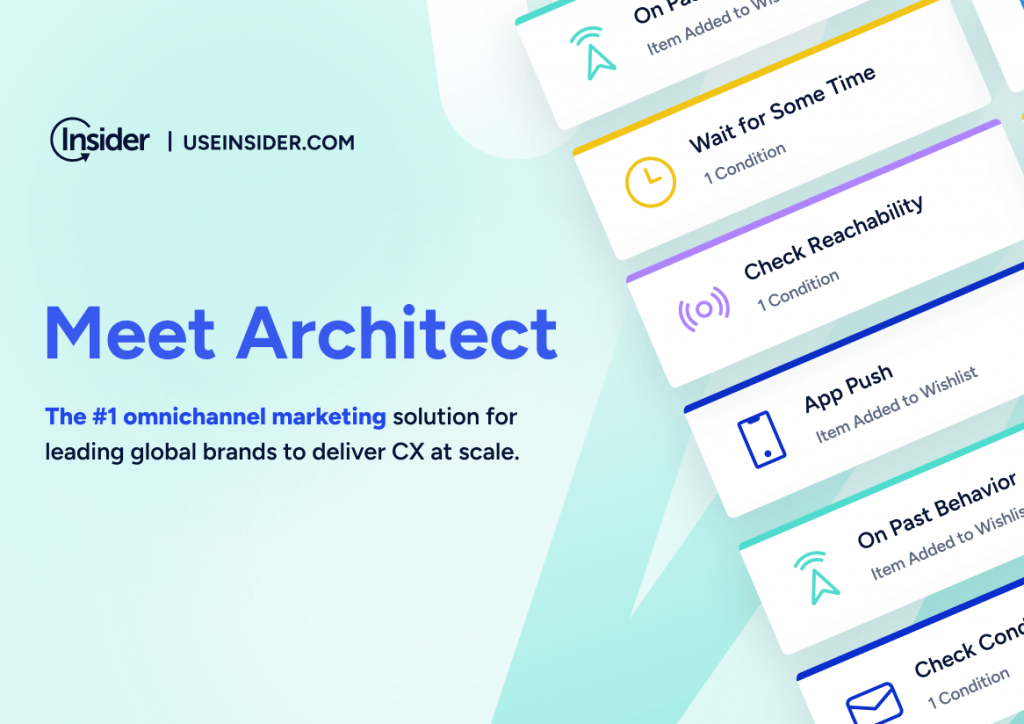
| Journey engine | Architect, Insider One’s customer journey orchestration solution |
| Data layer | Unified Customer Database with real-time identity resolution |
| Policy engine | Configurable guardrails, consent management, approval workflows |
| Execution | Native channels plus integrations |
| Observability | Built-in analytics, A/B testing, audit logging |
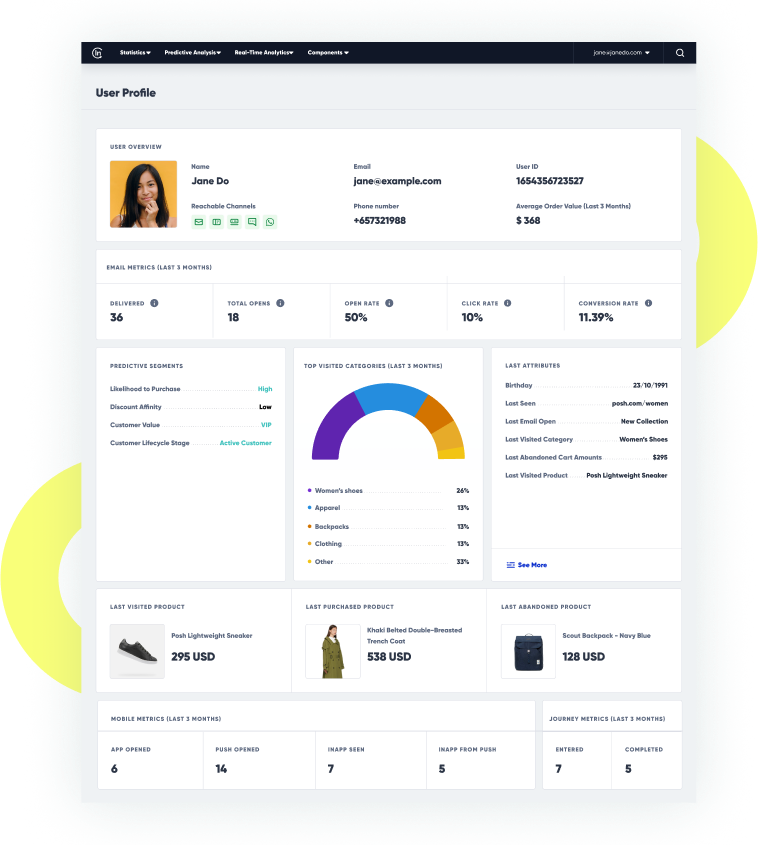
Agent One™ operates within the policy framework you define. Shopping Agent respects margin floors and inventory constraints. Support Agent escalates based on confidence thresholds. Insights Agent surfaces anomalies before they become problems.
Teams can go live quickly, with predictable monthly tracked users (MTU)-based pricing and no hidden charges for data or storage.
If you’re ready to move from mapped journeys to governed autonomy, request a demo to see Agent One™ and Architect, Insider One’s customer journey orchestration solution, run the perceive-reason-act loop on your channels and policies.
FAQs
Journey orchestration executes predefined paths with branching logic designed by humans. Agentic orchestration adds AI agents that perceive context, reason about goals, and decide actions autonomously within policy constraints.
Encode consent and suppression rules as hard constraints in the policy engine. The agent cannot access or act on data for users who have opted out, and every action is logged for audit.
Pilots typically run for several weeks. Full integration across multiple journeys takes a few months, depending on data complexity and governance requirements.
Yes. Agentic orchestration layers on top of existing CDPs, email service providers (ESPs), and ad platforms through application programming interfaces (APIs) and webhooks. The key requirement is real-time data access and bidirectional integration for action execution.
Use holdout groups that receive rule-based journeys as a control. Compare revenue per user, conversion rate, and guardrail metrics between the agentic cohort and the control to isolate incremental lift.

Keep Reading
7 min.

Muharrem Derinkok
4 Jun 2026
11 min.

Chris Baldwin
2 Jun 2026
4 min.
Chris Baldwin
3 Feb 2026