

 Platform Overview


 Integration Hub


 Agent One™


 Agent One™ Teams


 Customer Data Management


 Personalization


 Journey Orchestration


 Reporting & Data


 Behavioral Analytics


 Web


 Email


 Site Search


 Conversational CX


 WhatsApp


 Web Push


 InStory


 App


 SMS & RCS


 Join the $0 Migration Movement™


 The Insider One Difference


 Compare Vendors


 Switch to Insider One


 Success Story


 Retail & Ecommerce


 Financial Services


 Travel & Hospitality


 Beauty & Cosmetics


 Automotive


 Telecommunications


 Total Economic Impact™ Study


 Blog


 E-Books & Guides


 Events


 Glossary
Hande Cilingir on Agentic AI and the Future of Customer Engagement at OMR 2026

Updated on 26 Nov 2026
10 mins.
Table of Contents
- Hande Cilingir discusses the future of agentic AI at OMR Hamburg
- Why agentic AI is becoming important for marketing
- What OTTO's transformation reveals about retail technology
- Why first-party data and connected systems matter for agentic AI
- How OTTO is building toward autonomous customer engagement
- Why leadership remains critical as customer engagement becomes autonomous
- What marketing leaders should build before adopting agentic AI
- Building the future of customer engagement with Insider One
Most Popular
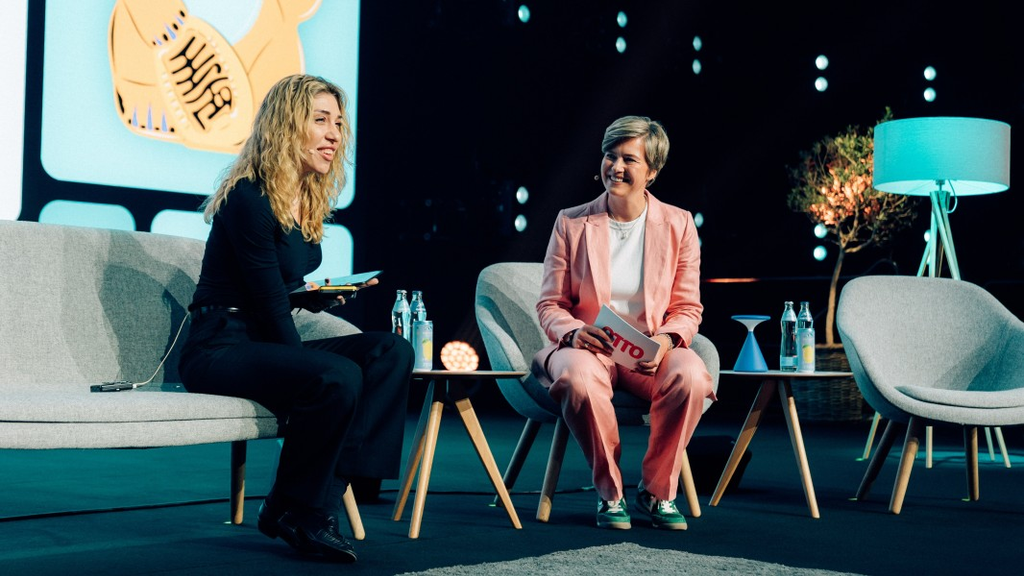
Hande Cilingir discusses the future of agentic AI at OMR Hamburg
AI is creating new opportunities for marketing teams, but adopting AI tools is only the beginning. For businesses to achieve meaningful results, they need the right data, technology architecture, and decision-making processes to turn AI capabilities into better customer experiences.
At OMR 2026 in Hamburg, Hande Cilingir, Co-Founder and CEO of Insider One, explored this challenge during a session with Henrieke Hentschel, Division Manager for Customer, CRM & Marketing Controlling at OTTO, a leading European marketplace and Insider One customer.
The discussion focused on how retailers can move toward autonomous customer engagement and what they need to build before AI can deliver value at scale. OTTO serves approximately 12 million customers and represents more than 6,000 partner brands, making its transformation an important example of the challenges large retailers face as their businesses evolve.
Cilingir highlighted a key prediction during the session: 60% of AI’s value creation in sales and marketing will come from Agentic AI. She explained why businesses need to look beyond content generation and isolated automation toward intelligent systems that can plan, execute, and optimize customer engagement.
The conversation also explored OTTO’s technology transformation, the importance of first-party data, and the role of leadership in an increasingly autonomous marketing environment.
Why agentic AI is becoming important for marketing
During her session at OMR, Cilingir distinguished Agentic AI from the AI applications that have dominated much of the marketing conversation so far.
Generative AI helps create content, while conversational AI enables interactions through natural language. Agentic AI extends these capabilities by enabling systems to plan tasks, make decisions, take actions, and optimize processes toward defined objectives.
For customer engagement, this creates an opportunity to connect activities that have traditionally operated separately. Instead of simply recommending an audience or generating a message, AI systems can increasingly help determine which action to take, execute it, and use the results to inform subsequent decisions.
Cilingir’s perspective is that this shift represents a broader change in how marketing operates. Rather than focusing exclusively on automating individual tasks, businesses can work toward systems that continuously optimize customer journeys against specific business outcomes.
However, she also emphasized that these capabilities depend on having the right foundations in place. Without reliable data, connected systems, and a clear understanding of customer needs, greater autonomy may simply amplify existing problems.
What OTTO’s transformation reveals about retail technology
Cilingir invited Henrieke Hentschel to share OTTO’s experience because the retailer’s challenges reflect issues facing many large ecommerce and retail businesses.
OTTO has evolved over time into one of Europe’s leading marketplaces, serving millions of customers and working with thousands of partner brands. Supporting this scale requires technology capable of handling a broad product assortment, different customer expectations, and complex marketing operations.
Hentschel explained that OTTO’s diverse products and services create a wide range of customer expectations. Its evolving MarTech ecosystem can also make it challenging to coordinate the entire customer journey.
For Cilingir, this illustrates an important distinction: achieving effective AI-driven customer engagement is not simply a matter of adding more technology. Businesses must ensure their existing systems can work together and support a consistent understanding of each customer.
Retailers need to consider how customer information moves between platforms, how engagement decisions are made, and whether their technology can support new use cases as their business requirements change.
OTTO’s experience demonstrates why technology transformation requires a deliberate approach that accounts for both current operational needs and future ambitions.
Why first-party data and connected systems matter for agentic AI
One of the central themes of the OMR discussion was the importance of data ownership and consolidation.
Hentschel explained that first-party data and ownership are essential for relevance, trust, and decision-making. Fragmented systems make it harder to deliver a seamless customer experience, which is why OTTO worked toward a more connected technology setup.
Cilingir’s discussion highlighted how these foundations become even more important as businesses move toward autonomous customer engagement.
AI systems need access to reliable information about customer preferences, behavior, and interactions to make relevant decisions. If customer data remains scattered across disconnected platforms, businesses may struggle to build a complete picture of their customers or coordinate actions consistently.
A connected customer data management strategy can help businesses unify customer information and make it more actionable across marketing activities.
Data consolidation also helps organizations understand which systems and processes genuinely support their objectives. As Hentschel noted during the discussion, the customer experience is only as strong as its weakest touchpoint.
This means data fragmentation is not merely an internal technology issue. It can also affect the relevance, consistency, and reliability of customer interactions.
How OTTO is building toward autonomous customer engagement
Cilingir discussed OTTO’s partnership with Insider One as part of its efforts to build the foundations for more autonomous customer engagement.
The objective was not simply to introduce another marketing tool, but to develop a more connected ecosystem that could support OTTO’s evolving requirements and future AI use cases.
Hentschel described the implementation as smoother than expected and explained that OTTO is taking an iterative approach to its transformation. The team is building its foundation, exploring new use cases, and learning how the organization can develop further over time.
This measured approach is important because autonomous customer engagement is not a single feature that businesses can activate without preparation. It requires connected data, appropriate workflows, clear objectives, and a technology foundation that can evolve alongside business needs.
At Insider One, the broader vision is to help businesses move beyond individual AI-assisted tasks toward connected systems that can plan, create, execute, and optimize customer journeys.
With AI-powered customer engagement, businesses can work toward connecting customer intelligence with marketing execution and decision-making across channels.
For retailers such as OTTO, building these capabilities progressively allows teams to develop their infrastructure, evaluate new opportunities, and establish the conditions needed for greater autonomy.
Why leadership remains critical as customer engagement becomes autonomous
Another important theme in Cilingir’s discussion was the role of leadership.
As AI systems take on more decisions and execution, the responsibility of business leaders does not disappear. Instead, leaders must establish the objectives, priorities, and guardrails that determine how these systems operate.
Cilingir emphasized that successful AI adoption starts with customer problems rather than technology. Businesses need to identify the experiences they want to improve and the outcomes they want to achieve before deciding which AI capabilities to introduce.
This also requires involving teams early in the transformation process. Employees need to understand how their roles may evolve, how decisions will be made, and where human oversight remains necessary.
Hentschel reinforced the importance of human decision-making, highlighting that access to technology alone does not determine success. The quality of the decisions made around that technology remains a key differentiator.
Their discussion also addressed empathy in customer engagement. Hentschel explained that empathy goes beyond polite messaging. It means delivering the right message at the right time, solving customer problems, and creating experiences that make customers feel understood.
AI can help businesses operationalize this principle by using customer insights to inform more relevant interactions. However, organizations must define what a good customer experience looks like and ensure that their technology supports that objective.
The implication for marketing leaders is clear: autonomous systems still need human direction, accountability, and a customer-first purpose.
What marketing leaders should build before adopting agentic AI
The discussion between Cilingir and Hentschel at OMR offers several considerations for businesses preparing for autonomous customer engagement.
Establish a reliable data foundation. Ensure customer information is accurate, accessible, and connected across the systems used to manage engagement.
Consolidate fragmented technology where needed. Review whether existing platforms support consistent customer experiences or create unnecessary complexity across the marketing stack.
Start with customer problems. Identify specific challenges, such as inconsistent messaging, disconnected journeys, or irrelevant offers, before choosing AI applications.
Define objectives and guardrails. Establish the outcomes AI should optimize for and the boundaries within which systems can make decisions.
Adopt an iterative approach. Build the foundation, test relevant use cases, learn from the results, and expand capabilities as the organization becomes ready.
Keep human accountability in place. Ensure leaders and teams remain responsible for the objectives, customer experience standards, and oversight of autonomous systems.
These priorities can help businesses move beyond isolated AI experiments and develop a more sustainable approach to customer engagement.
Building the future of customer engagement with Insider One
The conversation at OMR 2026 highlighted a shift in how businesses need to think about AI. The opportunity extends beyond generating content or automating individual marketing tasks. It lies in building systems that connect customer data, decision-making, and execution around measurable business outcomes.
Cilingir’s discussion with Hentschel demonstrated why this transition requires both technological foundations and organizational alignment. OTTO’s experience illustrates the importance of consolidating systems, learning through implementation, and building toward autonomous customer engagement with a clear direction.
Insider One helps businesses bring customer data, personalization, journey orchestration, and AI-powered capabilities together to support relevant customer experiences across channels.
As AI continues to evolve, businesses that combine connected technology with customer-first leadership will be better positioned to make intelligent decisions and improve engagement over time.
Explore AI-powered customer engagement with Insider One
Request a demo: Discuss your customer engagement goals with our team and discover how Insider One can support your AI strategy. Request a demo.
Take a platform tour: Explore Insider One’s platform and see how its customer engagement capabilities can support personalization, journey orchestration, and AI-powered marketing. Take a platform tour.

Keep Reading
4 min.

Chris Baldwin
3 Feb 2026
9 mins.

Nicolas Algoedt
27 Nov 2026
9 mins.
Chris Baldwin
27 Nov 2026