

 Platform Overview

 Integration Hub

 Agent One™

 Agent One Teams™

 Customer Data Management

 Personalization

 Journey Orchestration

 Reporting & Data

 Behavioral Analytics

 Web
Web

 Email
Email

 Site Search

 Conversational CX

 WhatsApp

 Web Push

 InStory

 App
App

 SMS & RCS

 Join the $0 Migration Movement™

 The Insider One Difference

 Compare Vendors

 Switch to Insider One

 Success Story

 Retail & Ecommerce

 Financial Services

 Travel & Hospitality

 Beauty & Cosmetics

 Automotive

 Telecommunications

 Total Economic Impact™ Study

 Blog
Blog

 E-Books & Guides

 Events

 Glossary
How ChatGPT Apps are Rewriting the Rules of Product Discovery

Updated on 15 May 2026
9 min.
Table of Contents
- Why ChatGPT has become a product discovery channel
- How OpenAI’s shopping features work for merchants
- What determines product ranking inside ChatGPT
- The signals that drive visibility
- Why feed quality becomes a practical requirement
- The discovery-to-conversion gap brands are missing
- Closing the gap: a unified, agent-aware experience layer
- A prioritized action plan for ecommerce and CX teams
- Connect catalog quality to your broader personalization stack
- FAQs
Most Popular


Summary
| ChatGPT is becoming an important shopping discovery channel, where product visibility depends on strong product data, reviews, and structured catalogs rather than ads. Brands that optimize early may gain an advantage, especially since many users still complete purchases on brand websites, making personalized onsite experiences and unified product data strategies increasingly valuable. |
Ecommerce teams have spent years building channel strategy around a stable assumption: shoppers search on Google, browse on social, and convert onsite. That assumption is breaking down.
A growing share of high-intent shoppers now start their purchase journey inside ChatGPT, asking things like “what’s the best running shoe for wide feet under $150” and receiving a curated, sourced shortlist before they have visited a single brand site.
This is a structural change in how product discovery works, and the brands that move earliest to understand the mechanics will hold a real advantage. Getting into ChatGPT results is one challenge; converting the visitors who arrive from there into revenue is a separate one, and it is the part most teams are still under-investing in.
Why ChatGPT has become a product discovery channel
For most of its early life, ChatGPT was a productivity tool, drafting, summarizing, answering factual questions. Shopping happened only incidentally. That changed when OpenAI introduced shopping experiences designed to generate personalized buyer’s guides drawn from indexed product data across the web, giving ChatGPT a structured, commerce-aware output format built specifically for purchase decisions.
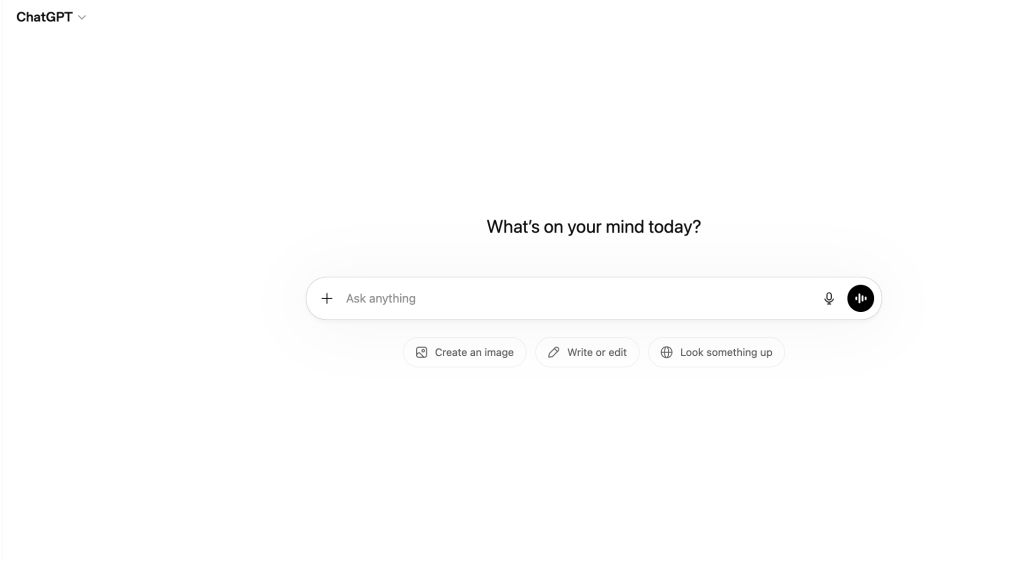
The result is a channel with notably high intent quality. When someone asks ChatGPT for a product recommendation, they have already moved past awareness, they have requirements, constraints, and a near-term decision. For ecommerce teams who have spent years optimizing for traffic volume, the shift toward intent density is worth taking seriously. Fewer visitors with sharper intent can produce comparable or stronger revenue than larger, shallower traffic pools.
How OpenAI’s shopping features work for merchants
Connecting product catalogs
OpenAI has introduced shopping mechanisms that allow merchants to make structured product feeds eligible for ChatGPT’s commerce outputs. Merchants share structured product data, pricing, inventory, attributes, promotions, and that data becomes eligible to surface inside ChatGPT results.
“Eligible” is the operative word. Not every catalog that submits data will appear, and the specific review criteria are still evolving as OpenAI develops these features. Brands that participate early are likely to benefit from a more established position as the system matures, though the exact competitive dynamics will depend on how OpenAI develops access over time.
Keeping the purchase journey on your own property
Alongside feed integrations, OpenAI has moved toward commerce experiences that route users to the retailer’s own checkout environment rather than through a generic intermediary layer. This matters for two reasons. Brands retain control over the purchase journey rather than ceding it to a third party, and customer data from the transaction flows back to the brand, a distinction that is significant for teams thinking about lifetime value and downstream personalization.
What determines product ranking inside ChatGPT
The signals that drive visibility
ChatGPT’s shopping outputs are not a paid channel in the traditional sense. There is no bid-based placement. Products surface because the model determines they are the most relevant response to a given query.
The signals influencing that determination include relevance to the specific query, review quality and recency, the accuracy of structured data attributes such as price, availability, and specifications, and overall catalog completeness. A product with rich, accurate, current data will consistently outperform a product with thin or stale data, regardless of brand size.
Why feed quality becomes a practical requirement
Feed quality matters most when shoppers ask complex, multi-constraint questions, the kind a real buyer poses, like “waterproof hiking boots, size 11, available within a week, under $200.” The model’s ability to answer accurately depends on how complete and consistent the underlying product data is. Every missing attribute, every out-of-date price, every availability mismatch is an invitation for the model to either omit your product or recommend it incorrectly.
This is where Insider One’s site search and product data infrastructure become an asset rather than a chore. Eureka, our hybrid (lexical + semantic) site search, already requires a clean, structured product catalog with rich attributes, smart variant groups, and intelligent facets. The same catalog quality that makes Eureka return relevant results for a complex onsite query is exactly what helps your products surface inside ChatGPT, same data asset, two compounding returns.
The discovery-to-conversion gap brands are missing
Much of the current conversation around ChatGPT and commerce skips a critical insight: many shoppers who receive a product recommendation from an AI tool do not complete their purchase inside that tool. They click through to the brand’s website. The chat interaction shapes the decision, but the conversion happens on the brand’s own property — which means the onsite experience at the landing moment is the variable that determines whether the sale is won.
Feed optimization alone cannot close this gap. A shopper arriving from ChatGPT is not a cold visitor. They arrive with a specific product in mind, a set of expectations shaped by what the AI told them, and a high degree of purchase intent. If they land on a generic listing page, or if the site serves them the same homepage experience it serves every anonymous visitor, the intent signal earned through catalog investment is wasted.
Closing the gap: a unified, agent-aware experience layer
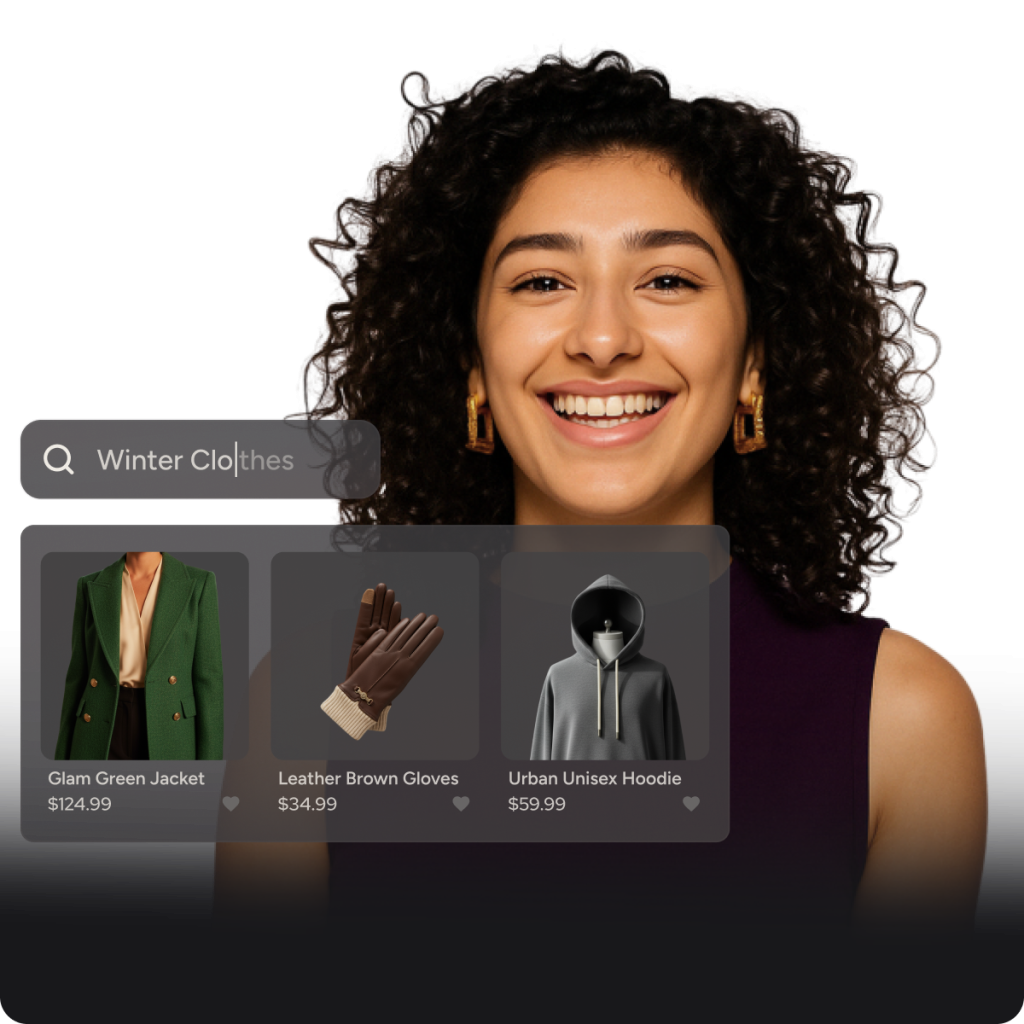
Delivering a relevant onsite experience to a ChatGPT-referred visitor requires connecting capabilities most teams currently run in silos. You need to recognize the visitor’s context immediately, what product they were recommended, what query they came from, whether they have any history with the brand. You need dynamic landing experiences that surface the specific product alongside contextually relevant alternatives. And you need real-time decisioning that adjusts within the visitor’s first few seconds on site.
Adidas worked with Insider One to deliver this kind of context-aware experience and saw a 259% increase in average order value and a 13% conversion rate lift in one month by combining personalized onsite experiences with behavioral data.
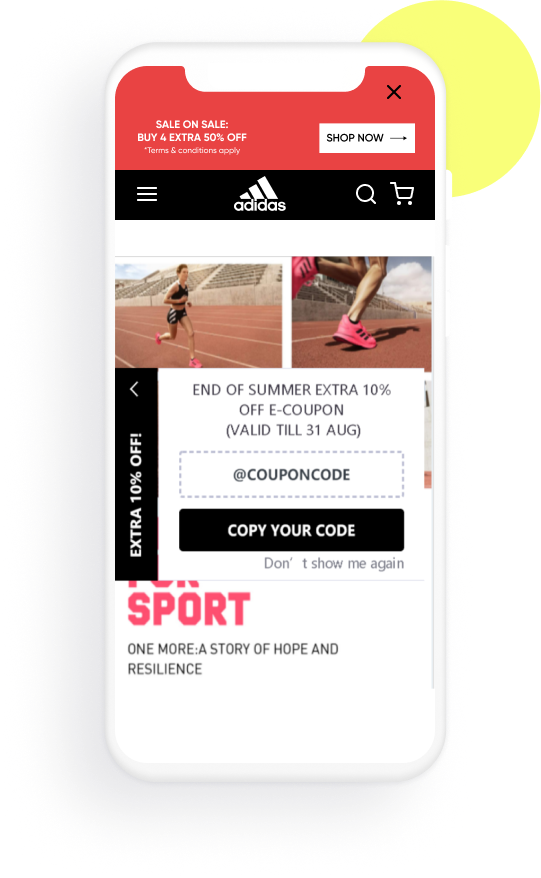
The same principle applies directly to ChatGPT-referred traffic, where the intent signal is especially strong at the moment of arrival.
Insider One’s platform is purpose-built for this kind of real-time, context-aware personalization. Smart Recommender surfaces relevant products dynamically based on behavioral signals and supports collaborative, content-based, and hybrid algorithms with strategy previewing and reusable recommendation strategies across web and app. Architect orchestrates the downstream journey based on where the visitor is in their lifecycle. A first-time visitor and a lapsed customer who arrive from the same ChatGPT recommendation can each receive an experience calibrated to their actual relationship with the brand, rather than a single generic response.
Where Insider One sits in the conversational discovery stack
Insider One is one of the few customer engagement platforms with a native ChatGPT app integration. That means conversational interactions, usage patterns, intent signals, engagement events are captured and activated inside the same unified customer profile that powers your onsite, email, push, WhatsApp, and SMS journeys. There is no conversational data silo to integrate later.
That same unified profile feeds Sirius AI™, our predictive and generative AI layer, and Agent One™, our suite of customer-facing autonomous agents (Shopping Agent, Support Agent) running on web, WhatsApp, Instagram, and Line. The same architecture that lets you act on a ChatGPT-referred shopper also lets you re-engage them with a Shopping Agent the next time they return, regardless of channel.
A prioritized action plan for ecommerce and CX teams
Catalog and feed readiness
Before your products can rank in ChatGPT results, they need to meet a baseline of data quality that most catalogs do not currently achieve at scale. The practical priorities are:
- Complete structured attributes: title, description, category taxonomy, material, size, color, weight, every specification that informs a real purchase decision, not just what fits a standard feed template.
- Real-time inventory signals: availability data updated frequently enough that ChatGPT is not recommending products that are out of stock or mispriced.
- Review syndication: recent, high-quality reviews are a ranking signal. If your review data is not flowing into your product feed, you are competing without one of the most influential inputs the model uses.
- Early participation: engaging with OpenAI’s commerce features as they develop gives brands more time to refine their data and establish visibility before the channel becomes more competitive.
Connect catalog quality to your broader personalization stack
This is where the strategic opportunity becomes clearest. The clean, structured, intent-rich product data you build for ChatGPT visibility is the same data that should power your site search results, your email recommendations, your push notifications, and your AI agents. Feed quality is not a ChatGPT-specific project, it is an infrastructure investment that compounds across every discovery surface your customers use.
Teams that manage product data in isolated, channel-specific pipelines find themselves rebuilding the same hygiene work multiple times. Insider One’s warehouse-native, composable CDP connects bidirectionally to Snowflake, Databricks, Google BigQuery, and Amazon Redshift, so the same product and customer signals that train your agents and personalize your site are governed in one place, not duplicated across point tools.
MadeiraMadeira achieved 52X ROI using Insider One’s Architect for cross-channel journey orchestration, and the same principle of unified data flowing across touchpoints applies directly to catalog quality in an OpenAI-enabled commerce environment.
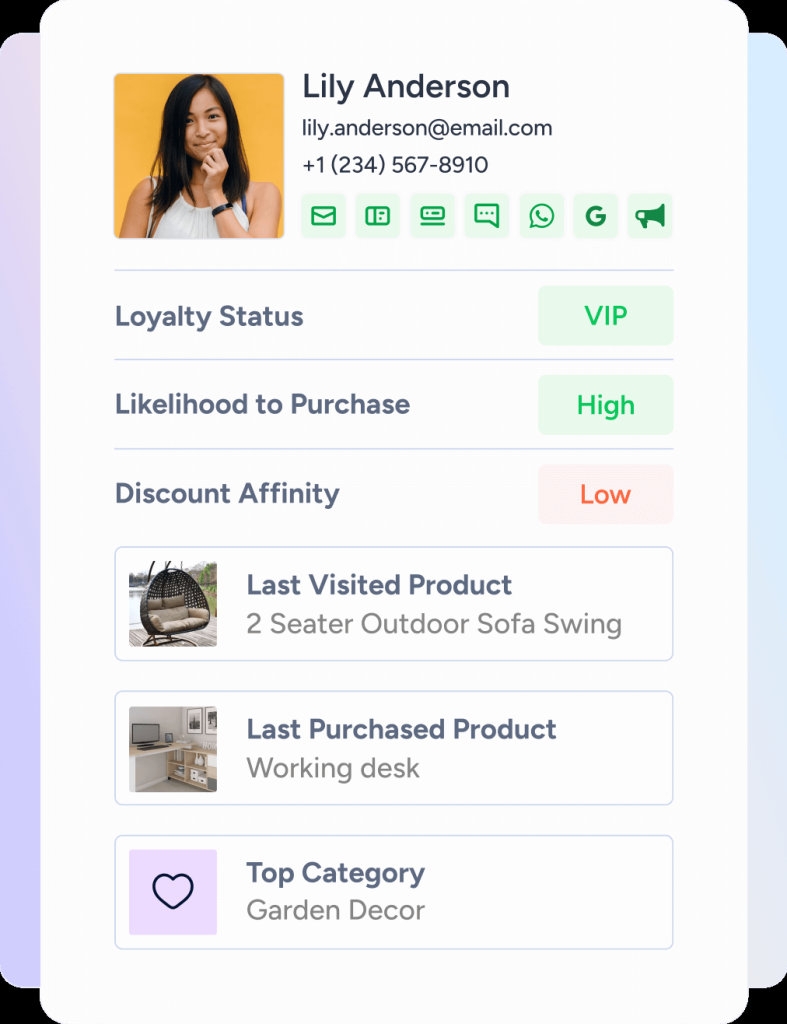
For teams evaluating where AI-powered discovery fits within their broader stack, the AI overview covers how Insider One’s capabilities connect across the customer journey, from initial product discovery through lifecycle engagement. The customer data management layer that underpins this approach is also worth reviewing, since feed quality and customer data quality are increasingly the same problem at scale. The conversational customer experience surface is expanding beyond ChatGPT into other interfaces and agents, and brands that build the underlying data and personalization infrastructure today are positioning for a channel landscape that is still taking shape.
If you want to see how Insider One’s ChatGPT Apps Integration, Smart Recommender, Architect, and Agent One turn live customer data into coordinated, revenue-driving experiences, book a personalized demo to see the exact use cases, decision logic, and growth levers most relevant to your team.
FAQs
No. Participation makes your catalog eligible for inclusion, but it does not guarantee placement. Ranking is shaped by relevance, data quality, review signals, and how well your product attributes match the specific query. Participation is necessary but not sufficient; feed quality is what separates visible catalogs from invisible ones.
Google Shopping ranks products primarily on bid, relevance, and feed quality against a specific keyword. ChatGPT’s shopping outputs are generated by a language model responding to a conversational query, which means it weights attribute completeness, review context, and semantic relevance differently, and it has no paid placement equivalent. The optimization levers overlap partially but are not identical.
Partially, but the gap is more specific than general personalization coverage. ChatGPT-referred visitors arrive with a defined product in mind and expect their onsite experience to reflect that context. Generic personalization rules built for typical traffic patterns do not automatically serve this segment well. The opportunity is in connecting the arrival context to the real-time decisioning that shapes the landing experience.
The cadence depends on how frequently OpenAI’s systems index updated feed data. The practical implication is that stale data does not correct itself instantly, which makes continuous feed maintenance more important than periodic batch updates.

Keep Reading
7 min.

Muharrem Derinkok
4 Jun 2026
11 min.

Chris Baldwin
2 Jun 2026
4 min.
Chris Baldwin
3 Feb 2026