

 Platform Overview

 Integration Hub

 Sirius AI™

 Customer Data Management

 Personalization

 Journey Orchestration

 Reporting & Data

 Behavioral Analytics

 Web
Web

 Email
Email

 Site Search

 Conversational CX

 WhatsApp

 Web Push

 InStory

 App
App

 SMS & RCS

 Join the $0 Migration Movement™

 The Insider One Difference

 Compare Vendors

 Switch to Insider One

 Success Story

 Retail & Ecommerce

 Financial Services

 Travel & Hospitality

 Beauty & Cosmetics

 Automotive

 Telecommunications

 Interactive Platform Tour

 Blog
Blog

 E-Books & Guides

 Glossary
5 Features to Demand from Your Next Journey Orchestration Solution

Updated on 30 Mar 2026
8 min.
Table of Contents
Most Popular

For most enterprise teams, the customer journey has become a series of disconnected events.
You send an email, a user clicks a link, they land on your site, but the experience feels like they’re interacting with three different companies.
This fragmentation is the primary driver of revenue leakage.
High-performing brands have moved past “set-and-forget” automation. They are turning to AI-powered Customer Journey Orchestration (CJO) to transform disparate data points into a single progression that prioritizes outcomes over volume.
This guide highlights the five non-negotiable features required to ensure your CJO solution is truly enterprise-ready.
What is a customer journey orchestration solution?
A Customer Journey Orchestration (CJO) solution is a real-time technology layer that unifies data points from multiple sources and AI to coordinate and automate customer experiences across every digital and physical touchpoint.
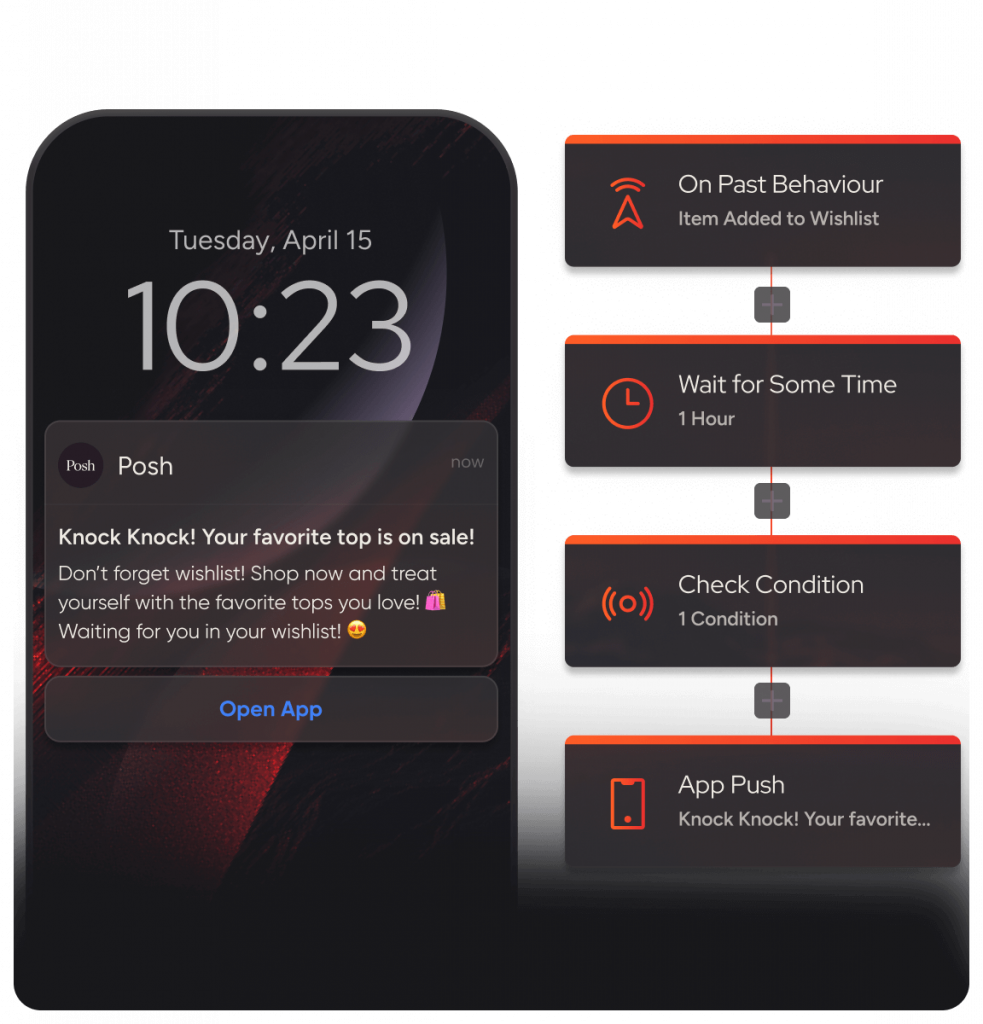
Unlike traditional marketing tools that push static messages to customers, a CJO solution listens for signals across your entire MarTech stack from your CDP and CRM to your POS and mobile app to decide the next best action for a user in milliseconds.
Think of the difference between a train and a self-driving car.
- Marketing automation (The train): Follows a fixed track. Every user receives “Email A” on Day 1 and “Email B” on Day 3, regardless of their behavior or changing needs
- Journey orchestration (The self-driving car): Has a clear destination (conversion), but constantly adjusts the route based on real-time user actions. If a user ignores a push notification but later engages with an InStory on your mobile site, the system pivots the journey instantly to meet them there
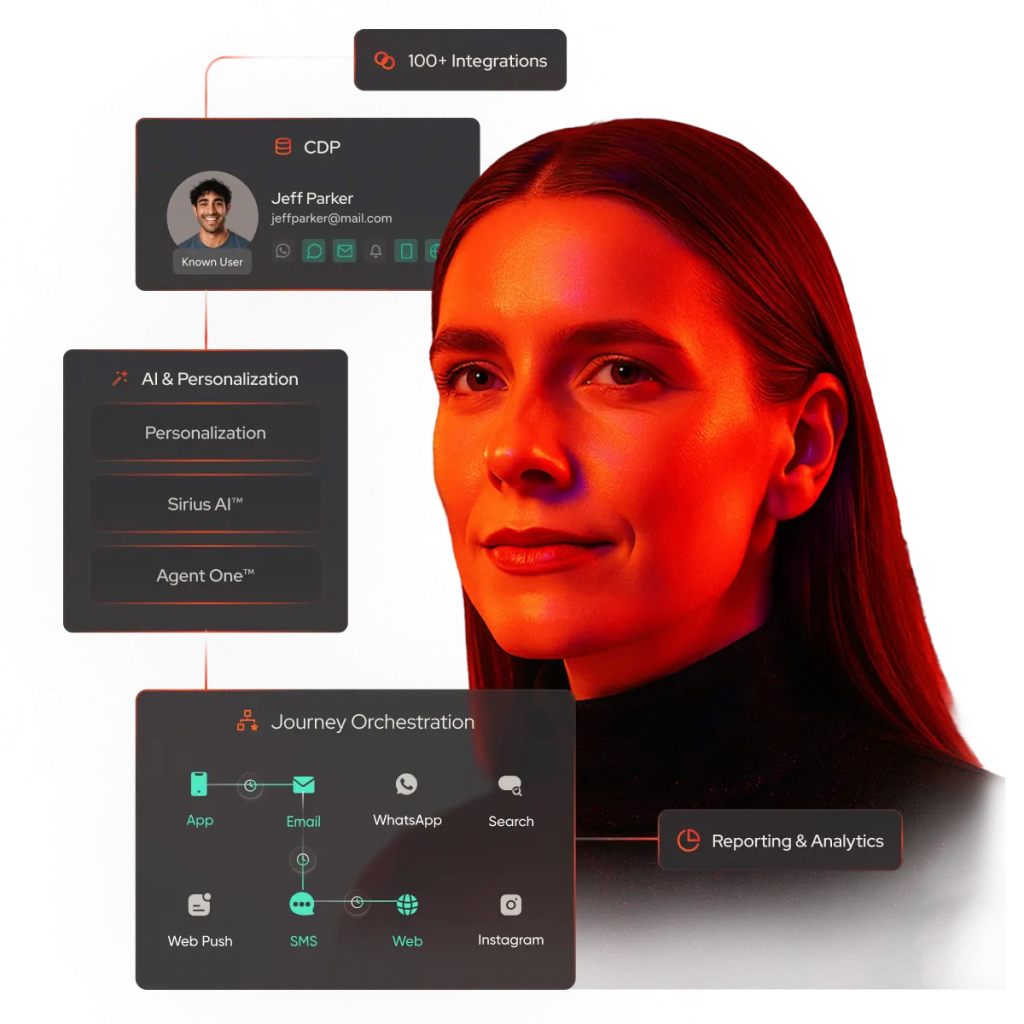
To see how this works in a real-world enterprise setting, consider a high-value shopper at a global beauty retailer:
- The trigger: The shopper adds a luxury serum to their cart on the mobile app but exits without checking out
- The context: The CJO solution instantly queries the Unified Customer Profile (powered by a real-time CDP). It notices this specific user has a 90% open rate on WhatsApp but hasn’t opened a single email in six months
- The action: Instead of wasting effort on a generic email, the system triggers an automated WhatsApp message with a “Complete your routine” prompt and a link back to their cart
- The pivot: While reading the WhatsApp message, the user returns to the website. The CJO system recognizes this live session immediately and serves a personalized Web Header offering a “Free Sample with your Serum” to remove the final friction to purchase
By connecting these dots, the CJO ensures the brand remains first, focused, and progressive. Meeting the customer exactly where they are to drive immediate ROI.
Benefits of using a customer journey orchestration solution
Transitioning to a dedicated CJO solution moves your team from reactive campaign management to proactive journey design.
For enterprises operating at scale, the impact is felt across three core pillars:
- Unified customer data in real-time: A CJO solution aggregates multiple data points from your CRM, POS, web, and app into a single actionable view. This ensures every message is based on a user’s most recent interaction across your entire ecosystem.
- Predictive next-best actions: CJO moves beyond rigid “if-this-then-that” rules by using AI to anticipate user needs. The system determines the most effective channel, the optimal timing, and the most relevant content for each specific user, ensuring your engagement strategy remains proactive rather than reactive.
- Seamless omnichannel consistency: A CJO solution orchestrates a single continuous conversation across all touchpoints (WhatsApp, SMS, Email, Web, and App). This eliminates fragmented experiences and message fatigue by ensuring a user isn’t prompted for an offer on one channel that they have already redeemed on another.
- Accelerated time-to-value: By providing a centralized orchestration layer, marketing teams can launch complex high-converting journeys without heavy dependency on engineering or IT. This flexibility allows for limitless experimentation and the ability to pivot strategies as fast as market conditions change.
- Measurable impact on retention and CLTV: By identifying and resolving friction points in real-time (such as a failed payment, a shipping delay, or a sizing hesitation), you directly lift conversion rates and long-term customer lifetime value. It allows you to address “revenue leaks” at the exact moment they occur.
- Operational efficiency at scale: Automating the decision-making process for millions of data points allows your growth teams to stay focused. Instead of managing manual segments and repetitive tasks, they can focus on high-level strategy while the orchestration engine optimizes performance and ROI on autopilot.
5 features to demand from your next customer journey orchestration solution
Here’s what you should look for:
Unified customer view
The foundation of any solid orchestration strategy is the ability to unify multiple data points into a single actionable view.
For an enterprise, this means moving beyond a basic list of names and emails.
You need a solution that aggregates behavioral data (web clicks, app opens), transactional history (offline POS, online orders), and contextual data (loyalty status, discount affinity).
Without a unified view, your data remains in silos.
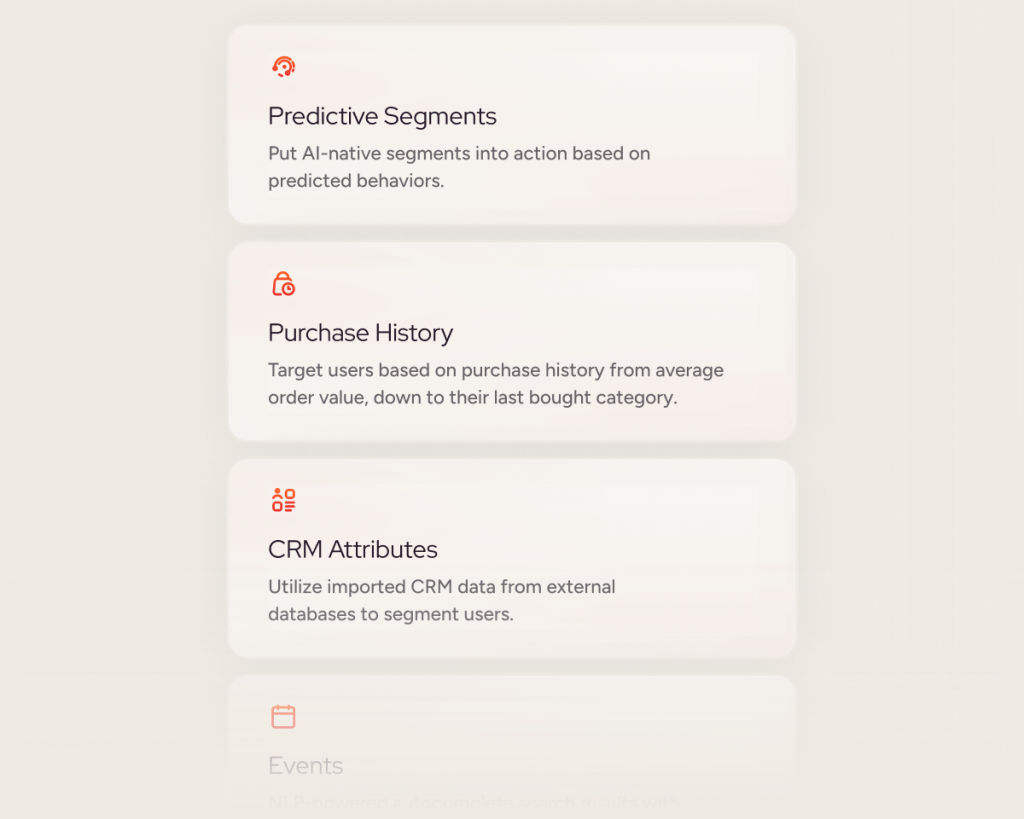
If a customer buys a pair of shoes in your physical store, but your web platform doesn’t know about it, you’ll likely spend marketing budget retargeting them for a product they already own.
A solid CJO solution ensures that the moment an offline transaction occurs, the online journey pivots from “Conversion” to “Post-Purchase Support” or “Cross-Sell,” saving your ad spend and protecting the customer experience.
Real-time AI-powered personalization
Static rule-based journeys cannot scale.
To stay first and forward, you need a solution that uses AI to make sub-second decisions.
The system should analyze historical behavior to predict a user’s “Next Best Channel,” their likelihood to churn, and their preferred window for engagement.
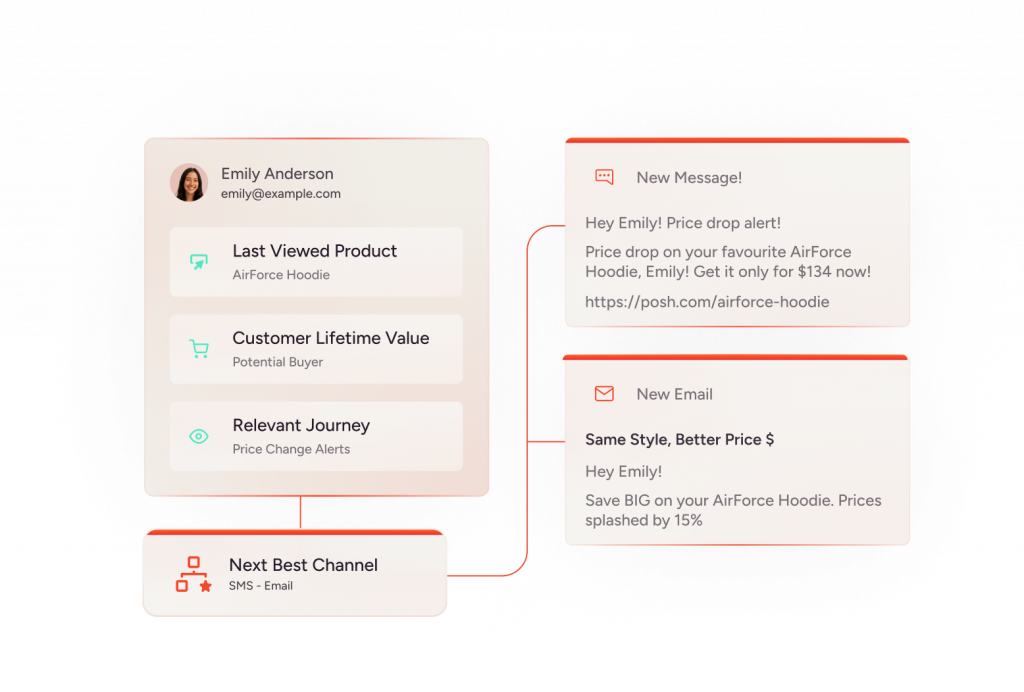
For example, imagine a user who typically shops on their lunch break and prefers WhatsApp.
Instead of a generic “set-and-forget” email sent at 9:00 AM, the AI-powered solution waits until 12:30 PM to trigger a personalized WhatsApp message.
By optimizing the channel, the timing, and the specific offer (e.g., a “Free Shipping” nudge for a price-sensitive segment), the platform increases the probability of conversion without any manual intervention from your team.
True omnichannel activation
Many platforms claim to be “omnichannel” but are actually “multichannel.”
They send messages on different platforms but don’t connect them. This creates a fragmented, frustrating user experience.
A non-negotiable feature for CJO is the ability to orchestrate a single continuous conversation across channels, including Web, App, Email, SMS, RCS, and WhatsApp.
Seamless drag-and-drop journey builder
Enterprise marketing teams need to move fast. If you have to wait for IT to write code or query a database every time you want to launch a new journey, you’ve already lost your window of opportunity.
Demand a visual drag-and-drop builder that lets marketers map out complex multi-branch workflows with ease.

A visual builder also allows your team to respond to market trends in real-time.
For example, if a sudden cold snap hits a specific region, a marketer can quickly drag and drop a new “Weather-Triggered” branch into an existing journey.
They can target “Outerwear Browsers” in those zip codes with an SMS alert for “Next-Day Delivery.” This level of agility allows you to run limitless experimentation and pivot your strategy in minutes, not weeks.
Robust analytics and attribution
Your CJO must provide granular stage-level analytics.
You need to see exactly which touchpoints are driving revenue and which are creating friction. This includes path analysis, funnel reporting, and the ability to A/B test entire journey flows.
For example, your data might show a massive drop-off between “Add to Cart” and “Payment” on your mobile site. Standard analytics might suggest a pricing issue, but Path Analysis might reveal that users are clicking away to find shipping details that weren’t clearly displayed.
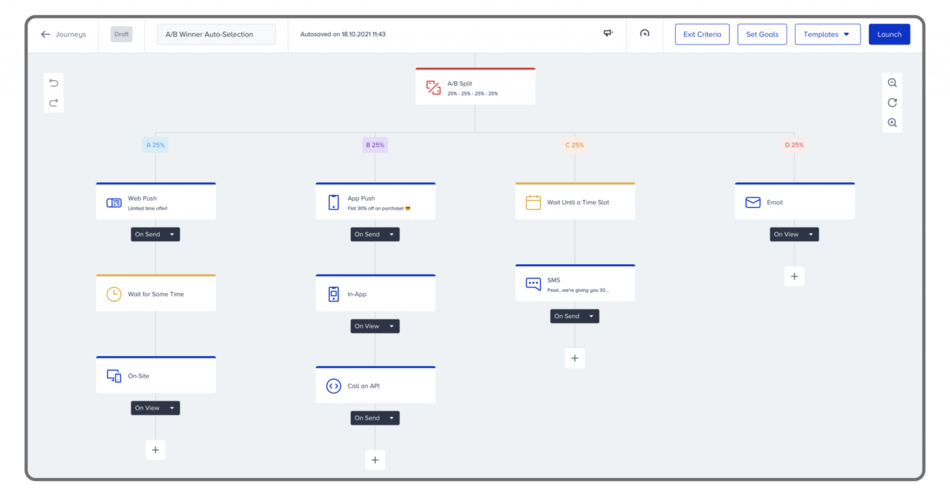
By running a journey-level A/B test, you can prove exactly which intervention works. You could test Version A (the current flow) against Version B, which triggers a real-time In-App Message clarifying “Free 2-Day Shipping” at the exact moment of hesitation.
Meet Architect: Insider One’s next-gen journey orchestration solution
In an era of fragmented touchpoints, Architect serves as the centralized decisioning engine for modern enterprises.
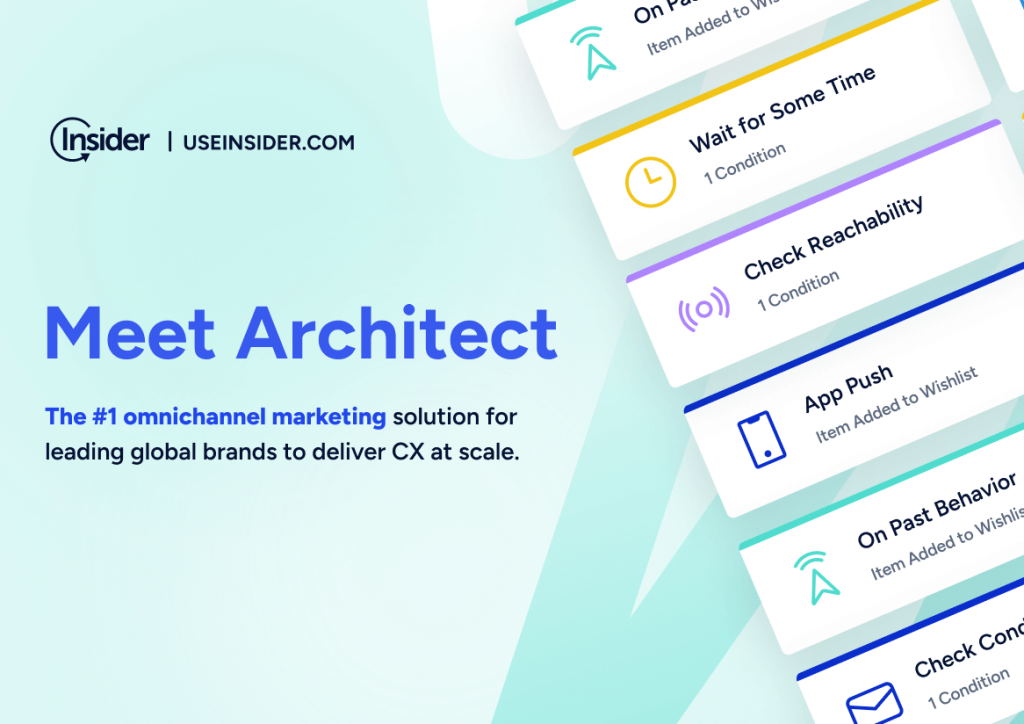
As the core orchestration layer of the Insider One platform, it synthesizes disparate data streams into a singular high-fidelity customer narrative. Rather than managing isolated campaigns, Architect allows you to govern the entire customer lifecycle through a logic-driven, real-time framework.
Here’s what you get:
- Integration with 12+ channels: Effortlessly bridge the gap between Email, SMS, WhatsApp, Web, and App. Architect ensures your brand speaks with one voice, regardless of where the customer engages
- Real-time data synthesis: Architect pulls from your CDP, CRM, and offline systems to create a “Living Profile” that updates in milliseconds
- AI-driven decisioning: Powered by Sirius AI™, the system determines the “Next Best Action” by analyzing thousands of variables, predicting the optimal channel, timing, and incentive for each individual
- Zero-code agility: Empower your marketing team to build, test, and deploy sophisticated multi-branch journeys in minutes using a visual drag-and-drop interface.
And more.
Orchestrate growth with Insider One
The difference between a fragmented experience and a high-converting journey lies in orchestration.
By moving beyond rigid pre-set sequences and allowing your customers’ real-time behavior to dictate the next step, you can eliminate the friction that causes revenue leakage.
Insider One helps global leaders like Samsung, Virgin, and Estée Lauder transform disconnected data into actionable growth.
Our Architect solution provides the agility to outpace the market and the precision to engage every customer at the exact moment of intent.
Ready to stop managing campaigns and start orchestrating growth?
Book a personalized demo with our experts today.
FAQs
Marketing automation focuses on executing repetitive linear tasks (like “Send Email X on Day 3”). Whereas CJO uses AI to listen to live signals across all channels and decide the “Next Best Action” dynamically based on several factors.
Enterprise-grade solutions like Insider One are built with a privacy-first architecture.
They use real-time consent management to ensure data is only processed according to user preferences and local regulations (like GDPR or CCPA).
By unifying data into first-party profiles, brands can maintain high levels of personalization without relying on invasive third-party cookies.
Prioritize three pillars:
Integration: Can it connect to your entire stack in real-time?
Intelligence: Does it use AI to predict channels and timing?
Agility: Is the interface user-friendly enough for marketers to pivot strategies without help from IT?

Keep Reading
4 min.

Chris Baldwin
3 Feb 2026
9 min

Muharrem
23 Dec 2025
7 min.
Chris Baldwin
8 Jul 2024