

 Platform Overview

 Integration Hub

 Sirius AI™

 Customer Data Management

 Personalization

 Journey Orchestration

 Reporting & Data

 Behavioral Analytics

 Web
Web

 Email
Email

 Site Search

 Conversational CX

 WhatsApp

 Web Push

 InStory

 App
App

 SMS & RCS

 Join the $0 Migration Movement™

 The Insider One Difference

 Compare Vendors

 Switch to Insider One

 Success Story

 Retail & Ecommerce

 Financial Services

 Travel & Hospitality

 Beauty & Cosmetics

 Automotive

 Telecommunications

 Interactive Platform Tour

 Blog
Blog

 E-Books & Guides

 Glossary
7 Ways to Engage Your Customers with a Conversational Shopping Strategy

Updated on 22 Jan 2026
7 min.
Table of Contents
- What is conversational shopping?
- 7 ways to engage your customers with a conversational shopping strategy
- 1. Simplify product discovery through conversational guidance
- 2. Personalize conversations using real-time behavioral signals
- 3. Make the digital experience feel human
- 4. Eliminate purchase anxiety with instant assistance
- 5. Guide customers through complex buying journeys
- 6. Engage customers after the purchase
- 7. Turn customers into brand advocates through two‑way engagement
- Power your conversational shopping strategy with Insider One
Most Popular



Shopping in 2026 doesn’t start with search bars. It starts with a simple question. “Can you help me find the right one?” Customers no longer want to scroll and click their way through generic product grids. They want instant answers, tailored advice, and human‑like interactions that turn curiosity into confidence.
Conversational shopping has become a strategic lever for growth, enabling brands across retail, travel, banking, and telecom to acquire, engage, and convert customers differently. What once began as FAQ bots has evolved into full-fledged AI assistants that understand intent, deliver guidance, and replicate the role of a knowledgeable in-store associate.
That shift matters. According to market research, the global conversational commerce market is projected to grow from around USD 8.8 billion in 2025 to more than USD 32.6 billion by 2035, with a compound annual growth rate (CAGR) of nearly 15%. Other reports put its 2030 value even higher.
For marketers focused on customer connection, building a mature conversational shopping strategy is not optional; it’s a differentiator. If done well, it improves engagement, deepens personalization, reduces abandonments, and reveals richer behavioral data. In this article, we’ll explore seven strategic pillars to build that conversational foundation in 2026, and how Insider One empowers each one.
What is conversational shopping?
Conversational shopping is a commerce experience that allows customers to explore, compare, and purchase products through real-time dialogue. These interactions can occur through chat widgets, WhatsApp, Messenger, in-app assistants, mobile web, or even voice interfaces. The goal is to help shoppers move from discovery to decision with minimal friction.
Unlike traditional live chat or support tools, conversational shopping focuses on guiding purchase intent. It helps customers refine their choices, find the right product, compare options, and get instant reassurance when doubts appear. Modern AI makes this experience scalable and personal because it can:
• Understand natural language
• Process user intent
• Use real-time behavioral data
• Trigger the right message at the right moment
• Recommend products instantly
This allows brands to deliver fast, human-like support across any digital touchpoint, creating smoother journeys and stronger relationships.
7 ways to engage your customers with a conversational shopping strategy
Below are seven actionable strategies that brands can use to build high-performing conversational shopping experiences.
1. Simplify product discovery through conversational guidance
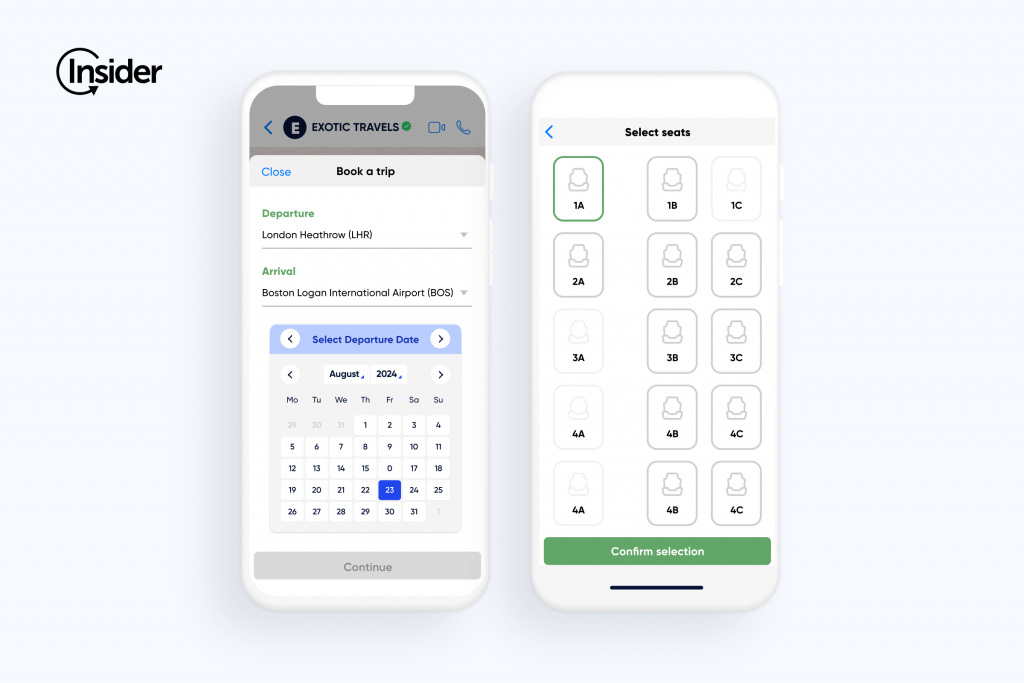
For many shoppers, the challenge isn’t finding products; it’s finding the right product. An overwhelming number of choices often leads to decision fatigue, a psychological burden well documented in behavioral economics research. Shoppers want clarity, not complexity.
Conversational guidance addresses this pain point head-on.
AI assistants can ask precise, helpful questions:
- “What’s your budget?”
- “What style fits your personality?”
- “How often will you use this?”
Then, it translates the answers into curated, highly relevant product suggestions. It mirrors the intuitive interaction shoppers have with in-store staff, where needs become clearer through conversation.
This guided discovery process shortens the time from intent to action. Instead of clicking through category pages, customers get a tailored shortlist in seconds. The emotional lift is significant: less overwhelm, more confidence, and a smoother path to checkout.
Furthermore, simplifying product discovery through AI allows customers to feel that their needs are understood and that the process is tailored to them, building trust and leading to higher conversion rates.
2. Personalize conversations using real-time behavioral signals
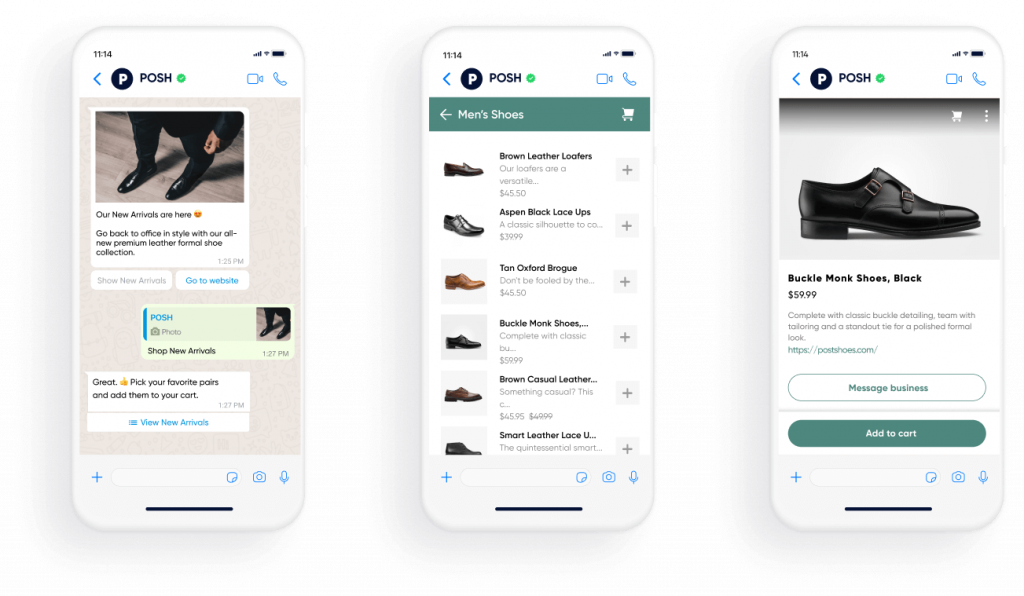
What makes conversational shopping so powerful is not just automation; it’s contextual intelligence. AI listens, adapts, and responds in real time based on individual user behavior.
When a shopper engages in a conversation, AI can pull from their browsing history, past purchases, or even their current device to deliver suggestions that are immediately relevant.
Research shows that customers are increasingly open to Gen-AI-powered commerce experiences: one study found that 66% of consumers are interested in using conversational AI for shopping. This indicates a growing readiness for conversational experiences that feel tailored and thoughtful.
For brands, the key is balancing personalization with transparency. When customers understand why AI recommends something based on their previous behavior or expressed preferences, they feel understood rather than surveilled. Insider One’s approach ensures that personalization is data-driven but ethical, respecting privacy while maximizing relevance.
3. Make the digital experience feel human
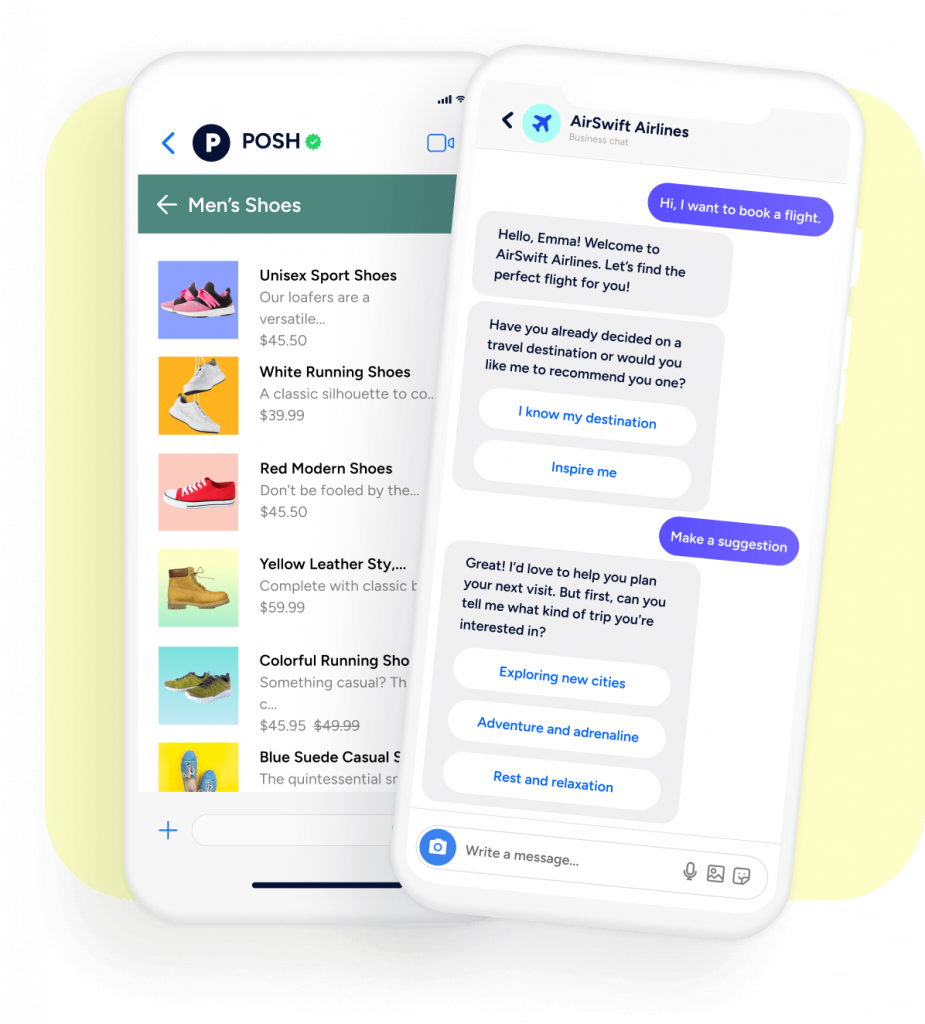
AI is transforming from transactional to relational. Today’s conversational agents go beyond answering queries. They detect hesitation, infer uncertainty, and respond in a way that feels emotionally aware.
When a shopper pauses at checkout, a well-designed AI might intervene with a reassuring message: “Would you like me to check current stock or compare similar products within your budget?” These kinds of responses reflect empathy and understanding rather than only automation.
Emerging research highlights how conversational agents can be more effective when they include grounded responses tied to product data, reducing hallucinations and improving trust. By combining emotional intelligence with factual precision, brands can deliver experiences that feel human while maintaining operational scale.
As AI continues to evolve, it will become increasingly important to combine relational empathy with accurate product data, ensuring that customers not only trust the technology but also feel supported through every step of their buying journey.
4. Eliminate purchase anxiety with instant assistance
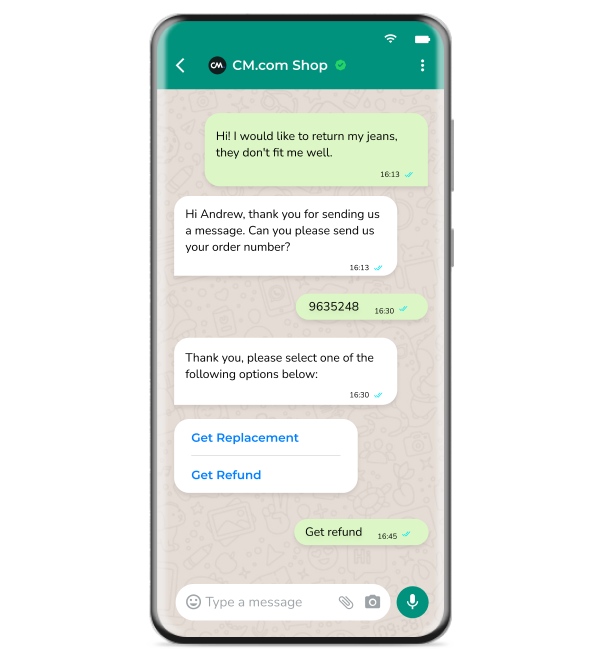
The moment a customer adds products to their cart or reaches the checkout stage is when hesitation often creeps in. Customers may have concerns about shipping, product sizing, or returns, leading them to abandon their carts.
Conversational AI can remove these barriers by offering real-time support at critical moments. For example, if a customer is uncertain about the size of an item, the AI can instantly provide size guides or shipping options to ease their concerns.
This proactive engagement during high‑intent moments can drive meaningful uplifts. Some sources report conversion increases of 10‑15% or more for brands using chat/AI in checkout flows.
By offering real-time guidance during moments of hesitation, brands can reduce abandonment rates and increase conversions, ultimately improving their sales and enhancing customer satisfaction.
5. Guide customers through complex buying journeys

Certain products require complex decisions, such as electronics, furniture, or travel services. In these cases, the shopping journey involves multiple steps that can overwhelm users. Conversational AI helps simplify these decisions by offering structured guidance and asking clarifying questions.
For instance, when shopping for a camera, the AI might ask whether the customer values battery life or processing power more, then filter options based on their responses. Similarly, when shopping for furniture, the AI might focus on space optimization or design preferences, making the decision process smoother and less overwhelming.
This approach results in higher customer satisfaction and reduces pre-purchase drop-offs, as customers feel confident and supported in their decision-making process.
6. Engage customers after the purchase
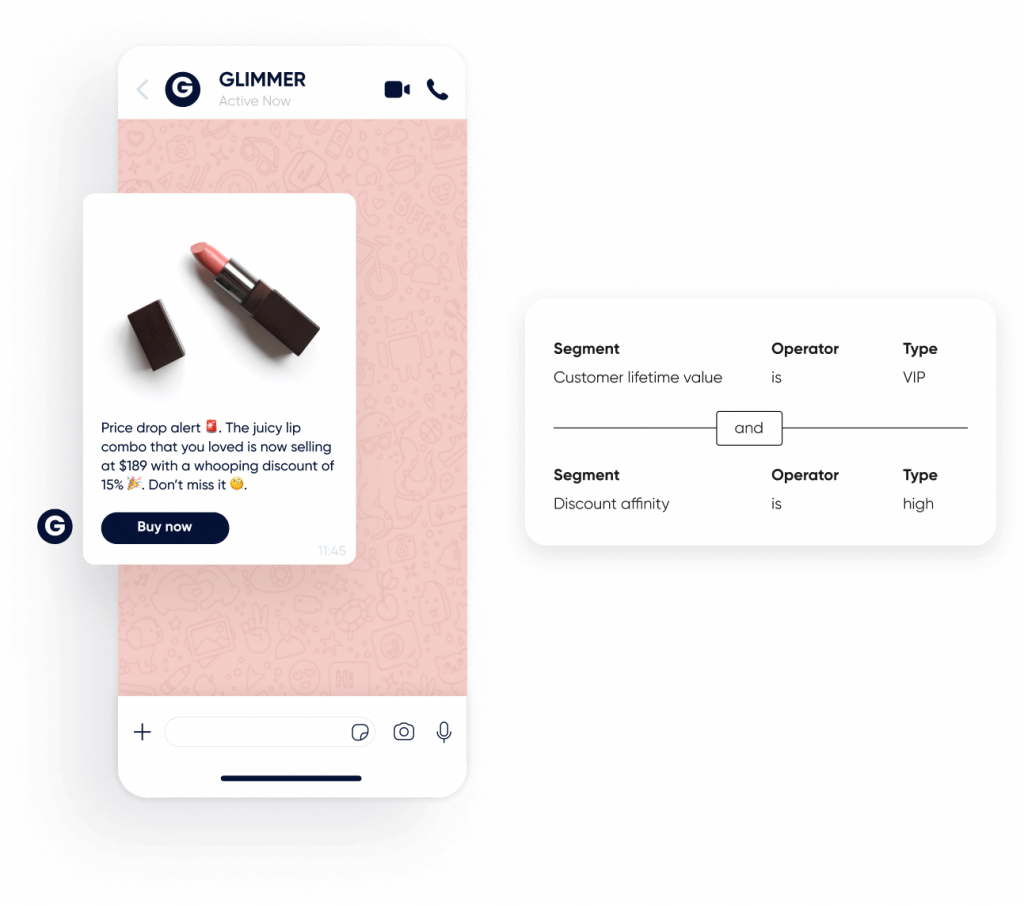
The relationship doesn’t end once the purchase is made. Post-purchase engagement is vital for building long-lasting loyalty and encouraging repeat business. Conversational AI can be used to provide order updates, tracking links, product care tips, and even exclusive offers.
For example, after buying a laptop, customers might receive follow-up messages with setup tips, product care instructions, or recommendations for related products like laptop cases or accessories. These thoughtful follow-ups help build an ongoing connection with the customer, increasing the likelihood of future purchases.
7. Turn customers into brand advocates through two‑way engagement
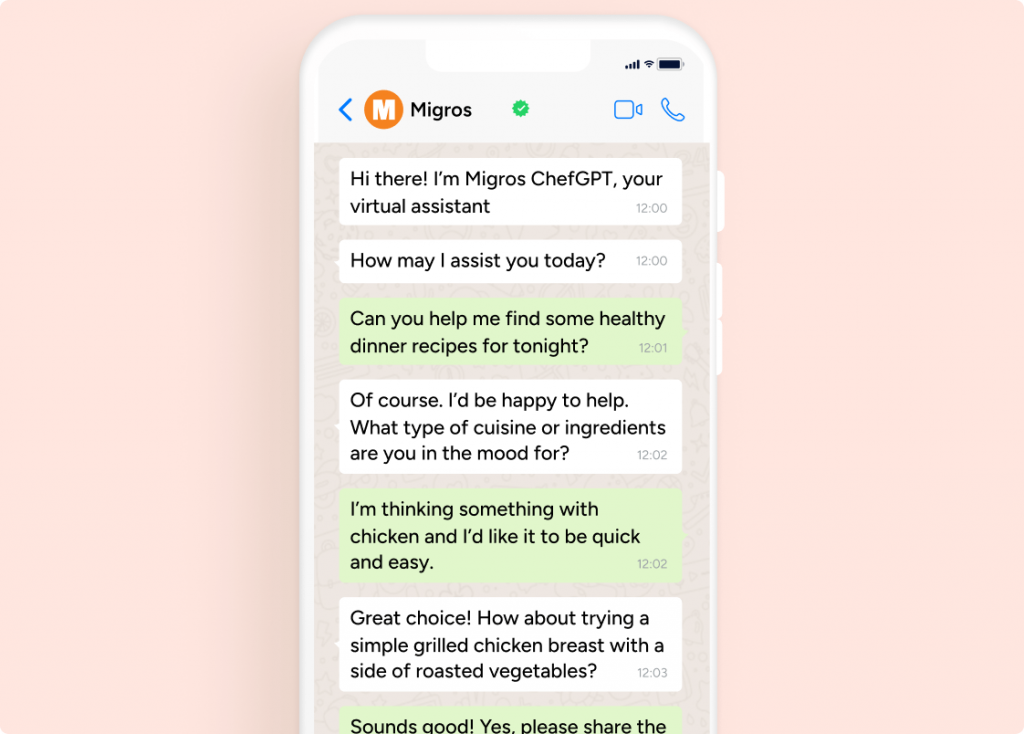
Conversational shopping focuses on building relationships. By inviting customers to share their opinions through surveys, feedback loops, and early access invites, brands can foster a deeper connection with their audience.
When customers feel involved in the decision-making process, they’re more likely to share their positive experiences with others and become passionate brand advocates. This kind of organic promotion strengthens brand loyalty and cultivates a community of engaged customers.
Power your conversational shopping strategy with Insider One
To build a truly effective conversational shopping strategy, you need a platform that integrates AI-driven intelligence, real-time data, and omnichannel engagement. Insider One is the perfect platform to help you scale and optimize your conversational shopping experiences.
Here’s why Insider One should be your platform of choice:
- AI-Powered Conversations: Insider One’s AI can engage customers in real-time, guiding them from discovery to purchase and providing personalized recommendations.
- Omnichannel Integration: Whether your customers are on WhatsApp, Messenger, your website, or mobile apps, Insider One ensures a seamless experience across all touchpoints.
- Real-Time Data and Insights: Insider One’s CDP consolidates behavioral, transactional, and predictive data to offer personalized, context-aware conversations at every stage of the customer journey.
Ready to transform your customer engagement? Request a Demo and see how Insider can revolutionize your conversational shopping strategy.

Keep Reading
4 min.

Chris Baldwin
3 Feb 2026
9 min

Muharrem
23 Dec 2025
10 min.
Muharrem
11 Oct 2024