

 Platform Overview

 Integration Hub

 Sirius AI™

 Customer Data Management

 Personalization

 Journey Orchestration

 Reporting & Data

 Behavioral Analytics

 Web
Web

 Email
Email

 Site Search

 Conversational CX

 WhatsApp

 Web Push

 InStory

 App
App

 SMS & RCS

 Join the $0 Migration Movement™

 The Insider One Difference

 Compare Vendors

 Switch to Insider One

 Success Story

 Retail & Ecommerce

 Financial Services

 Travel & Hospitality

 Beauty & Cosmetics

 Automotive

 Telecommunications

 Interactive Platform Tour

 Blog
Blog

 E-Books & Guides

 Glossary
Conversational Commerce Platforms: A Complete 2026 Guide

Updated on 22 Jan 2026
7 min.
Table of Contents
Most Popular



Not long ago, purchasing without speaking to someone felt almost impossible. Whether it was a sales assistant helping you choose the right product in-store or an operator taking your order over the phone, conversations were at the heart of every transaction.
But ecommerce flipped the script, making shopping faster, more convenient, and fully self-serve. But with convenience came a new problem: the loss of human connection.
Despite being able to shop independently, today’s customers still want brands to be available when it matters, offering fast, personal, human-like guidance. Research shows that 90% of customers consider immediate responses important when they have a question, 42% expect personalized messages from brands, and 84% are now opted in to business SMS.
This is where conversational commerce platforms step in, bringing the personal, human quality of traditional retail together with the intelligence, scale, and efficiency of AI-powered messaging.
What is conversational commerce?
Conversational commerce is a multi-channel engagement strategy that enables real-time interactions between brands and consumers across messaging apps like WhatsApp, Messenger, Instagram, SMS, and web chat.
The easiest way to come to grips with conversational marketing and commerce is with an example. Imagine that a customer is looking for a new carry-on suitcase for an upcoming trip. That customer could:
- Tell Siri, Alexa, Google, or another voice assistant something like, “Show me the best carry-on rolling suitcases.”
- On a retailer’s website, use a messaging chatbot to ask questions about a specific product’s dimensions and features
- Within the same chatbot, receive personalized recommendations that match their preferences and budget
- After placing the order, receive a text message confirmation of the estimated delivery time, where they can also ask questions, update their shipping address, and track their order status
- Weeks later, they receive a notification in the chat app offering them a personalized discount and go on to make a purchase directly within the messaging app
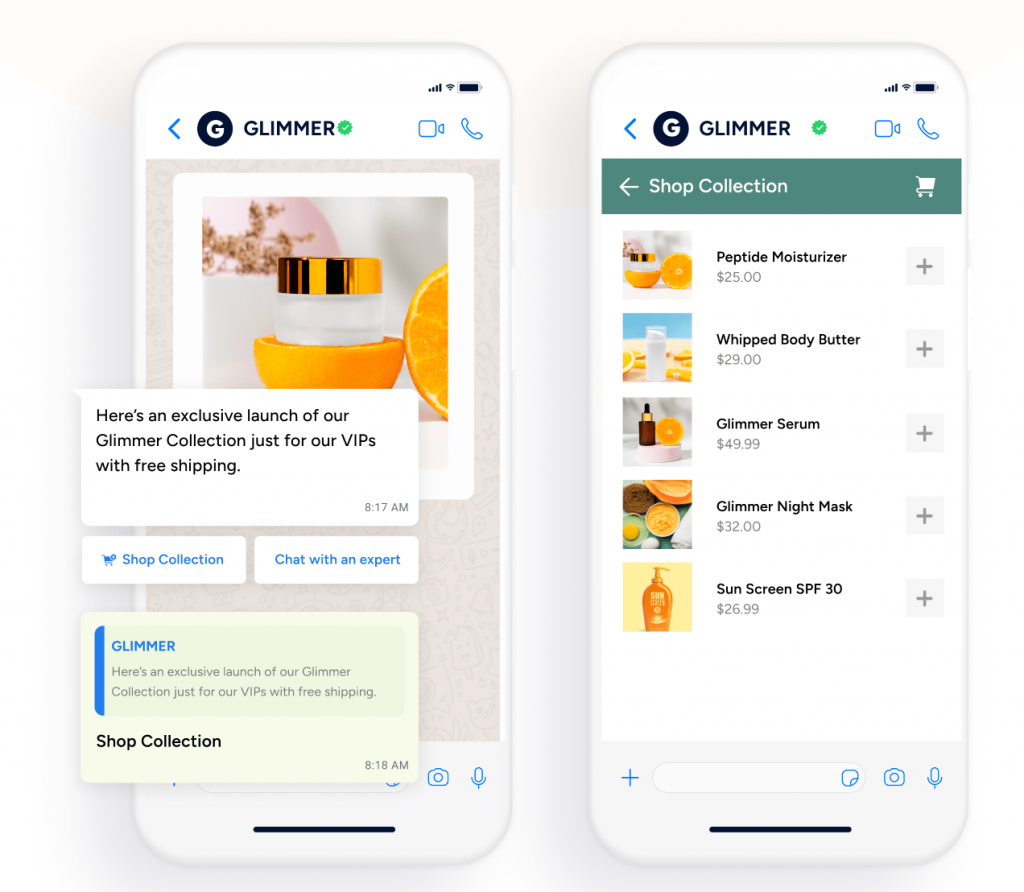
All of those are examples of how conversational commerce platforms can balance ease and efficiency with customer engagement, thereby improving the customer’s experience and ultimately driving more conversions.
Why conversational commerce matters in 2026
Consumer expectations have accelerated dramatically. Shoppers still value self-service, but they also expect brands to be instantly available, highly relevant, and human in tone. These expectations have made conversational journeys a core requirement of ecommerce.
Recent behavior shifts highlight this evolution:
- 46% of customers expect companies to reply within 4 hours, and 12% expect a reply within 15 minutes
- 64 % of customers will spend more if a business resolves their issues where they already are
- 76 % of consumers are open to handling returns and exchanges directly in their phone’s messaging app
As speed and personalization continue to define brand loyalty, conversational commerce becomes a competitive differentiator. Brands that adopt it build trust faster, reduce friction, and strengthen long-term customer relationships, not just produce transactions.
What are the benefits of conversational commerce platforms?
From the moment a shopper asks their first question to the second they complete a purchase, conversational commerce improves every interaction. Its impact becomes clear across five core benefits:
Personalization at scale
Conversational commerce platforms make it possible to deliver personalized experiences to thousands of customers simultaneously. AI-driven segmentation, such as Insider One’s Architect, powered by Generative AI, analyzes behavior, intent, and past interactions to tailor product recommendations, promotions, and messages in real time. This level of relevance feels human, yet it operates at enterprise scale.
Real-time conversations
Consumers now expect instant responses across the entire buyer journey. Conversational channels like WhatsApp and Instagram enable brands to offer true 24/7 support, combining AI chatbots for quick answers with live agents for more complex needs. This continuous availability boosts customer satisfaction, accelerates decision-making, and significantly strengthens retention.
Frictionless buying journeys:
One of the biggest advantages of conversational commerce is the ability to complete purchases directly inside messaging apps. By removing redirects and multi-step checkout flows, brands reduce friction dramatically. Customers can discover, evaluate, and buy products without ever leaving the conversation.
Smarter insights
Every interaction, every question, click, and message creates a rich source of customer intelligence. Conversational commerce platforms analyze these signals to surface intent, preferences, and behavioral trends. Brands can use these insights to refine targeting, improve product recommendations, and optimize overall marketing performance.
Cost efficiency
Automating routine inquiries, follow-ups, and re-engagement campaigns delivers substantial operational savings. By handling FAQs, order updates, and simple requests through AI, businesses can reduce customer service costs by up to 30%, while allowing human teams to focus on higher-value interactions.
How to choose the right conversational commerce platform
Choosing the right conversational commerce platform means selecting one that supports your entire customer lifecycle, not just a single touchpoint. Look for these five essentials:
1. Address your entire customer journey
Your platform should support conversations from the first touchpoint to post-purchase engagement, whether a customer is discovering a product, comparing options, completing a purchase, or seeking support.
Platforms that only serve a single stage of the funnel limit your ability to build seamless, connected experiences.
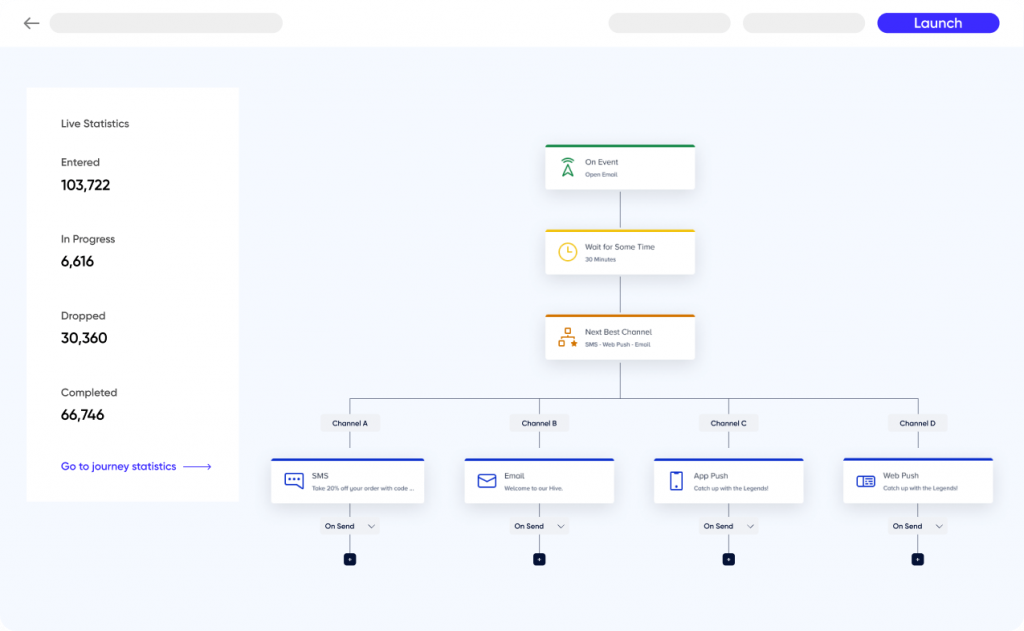
2. Develop a unified view of your customers
Personalization depends on data. Look for a platform that unifies behavioral, transactional, and preference data from every channel so conversations feel timely, contextual, and relevant, not generic.

3. Integrate with your existing tools and platforms
Your conversational platform must fit into your ecosystem, connecting smoothly with your CRM, CDP, ecommerce engine, and loyalty tools. Strong integration ensures consistent messaging and a unified customer record.
4. Offer templates and flows
To move quickly, your platform should include pre-built conversational flows for common journeys such as recommendations, order tracking, feedback, and re-engagement. These should be easy to customize without coding.
5. Include a variety of channels
Customers use multiple messaging platforms. Your solution should support WhatsApp, Instagram, Messenger, SMS, and web chat so you can engage them wherever they are, without fragmentation.
The Insider One Advantage in conversational commerce
Insider One sets the benchmark for conversational commerce by delivering a complete, connected, and AI-powered experience across every major messaging channel. Its WhatsApp Commerce capability enables customers to browse, ask questions, and complete payments entirely within the conversation, removing barriers that normally lead to drop-off.
Through AgentOne™, brands can combine AI automation with human support for fast, context-rich interactions that feel genuinely helpful.
With Generative AI Orchestration, Insider One intelligently tailors messaging, offers, and product suggestions to each customer’s behavior and intent. Prebuilt WhatsApp Flows make it simple to deploy high-impact journeys for booking appointments, capturing feedback, guiding shoppers, or re-engaging dormant users.
All of this is supported by deep integrations into CDPs, ecommerce systems, and marketing tools, ensuring brands can activate their data instantly inside every conversation.
This unified approach is why global brands trust Insider One: Slazenger achieved 49× ROI, and Watsons lifted repeat purchases by 10% using Insider One’s conversational experiences.
See how Insider One powers conversational experiences that convert. Request a demo now.
Frequently Asked Questions (FAQs)
Conversational commerce refers to real-time, AI-powered conversations between brands and customers, enabling seamless product discovery, purchase, and re-engagement via messaging platforms like WhatsApp and Instagram.
While chatbots are part of conversational commerce, the latter uses AI to personalize conversations dynamically, offering a more context-aware experience that goes beyond scripted responses.
Insider One supports key messaging platforms like WhatsApp, Instagram, Messenger, SMS, and web chat, allowing you to engage with customers across multiple channels.
Insider One’s WhatsApp Commerce allows customers to discover, engage, purchase, and re-engage, all within WhatsApp, creating a seamless and frictionless experience.
Generative AI will make conversational commerce even more dynamic, allowing for automated personalization in real-time, improving engagement, and leading to higher conversions.

Keep Reading
4 min.

Chris Baldwin
3 Feb 2026
9 min

Muharrem
23 Dec 2025
10 min.
Muharrem
11 Oct 2024