

 Platform Overview

 Integration Hub

 Sirius AI™

 Customer Data Management

 Personalization

 Journey Orchestration

 Reporting & Data

 Behavioral Analytics

 Web
Web

 Email
Email

 Site Search

 Conversational CX

 WhatsApp

 Web Push

 InStory

 App
App

 SMS & RCS

 Join the $0 Migration Movement™

 The Insider One Difference

 Compare Vendors

 Switch to Insider One

 Success Story

 Retail & Ecommerce

 Financial Services

 Travel & Hospitality

 Beauty & Cosmetics

 Automotive

 Telecommunications

 Interactive Platform Tour

 Blog
Blog

 E-Books & Guides

 Glossary
How Conversational AI is Shaping the Future of Retail

Updated on 9 Mar 2026
12 min.
Table of Contents
Most Popular



AI search is reshaping how consumers shop and what they expect from brands.
Shoppers now expect brands to anticipate what they want, deliver personalized recommendations instantly, and make checkout feel effortless. Speed is the baseline, and delays can kill your brand’s growth.
To keep up with such drastic changes in customer engagement expectations, adopting conversational AI is the only edge left.
It’s no surprise that 54% of organizations are already using AI-powered chatbots or virtual assistants for customer-facing roles, according to Gartner. The global conversational AI market reflects this transformation, which is currently valued at $8.8 billion in 2025. It’s projected to reach $32.6 billion by 2035, growing at a 14.8% CAGR.
The momentum points to the near future where conversational AI becomes one of the primary service channels in retail.
Retail giants are already using platforms like Insider One to deliver these experiences at scale. Insider One enables brands to craft deeply personalized, AI-driven interactions across channels, whether through WhatsApp, web chat, mobile, or email, helping them respond faster and anticipate customer needs in real time.
In this article, we’ll explore how conversational AI is transforming retail engagement, examine real-life examples of its impact, and highlight the future trends shaping this evolving space.
What is conversational AI in retail, and why is it so important?
Conversational AI refers to intelligent systems, such as chatbots and voice assistants, that mimic natural human interactions using text or speech. These systems rely on technologies like natural language processing (NLP), machine learning, and voice recognition. Conversational AI helps retailers create effortless, human-like interactions across digital and physical touchpoints.
Over the past few years, conversational AI has evolved from basic scripted bots into context-aware assistants that can manage genuine conversations. It understands customer intent, interprets context, guides them in their journey and responds with relevance.
Customer engagement in retail has long depended on human teams managing high volumes of repetitive requests.
As a result, customers faced long wait times, siloed communication channels, and inconsistent customer experiences. Relying on manual segmentation led to generic product promotions that didn’t incite customer interest, or delayed responses that frustrated them.
As consumer expectations started rising, these inefficiencies became a bottleneck. Hence, retailers started racing to adopt conversational AI in their business to keep up with customers’ changing expectations.
Retailers report that conversational AI effectively reduces wait times and increases satisfaction. In fact, 73% of consumers agree that AI assistants help shorten service delays.
This backs up Gartner’s prediction that by 2029, AI will resolve over 80% of customer service issues with zero human intervention.
Key benefits of conversational AI for retailers
Conversational AI has become one of the most effective tools for retail brands to improve customer satisfaction, drive sales, and optimize operational efficiency, all at once. Let’s take a detailed look at the benefits conversational AI delivers:
1. Customer satisfaction and loyalty
Conversational AI meets customer expectations with fast, context-aware responses to resolve issues in seconds. Retailers using conversational AI have seen tangible improvements in satisfaction scores as customers receive instant support, product recommendations, and proactive updates on orders. This consistency builds trust over time, strengthening loyalty across every touchpoint.
2. Sales impact
Shoppers interacting with AI-led assistants complete their purchases 47% faster, as decision-making friction is reduced. According to industry benchmarks, companies using conversational marketing tools powered by AI have achieved up to a 10x increase in conversion rates, and in 2024 alone, AI-powered chatbots generated over $142 billion in retail sales globally.
3. Efficiency and cost reduction
Retailers traditionally spend heavily on human-led support teams to manage inquiries and complaints. Conversational AI cuts those costs dramatically by automating repetitive, low-complexity interactions while routing only nuanced cases to human agents.
Insider One’s platform helps retail brands lower cost per contact, reduce escalations, and maintain high-quality support without expanding headcount. This efficiency enables teams to focus on higher-value interactions that require empathy and strategic thinking.
4. Personalization and engagement
Personalized product recommendations alone have been found to account for up to 31% of commerce revenue, and nearly half of consumers (49%) have made impulse purchases after receiving AI-driven suggestions. Insider One’s conversational AI adapts in real time, tailoring messages, offers, and recommendations based on each customer’s behavior, context, and intent.
These individualized experiences make every interaction feel human and relevant, whether it’s suggesting a complementary item during checkout or notifying a user when a previously viewed product is back in stock. The result is deeper engagement and stronger customer relationships that go beyond transactions.
5. The first-party data advantage
Every interaction between a customer and an AI agent is a source of insight. With Insider One, retailers can turn these conversations into a continuous feedback loop, gathering rich, first-party data that enhances segmentation and future campaigns.
This data advantage not only fuels more accurate personalization but also helps brands maintain resilience in a privacy-first world where third-party cookies are fading, and consent-driven engagement is key to sustainable growth.
Challenges in implementing conversational AI and how Insider One solves them
AI adoption in retail requires alignment between systems, people, and data. While conversational AI can transform customer engagement, businesses often face roadblocks in implementation that slow or stall progress. We have highlighted the challenge with a simple solution to solve it with Insider One.
1. Integration complexities
Many retailers struggle to align new AI systems with existing infrastructure. Legacy CRMs, fragmented Martech stacks, and isolated data sources make it difficult for AI models to access the full customer picture.
Insider One simplifies this by connecting with more than 100+ retail and ecommerce platforms, from CRMs and CDPs to analytics and messaging tools. Its unified architecture helps brands centralize customer data and deploy Conversational AI across channels without disrupting operations.
The result is faster deployment, cleaner data synchronization, and consistent conversations across web, app, and messaging platforms.
2. Data privacy and security concerns
Customer trust starts with data responsibility. AI systems require access to personal and behavioral data to deliver contextual interactions, which raises privacy and compliance concerns.
Insider One is built with enterprise-grade security and privacy-by-design architecture. The platform ensures all data is encrypted in transit and at rest, with regional data hosting options that help brands meet GDPR and CCPA compliance requirements. By maintaining strict data governance, Insider One allows brands to leverage customer insights confidently while upholding transparency and trust.
3. Customer acceptance and trust
Shoppers want efficiency, but they also expect empathy. When interactions feel robotic, customers hesitate to engage with virtual agents.
Insider One’s Conversational AI is designed to feel human, not mechanical. It enables smooth transitions between AI agents and live customer support teams, maintaining context across both interactions.
This ensures that customers experience continuity, not friction, when moving from automated chat to a human conversation. Brands using Insider One have seen a measurable lift in CSAT scores and first-contact resolution rates, proving that trust and technology can coexist.
4. Continuous training and adaptability
An AI system trained once and left unattended quickly becomes outdated, leading to poor response quality and irrelevant recommendations.
Insider One’s AI models continuously learn from real customer interactions. They adapt to seasonal trends, new product launches, and changing behavior patterns, ensuring every message stays relevant.
Marketing and support teams can easily retrain models within the platform using conversation data, so improvements happen in real time, without depending on external developers.
5. Data quality and bias mitigation
Even the most advanced AI can only perform as well as the data it’s trained on. Inconsistent, biased, or incomplete datasets can distort predictions and harm customer experiences.
Insider One mitigates this by unifying first-party and behavioral data within its Customer Data Platform (CDP). This ensures AI models learn from verified, high-quality datasets.
Built-in bias detection also monitors for skewed outcomes in recommendations or sentiment responses, helping brands uphold fairness and reliability across AI-driven interactions.
Conversational AI trends for retail to watch in 2026
Let’s look at the conversational AI trends that will keep you ahead in the competitive industry:
1. AI shopping assistants and agents
AI shopping assistants (sometimes called virtual agents or just agents) help users discover, compare, and purchase products more efficiently. Today, they’ve evolved far beyond the capabilities of traditional chatbots. Instead of just reacting to user prompts, these new AI-powered assistants are the new digital front-line workers — they guide users, answer product questions, and deliver highly personalized product recommendations across all stages of the customer journey.
More importantly, they can do so autonomously while perceiving, learning, and adapting in real-time. This is what defines the next generation of “agentic” commerce: autonomous, learning-based agents that act with intelligence and empathy.
Take Insider One’s Agent One™ Shopping Agent as an example. This agent integrates deeply with our Customer Data Platform (CDP), site search solution, and Smart Recommendation models to deliver emotionally intelligent, one-on-one shopping experiences. Its capabilities include:
- Intent prediction and personalization: Rather than waiting for prompts, the Shopping Agent anticipates what a customer needs, based on behavioral cues and contextual data.
- Real-time product guidance: Using site search inputs, purchase history, and smart recommendations, it provides dynamic suggestions that increase confidence and accelerate conversions.
- Omnichannel integration: The agent can be embedded across websites, mobile apps, and messaging interfaces to help brands meet customers where they are.
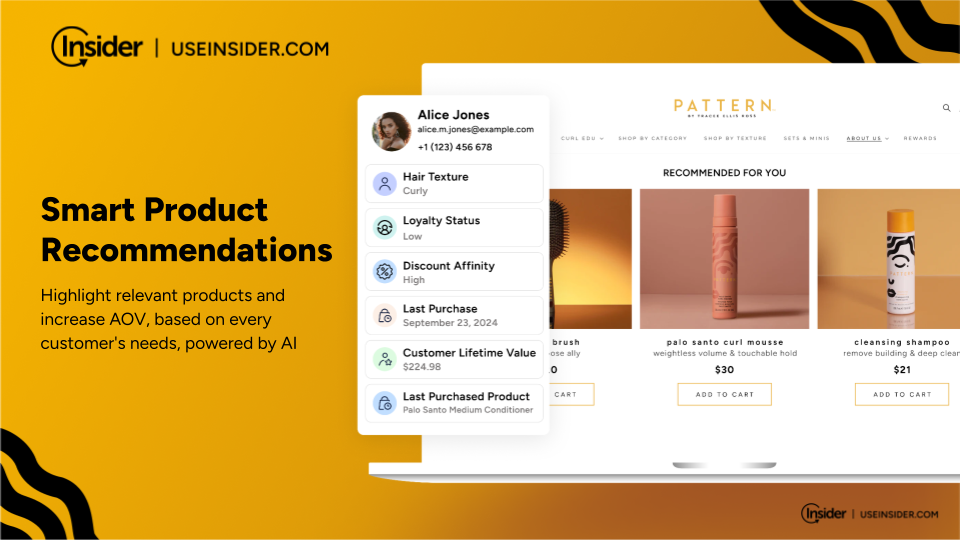
PATTERN Beauty, for instance, leveraged Insider One to personalize the shopping experience for every visitor. By analyzing browsing patterns and preferences, the brand served recommendations that matched each customer’s hair type and product history. The outcome was higher engagement, increased average order value, and more meaningful customer relationships.
2. Conversational commerce and voice shopping
In 2025, more consumers are shopping through voice and text than ever before, whether through smart assistants like Alexa or embedded AI chat in brand-owned apps.
This trend is about accessibility, speed, and removing friction from discovery and purchasing. New developments in generative and conversational AI are only speeding up this trend across the globe as they enable:
- Hands-free interactions are especially valuable for mobile-first or visually impaired users.
- Personalized, real-time support driven by context-aware dialogue that boosts confidence and conversions.
- End-to-end engagement from product discovery to purchase and post-sale support, all through a single place.
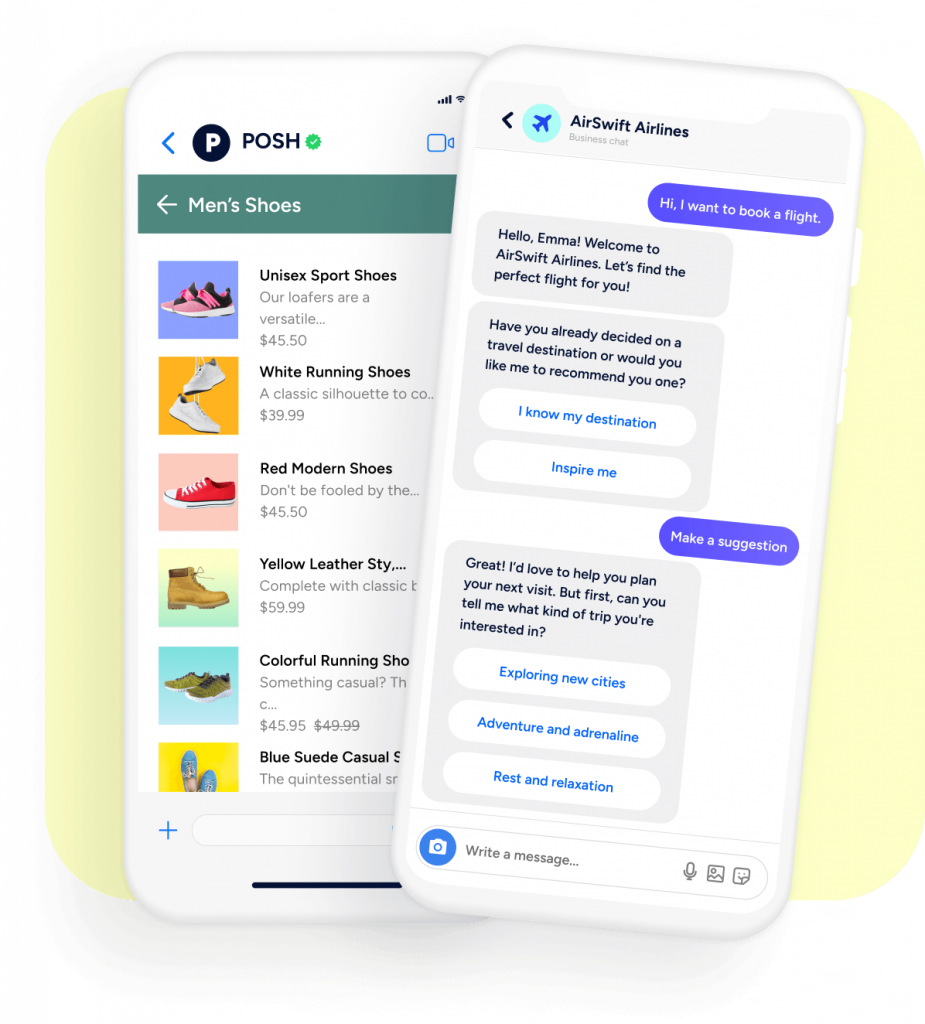
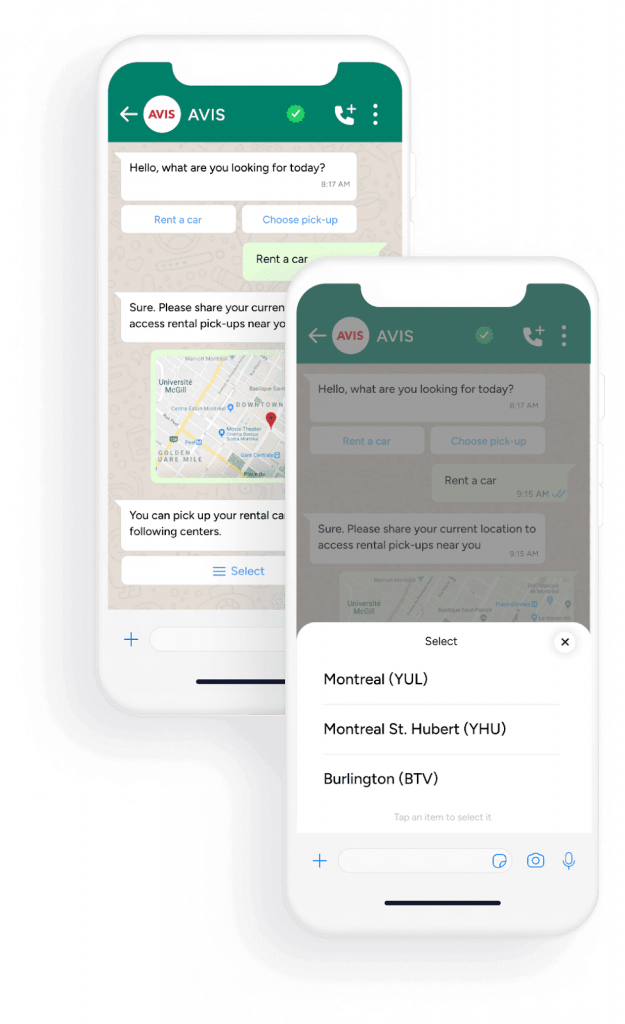
For example, Insider One’s Conversational CX toolkit lets brands leverage AI-powered, two-way customer conversations at scale across WhatsApp, Facebook Messenger, and many other messaging channels.
Avis used these capabilities to launch an AI-powered digital assistant on WhatsApp. As a result, the assistant handles 70% of customer queries, saving up to 39% cost in one year.
3. AI-enhanced omnichannel experiences
AI helps retailers create cohesive experiences across mobile, desktop, in-store, and post-sale channels.
For example, Insider One’s ecommerce CDP lets brands unify customer data from all of these touchpoints in one convenient database. Then, AI models and agents can use this information — like preferences, behaviors, and interactions — to fuel:
- Consistent messaging: Regardless of platform, our AI ensures each customer gets context-aware content.
- Real-time personalization: Whether a customer browses on mobile and buys in-store, or shops via social then returns via web, the experience is always tailored to their needs and interests.
- Omnichannel orchestration: Our omnichannel personalization and automation tools let brands build flows across web, mobile apps, email, SMS, WhatsApp, and many other channels.
AI makes true omnichannel engagement possible by leveraging the right data and algorithms to deliver consistent messaging across the entire customer journey, something legacy platforms struggled to do effectively.
Slazenger, a heritage sportswear brand, turned to Insider One to unify its customer engagement strategy. Using Insider One’s Conversational CX platform, the team built personalized omnichannel messaging journeys that followed customers seamlessly from discovery to purchase.
The outcome was stronger engagement, higher open and conversion rates, and an uplift in brand loyalty. When every message feels timely and relevant, customers experience a deeper connection.

Embrace the future of retail with Insider One
As digital interactions grow more complex, customers expect brands to respond with the same intuition and intelligence they’d find in a human conversation. That’s why conversational AI is becoming the foundation of modern customer experience.
That’s exactly what Insider One’s Conversational AI delivers. It enables brands to connect every data point, from browsing behavior and purchase history to intent signals and context, and turn them into meaningful, real-time conversations.
Insider One’s conversational AI helps retailers:
- Transform search into conversation. Instead of static queries, customers can ask questions and get personalized answers, powered by data-rich insights.
- Anticipate needs with context. The AI understands intent, recommends relevant products, and resolves queries using unified customer profiles across channels.
- Deliver always-on support. It handles repetitive questions with human-like accuracy, freeing teams to focus on complex requests while ensuring 24/7 responsiveness.
- Optimize performance in real time. Conversational AI continuously learns from each interaction, identifying friction points, recommending improvements, and helping brands refine their campaigns for better outcomes.
Beyond conversations, Insider One’s broader AI suite powers features like Smart Recommender, Next-Best Channel, and Send-Time Optimization, ensuring that every customer receives the right message, on the right channel, at the right time.
The future of retail belongs to brands that lead with speed, empathy, and real-time personalization. Join the ones already redefining customer engagement. Take a product tour or book a demo to see how Insider One’s Conversational AI keeps you one step ahead of every conversation.
FAQs
AI shopping assistants help convert intent into action by understanding customer behavior and personalizing every interaction in real time. Instead of showing static recommendations or broad promotions, they analyze each customer’s browsing history, preferences, and engagement patterns to suggest products that match both intent and context.
For instance, when a customer lingers on a specific product page, Insider One’s AI shopping assistants can automatically trigger a personalized offer, product comparison, or back-in-stock alert to nudge them toward purchase.
Brands using Insider One’s AI Shopping Agent have seen higher click-through rates, reduced cart abandonment, and up to 25% lift in conversions by delivering the right message at the right moment.
Yes, conversational AI isn’t just for enterprise retailers, it’s increasingly accessible to small and mid-sized businesses. Modern platforms like Insider One eliminate the technical barriers that once made AI adoption complex and costly.
Both experience metrics and business outcomes should measure the success of AI in retail. Key experience metrics include:
Response time and resolution rate: How quickly and accurately the AI handles customer queries.
Engagement rate: The volume and quality of interactions customers have with your AI agents.
Customer satisfaction (CSAT): Post-interaction surveys or sentiment analysis to assess the quality of conversations.
On the business side, focus on:
Conversion rate uplift: How AI interactions influence purchasing behavior.
Retention and repeat purchase rate: The extent to which personalized conversations encourage loyalty.
Revenue per visitor (RPV): Whether AI-driven engagement increases order value.
Insider One’s analytics dashboard centralizes these metrics, enabling teams to monitor performance across every touchpoint, from product recommendations to post-purchase conversations. The platform’s AI Insights module also identifies opportunities for improvement, showing how each AI interaction impacts overall business KPIs.
Integration is often the biggest concern for retailers adopting new technology. With Insider One, it’s also the easiest part.
Insider One’s AI-powered customer engagement platform connects seamlessly with existing CRM, CDP, marketing automation tools, and commerce systems. This integration allows conversational AI agents to access real-time customer data, such as purchase history, preferences, and behavioral signals without disrupting existing workflows.

Keep Reading
4 min.

Chris Baldwin
3 Feb 2026
9 min

Muharrem
23 Dec 2025
10 min.
Muharrem
11 Oct 2024