

 Platform Overview

 Integration Hub

 Sirius AI™

 Customer Data Management

 Personalization

 Journey Orchestration

 Reporting & Data

 Behavioral Analytics

 Web
Web

 Email
Email

 Site Search

 Conversational CX

 WhatsApp

 Web Push

 InStory

 App
App

 SMS & RCS

 Join the $0 Migration Movement™

 The Insider One Difference

 Compare Vendors

 Switch to Insider One

 Success Story

 Retail & Ecommerce

 Financial Services

 Travel & Hospitality

 Beauty & Cosmetics

 Automotive

 Telecommunications

 Interactive Platform Tour

 Blog
Blog

 E-Books & Guides

 Glossary
Enhance Competitiveness with Agile Customer Engagement Models

Updated on 19 Feb 2026
10 min.
Table of Contents
Most Popular


Customer engagement has gone from a single conversation at the counter to a constant, multi-channel presence that follows your customer everywhere they are.
Those same digital touchpoints give you powerful reach and efficiency, but they also raise the stakes, with 32% of customers willing to walk away from a brand they love after just one bad experience.
The brands that pull ahead in 2026 will be the ones that treat engagement as a designed system, not a scattered set of campaigns. That means building intentional, structured models that span the entire journey, from first touch to long-term loyalty.
In the sections that follow, you will find seven customer engagement models worth considering for any growth-focused brand, along with when to use each and the outcomes they can unlock. These are not abstract frameworks; they are practical ways to bring more clarity, consistency, and impact to how you engage customers at scale.
Understanding customer engagement models
Customer engagement models act as strategic blueprints for how your business interacts with customers across their entire lifecycle. They help you structure digital and human touchpoints, create consistency across teams, adapt engagement based on customer value, behavior, and stage, and improve satisfaction, retention, and lifetime value
Think of a new user joining a platform: they receive a personalized welcome, onboarding prompts, nudges during trial, smart recommendations, and timely re-engagement. When needed, an AI agent steps in with real-time support. This is an engagement model in motion; predictable for you, seamless for them.
Reasons why successful brands swear by customer engagement models
If you’re building relationships that last, engagement models aren’t optional. Here’s what they deliver:
1. Better prospect-to-customer conversion
Engagement models map out exactly how to nurture prospects at each stage of the journey. When you have that clarity, you stop guessing what to say, when to say it, or where to show up. The result is less friction, faster decisions, and more prospects who actually convert into paying customers.
2. Increased customer satisfaction
Consistent, high-quality service is the foundation of strong customer relationships. Engagement models ensure customers receive timely, relevant support, whether automated or human-led.
This structure helps brands deliver more accurate information, faster responses, and more tailored interactions, improving CSAT scores over time.
3. Higher retention
Customer experience has become a critical competitive factor: 73% of consumers say experience influences their purchasing decisions.
Engagement models help brands proactively support users, personalize experiences, and maintain meaningful contact, resulting in stronger loyalty and reduced churn.
4. Enhanced Customer Lifetime Value (CLV)
Satisfied customers stay longer and spend more. Research shows that happy customers are willing to pay up to a 16% price premium for brands that consistently deliver excellent experiences.
By structuring engagement around customer needs and lifecycle triggers, brands can increase repeat purchases, cross-sell opportunities, and long-term value.
7 models to engage customers across your marketing funnels
There are numerous customer engagement models, each tailored to specific stages of the funnel you want to focus your engagement efforts on. Let’s take a look at the seven most prominent models you can apply to your pipeline:
| Model | Funnel stage | Understanding | Suitable For |
| High Touch Model | MOFU/BOFU | One-on-one engagement, personalization during the purchase phase. | Organizations with a long buying cycle or complicated or niche products |
| Low Touch Model | TOFU/MOFU | Use of automation and self-service. | Companies with a shorter buying cycle or simple products that don’t need much assistance |
| Retention Model | Post-funnel (loyalty) | Customer retention and CLV enhancement. | Businesses with a recurring revenue model needing proactive support |
| CSM-Driven Model | Post-funnel (loyalty) | Retention, upselling, and the relationship growth phase. | Companies that need hands-on support for important clients |
| Automated Retention Model | Post-funnel (loyalty) | Use of automation tools, workflows, etc., to maintain engagement and control churn. | Small businesses that do not need immediate support |
| Collaborative Product Model | Post-funnel (engagement and loyalty) | Customer involvement in product development to enhance engagement. | SaaS businesses that benefit from collaborating with customers |
| Hybrid Models | All stages (TOFU to Post-funnel) | A combination of personalization and automation across the entire funnel. | SaaS businesses with a diverse range of products, with short buying cycles |
1. High-touch model
The high-touch approach emphasizes personalized, one-to-one interactions. It relies on human expertise to guide customers through complex decisions, making it ideal for high-value or high-involvement purchases.
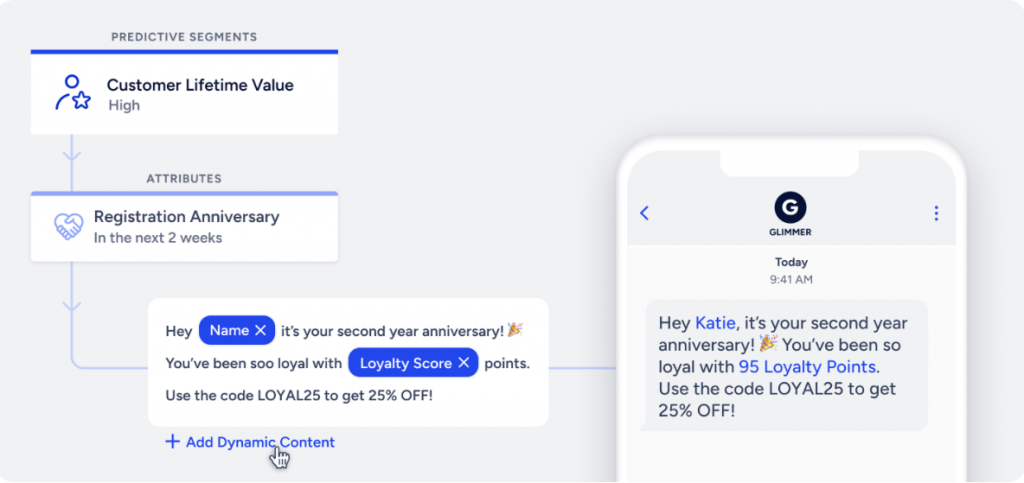
Insider One’s personalization solutions help keep the customers engaged
Benefits
- Establishing a strong brand reputation with high-quality service
- Achieving higher CSAT scores with personalization and individualized attention
- Gain repeat customers
Limitations
- High model costs due to a labor-intensive framework
- Service inconsistencies with varying levels of personalization
- Requirement of skilled staff who know how to apply the concept
Example
A luxury watch brand assigns a personal concierge to every customer to offer personalized recommendations and exclusive reviews. The dedicated support and tailored experience help build a strong customer relationship, encouraging repeat purchases through one-on-one engagement.
2. Low-touch model
This model minimizes direct customer interactions by introducing automation features, such as AI agents and an intelligent knowledge base. It helps you streamline your support processes and reduce reliance on live agents by making self-service options available to customers.
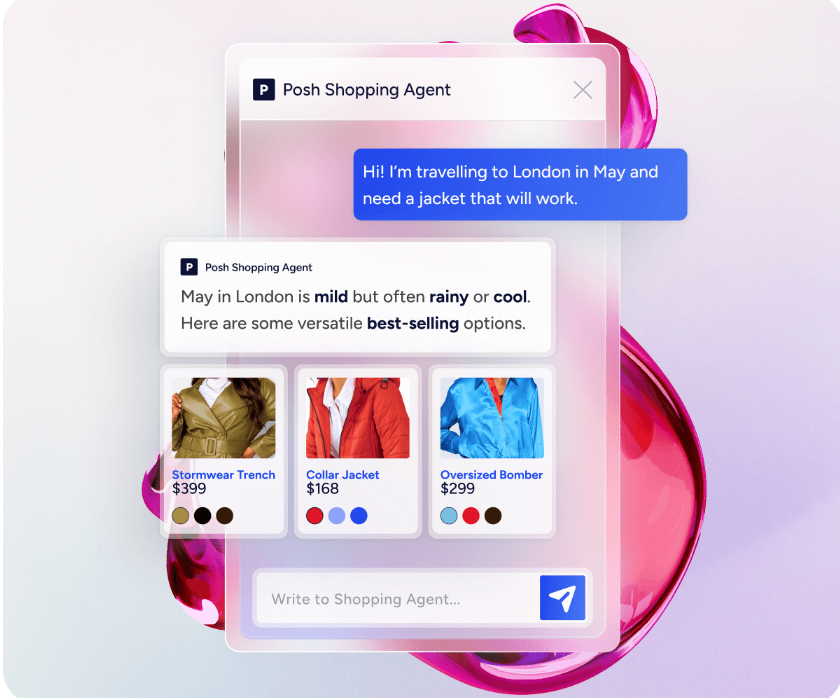
Insider One’s Agentic AI makes customer self-help easy, prompt, and accurate
Benefits
- Easy scale-up and scale-down because of automated processes
- Consistency in customer experience across multiple SLAs
- Faster, more efficient interactions at the basic level
Limitations
- Inability to focus on high-level customization because of automation
- Fewer opportunities for interactions with customers because of automation
Example
An online bookstore uses automated emails, chatbots, and a knowledge base. This helps visitors browse, order, and receive after-sales support without waiting in queues for an agent.
3. Retention model
This model focuses on customer retention by understanding the customer lifecycle to build a retention strategy around it. The aim is to keep the existing customers satisfied with services/products to reduce churn.
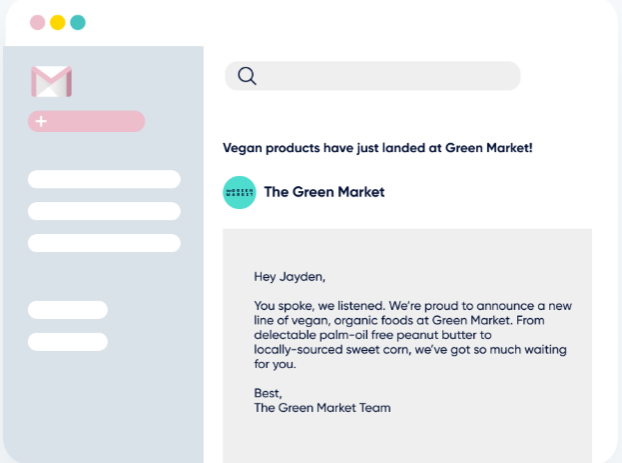
Insider One’s predictive models show where customers are dropping off to create automated re-initiation campaigns
Benefits
- Enhances CSAT scores by understanding the customer lifecycle and providing proactive support
- Reduces acquisition costs by retaining existing customers
- Marketing and upselling resonate with customer preferences
Limitations
- Consistent and meaningful engagement is required.
- Poor offerings can foil all retention efforts.
- Measuring the impact of these efforts is challenging without clear metrics.
Example
An OTT streaming service uses retention models to provide relevant recommendations, personalized content lists, loyalty rewards, and timely surveys for improvement. This helps maintain a high subscription renewal rate.
4. CSM-driven retention model
This is a customer-oriented model that ensures that your customers achieve the desired goals or outcomes by using your products and services. It typically involves Customer Success Managers (CSMs) who work closely with customers to guide them along the usage journey.
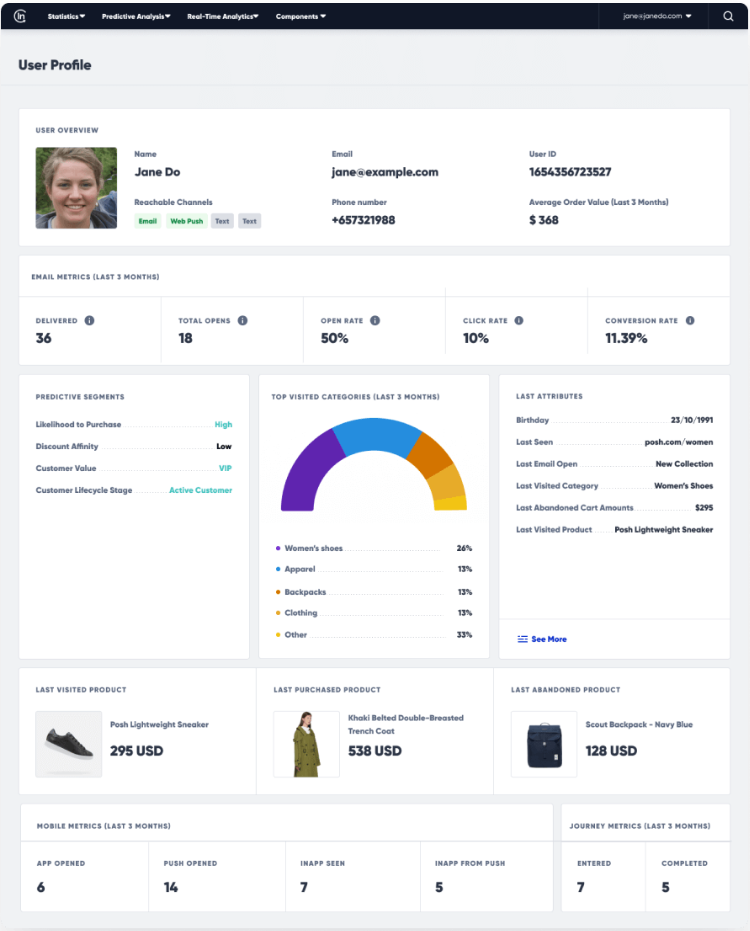
Insider One creates 360-degree buyer profiles so your success managers have customer information at their fingertips
Benefits
- Establish a dedicated contact channel and person for each customer, ensuring one-on-one service.
- Problems can be identified before they occur, delivering proactive solutions.
Limitations
- Requirement of skilled CSM staff
- Not suitable for businesses with low-value customers
Example
A SaaS provider assigns a dedicated CSM to engage its high-value clients proactively. The CSM then understands the client’s needs, develops strategies to achieve specific goals, and guides them through product usage. They also offer tailored solutions and regular check-ins to foster long-term relationships.
5. Automated retention model
This model focuses on customer retention by automating after-sales processes that deliver timely, relevant, personalized messages to customers. For brands aiming to cut costs while maintaining their customer nurturing workflows, this model proves highly efficient.
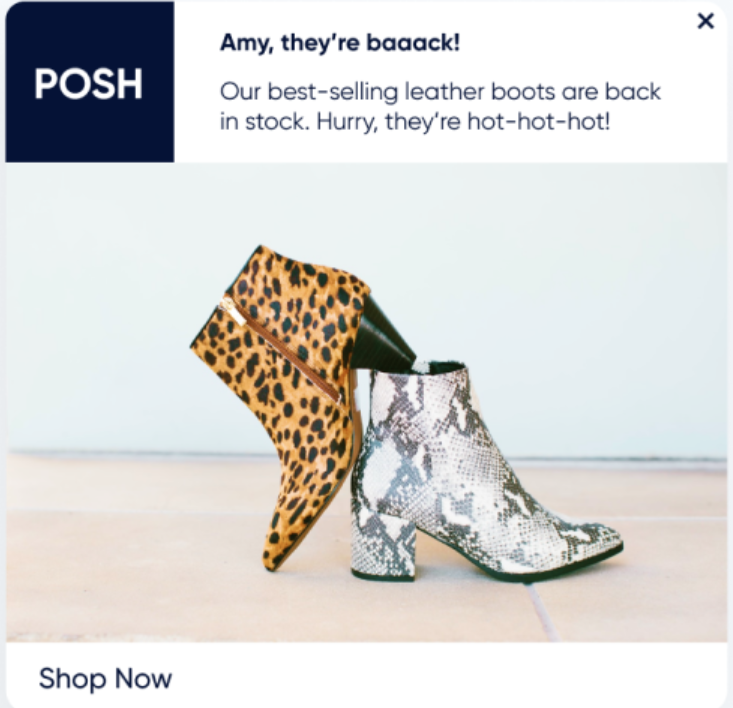
Insider One provides various automations, like restock alerts, to enhance customer engagement and repeat purchases
Benefits
- Apply targeted messaging and keep numerous customers engaged at once.
- Sentiment analysis and automation algorithms allow the detection of dissatisfaction.
- Timely and consistent follow-ups improve customer engagement.
Limitations
- Communications may become too generic due to a lack of personal touch or over-automation.
- Initial investment in technology is high.
Example
You are a subscription software company. You use automated emails, in-app notifications, reminders, and renewal alerts to keep your customers updated. It helps you reduce churn without requiring any manual intervention.
6. Collaborative product roadmap
This model works by actively engaging customers, stakeholders, and teams in the product development process. Customer feedback and co-creation help brands align their offerings with user needs and market demands.
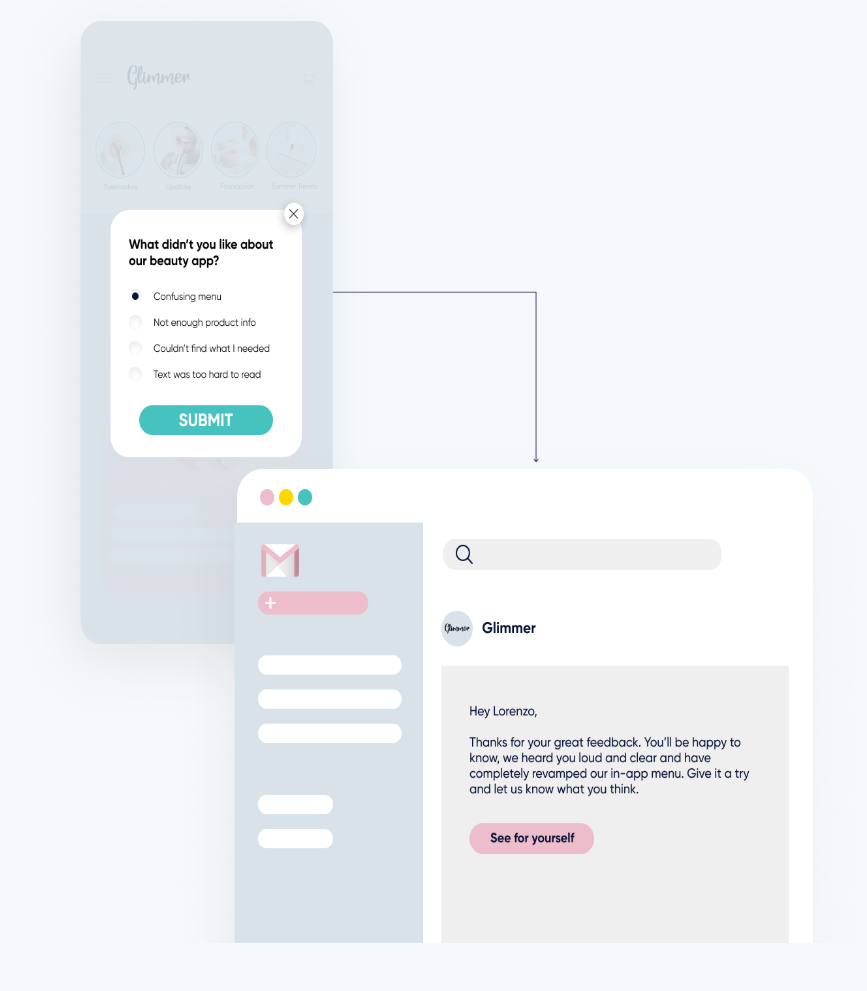
Insider One’s efficient feedback flows and loops help you collaborate with end-users easily
Benefits
- Increase in CSAT due to the offering consisting of features requested by end-users
- Builds strong customer loyalty
- Customers feel valued and invested in the brand.
Limitations
- Managing feedback is complicated and time-consuming.
- It is tough to balance business priorities and goals with customer feedback and requests.
Example
A project management company sets up an online portal where customers can take a vote on feature requests for the next update, and the developers can participate in beta testing. It helps the company prioritize high-impact enhancements and create a loyal community.
7. Hybrid models
Hybrid models combines elements of the high-touch and low-touch models to create a customized user experience. It strikes a good balance between automation and one-on-one attention, delivering meaningful customer experiences.
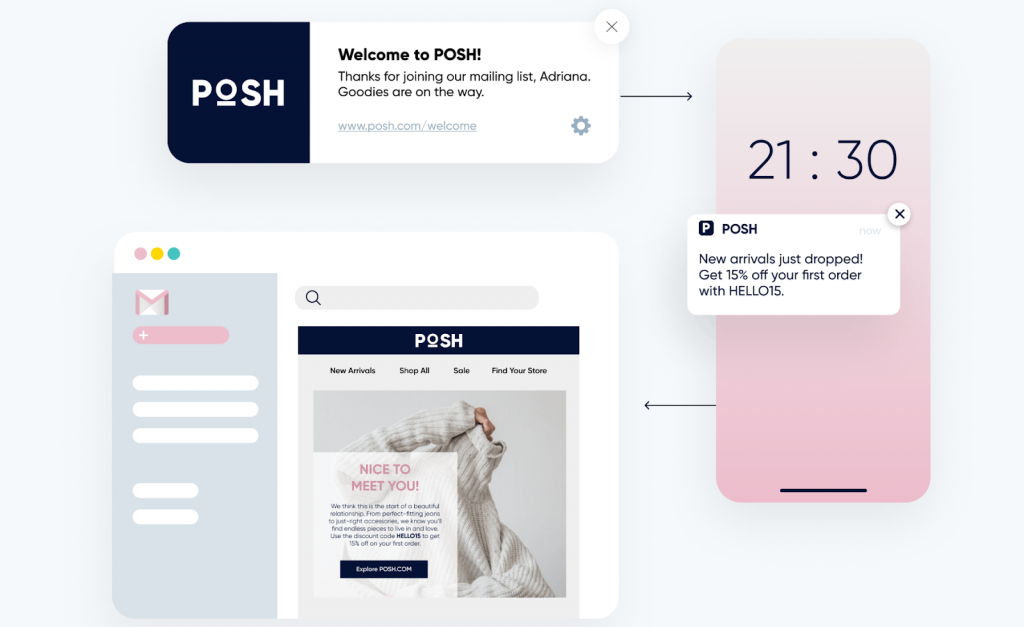
Build AI-powered customer journeys, user segmentation, personalization, and more to power your hybrid models
Benefits
- Allows you to work with automation and human resources with flexibility
- Better streamline options for processes due to automation availability
- Highly scalable with company growth
Limitations
- These models are complex and require effort to develop, maintain, and evolve.
- These models require higher computational power and resources.
Example
FinTech companies can combine automated onboarding with personalized follow-ups by human relationship managers. It fuses scalable digital interactions with one-on-one dedicated support throughout the customer journey for better experiences.
Enhance your customer engagement models with modern AI by Insider One
Modern customer engagement demands more than automation; it requires intelligence, adaptability, and a deep understanding of customer behavior. Agent One™ by Insider One strengthens every engagement model in this guide by acting as the AI layer that personalizes, predicts, and enhances interactions across the entire lifecycle.
Agent One provides you with three distinct and autonomous agents for improving customer engagement:
Shopping Agent
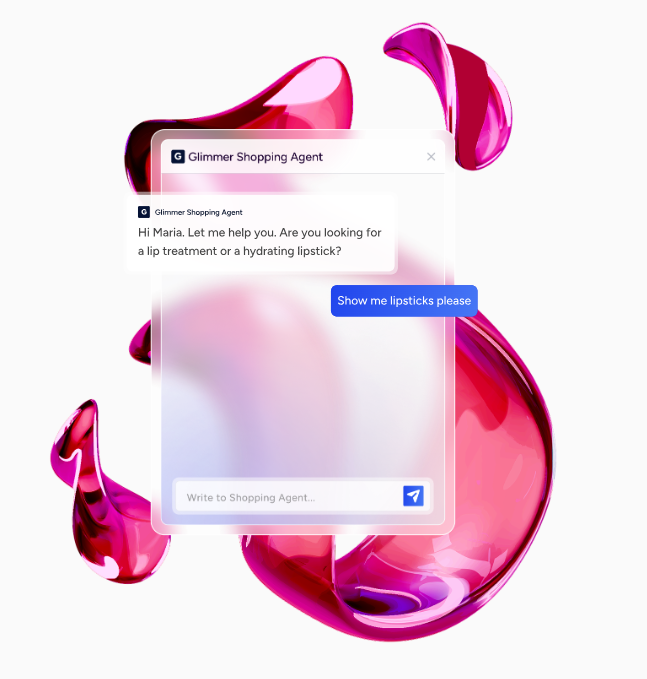
The Shopping Agent is an AI-native agent that boosts your conversions by seamlessly personalizing every customer conversation. It understands their shopping intent, anticipates their needs, and delivers relevant recommendations for an elevated shopping experience.
Support Agent
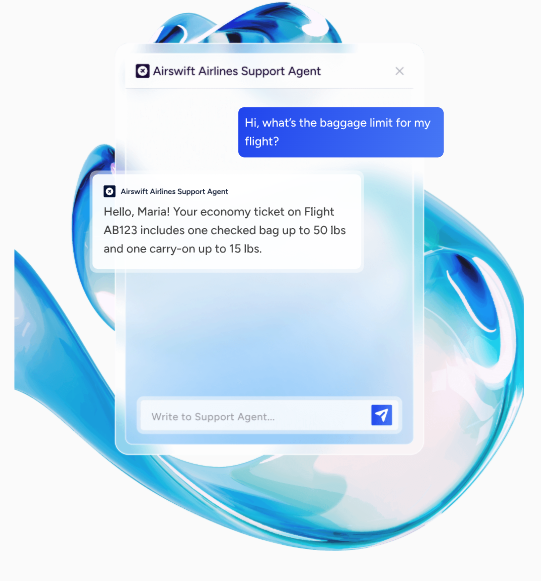
This intelligent AI agent connects with your CRM and CDP to deliver high-fidelity, human-like responses, driving customer engagement. The agent adapts its responses according to customer needs, enhancing relevance and accuracy.
Insights Agent
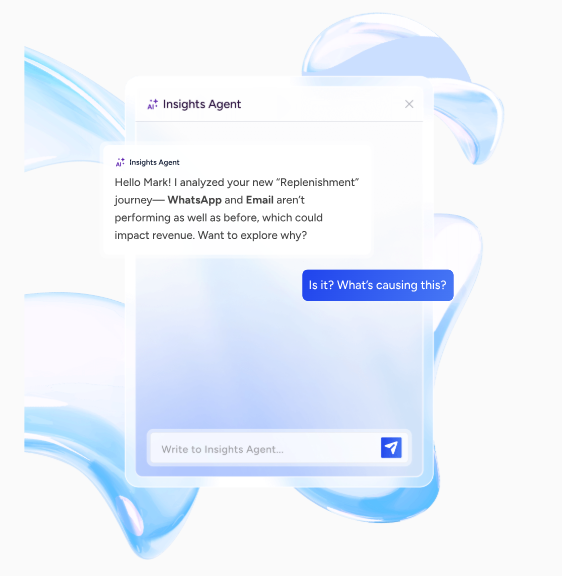
The Insights Agent is an internal agent that gathers and assimilates customer insight to inform brand journey design. It helps you design adaptive, customer-centric, fluid journeys with real-time information.
Scale your success with tested blueprints for customer growth
An engaged customer is a loyal customer, and a powerful driver of long-term growth. The quality of the experiences you design determines how strongly your audience connects with your brand.
Insider One’s omnichannel CX and engagement platform helps you operationalize the models in this guide through:
- AI-powered journey orchestration
- Predictive segmentation and personalization
- Unified customer data across 12+ channels
- Real-time insights that adapt experiences automatically
Whether your goal is to reduce churn, improve retention, support hybrid engagement, or accelerate revenue, Insider One provides the tested blueprints and AI infrastructure to scale with confidence.
Explore how Insider One can strengthen your engagement strategy. Request a demo now.
FAQs
You can assess the performance of a customer engagement model by using KPIs like customer retention, churn rate, and customer lifetime value.
You can choose the right engagement model by understanding your scalability requirements, customer lifetime value, customer base size, and product complexity.
Yes, customer engagement models as a business scales up. You can incorporate more automation, include data-driven insights, or try a hybrid approach to deliver a more personalized experience.
You can leverage technologies like CRM systems, AI-powered platforms, and automation systems to power your customer engagement models.

Keep Reading
4 min.

Chris Baldwin
3 Feb 2026
9 min

Muharrem
23 Dec 2025
10 min.
Muharrem
11 Oct 2024